
Phonics Skills Normal Reading Worksheets for Ages 3-4
3 filtered results
Difficulty Level
Grade
Age
-
From - To
Subject
Activity
Standards
Discover our engaging Phonics Skills Normal Reading Worksheets designed specifically for children ages 3-4. These worksheets help young learners build essential phonics skills, laying a strong foundation for reading success. With colorful illustrations and interactive activities, children will enjoy practicing letter sounds, matching rhymes, and identifying vowel sounds. Each worksheet is crafted to develop key reading abilities in a fun, age-appropriate manner. Ideal for both classroom use and at-home learning, our resources encourage early literacy and boost confidence in young readers. Explore our collection today and support your child's journey toward literacy with hands-on phonics practice!
Favorites
With answer key
Interactive
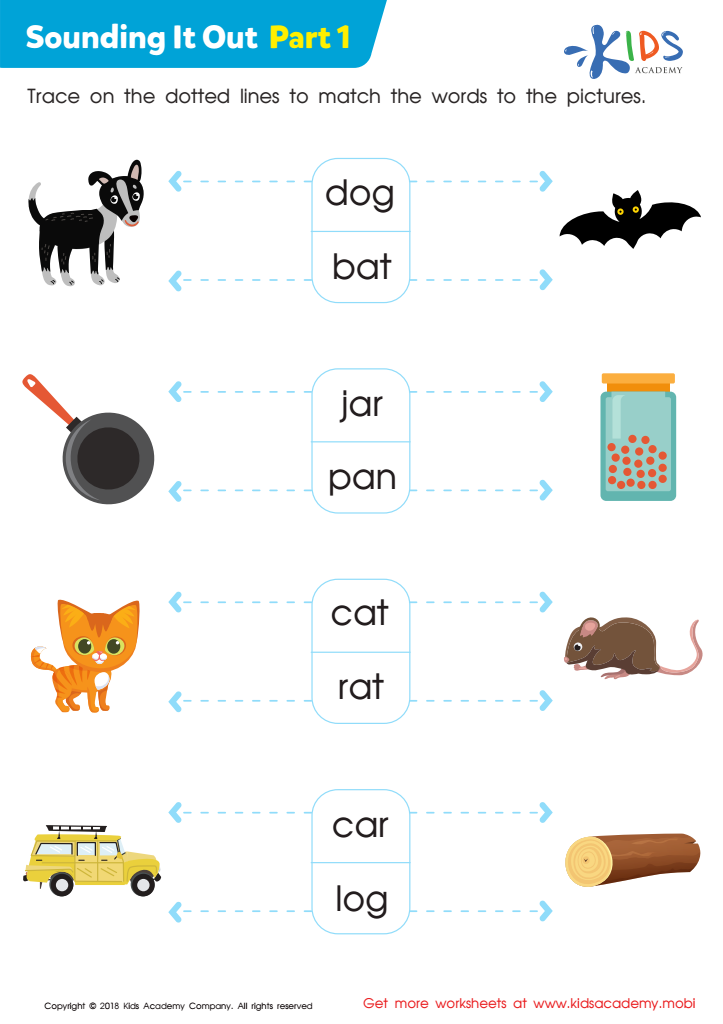
Sounding it Out: Part 1 Worksheet
Help kids learn to read with this fun worksheet! Kids use picture clues to sound out words and trace the dotted lines to match each word to its corresponding image. Stimulating and interactive, this printable is a great way for little learners to practice phonics.
Sounding it Out: Part 1 Worksheet
Worksheet
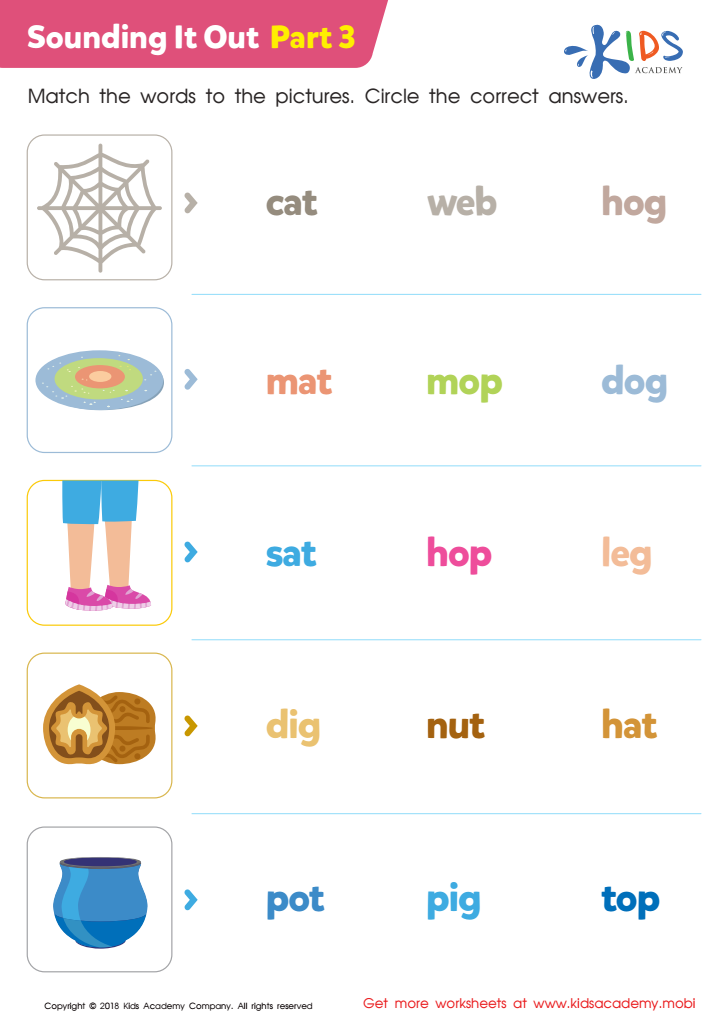
Sounding it Out: Part 3 Worksheet
Once Parts 1 and 2 are complete, this printable phonics worksheet will help kids take their reading skills to the next level! As they gain confidence, give them hints less often and direct their attention to three words in a row. Ask them to read and circle the correct word to complete!
Sounding it Out: Part 3 Worksheet
Worksheet
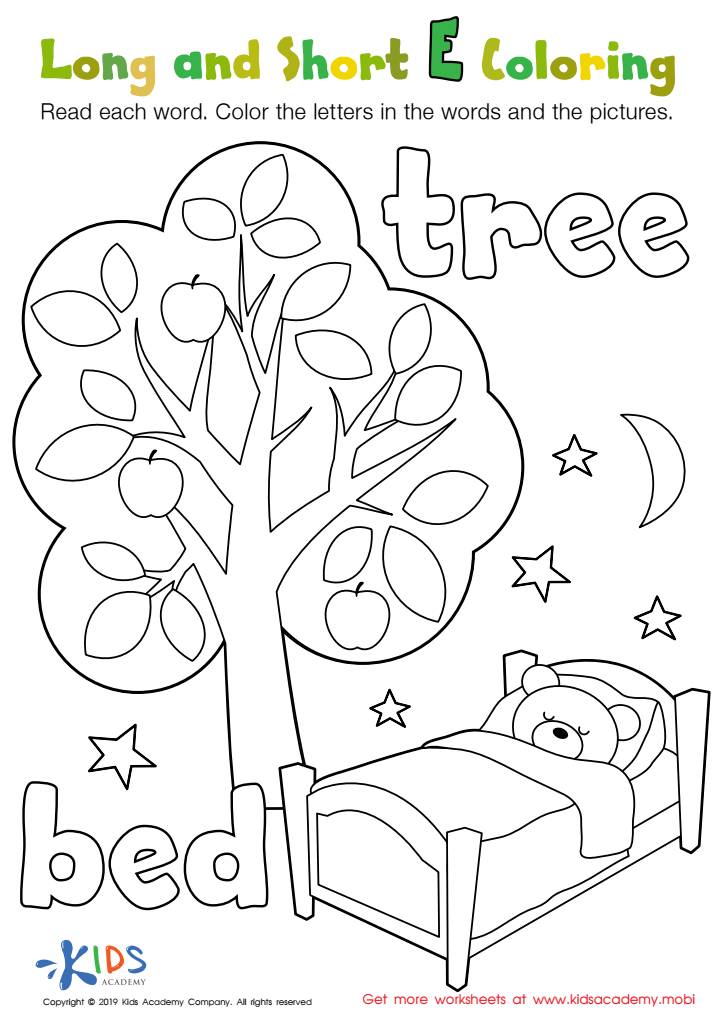
Long and Short E Worksheet
This fun printout makes learning phonics enjoyable for Grade 3 students. Get them to read the words “tree” and “bed” to recognize the different sounds of the letter “E”. After hearing the words they can color the words and the pictures to understand differences between long and short vowels.
Download (PDF)
 Assign to My Students
Assign to My Students
Long and Short E Worksheet
Worksheet
Join Kids Academy for Free
Who is primarily going to use this learning content?








Phonics skills are essential for early literacy development, particularly for children aged 3-4. At this stage, children are like sponges, eagerly soaking up information and building foundational skills that impact their future reading abilities. Understanding phonics— the relationship between sounds and letters— equips young learners with the tools they need to decode words. This early focus on phonics promotes effective reading strategies, fostering confidence and motivation as they progress through their educational journey.
Parents and teachers should prioritize phonics skills because they serve as the building blocks for literacy. Through engaging phonics activities, children learn to recognize letters and sounds, which forms the groundwork for word formation and comprehension. Properly developing these skills at a young age can help prevent reading difficulties later on, setting children on a path of academic success.
Additionally, recognizing the increased emphasis on standardized testing and literacy benchmarks in later grades, early phonics instruction can give children a critical advantage. By nurturing phonics skills, parents and teachers can cultivate an environment that encourages a love for reading, helping children develop not only their academic capabilities but also their creativity and imagination, vital for lifelong learning.
Investing in phonics skills now paves the way for a brighter literary future.








