Spatial awareness Normal Reading Worksheets for Ages 3-4
3 filtered results
-
From - To
Our Spatial Awareness Normal Reading Worksheets for ages 3-4 are expertly designed to help young learners develop key coordination and comprehension skills through engaging activities. These worksheets enhance a child's understanding of spatial relationships, crucial for their overall cognitive development. Each activity is tailored for preschoolers, turning early learning into a fun and rewarding experience. The worksheets offer a colorful, interactive approach that fosters early reading capabilities while nurturing fine motor skills. Perfect for home or classroom use, our spatial awareness materials provide an essential foundation for future academic success and confidence in young readers.
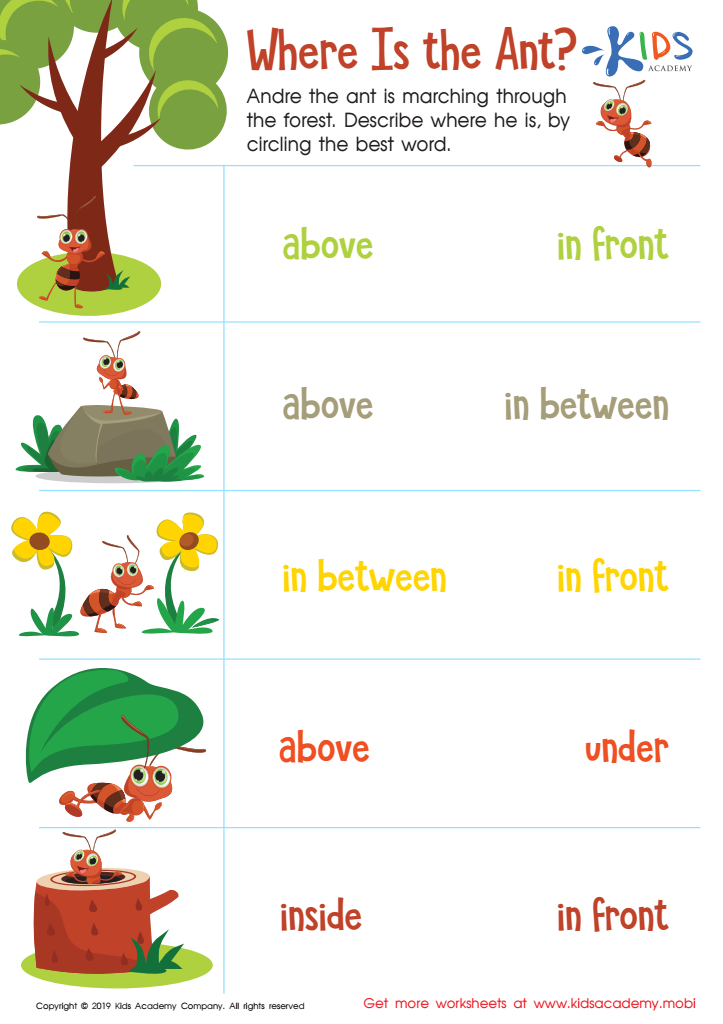
Where Is the Ant? Worksheet
 Assign to My Students
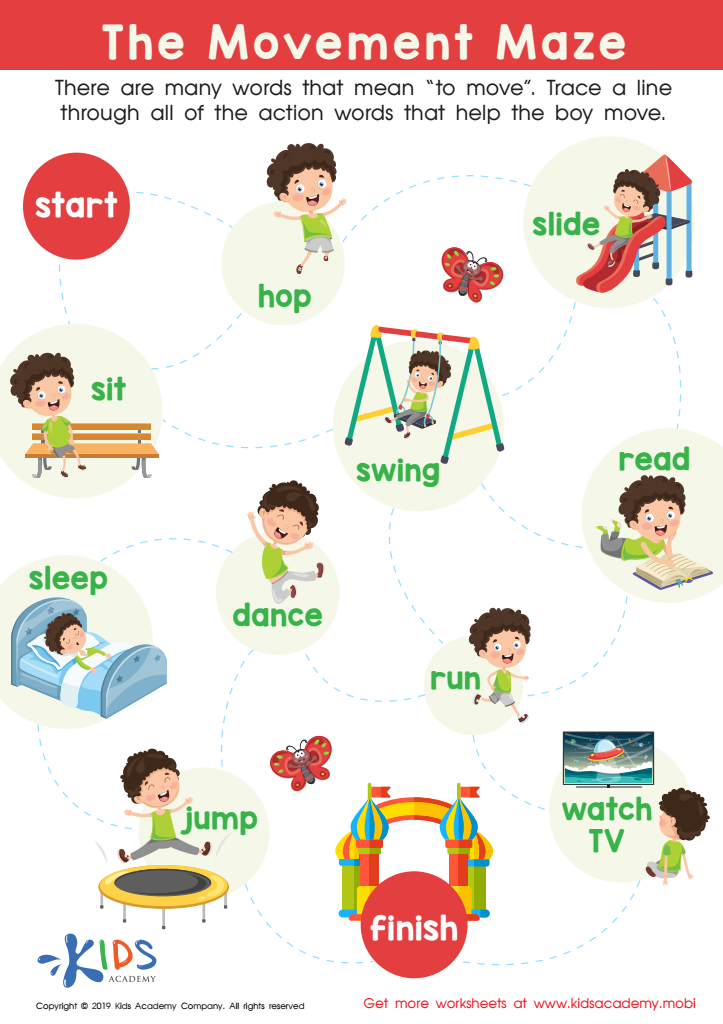
The Movement Maze Worksheet
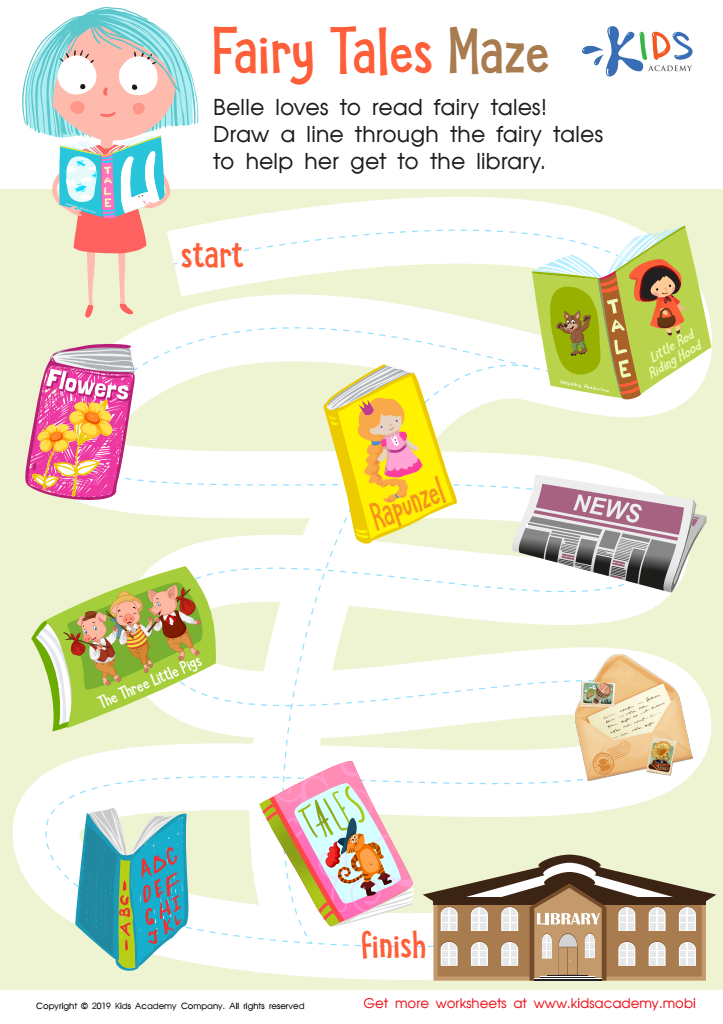
Fairy Tales Maze Worksheet



.jpg)




Spatial awareness and normal reading development in children ages 3-4 are critical aspects of early childhood education that parents and teachers should prioritize. Spatial awareness, or the understanding of objects in space and their relative positions and movement, forms the foundation for many critical skills, including mathematics, problem-solving, and the ability to follow directions. When children engage in activities that enhance spatial awareness, such as puzzles, building blocks, and navigation games, they improve their hand-eye coordination and fine motor skills, which are essential for writing and other everyday tasks.
Equally important is the development of reading skills at this age. Reading activities, such as being read to or engaging with picture books, help children grasp the basics of language, from vocabulary to sentence structure. This early exposure lays the groundwork for future literacy and academic success. It enhances cognitive development, expands imagination, and improves concentration and attention. Furthermore, regular reading interaction fosters a love for books, helping ease the transition to more structured learning environments in later years.
By focusing on both spatial awareness and reading, parents and teachers support a holistic approach to education. These foundational skills are interconnected and collectively boost a child's intellectual, emotional, and social development, setting them on a path toward lifelong learning and success.








