Story sequencing Normal Reading Comprehension Worksheets for Ages 3-4
6 filtered results
-
From - To
Discover our engaging Story Sequencing Reading Comprehension Worksheets, specially designed for ages 3-4. Help budding readers enhance their reading skills with fun and interactive activities. Each worksheet features vibrant illustrations and simple text that follow a logical sequence, making it easy for young minds to grasp the concept of story order. By practicing story sequencing, children develop essential skills like memory, critical thinking, and comprehension. Perfect for both classroom and at-home learning, our worksheets provide a delightful way to encourage a love for reading and storytelling. Download and start your child's journey to reading success today!
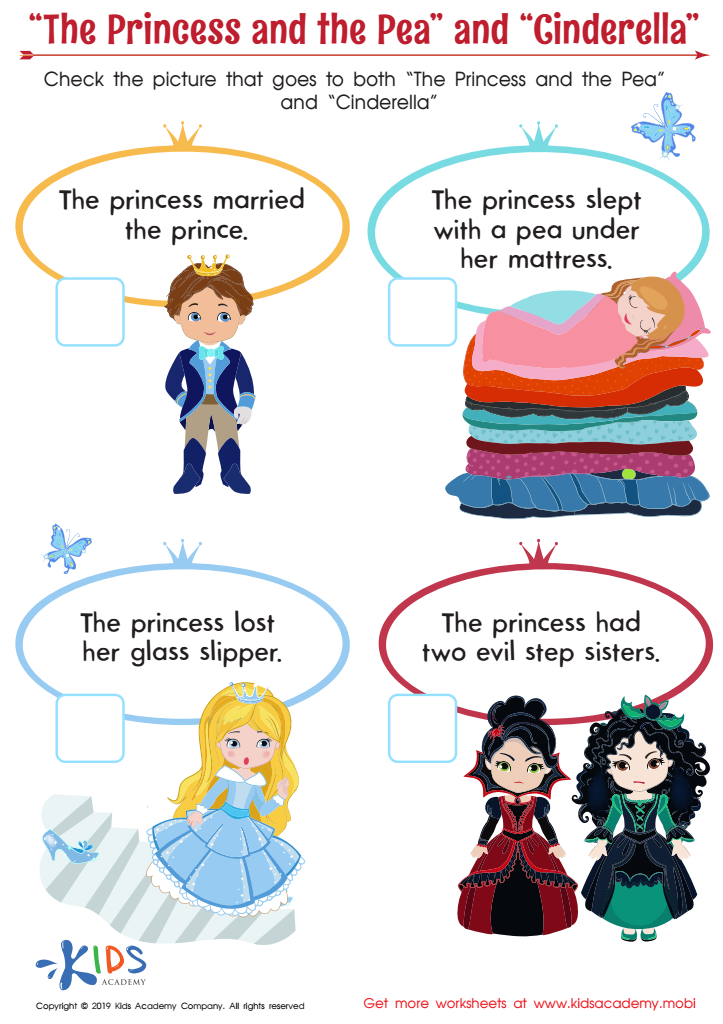
“The Princess and the Pea” and “Cinderella” Worksheet
 Assign to My Students
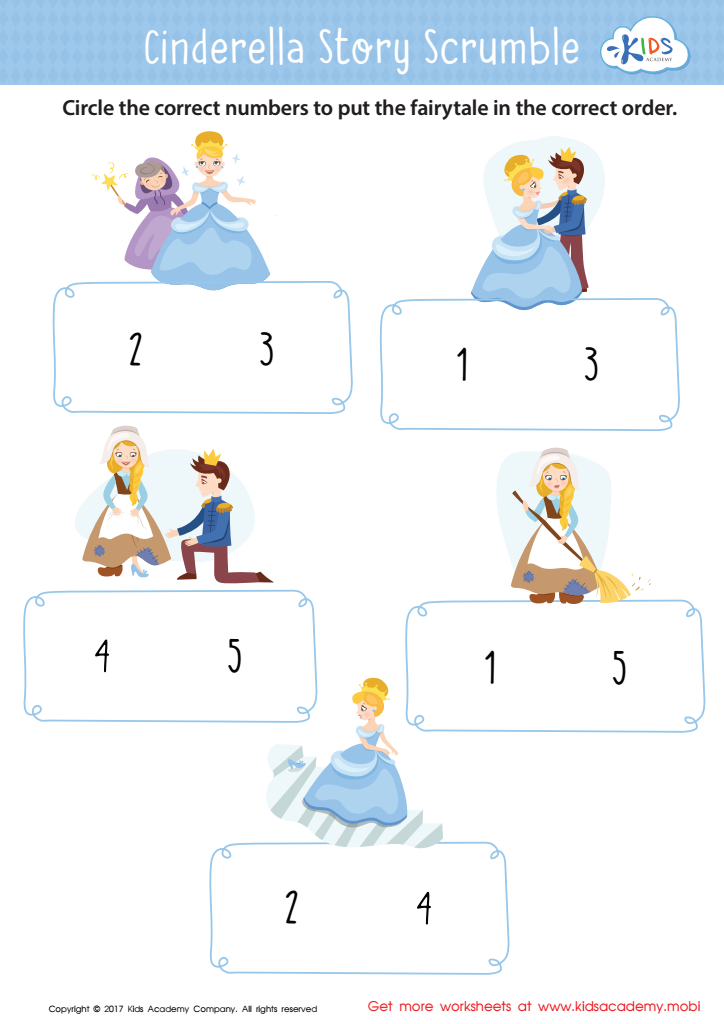
Cinderella Story Sequencing Worksheet
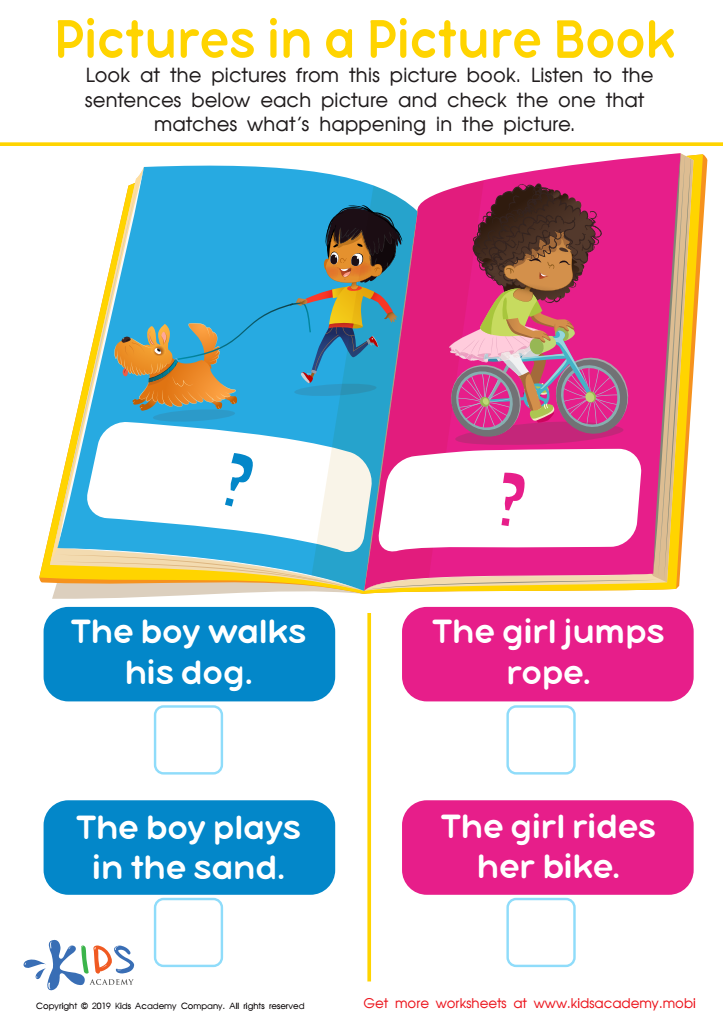
Picture in Books Worksheet
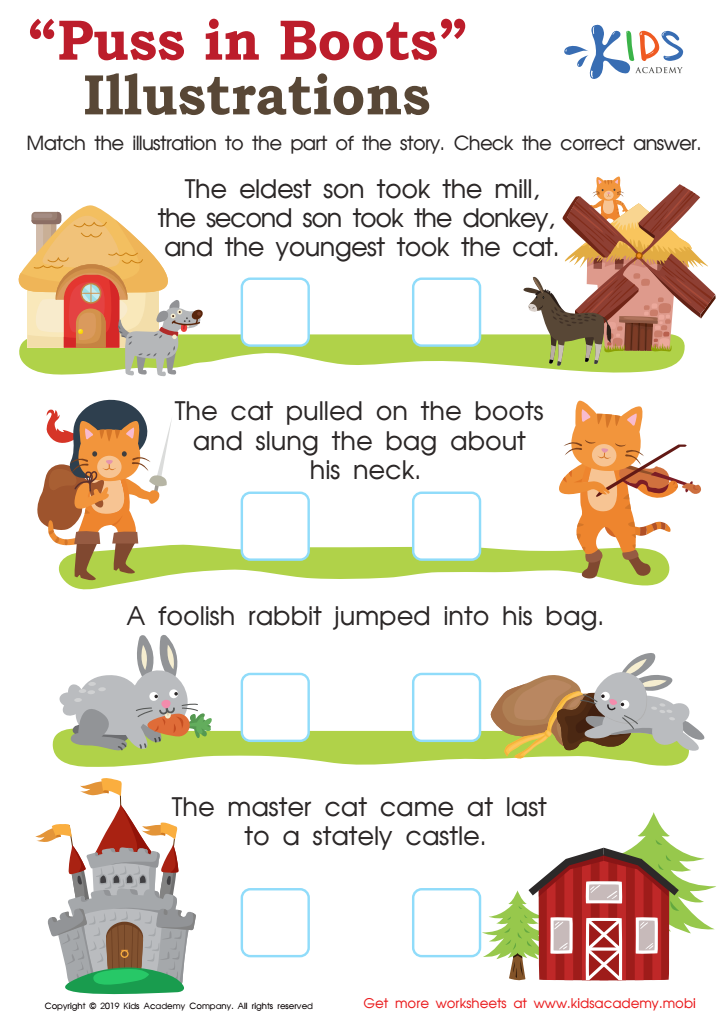
Puss in Boots Illustrations Worksheet
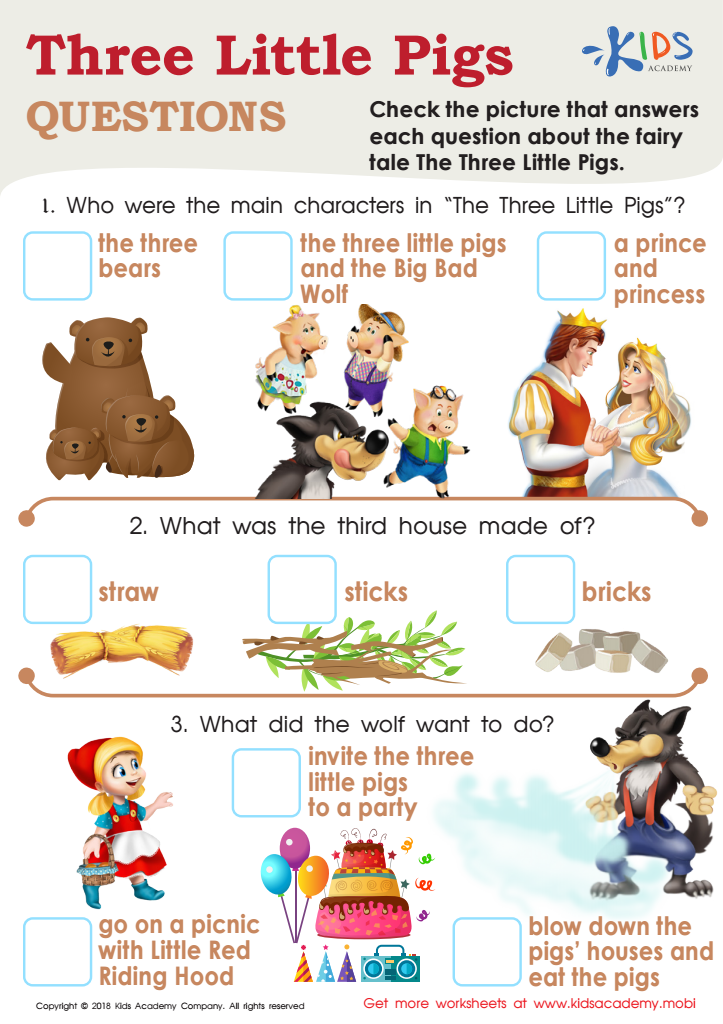
Three Little Pigs Questions Worksheet
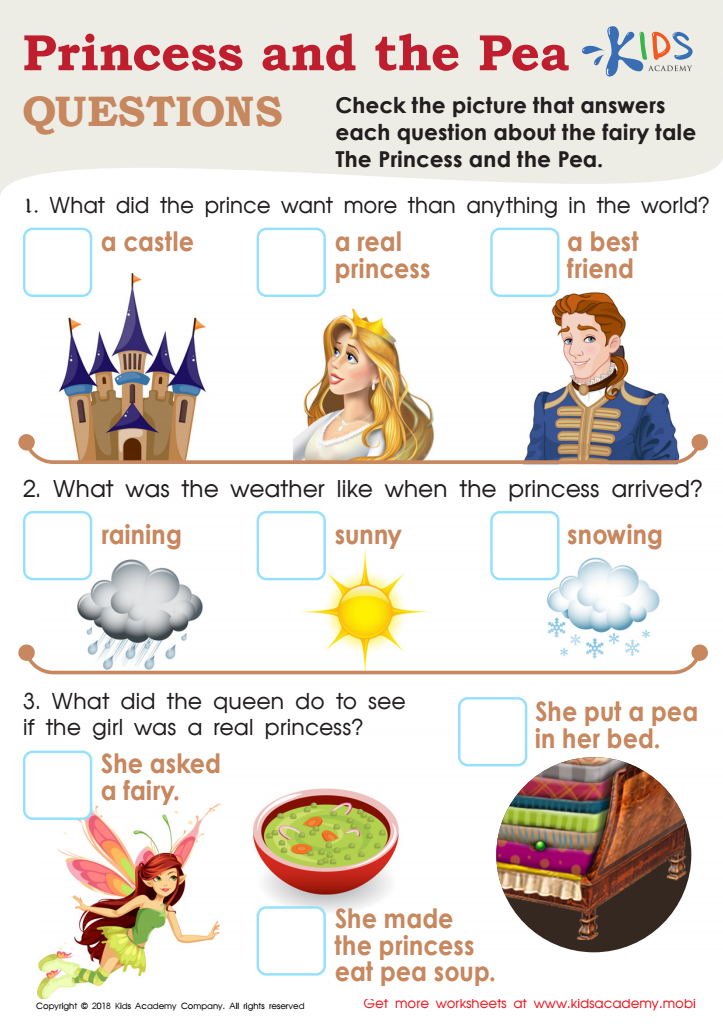
Princess and the Pea Questions Worksheet



.jpg)




Story sequencing and normal reading comprehension are essential skills for young children aged 3-4 as they lay the foundation for future literacy and cognitive development. Parents and teachers should prioritize these skills for several reasons.
Firstly, understanding story sequence helps children grasp the concept of beginning, middle, and end, which is crucial for logical thinking and organization. Recognizing the order of events enhances their ability to anticipate what happens next, fostering predictive skills that are vital for reading comprehension.
Secondly, early comprehension skills build a strong language base. When children understand and retell stories, they expand their vocabulary, improve sentence construction, and develop better communication abilities. This prepares them for more complex language tasks in preschool and grade school.
Furthermore, involving children in story sequencing and comprehension activities promotes listening skills and concentration. As they pay attention to the storyline, they learn to focus, aiding their learning across different subjects. These skills can also lead to better social interactions, as children learn to understand others' perspectives through characters' experiences.
Lastly, a strong foundation in sequencing and comprehension contributes to a lifelong love for reading. Enjoying and understanding stories at a young age can spark curiosity and imagination, nurturing a positive attitude toward learning and discovery.
In summary, parents and teachers who emphasize these early literacy skills support children's cognitive, linguistic, and social development, setting them up for academic success and a lifelong enthusiasm for reading.








