
Animal recognition Normal Science Worksheets for Ages 3-4
3 filtered results
Difficulty Level
Grade
Age
-
From - To
Subject
Activity
Standards
Discover the joy of learning with our Animal Recognition Normal Science Worksheets designed specifically for ages 3-4. These engaging sheets introduce young learners to various animals, fostering curiosity and excitement about the natural world. Featuring colorful illustrations and simple instructions, each worksheet encourages children to identify, match, and explore different animals through fun activities. By enhancing their observational skills and vocabulary, these worksheets lay a strong foundation for early science education. Perfect for home or classroom use, our resources are tailored to support preschool development and inspire a lifelong love for learning about animals. Get started on this exciting adventure today!
Favorites
With answer key
Interactive
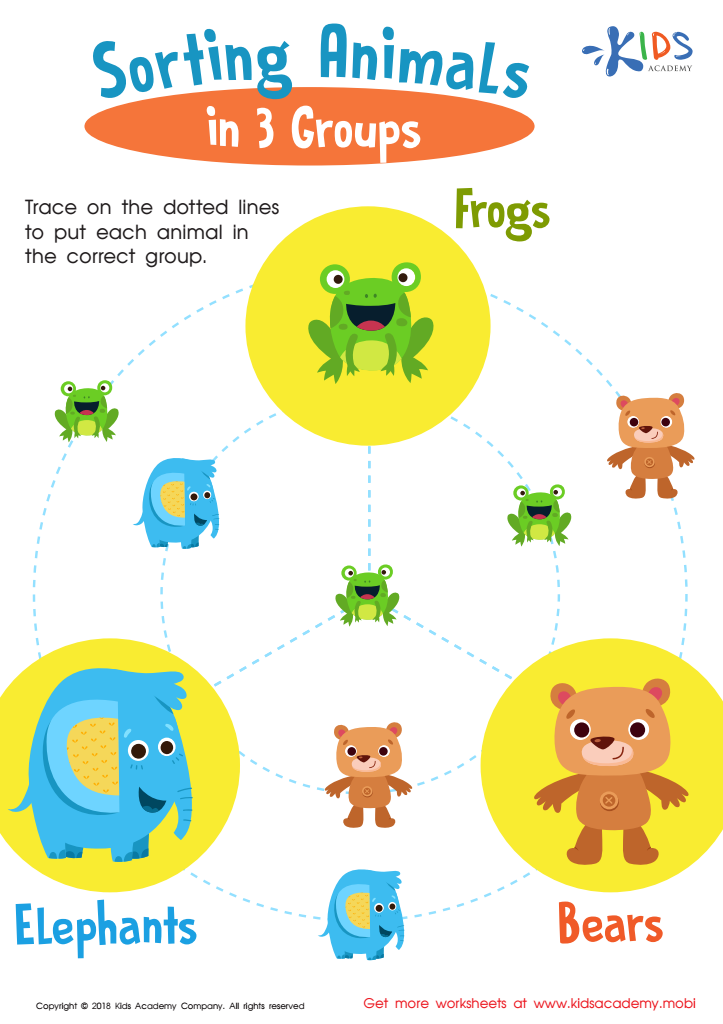
Sorting Animals in 3 Groups Worksheet
Let your kids practice and build skills for future Venn Diagrams with this PDF worksheet. They'll trace lines to match and group animals, and learn the differences and similarities of animals by categorizing with pictures and words. Plus, it's a great way to develop fine motor skills.
 Assign to My Students
Sorting Animals in 3 Groups Worksheet
Worksheet
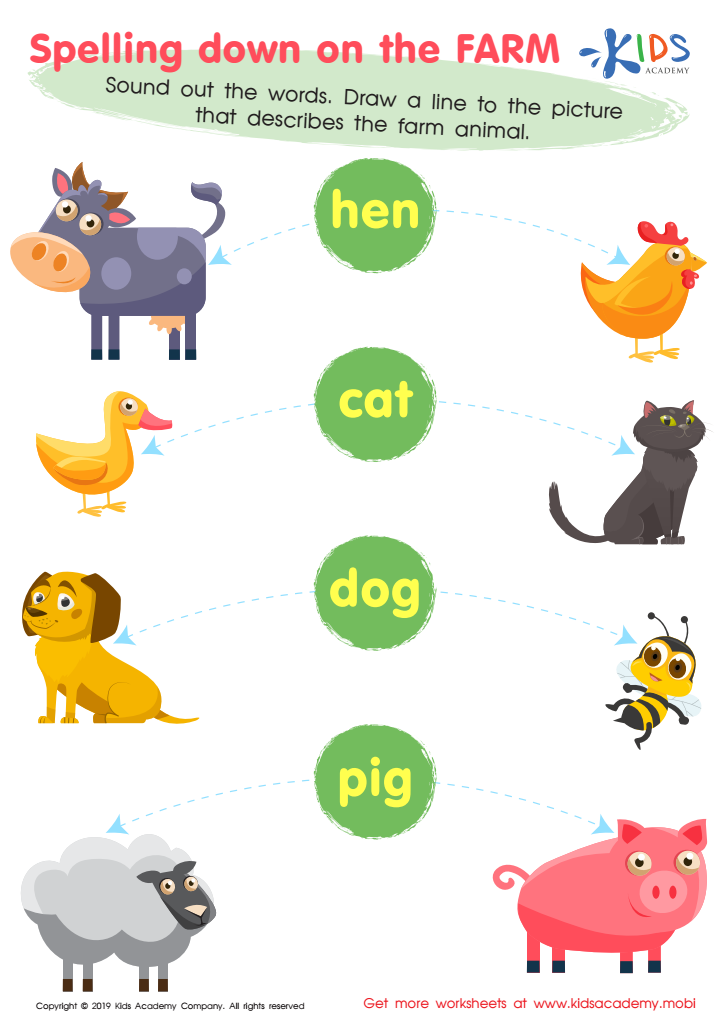
Spelling Down on the Farm Worksheet
Want to help your kids nail their spelling? Introduce them to this farm animal worksheet! Get them to look at the animals in the tracing sheet, name them and then sound out the words. Have them draw a line to the picture that describes it. You'll be surprised at how quickly their skills improve.
Spelling Down on the Farm Worksheet
Worksheet
Join Kids Academy for Free
Who is primarily going to use this learning content?








Animal recognition is a foundational component of early childhood education, particularly for children aged 3-4. Understanding animals enhances cognitive development, fosters curiosity, and promotes critical thinking. For parents and teachers, caring about this aspect of learning is vital because it lays the groundwork for a child's awareness of the world around them.
At this age, children are naturally inquisitive, making it an ideal time to introduce them to different animal species. Identifying animals helps develop language skills, as children learn new words associated with various species, their qualities, and sounds. This builds vocabulary and encourages communication.
Additionally, animal recognition can support emotional and social development. Familiarity with animals can stir empathy, especially when children learn about habitats, diets, and behaviors. Making connections with animals fosters a sense of responsibility toward the environment and promotes an understanding of biodiversity.
Incorporating animal recognition into daily activities – such as storytelling, interactive games, and outdoor exploration – engages children effectively. It offers opportunities for hands-on learning and social interaction, key elements in the development of critical social skills.
Overall, emphasizing animal recognition in early education shapes knowledgeable, compassionate, and responsive individuals in their environment.







