Visual discrimination skills Normal Alphabet Worksheets for Ages 3-5
5 filtered results
-
From - To
At Kids Academy, we offer specialized Visual Discrimination Skills Normal Alphabet Worksheets designed specifically for children ages 3-5. These engaging and educational worksheets help young learners develop essential visual discrimination abilities, enabling them to distinguish between similar letters and shapes. Our age-appropriate exercises focus on enhancing letter recognition, and fine motor skills, and fostering early reading readiness. Perfect for both classroom and home use, these printable resources make learning fun and effective. Visit our website to explore our wide range of expertly crafted worksheets that support your child's early educational journey!
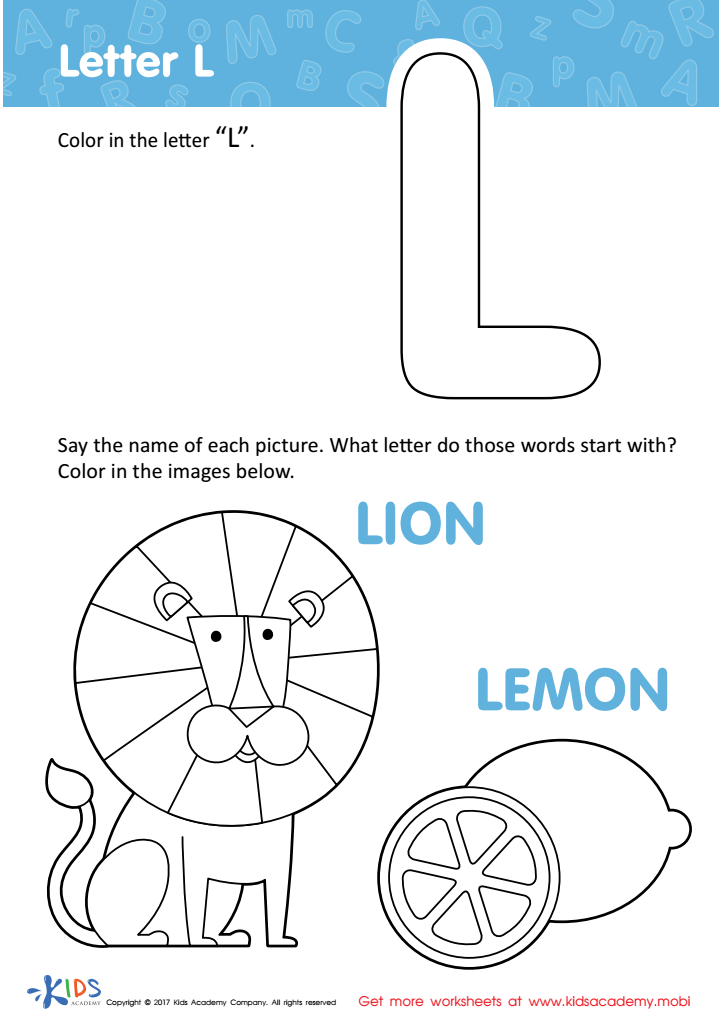
Letter L Coloring Sheet
 Assign to My Students

Find Uppercase Letters A, B, and C Worksheet
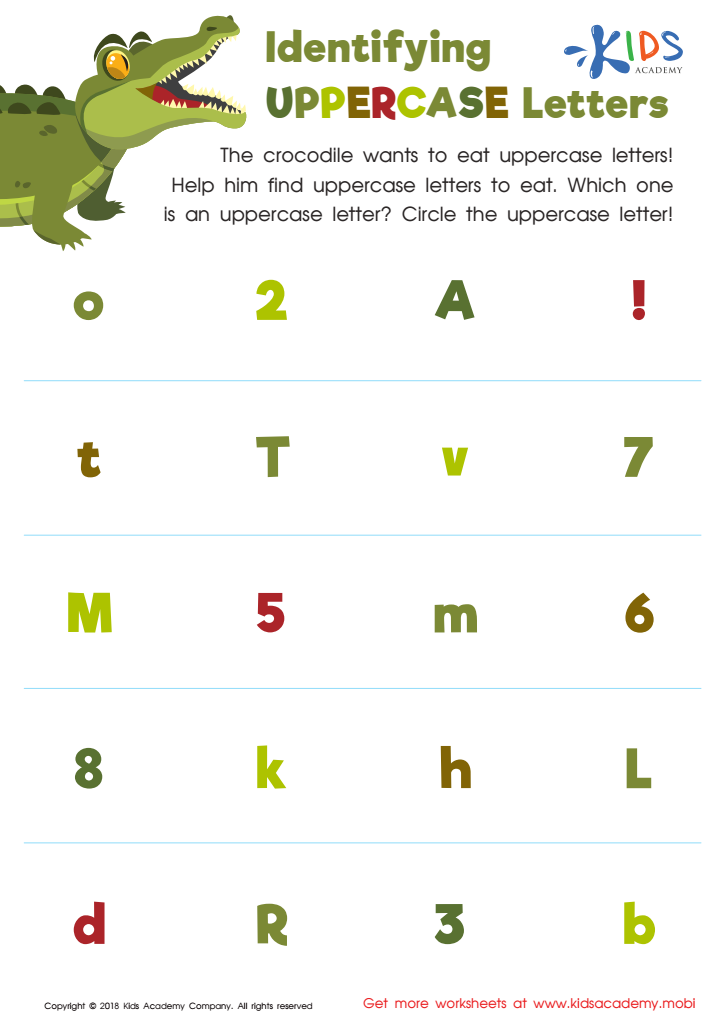
Identifying Uppercase Letters Worksheet
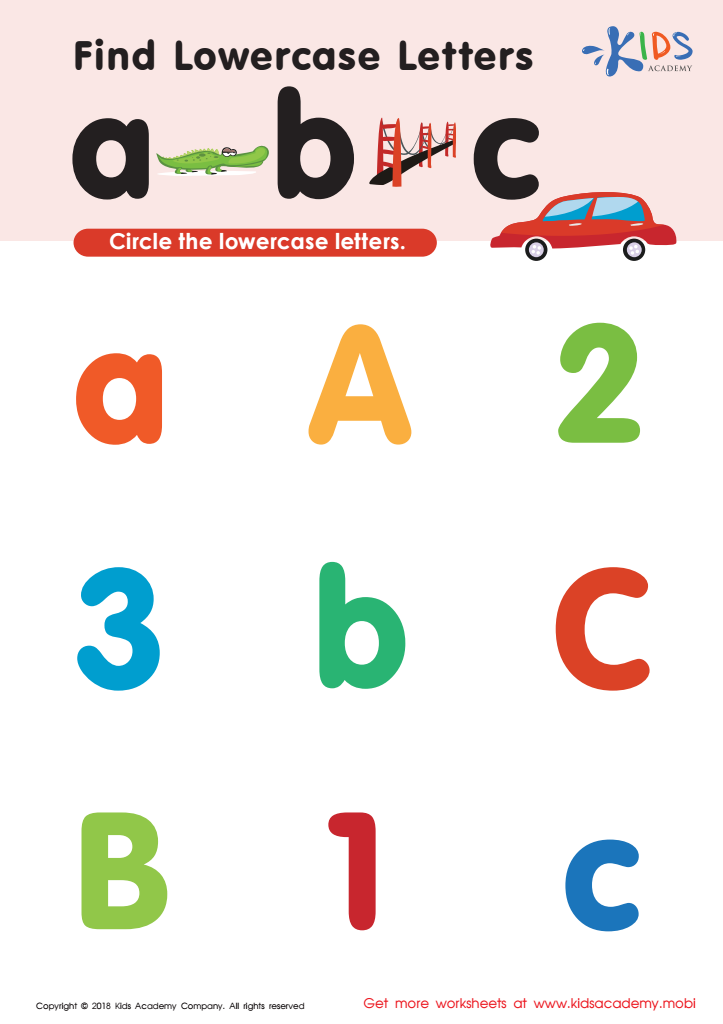
Find lowercase letters a b c Worksheet
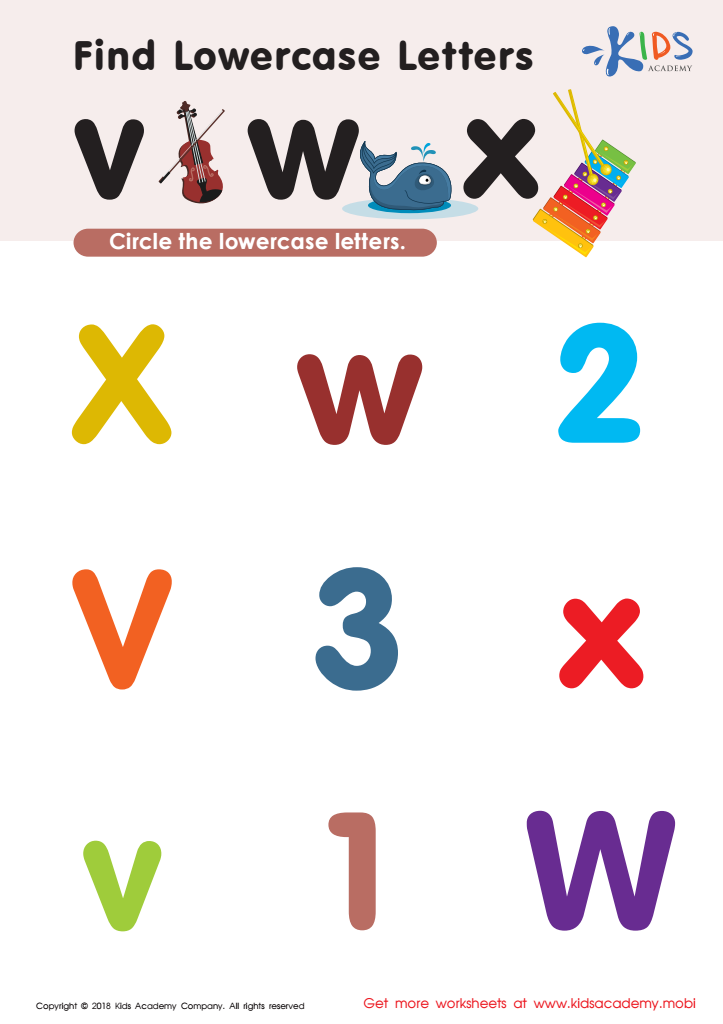
Find Lowercase Letters v w x Worksheet








Visual discrimination skills refer to the ability to perceive and identify differences and similarities in shapes, letters, patterns, and objects. These skills are foundational for children aged 3-5 years old, playing a critical role in their early learning and development, particularly in reading and writing.
For parents and teachers, nurturing these skills is essential because they directly impact a child's ability to recognize letters and numbers, which is crucial for developing literacy and numeracy. For instance, distinguishing between letters like ‘b’ and ‘d’ or ‘p’ and ‘q’ is vital for understanding written language. This early proficiency helps prevent potential reading difficulties or misunderstandings that can hinder academic progress.
In addition to academic benefits, strong visual discrimination skills also enhance overall cognitive development. These skills improve memory, attention to detail, and problem-solving abilities by enabling children to notice subtle differences in their environment and learning materials.
Practically, this means children will also excel in activities requiring hand-eye coordination, such as drawing or assembling puzzles. By supporting the development of visual discrimination, parents and teachers are laying a strong foundation for a child’s education, ensuring they are well-prepared for the structured learning environment of formal schooling. Early investment in these skills pays long-term dividends in a child’s academic journey and personal growth.







