Lowercase identification Normal Letter Recognition Worksheets for Ages 3-5
4 filtered results
-
From - To
Introduce your little learners to the world of lowercase letters with our engaging Lowercase Identification Normal Letter Recognition Worksheets, designed specifically for ages 3-5! These worksheets are perfect for honing essential skills while fostering a love for reading and writing. Each activity is carefully crafted to help children recognize and differentiate lowercase letters through fun and interactive exercises. By encouraging hands-on practice with colorful illustrations and simple instructions, your child will gain confidence in their literacy skills. Perfect for both classroom and home use, these worksheets will provide hours of educational fun, cultivating early reading success in your preschooler!
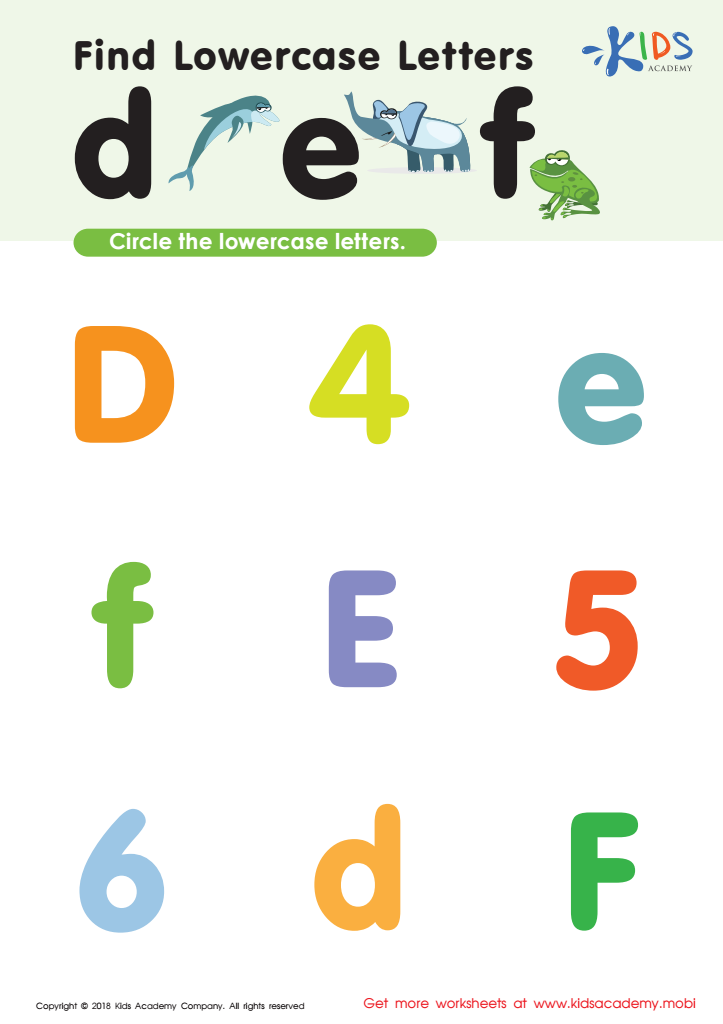
Find Lowercase Letters d e f Worksheet
 Assign to My Students
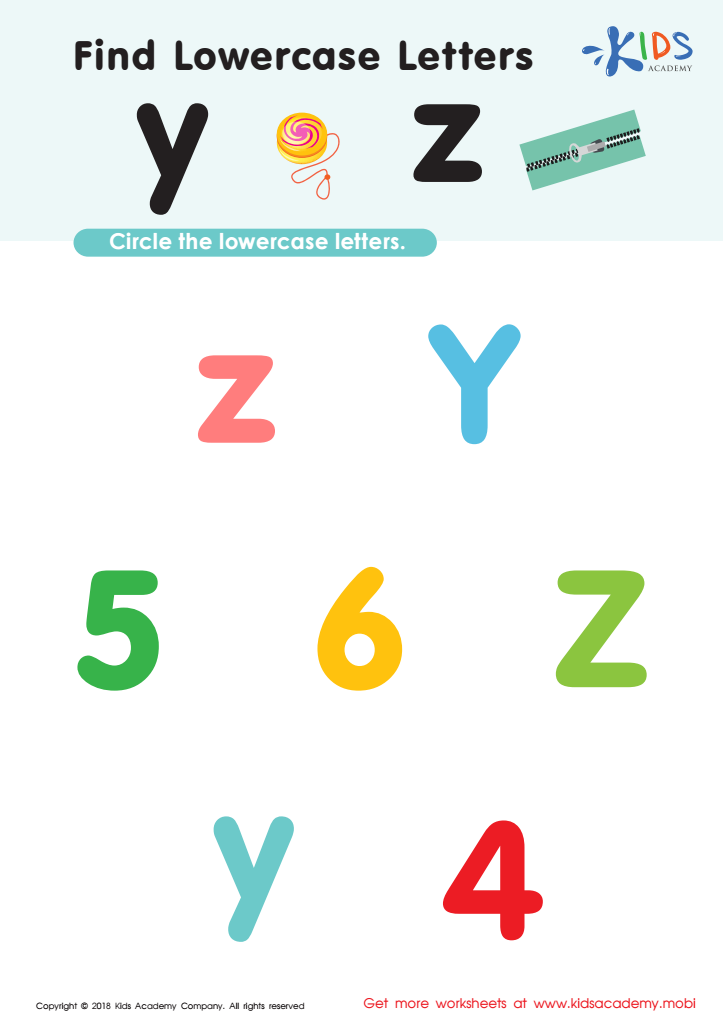
Find Lowercase Letters y z Worksheet

Find lowercase letters a b c Worksheet

Find Lowercase Letters v w x Worksheet








Lowercase letter identification is crucial for children aged 3-5 as it lays the foundation for literacy development. During this critical learning stage, children encounter letters in various contexts, from books to everyday signs. Recognizing lowercase letters helps them understand that letters come in different forms—uppercase and lowercase—which is essential for reading and writing fluency.
Teachers and parents should prioritize lowercase letter recognition because it directly impacts children's future academic success. Mastery of lowercase letters enables them to decode words effectively, encouraging a love for reading and a curiosity about language. Moreover, knowing lowercase letters enhances children’s writing skills, as they learn to form letters and words correctly.
Additionally, lowercase letters are more commonly used in printed materials, and recognizing them supports children's comprehension and communication skills. Engaging activities such as letter recognition games, reading aloud, and interactive games can make this learning enjoyable and effective. By fostering an environment that emphasizes lowercase letter identification, parents and teachers not only enhance literacy skills but also instill confidence and competence in children, better preparing them for the school years ahead. Early identification skills ultimately contribute to a smoother transition into reading and writing in more complex formats.








