Rhyming skills development Normal Phonics Worksheets for Ages 3-5
3 filtered results
-
From - To
Discover our engaging Rhyming Skills Development Normal Phonics Worksheets, designed specifically for children ages 3-5! These interactive worksheets foster early phonics understanding while making learning fun and enjoyable. Through a variety of activities, kids will explore sound patterns, recognize rhyming words, and enhance their vocabulary. Our resource not only supports language development but also promotes critical thinking and creativity. Perfect for home or classroom use, these worksheets are a valuable tool for preschool educators and parents alike. Help your little learners develop a strong foundation in phonics with our easy-to-use and effective rhyming worksheets today!
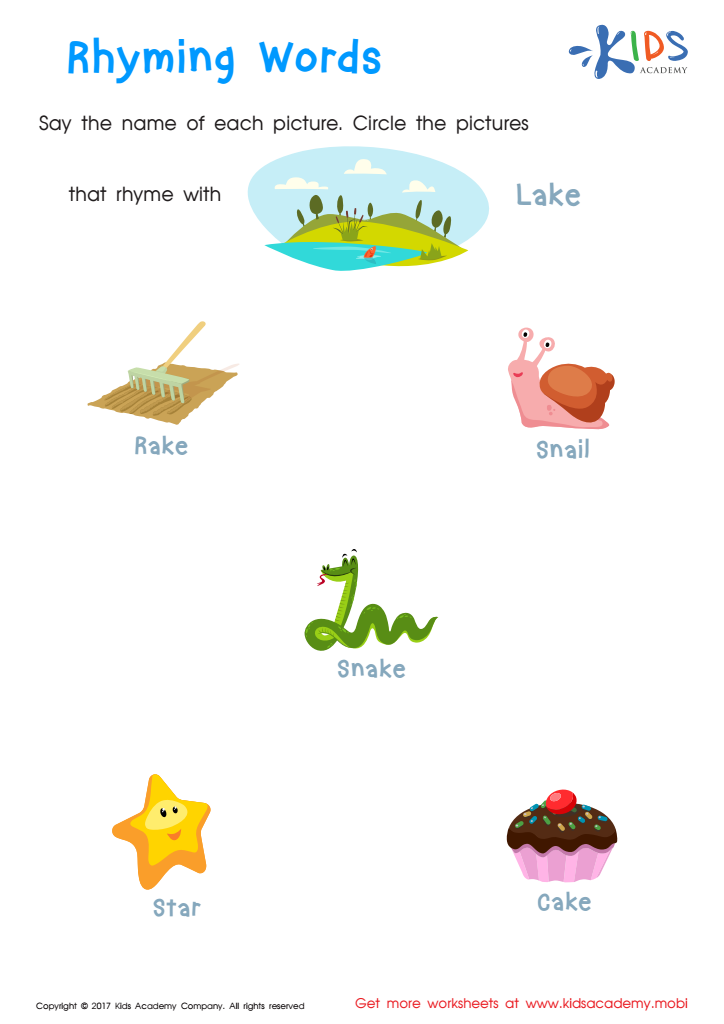
Rhyming Words Rhyming Worksheet
 Assign to My Students
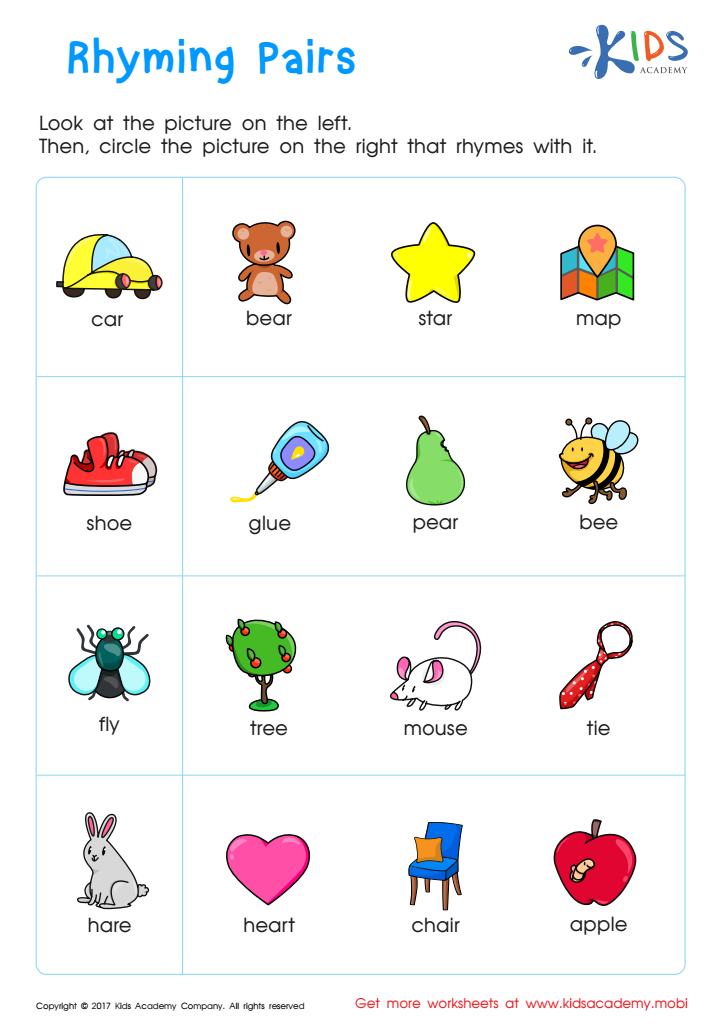
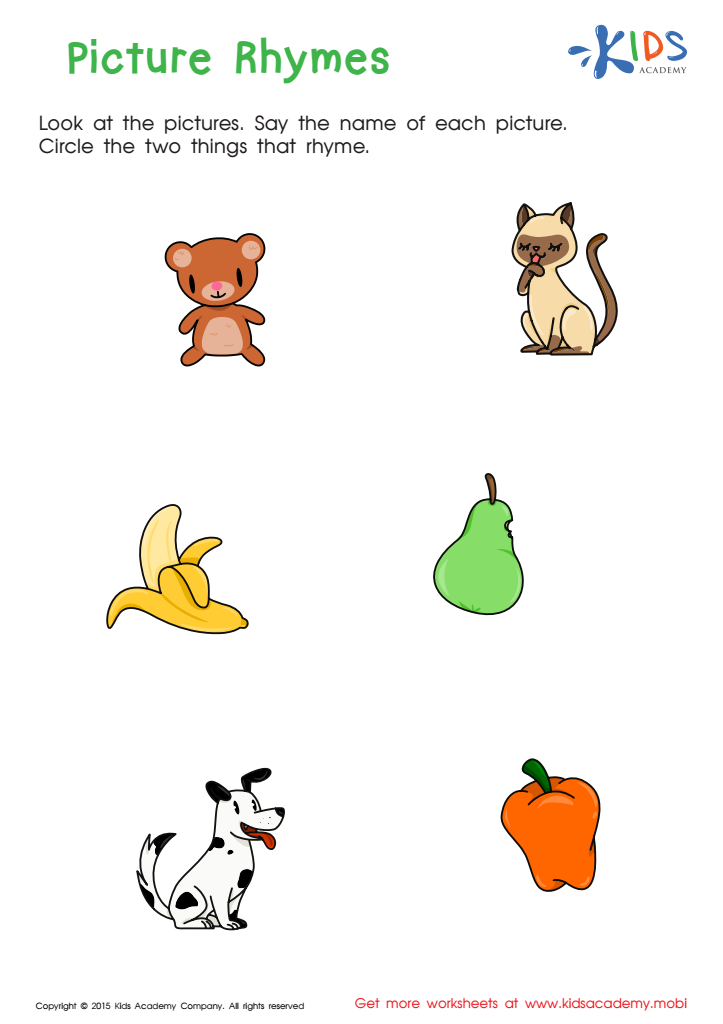
First Words: Picture Rhymes Worksheet








Rhyming skills and phonics development are crucial for early literacy in children aged 3-5. Understanding and recognizing rhymes help children to develop phonemic awareness, which is the ability to hear and manipulate sounds in spoken words. This foundational skill is essential for learning to read, as it enhances their ability to decode words and recognize patterns in language.
When children engage with rhymes, they improve their phonological awareness, allowing them to identify sounds, syllables, and the structure of words. This sets the stage for successful reading and writing as they learn to connect sounds with letters. Additionally, rhyming activities are often enjoyable and can make learning feel playful and engaging. They help develop vocabulary and comprehension skills, as children begin to explore the meanings of words and the concepts behind them.
Parents and teachers play an important role in nurturing these skills through interactive activities such as singing songs, reading poetry, and playing rhyming games. By emphasizing the importance of rhyming and phonics, adults can cultivate a love for language and literacy that will benefit children throughout their academic journeys and beyond. Therefore, investing in rhyming skills development is critical for a strong literacy foundation.







