
Spelling practice Normal Phonics Worksheets for Ages 3-5
7 filtered results
Difficulty Level
Grade
Age
-
From - To
Subject
Activity
Standards
Enhance your child's early literacy skills with our Spelling Practice Normal Phonics Worksheets, designed for ages 3-5. These engaging and educational worksheets help young learners build a strong foundation in phonics and spelling. Each activity focuses on letter sounds, word construction, and vocabulary development, blending fun illustrations with effective learning techniques. Our expertly crafted exercises cater to preschool and kindergarten students, ensuring they develop vital reading skills through playful and systematic practice. Ideal for both home and classroom settings, these worksheets are the perfect tool to make spelling practice enjoyable and effective for your little one. Start their learning journey today!
Favorites
With answer key
Interactive
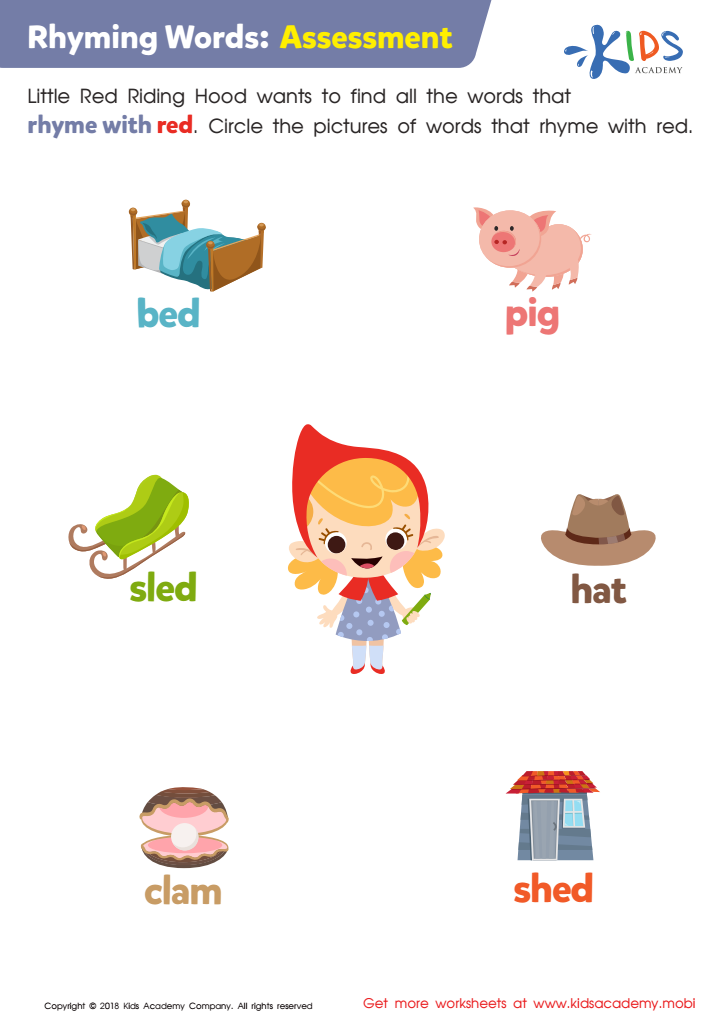
Rhyming Words: Assessment Worksheet
Help Little Red Riding Hood find rhyming words with "red". Download and print this worksheet. Have your child circle the rhyming words and pictures. Get them to say each word out loud and compare it to the word "red". When they're done, review the answers and talk about any words that don't rhyme.
 Assign to My Students
Rhyming Words: Assessment Worksheet
Worksheet
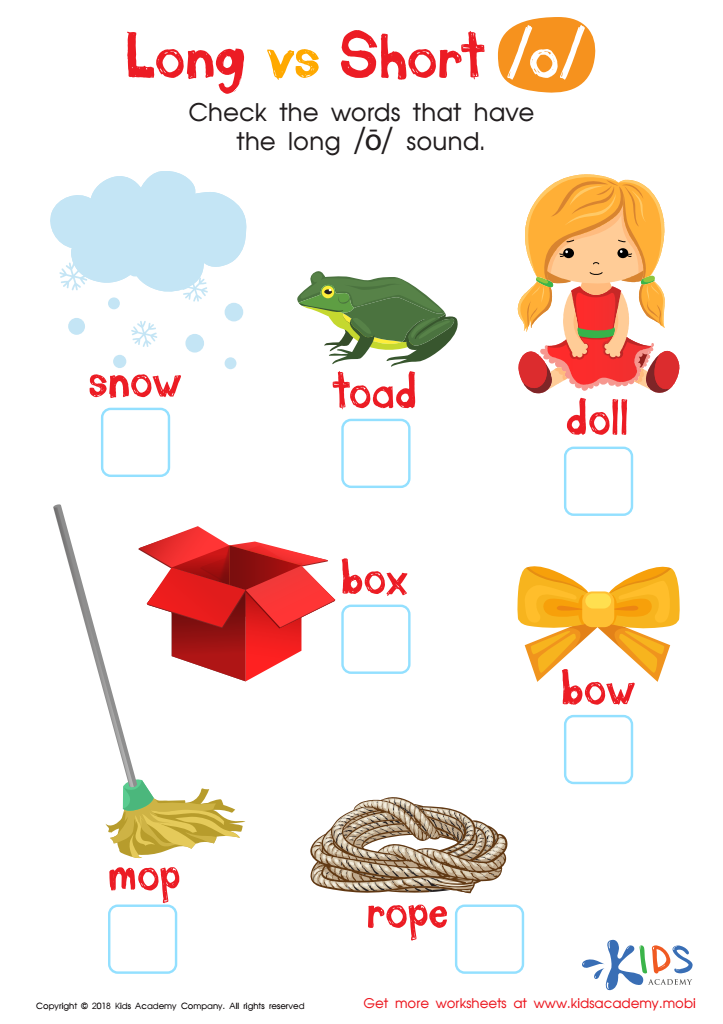
Long vs Short O Reading Worksheet
Help your child learn to identify the long and short «o» sound with this colourful worksheet. Guide them as they spot words with the long or short «o» sound. With practice, your child will find it easier to tell the difference between the two.
Long vs Short O Reading Worksheet
Worksheet
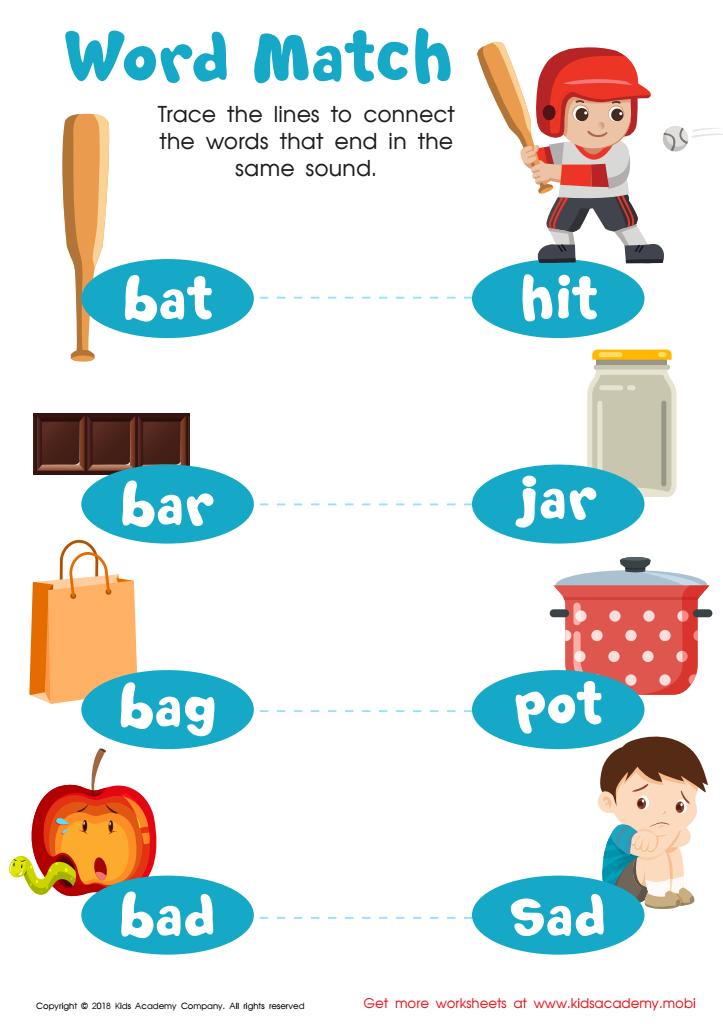
Word Match Reading Worksheet
This printout helps children learn to read fluently by connecting words with the same sound. Colorful pictures aid understanding and context for kindergarten-level students. Tracing lines, they learn to identify the sounds made by letters of the alphabet and deepen their knowledge of phonics.
Word Match Reading Worksheet
Worksheet
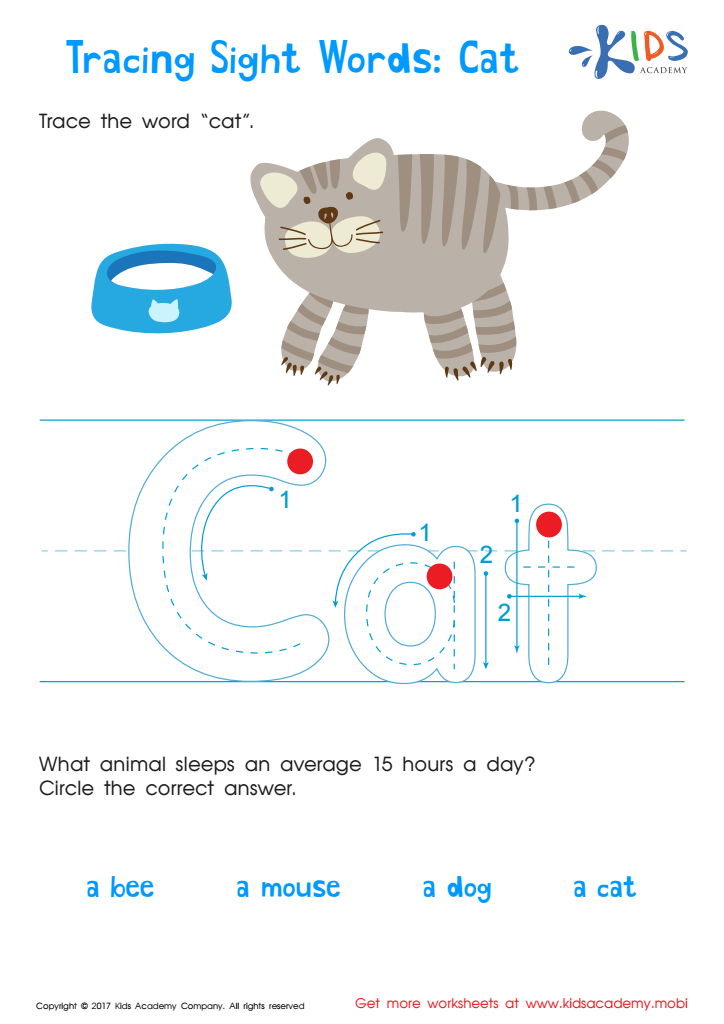
Cat Printable Sight Words Worksheet
Encourage your child's literacy with this fun sight words worksheet: cat PDF! It helps build a solid foundation for reading, featuring activities such as reading and tracing the word cat, and finding it amongst other sight words. With its cute cat, Kids Academy makes learning to read a delight!
Cat Printable Sight Words Worksheet
Worksheet
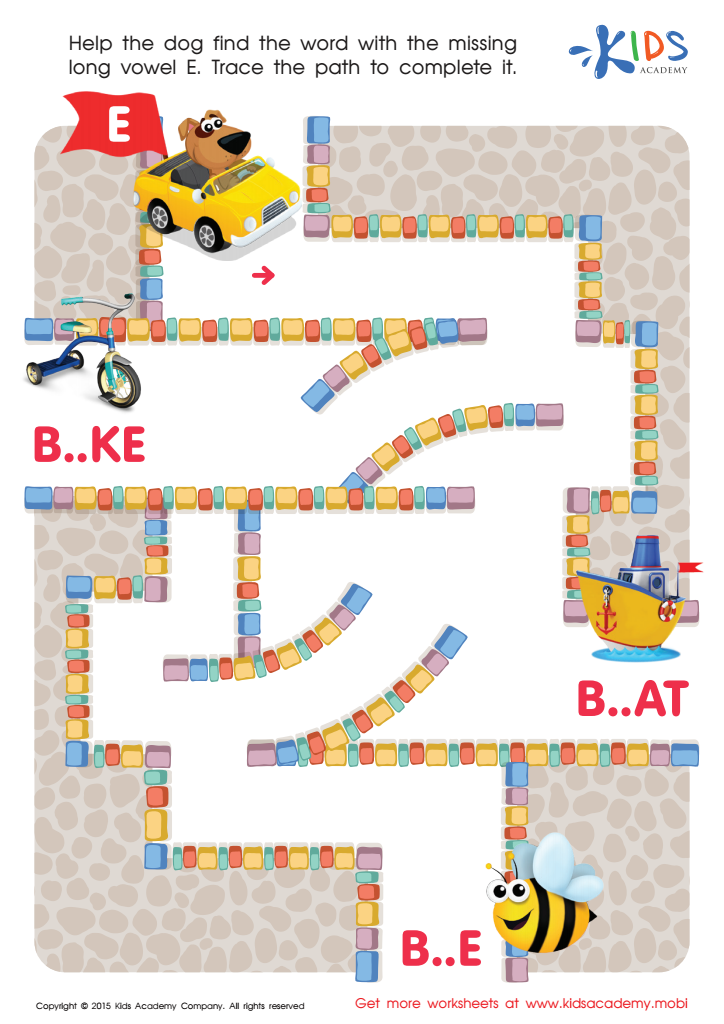
Long Vowel Sound E Worksheet
Practice distinguishing long and short vowel sound E with this free printable! Kids must complete the word “bee” by tracing the maze and adding the missing letter E. Remind them to say the word aloud to help sharpen their phonics ear. Get more phonics fun with the vowel sound E here.
Long Vowel Sound E Worksheet
Worksheet
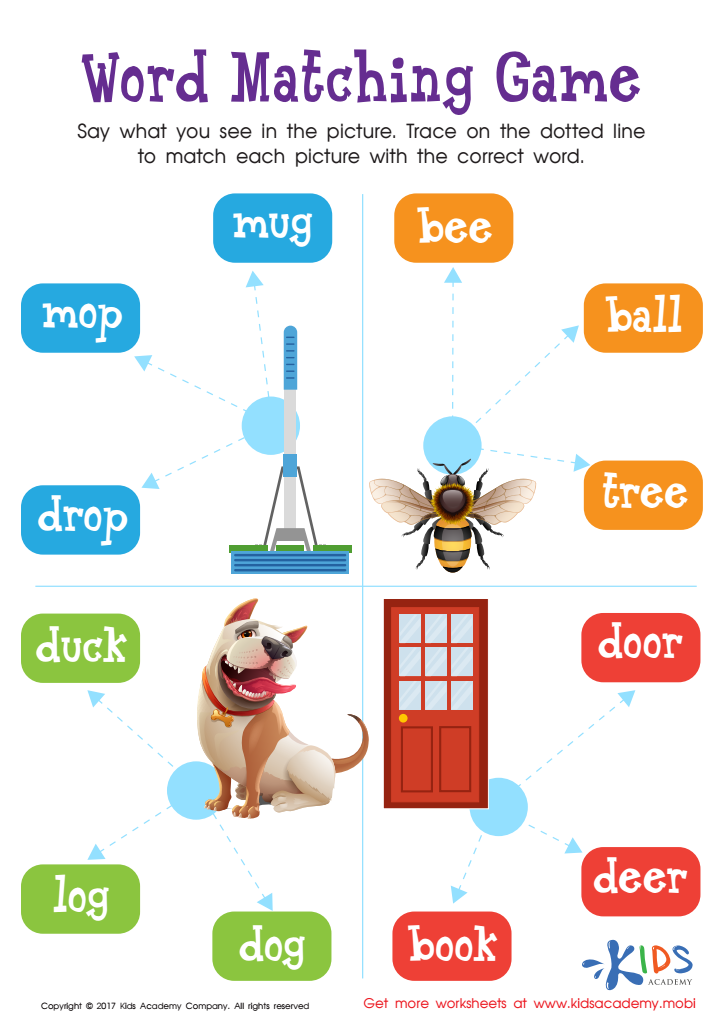
Word Matching Game Worksheet
Help your early reader develop prereading skills with this fun matching worksheet! Visual cues help them learn sight words, decode words in word families, and identify phonetic patterns. They'll practice discerning sounds past initial consonants while saying the name of the picture and finding the matching word - and reading at the same time!
Word Matching Game Worksheet
Worksheet
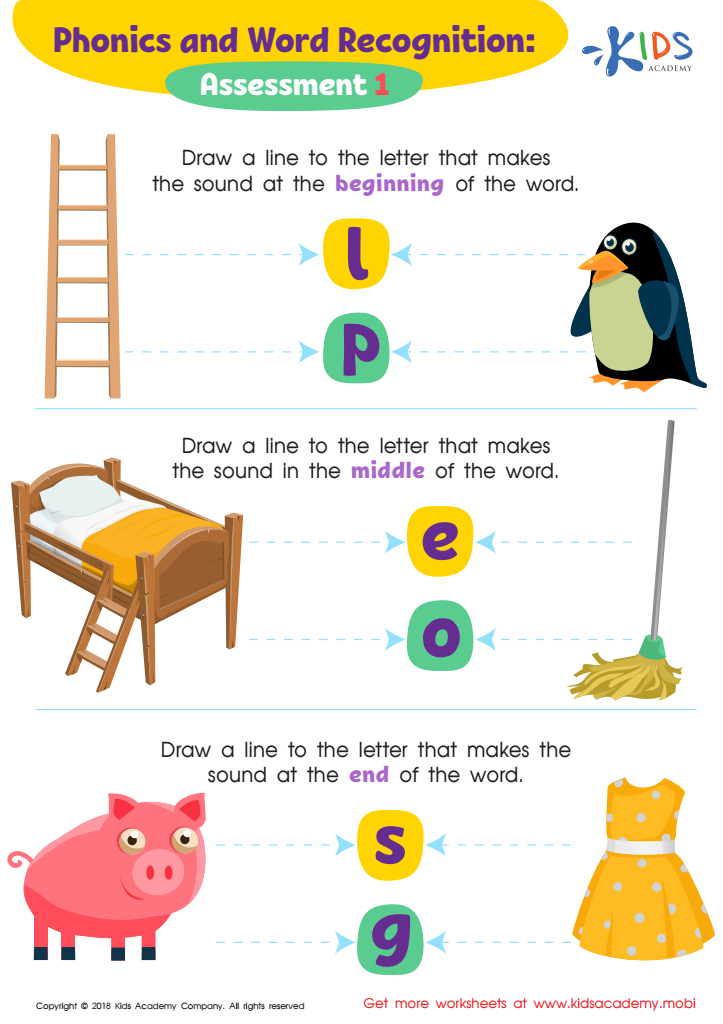
Phonics and Word Recognition: Assessment 1 ELA Worksheet
This fun worksheet tests your child's sound recognition skills for each part of a word. Ask your child to name each image and trace the line to match it with the corresponding letter. Listen for beginning sounds on 1st, middle sounds on 2nd, and ending sounds on 3rd. Encourage learning with this colorful and interactive activity!
Phonics and Word Recognition: Assessment 1 ELA Worksheet
Worksheet
Join Kids Academy for Free
Who is primarily going to use this learning content?








Spelling and phonics practice are crucial in the early developmental stages for children ages 3-5 for several reasons. During this formative period, a child's brain is highly receptive to learning language. Developing a strong foundation in spelling and phonics enhances overall literacy skills, laying the groundwork for future academic success.
Firstly, spelling practice helps young children understand the connection between letters and sounds, an important step in learning to read. Phonics instruction builds on this by teaching the relationships between sounds and letter combinations. Together, these skills enable children to decode new words, improving their reading fluency and comprehension.
Moreover, early spelling and phonics practice build confidence. As children learn to spell and recognize words, they exhibit more interest in reading and writing activities, fostering a positive attitude towards literacy and learning in general. This self-assurance can translate into better performance across academic subjects.
Finally, regular practice in these areas improves children’s fine motor skills. Activities like writing letters or words help develop hand-eye coordination and pencil control, which are also essential for other tasks. Recognizing the importance of these early skills ensures children are well-equipped for the myriad of educational challenges they will face later on.







