Letter formation Normal Tracing Letters Worksheets for Ages 3-5
3 filtered results
-
From - To
Discover our "Letter Formation Normal Tracing Letters Worksheets" designed specifically for children ages 3-5. These engaging worksheets provide young learners with a fun and interactive way to practice letter formation. By tracing both uppercase and lowercase letters, children will enhance their fine motor skills and develop a solid foundation in writing. Our visually appealing worksheets feature colorful designs and clear instructions, encouraging kids to explore the alphabet creatively. Ideal for home or classroom use, these resources help prepare your child for future literacy success while making the learning experience enjoyable. Start your child's writing journey today!
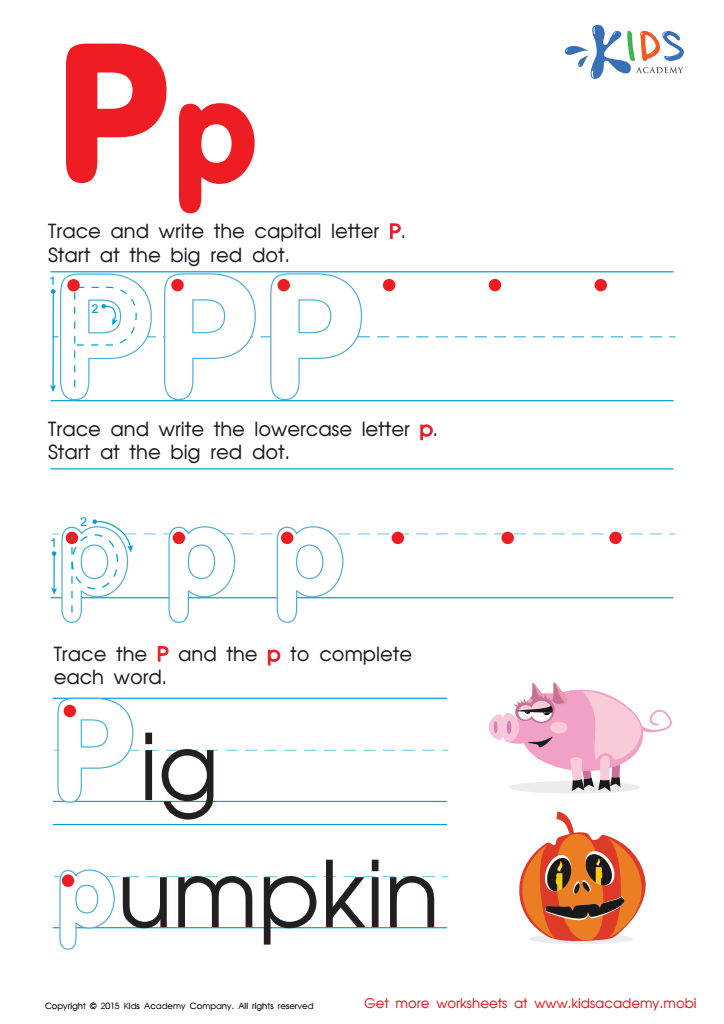
Letter P Tracing Page
 Assign to My Students
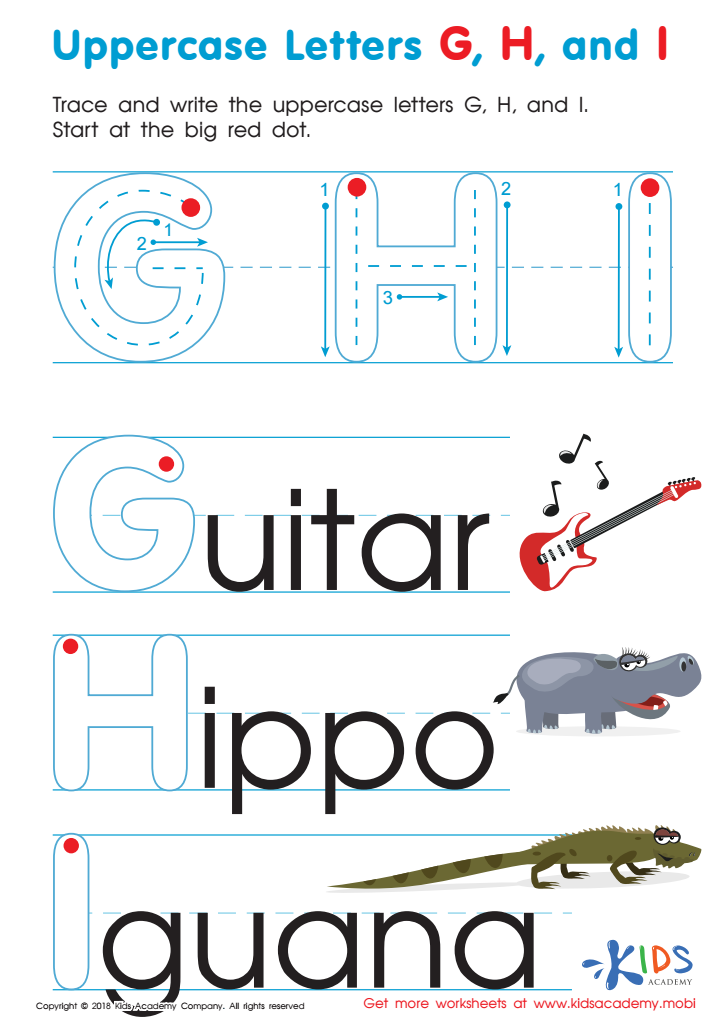
Uppercase Letters G, H, and I Worksheet
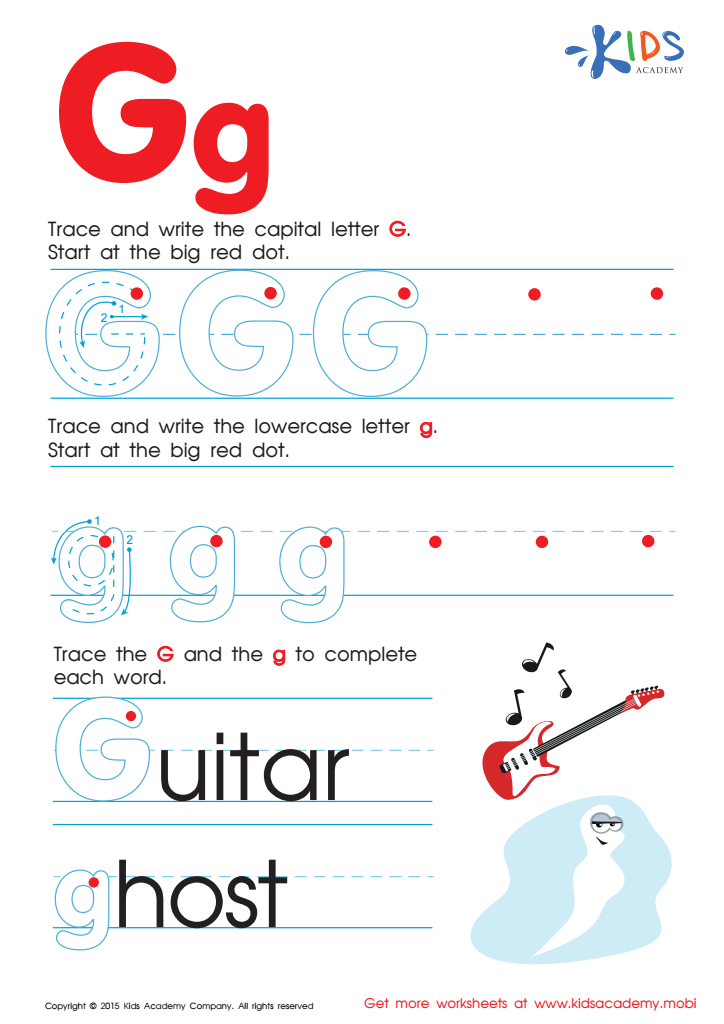
Letter G Tracing Page








Parents and teachers should prioritize letter formation and tracing for children aged 3-5 because it lays the foundation for writing skills critical to literacy development. At this age, children are developing fine motor skills, which directly impact their ability to write. Tracing letters helps them practice these skills, leading to better control of writing instruments and more fluent letter representation.
Moreover, learning proper letter formation enables children to create recognizable letters, facilitating easier reading and communication in their later educational journey. Early mastery of letter formation supports phonemic awareness, as kids can connect writing with sounds and letters when they learn correctly.
Encouraging tracing activities also nurtures cognitive development. As children engage in these activities, they develop hand-eye coordination and spatial awareness. They learn to focus, refine their concentration, and build confidence in their writing abilities—most important precursors to the more complex tasks they will encounter as they advance in their education.
Furthermore, when parents and teachers involve tracing activities into play, it fosters a positive attitude toward learning. Creating a fun environment around writing from a young age can cultivate a lifelong love for reading and writing, significantly impacting children’s academic success.








