Attention to Detail Normal Worksheets for Ages 3-5
5 filtered results
-
From - To
Discover our "Attention to Detail Normal Worksheets" designed specifically for children ages 3-5. These engaging worksheets help young learners sharpen their observation skills through fun and interactive activities. Babies develop crucial cognitive abilities as they complete tasks that encourage them to notice differences and similarities in various images. Offering colorful illustrations and age-appropriate themes, these worksheets make learning enjoyable while fostering critical thinking. Perfect for home or classroom use, the worksheets can be easily printed for convenient access. Help your little ones improve their focus and attention to detail with these thoughtfully crafted resources tailored to their developmental needs.
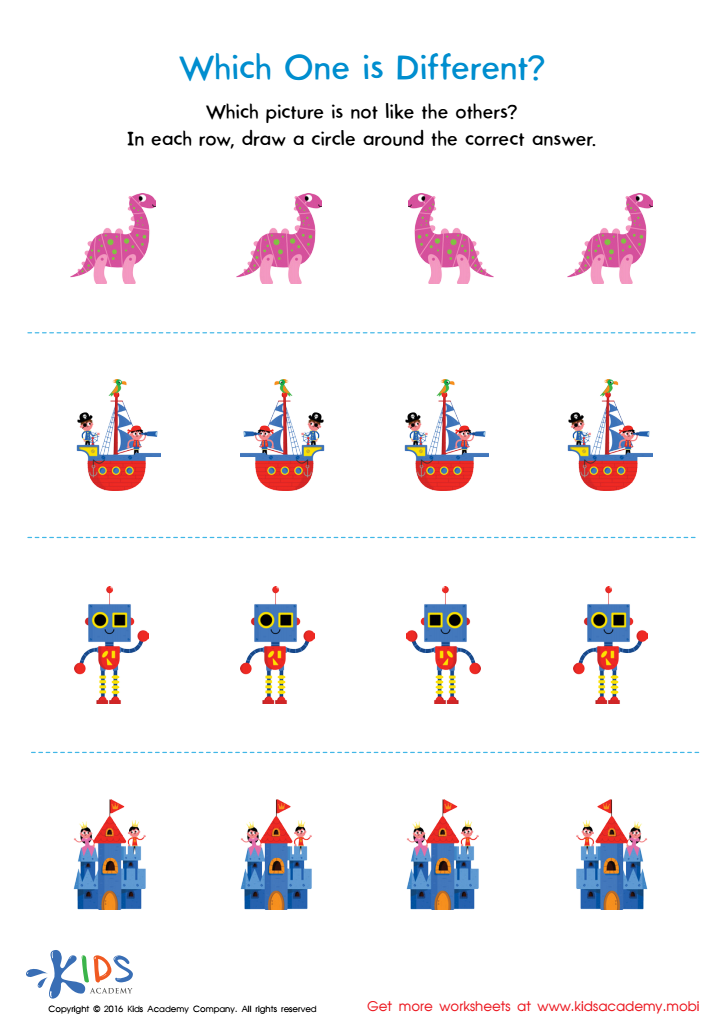
Which One Is Different Worksheet
 Assign to My Students
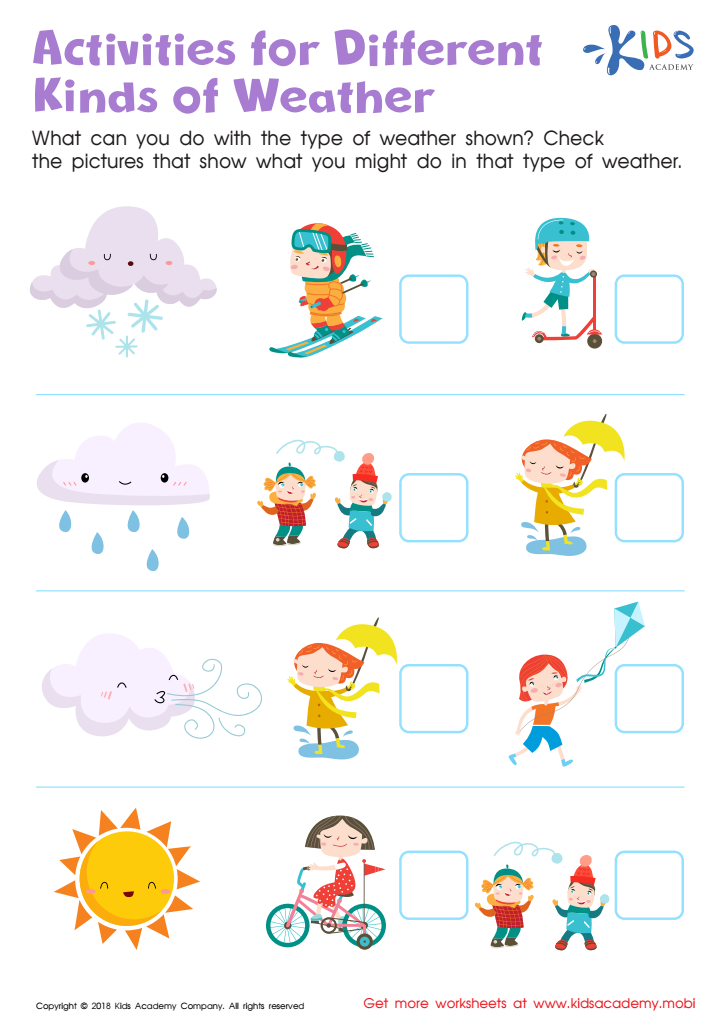
Activities for Different Kinds of Weather Worksheet
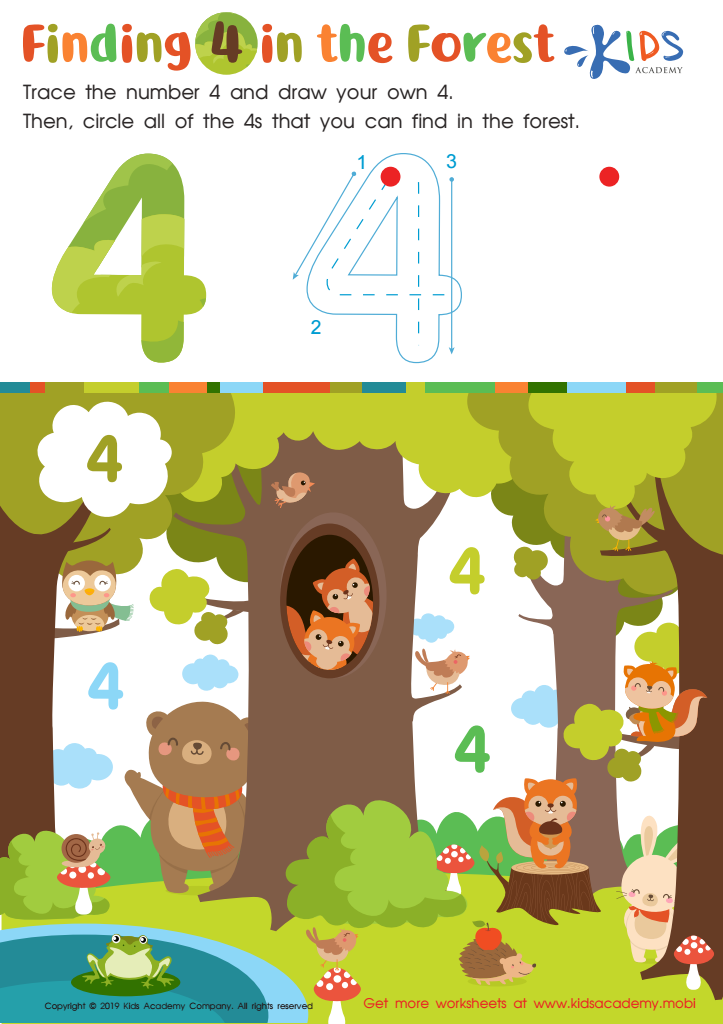
Finding 4 in the Forest Worksheet
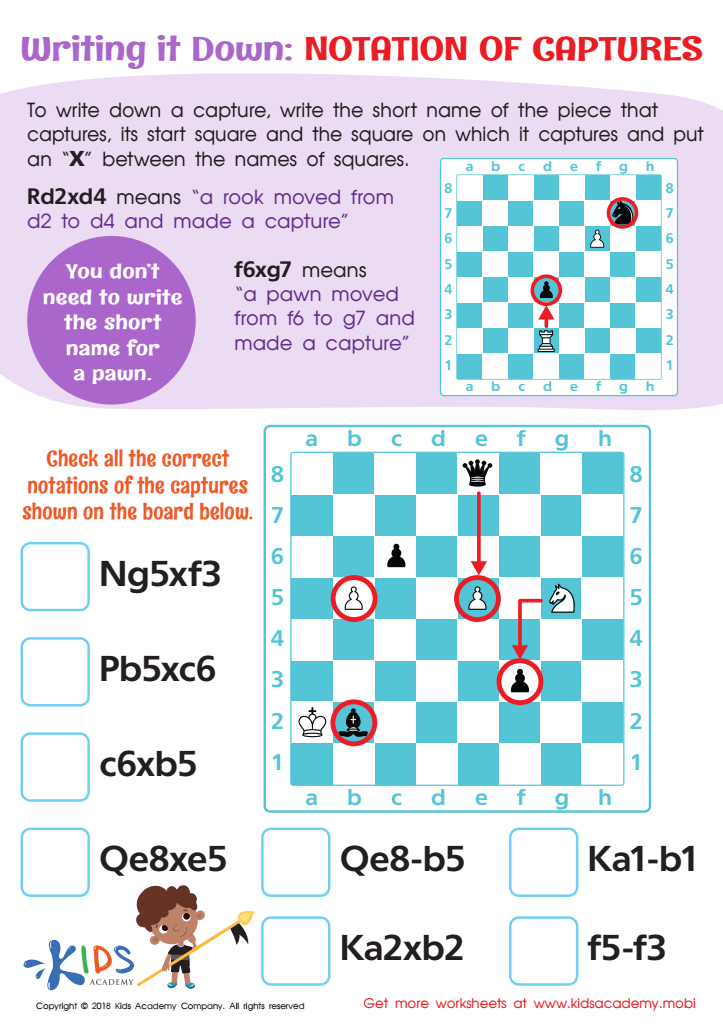
Notation of Captures Writing it Down Worksheet
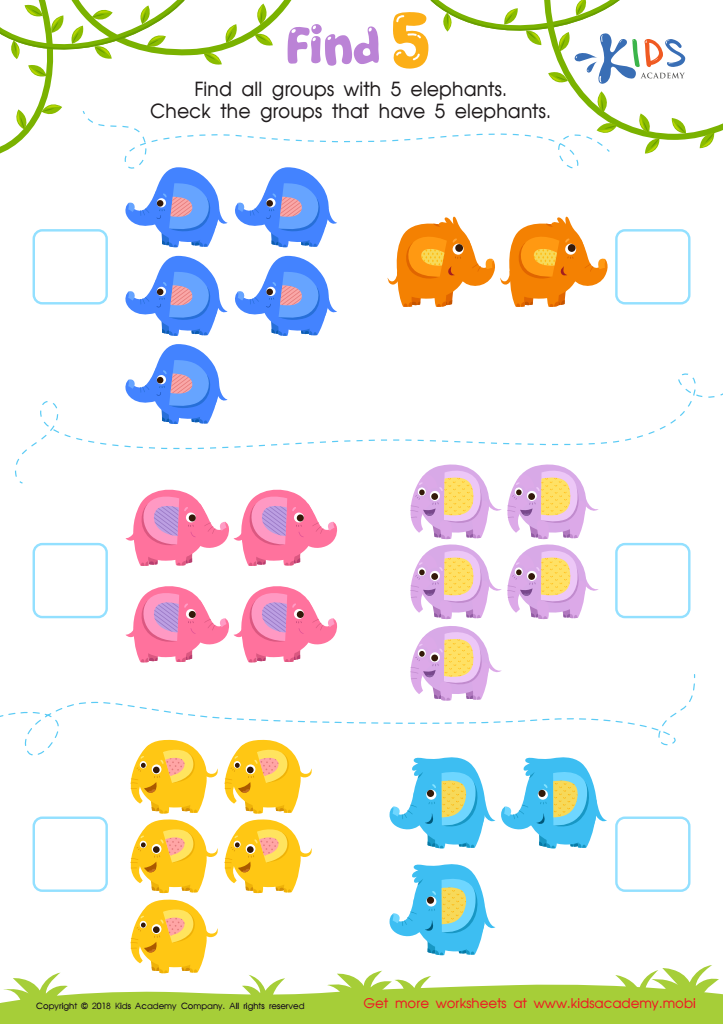
Find 5 Worksheet







Attention to detail is a crucial skill for children aged 3-5, and both parents and teachers should prioritize its development. This skill not only enhances a child's ability to observe and interact meaningfully with their environment, but it also lays the foundation for future academic success. At this age, children are naturally curious and eager to explore, making it an ideal time to cultivate attentive behaviors.
When children learn to focus on details, they improve their critical thinking skills by learning to notice patterns, differences, and relationships between objects or concepts. This attentiveness contributes to better problem-solving abilities, fostering independence in learning. Furthermore, paying attention to detail plays a significant role in early literacy and numeracy; recognizing letters, numbers, shapes, and even intricate story elements boosts comprehension and cognitive skills.
Moreover, by developing attention to detail, young children enhance their social-emotional skills. They become better listeners and more observant friends, which supports collaboration and communication in group settings. Consequently, a solid grounding in attention to detail not only assists in personal development but also encourages a positive classroom environment and stronger family interactions. Therefore, nurturing this skill can have lasting impacts on a child's holistic growth.








