Basic measurement concepts Normal Worksheets for Ages 3-5
3 filtered results
-
From - To
Discover our engaging Basic Measurement Concepts Worksheets designed specifically for children aged 3-5! These interactive resources serve as the perfect introduction to fundamental measurement skills, helping young learners explore concepts like length, weight, and volume in a fun way. Each worksheet features colorful illustrations and simple activities tailored to grab your child's attention while enhancing their understanding of measurement through hands-on practice. With our worksheets, preschoolers can practice comparing sizes, sorting, and identifying measurements, all while developing critical thinking skills. Foster a love for learning and strengthen mathematical foundations in your little ones with our carefully crafted measurement worksheets today!
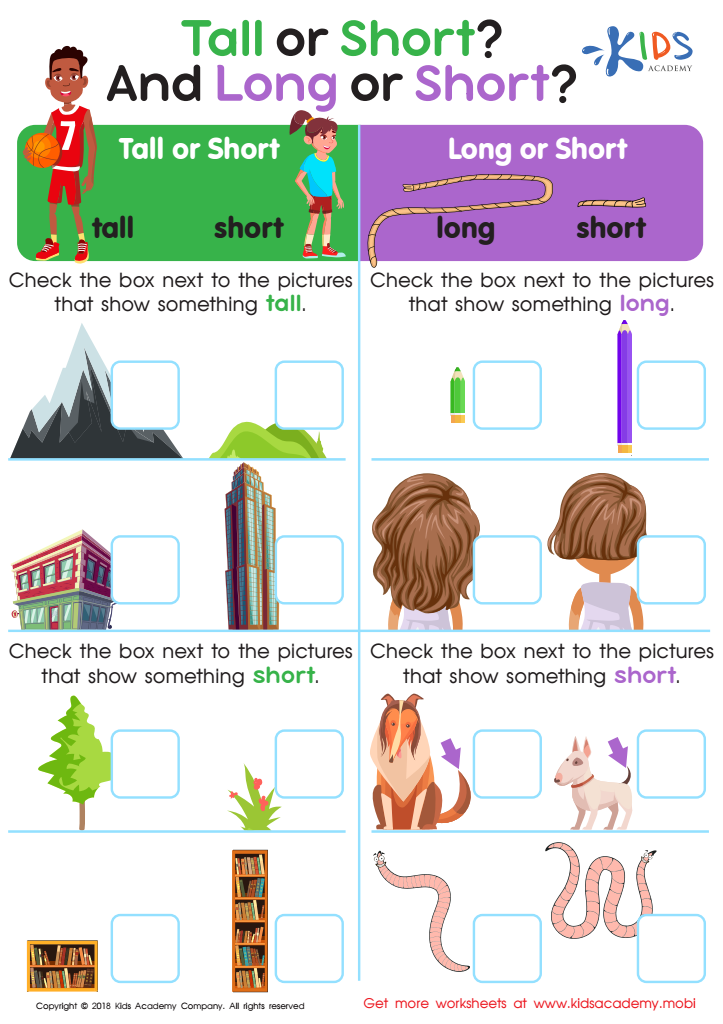
Tall or Short and Long or Short? Worksheet
 Assign to My Students
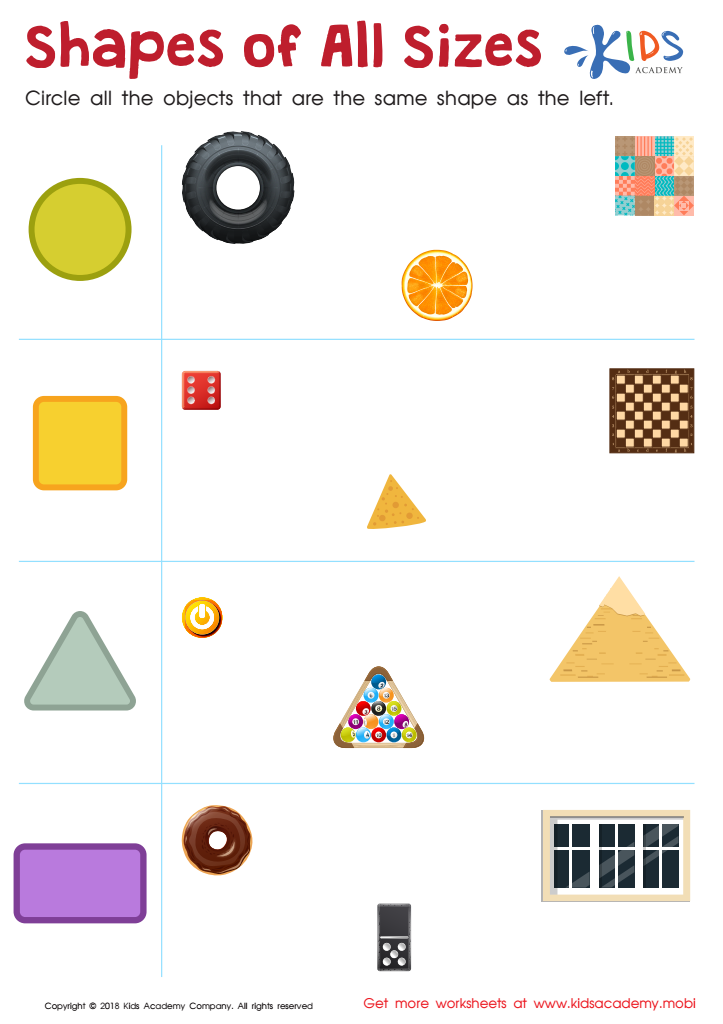
Shapes of All Sizes Worksheet
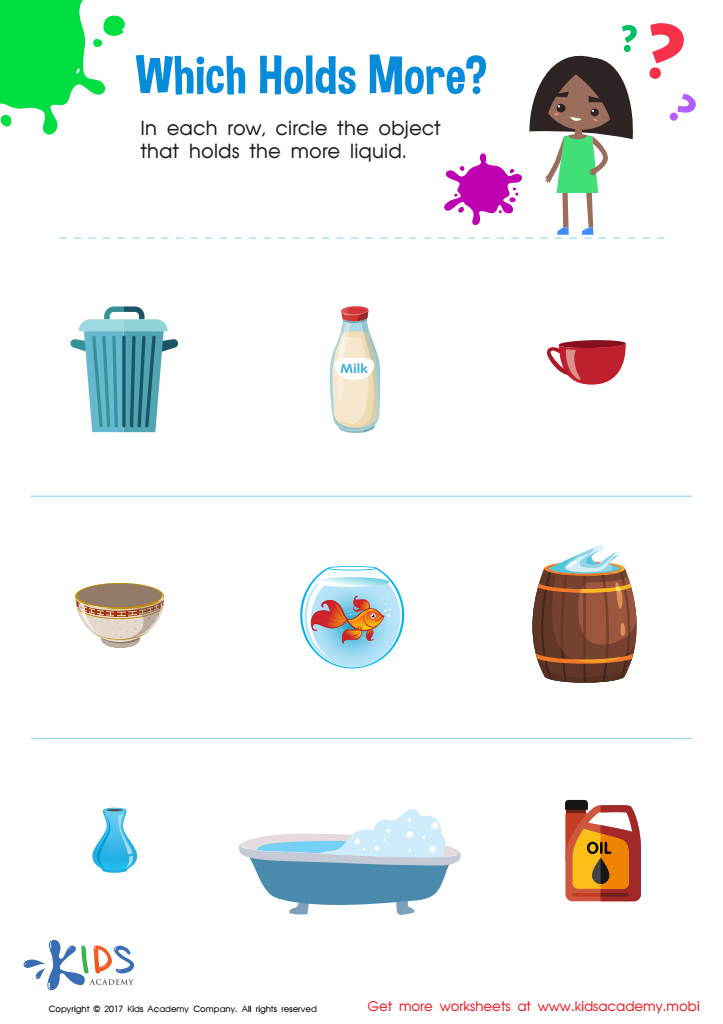
Which Holds More: Capacity Worksheet




Understanding basic measurement concepts is crucial for children aged 3 to 5, as it lays the groundwork for their future learning in mathematics and various everyday skills. Parents and teachers should care about these foundational concepts for several reasons.
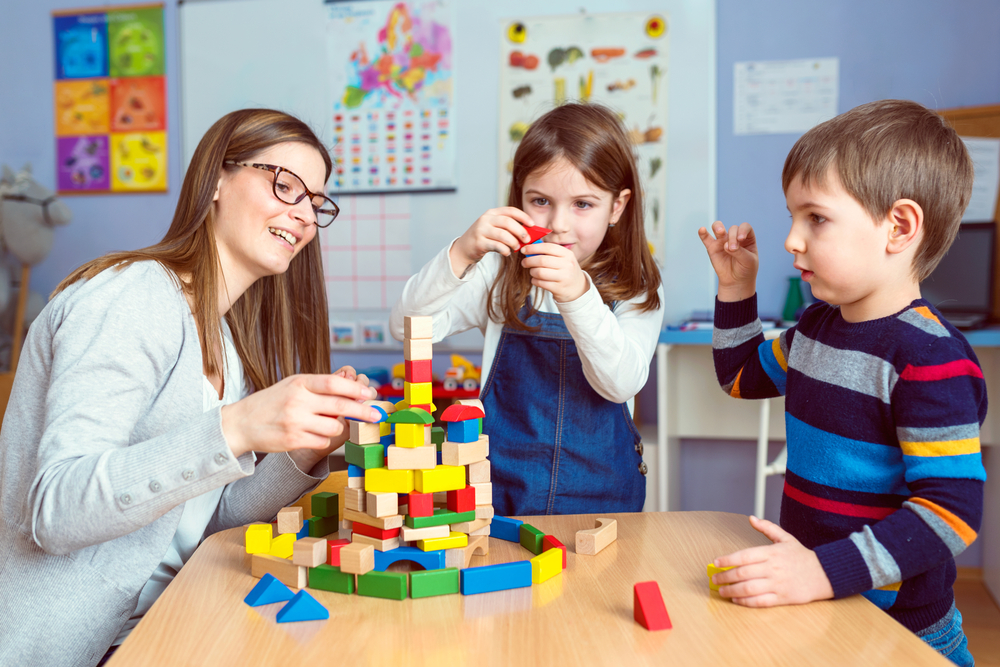
Firstly, early exposure to measurement develops critical thinking skills. When children learn to compare sizes, lengths, and weights, they practice making decisions based on observation and analysis. For instance, activities like measuring with blocks or comparing the height of plants cultivates curiosity and problem-solving abilities.
Secondly, measurement is a key practical life skill. Knowing how to measure time, weight, and volume is essential as they grow, whether it's in cooking, playing sports, or understanding routines. These skills help children navigate their daily lives with confidence.
Lastly, incorporating measurement concepts into play inherently fosters engagement. Activities like building with toys, sorting objects by size, or timing races convert learning into fun experiences. This not only nurtures a positive attitude towards math but also enhances language development as children use vocabulary related to measurement during play.
In summary, instilling basic measurement concepts in early childhood is integral to holistic development, setting the stage for more complex understanding in their educational journey.








