
Cultural awareness Normal Worksheets for Ages 3-5
6 filtered results
Difficulty Level
Grade
Age
-
From - To
Subject
Activity
Standards
Introducing "Cultural Awareness Normal Worksheets for Ages 3-5" – at Kids Academy, our engaging printable worksheets foster cultural understanding from an early age. Designed for preschoolers, these activities celebrate diversity, enhance learning, and broaden your child's worldview through fun and interactive exercises. Each worksheet encourages curiosity about different cultures, traditions, and customs, helping children appreciate the world's rich tapestry. Promote inclusion, respect, and a love of learning with our thoughtfully crafted worksheets, setting a foundation for your child’s social development and global awareness. Explore the world together, right from your home, with Kids Academy!
Favorites
With answer key
Interactive
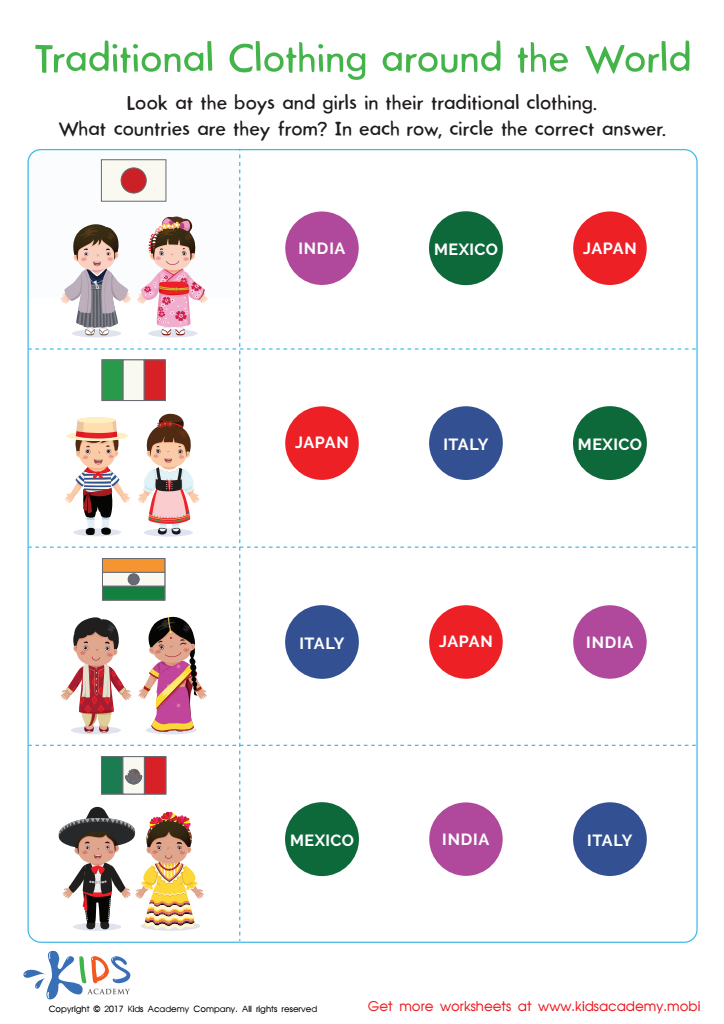
Traditional Clothing Worksheet
Introduce your child to cultures around the world with this illustrated traditional clothing printable worksheet! It will help them to recognize clothing, national flags and cultures from different countries, fostering an appreciation and love for all. It's a joyful way to learn and recognize the differences of people from around the world!
 Assign to My Students
Traditional Clothing Worksheet
Worksheet
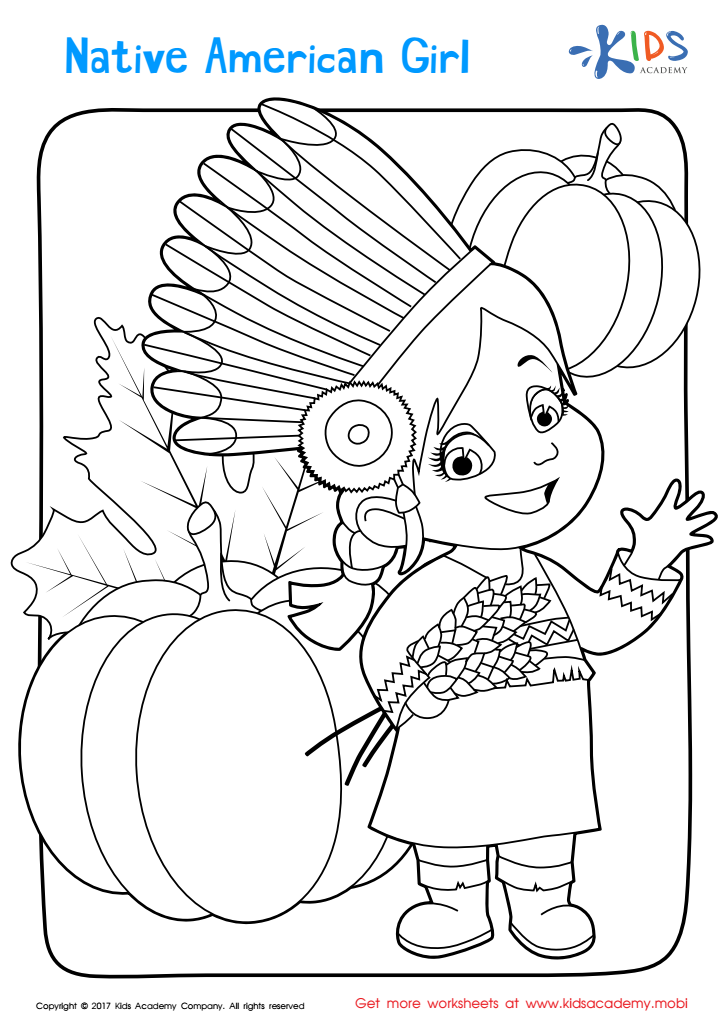
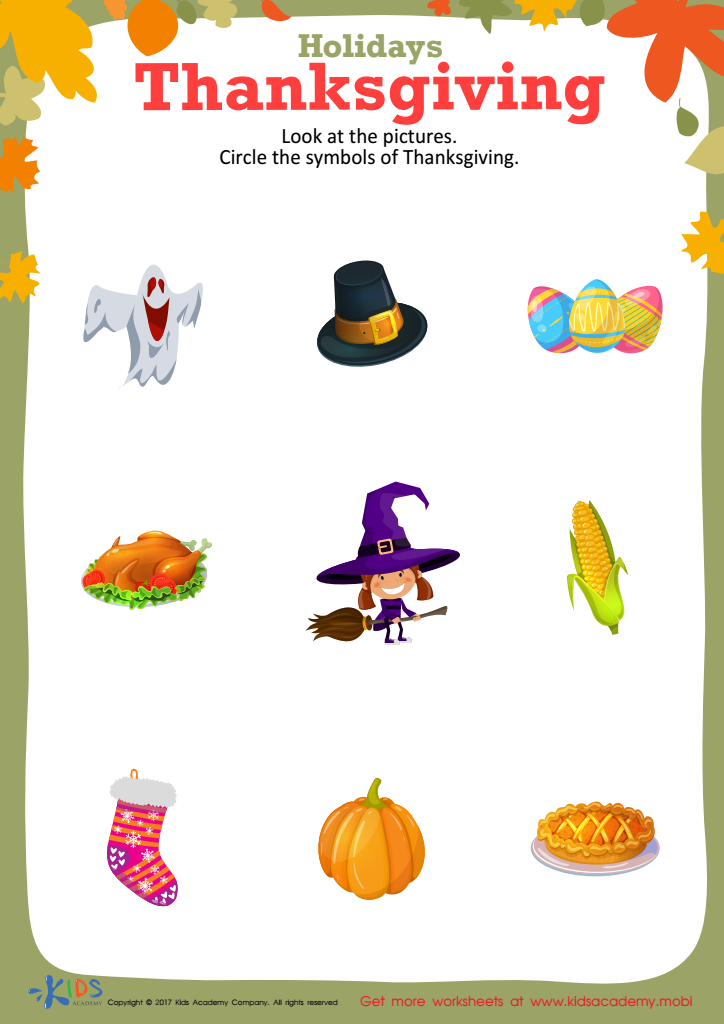
Thanksgiving Holiday Printable
Thanksgiving is here! Celebrate by showing appreciation and giving thanks. Teach your kids about the iconic symbols of the holiday with this free printable worksheet. Enjoy America's most famous feast!
Thanksgiving Holiday Printable
Worksheet
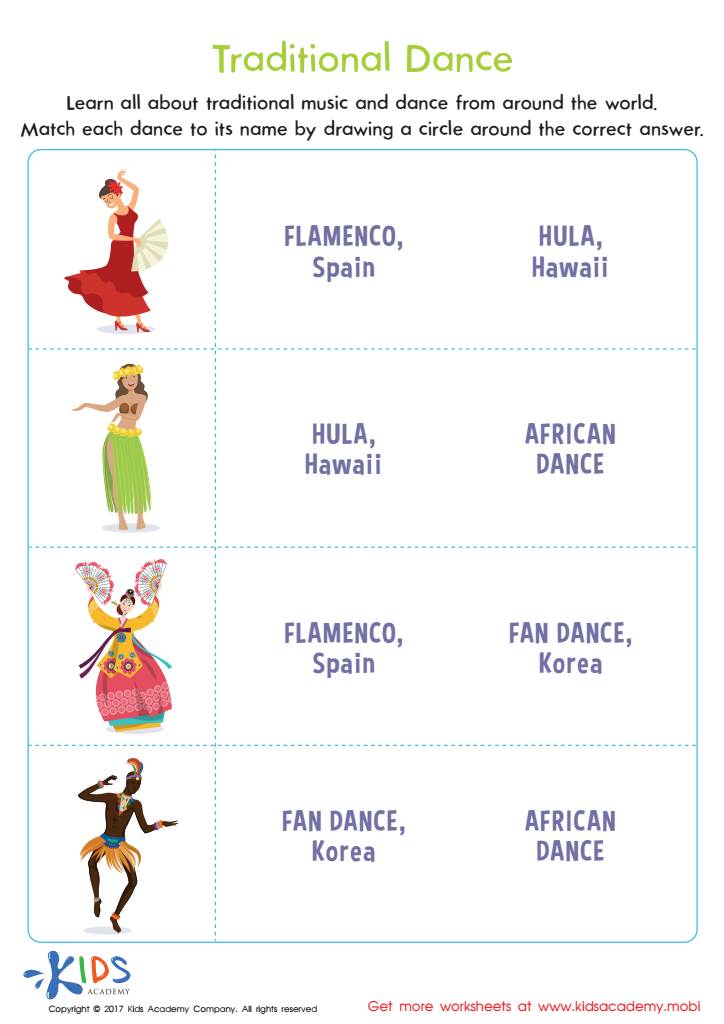
Traditional Dance Printable
Introduce your child to traditional dances from across the globe with this worksheet. They'll learn to identify dances from different cultures, use their critical thinking skills and build an appreciation for different cultures. Let’s help kids to appreciate people’s differences and explore the world with this fun, colorful worksheet.
Traditional Dance Printable
Worksheet
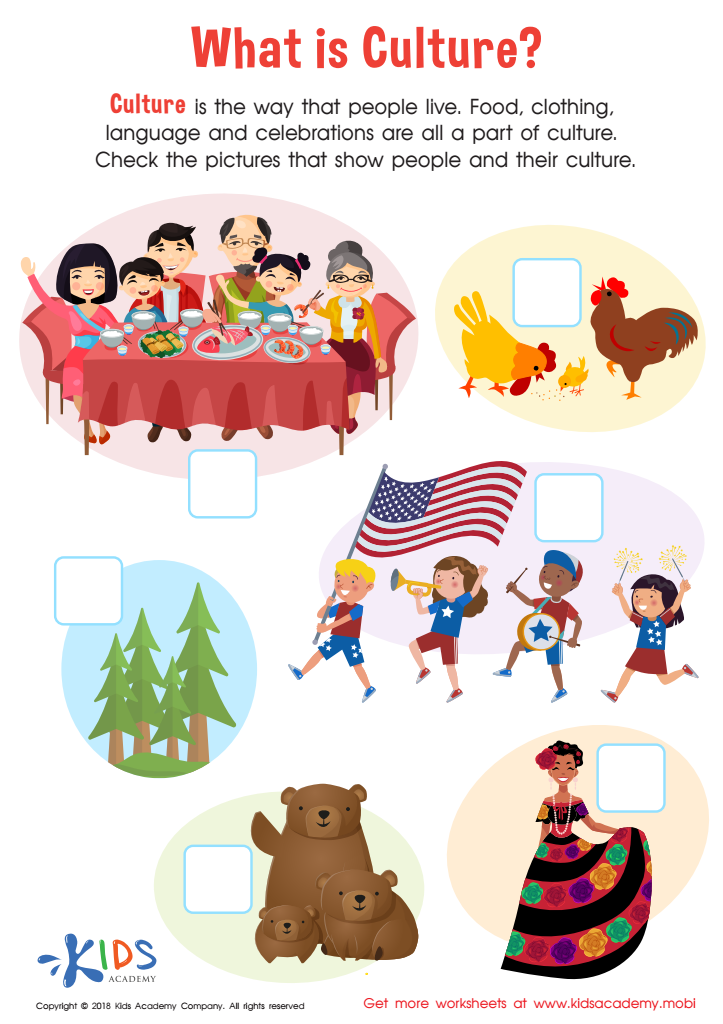
What Is Culture? Worksheet
Before beginning, talk to your kids about different cultures and how they may differ from yours. Explain that culture is the way of life and includes food, clothing, language and celebrations. Ask if they know any friends or classmates with a different culture and see if they can tell you about it. Then, help them look through this printout and check the pictures that show people and their culture.
What Is Culture? Worksheet
Worksheet
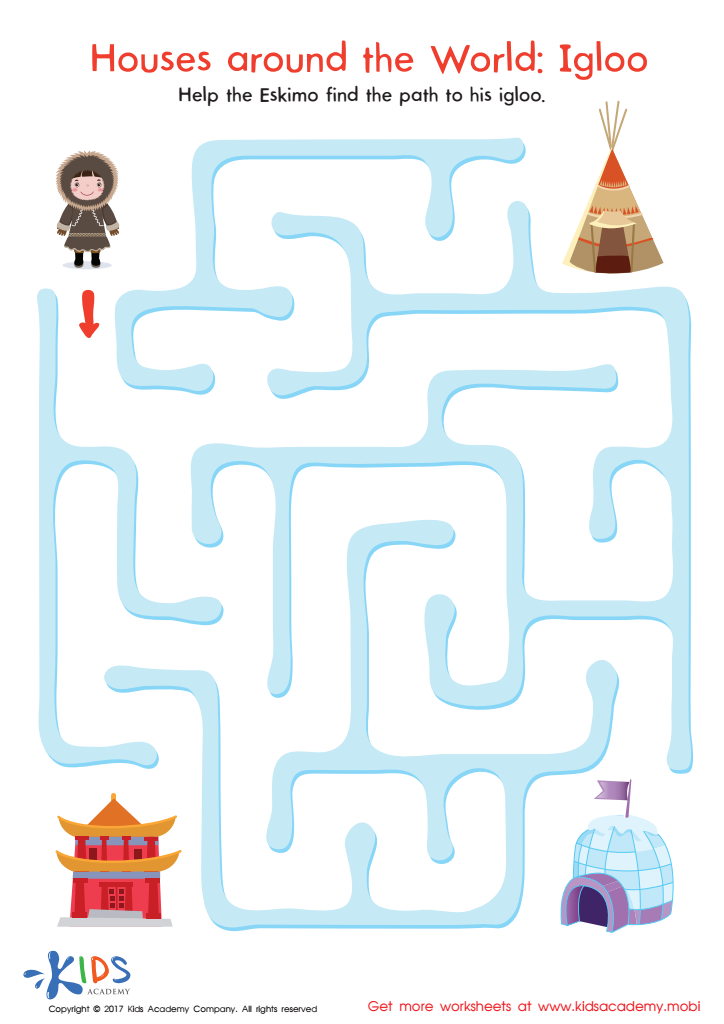
Houses Around the World: Igloo Printable
Print out the igloo maze worksheet and help the Eskimo find his way home. Along the way, you’ll discuss different types of houses. A perfect way to practice thinking skills!
Houses Around the World: Igloo Printable
Worksheet
Join Kids Academy for Free
Who is primarily going to use this learning content?






Cultural awareness is important for young children, ages 3-5, as it lays the foundation for a more inclusive and understanding future. At this tender age, children are highly impressionable and begin forming their worldview. Exposing them to different cultures helps them appreciate diversity, fostering empathy and respect for others. When parents and teachers incorporate cultural awareness into early education, they encourage children to see differences as positive and enriching rather than confusing or scary.
Introducing cultural awareness early can help combat biases and stereotypes that may otherwise form. Children who learn about different customs, traditions, and ways of life are better equipped to understand the complex world they inhabit. This awareness promotes social harmony by teaching them to respect not just peers but everyone around them, regardless of cultural background.
Moreover, culturally-aware children grow into open-minded adults who are more adaptable and successfully navigate our globalized society. Education that includes diverse perspectives enhances cognitive skills like critical thinking and problem-solving, better preparing children for future academic and social challenges. Overall, fostering cultural awareness in early childhood helps to cultivate a more empathetic, inclusive, and well-rounded generation. Parents and teachers play a crucial role in this developmental stage, making their efforts pivotal.








