Differentiating shapes Normal Worksheets for Ages 3-5
3 filtered results
-
From - To
Introduce your little ones to the exciting world of shapes with our Differentiating Shapes Normal Worksheets, designed specifically for ages 3-5. These engaging, educator-approved activities help youngsters identify and differentiate between various common shapes, enhancing their cognitive development and fine motor skills. Through fun, hands-on exercises, children will learn to recognize circles, squares, triangles, and more. Perfect for early learners, our worksheets build a solid foundation for future math success while keeping kids entertained. Unlock the joy of learning as your child explores, discovers, and masters the world of shapes on their educational journey.
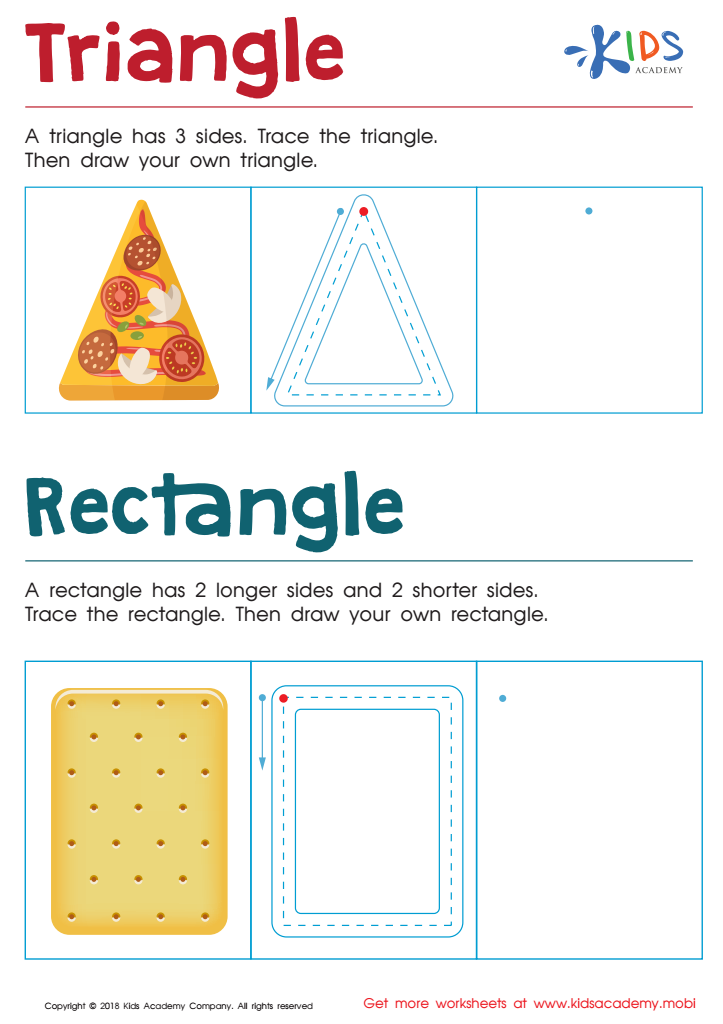
Triangle Rectangle Worksheet
 Assign to My Students
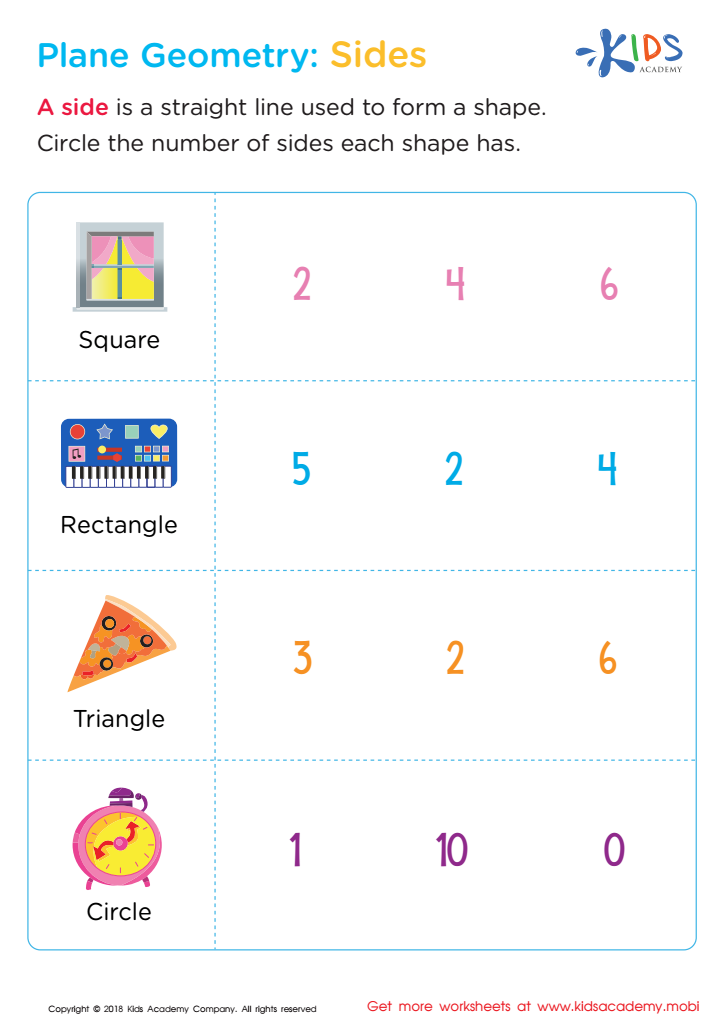
Plane Geometry: Sides Worksheet
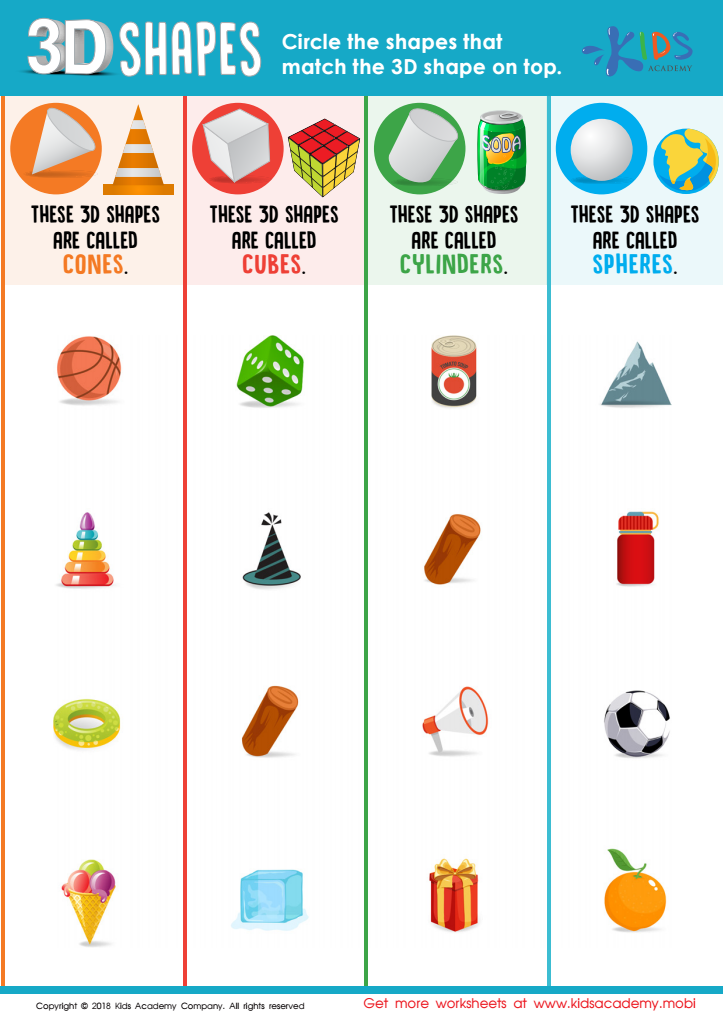
3D Shapes Worksheet






At ages 3-5, children are in a critical phase of their cognitive development where they begin to explore, recognize, and categorize the world around them. Differentiating shapes is an essential skill that lays the foundation for future learning in areas such as mathematics, reading, and problem-solving.
First, shape differentiation helps enhance visual and spatial awareness. When children recognize and name different shapes, like circles, squares, and triangles, they develop the ability to observe details and distinguish between objects based on their attributes. This skill transfers to reading, where distinguishing between letters (e.g., 'b' vs. 'd') relies on similar visual discernment.
Second, learning about shapes supports mathematical reasoning. It introduces children to fundamental geometric principles and vocabulary. Concepts such as sides, angles, and symmetry grow from understanding basic shapes, ensuring that children are better prepared for kindergarten and beyond.
Third, shape activities foster fine motor skills and hand-eye coordination. Whether drawing shapes, completing puzzles, or engaging in shape-oriented crafts, the hands-on activities help develop essential physical skills that correlate with writing and other daily tasks.
Overall, parents and teachers supporting shape differentiation ignite curiosity and build a strong educational foundation. This early skill fosters academic success and everyday problem-solving abilities that serve children well throughout their lives.








