Letter formation Normal Worksheets for Ages 3-5
4 filtered results
-
From - To
Discover our engaging Letter Formation Normal Worksheets designed specifically for children aged 3-5! These worksheets provide young learners with the opportunity to develop essential handwriting skills through fun and interactive activities. Each worksheet focuses on different letters of the alphabet, encouraging proper strokes and aiding in fine motor development. By practicing letter formation, children will boost their confidence and readiness for future writing tasks. Our resources are easy to print, allowing parents and educators to create a productive and enjoyable learning environment at home or in the classroom. Start your child’s writing journey with our delightful and effective worksheets today!
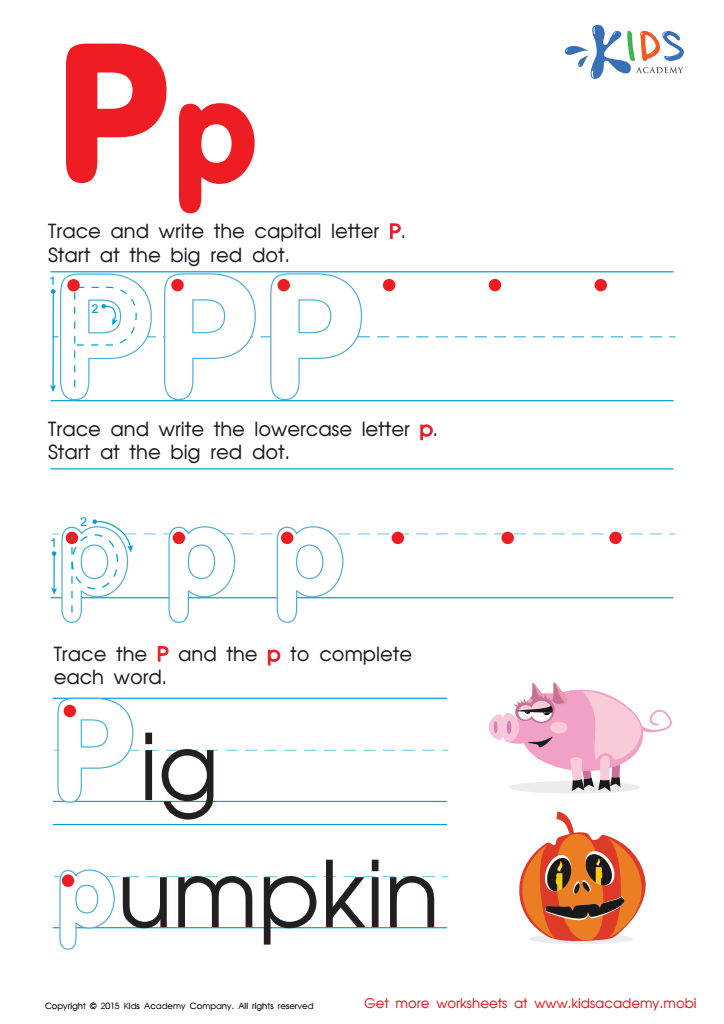
Letter P Tracing Page
 Assign to My Students
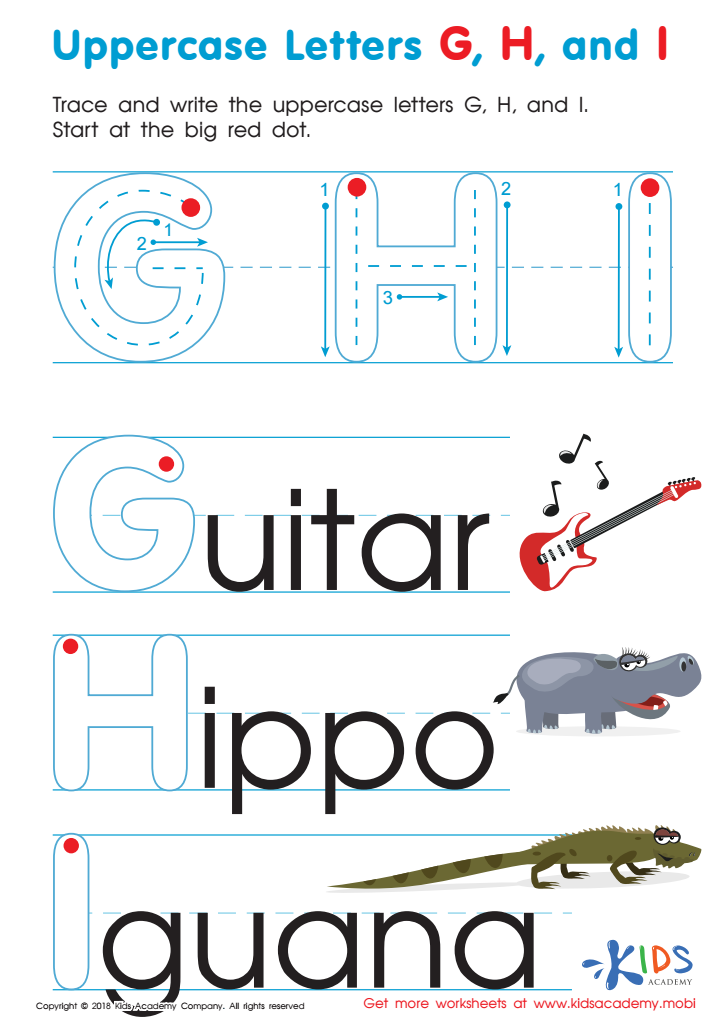
Uppercase Letters G, H, and I Worksheet

Letter G Tracing Page
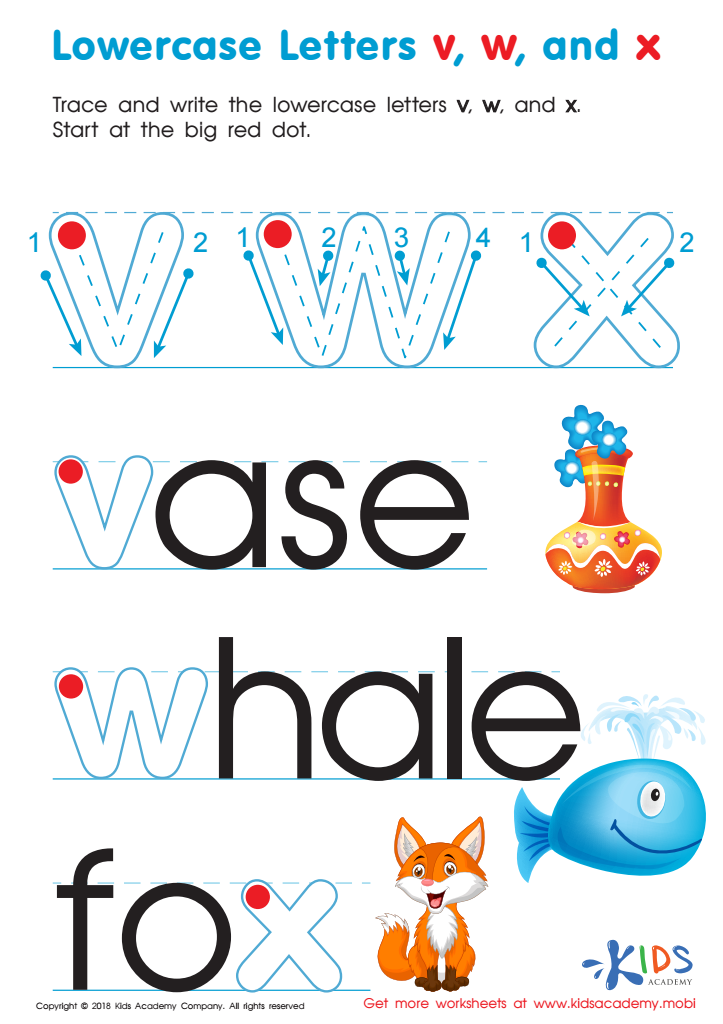
Lowercase Letters v w x Worksheet







Letter formation is a critical skill for children aged 3-5 as it lays the foundation for effective writing and communication. During this developmental stage, young children are honing their fine motor skills and starting to grasp concepts associated with letters and words. Proper letter formation helps in developing good handwriting habits, which can prevent confusion and frustration later in academic life.
Moreover, forming letters correctly encourages children to take pride in their work, boosting their self-esteem and motivation. When children are able to write clearly, they can express themselves more confidently, enabling them to participate actively in classroom activities and discussions.
Teachers and parents play a pivotal role in guiding children through this learning process. By introducing various activities like tracing, coloring, and interactive games focused on letter formation, adults can foster interest and engagement in writing. Additionally, observing and correcting letter formation early on can set children up for greater success as they progress to more complex writing tasks.
Ultimately, supporting proper letter formation from ages 3-5 not only enhances writing skills but also contributes significantly to overall literacy development and academic achievement, making it a priority for both parents and educators.








