Phonological awareness Normal Worksheets for Ages 3-5
3 filtered results
-
From - To
Enhance your child's phonological awareness with our engaging worksheets designed for ages 3-5! These normal worksheets are crafted to help young learners identify and manipulate sounds in words, building a strong foundation for reading and language development. Featuring fun activities such as rhyming, sound sorting, and syllable counting, our resources capture children's attention while promoting essential literacy skills. Whether at home or in the classroom, these worksheets are perfect for fostering a playful learning environment. Kickstart your child's educational journey and watch their confidence soar as they explore the exciting world of phonological awareness today!
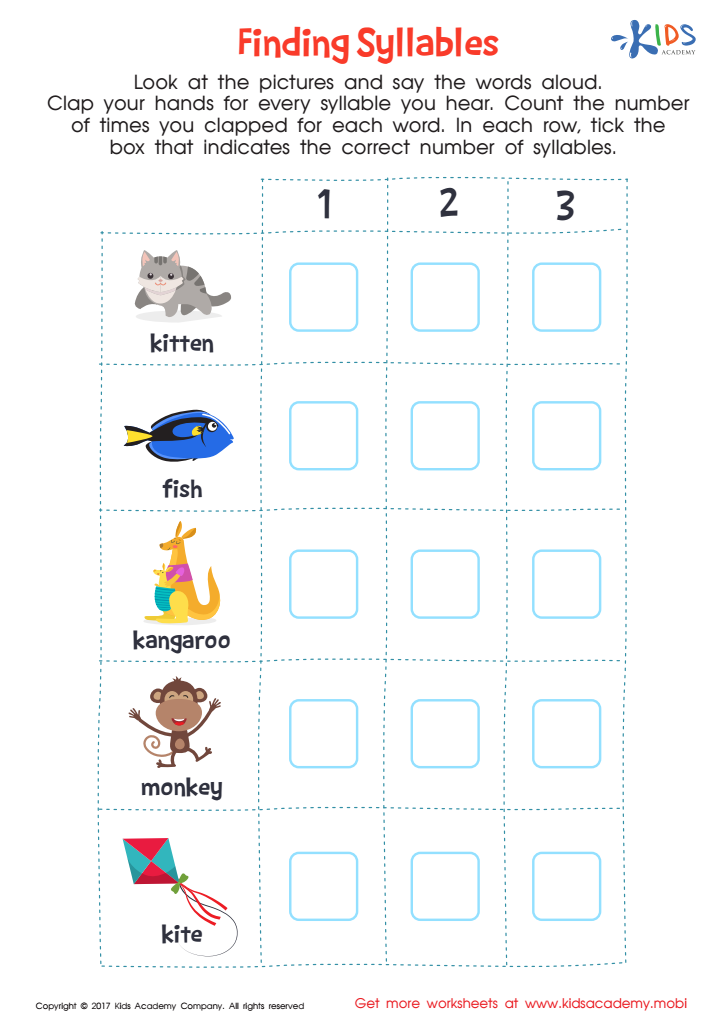
Finding Syllables Word Structure Worksheet
 Assign to My Students
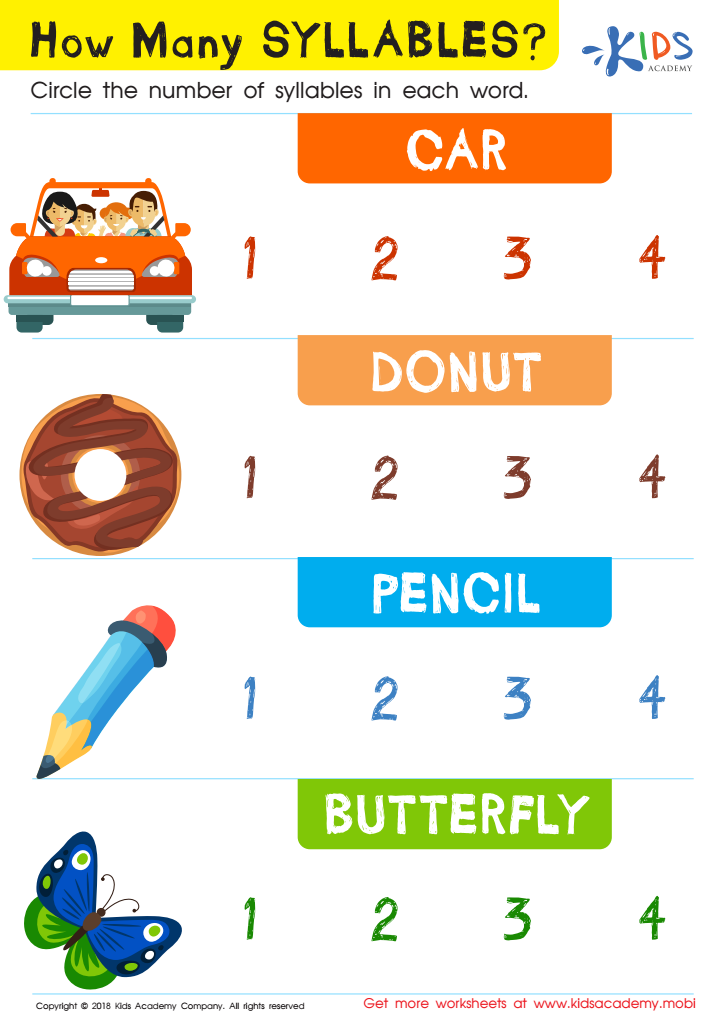
How Many Syllables? Worksheet
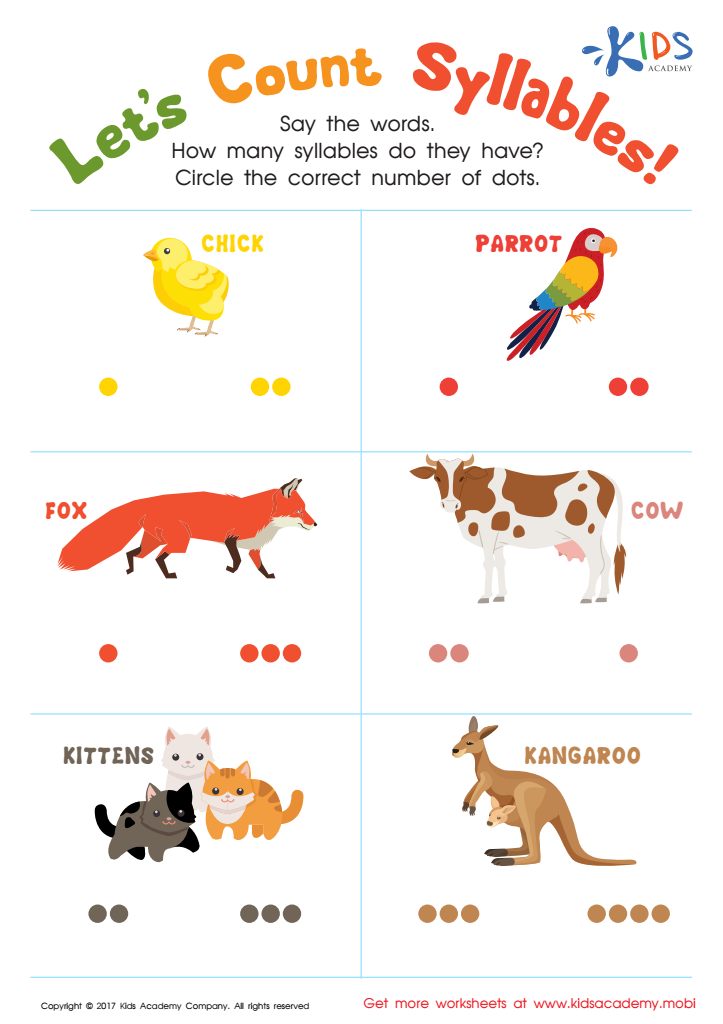
Lets Count Syllables Worksheet







Phonological awareness is a crucial component of early literacy development, particularly for children aged 3-5. It encompasses the ability to recognize and manipulate sounds in spoken language, laying the groundwork for reading and writing skills. Parents and teachers should prioritize phonological awareness for several reasons.
Firstly, children with strong phonological awareness skills are more likely to succeed in learning to read and write. This foundational skill helps them understand the relationship between sounds and letters, which is essential for decoding words. Secondly, phonological awareness supports overall language development. By engaging with sounds, children enhance their vocabulary, listening skills, and speech clarity.
Moreover, encouraging phonological awareness can be a fun and interactive experience. Activities such as rhyming, clapping syllables, or singing songs not only stimulate cognitive development but also foster a love for language and literacy from an early age. Lastly, early investment in phonological awareness can reduce future challenges in literacy achievements, creating a smoother learning path in school and beyond. Therefore, parents and teachers play a vital role in nurturing these skills, contributing to children’s long-term academic success and building a strong foundation for lifelong learning.








