Problem Solving Normal Worksheets for Ages 3-5
6 filtered results
-
From - To
Our "Problem Solving Normal Worksheets for Ages 3-5" are designed to engage young learners while developing critical thinking skills. These worksheets offer fun and interactive activities that encourage children to identify problems and explore solutions independently. Ideal for preschool and kindergarten settings, our materials provide age-appropriate challenges that promote cognitive development, enhance reasoning abilities, and boost confidence. Each worksheet is colorful and enticing, capturing the attention of little ones and encouraging creativity. Let your child dive into an exciting educational journey, empowering them to become savvy problem solvers. Download now and transform learning into an enjoyable adventure!

Peter Pan Worksheet
 Assign to My Students
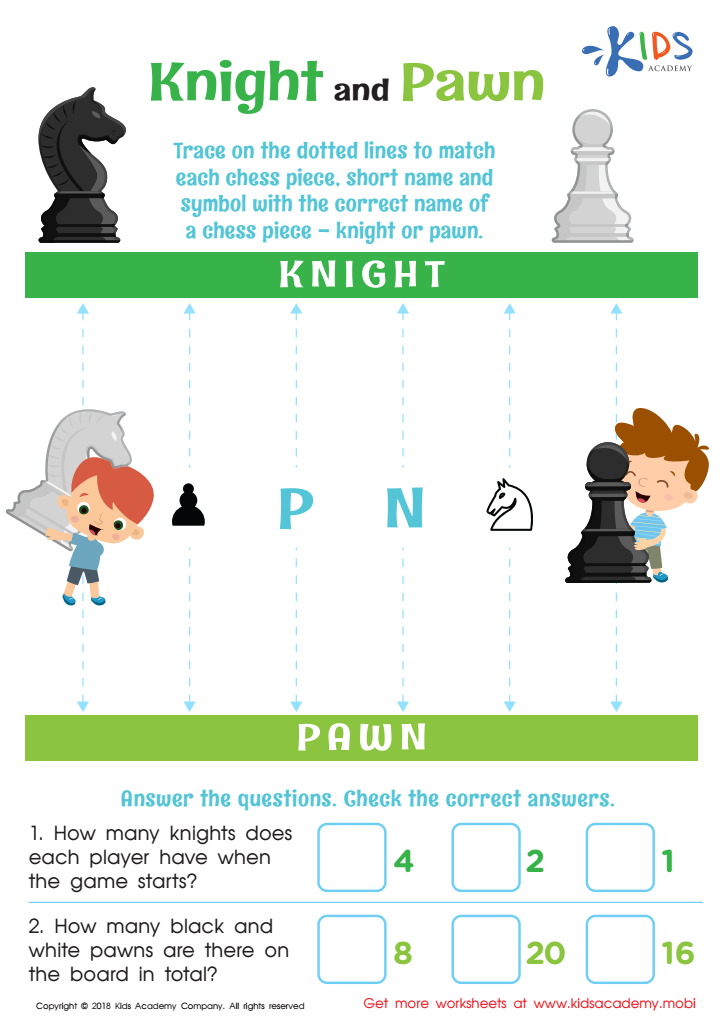
Knight and Pawn Worksheet
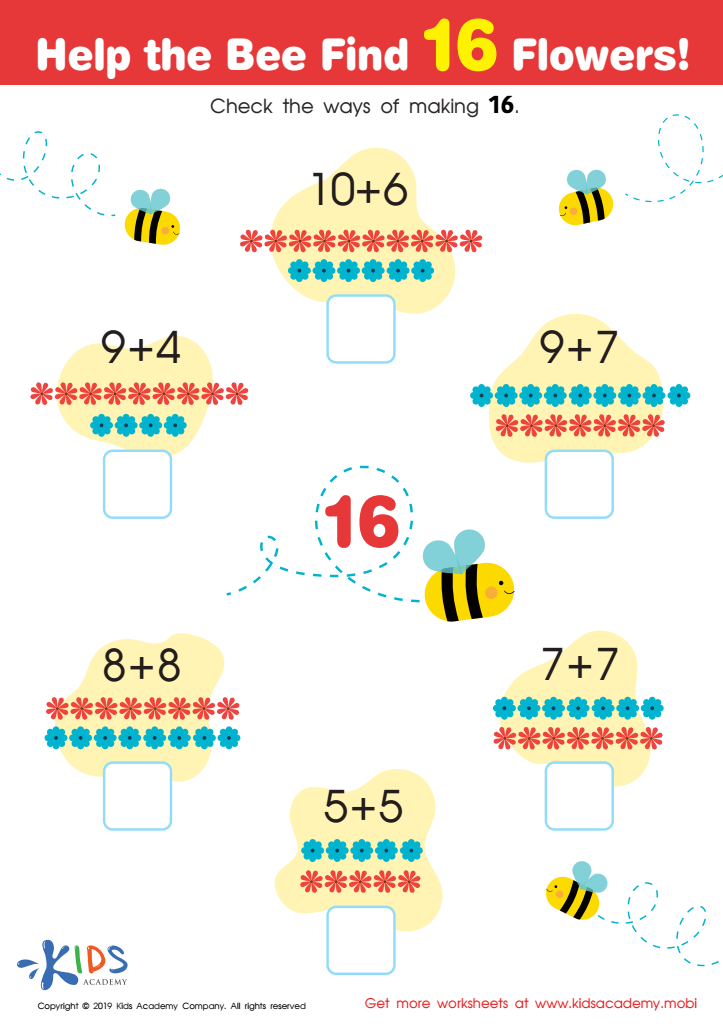
Help the Bee Find 16 Flowers Worksheet
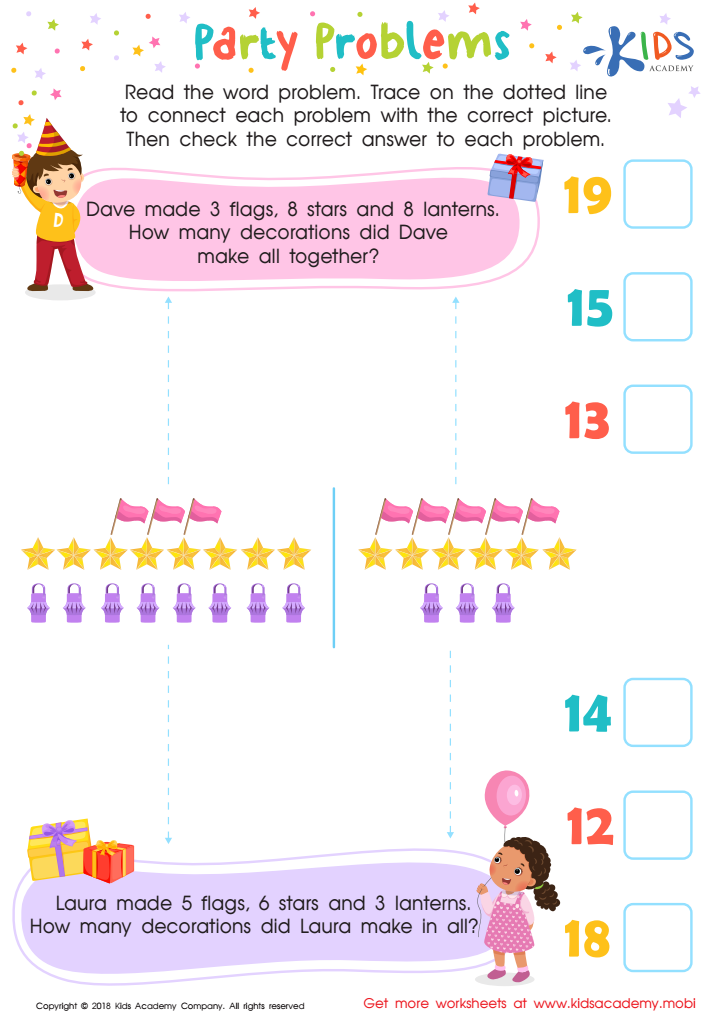
Party Problems Worksheet
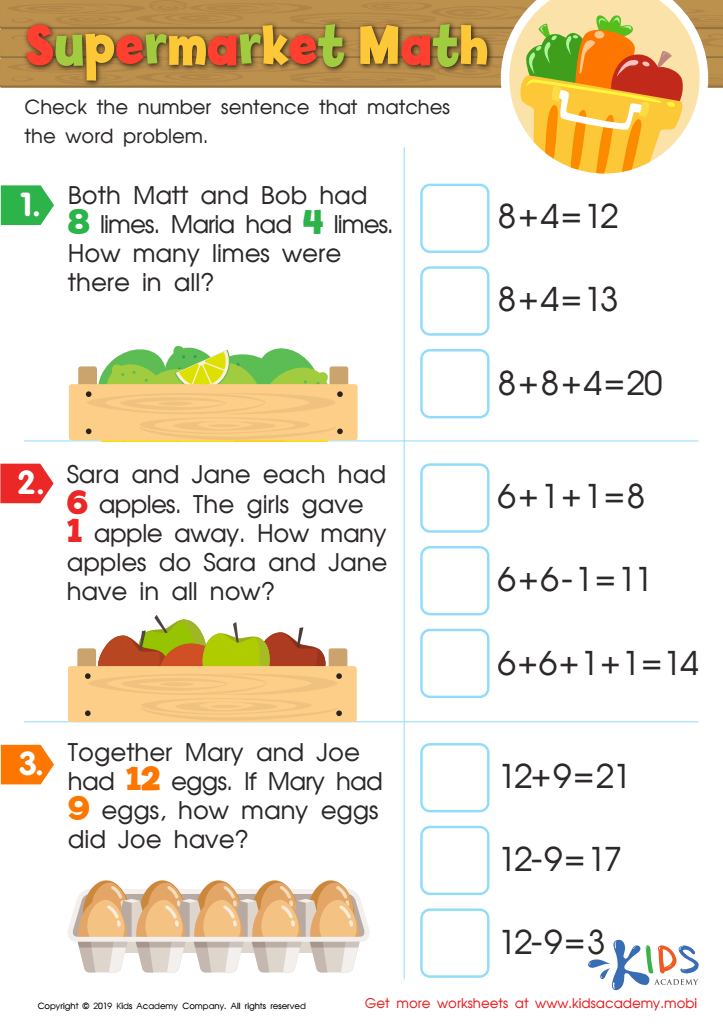
Supermarket Math Worksheet
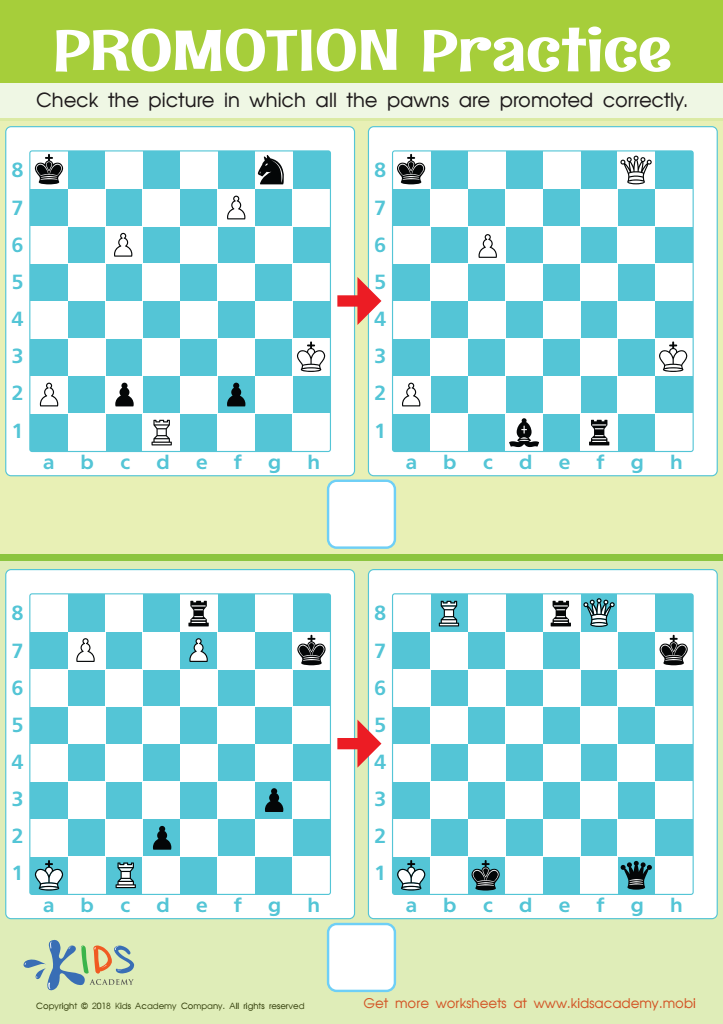
Promotion Practice Worksheet




.jpg)



Parents and teachers should prioritize problem-solving skills for children aged 3-5 because these foundational skills profoundly impact a child’s future learning and development. At this age, children are naturally curious and inclined to explore their environment. By encouraging them to tackle problems, whether through puzzles, simple games, or real-life scenarios, we help them develop critical thinking abilities that enhance cognitive growth.
Engaging in problem-solving activities fosters creativity and resourcefulness, enabling children to approach challenges with confidence. Moreover, these activities promote persistence; when children find solutions to obstacles, they learn resilience and perseverance, essential traits for lifelong learning.
Additionally, effective problem-solving enhances collaboration skills as children often work in groups, facilitating communication and emotional intelligence. Such interaction teaches them how to express ideas, negotiate, and understand different perspectives.
Ultimately, investing in problem-solving skills at an early age prepares children not only for academic success but also for social interactions and everyday challenges. As parents and educators encourage exploration, imagination, and critical questioning, they nurture well-rounded individuals equipped with the tools needed for future challenges in an ever-changing world. Fostering these skills during the ages of 3-5 lays the groundwork for successful lifelong learning.








