
Real-life application Normal Worksheets for Ages 3-5
3 filtered results
Difficulty Level
Grade
Age
-
From - To
Subject
Activity
Standards
Discover our engaging Real-life Application Normal Worksheets designed specifically for ages 3-5. These printable resources foster early learning by connecting essential skills to everyday situations. Each worksheet promotes critical thinking, problem-solving, and creativity through fun activities, ensuring that young learners build a strong foundation for their future education. From learning about daily routines to understanding simple concepts like sharing and teamwork, our worksheets are perfect for boosting your child's confidence and real-world knowledge. Easy to use at home or in the classroom, these resources make learning interactive and enjoyable. Explore the exciting world of learning with Kids Academy today!
Favorites
With answer key
Interactive
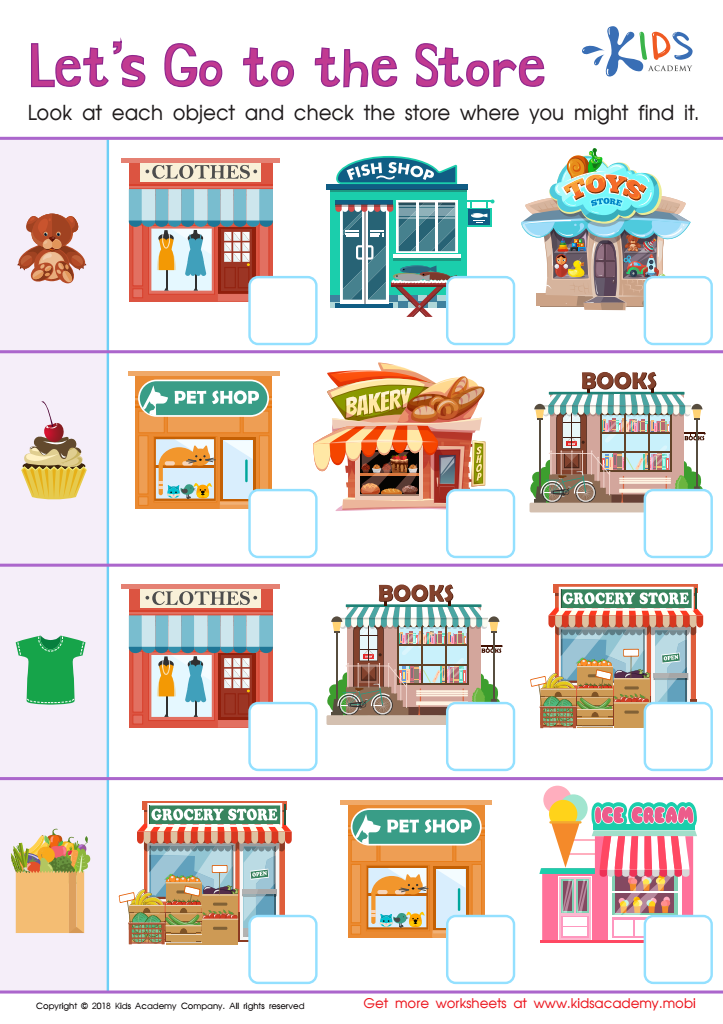
Let's Go to the Store! Worksheet
Take your kids along for errands and shopping. Ask them to identify items on this worksheet and the store where you'd buy them. See how much attention they were paying! Have fun and find out with this fun worksheet.
 Assign to My Students
Let's Go to the Store! Worksheet
Worksheet
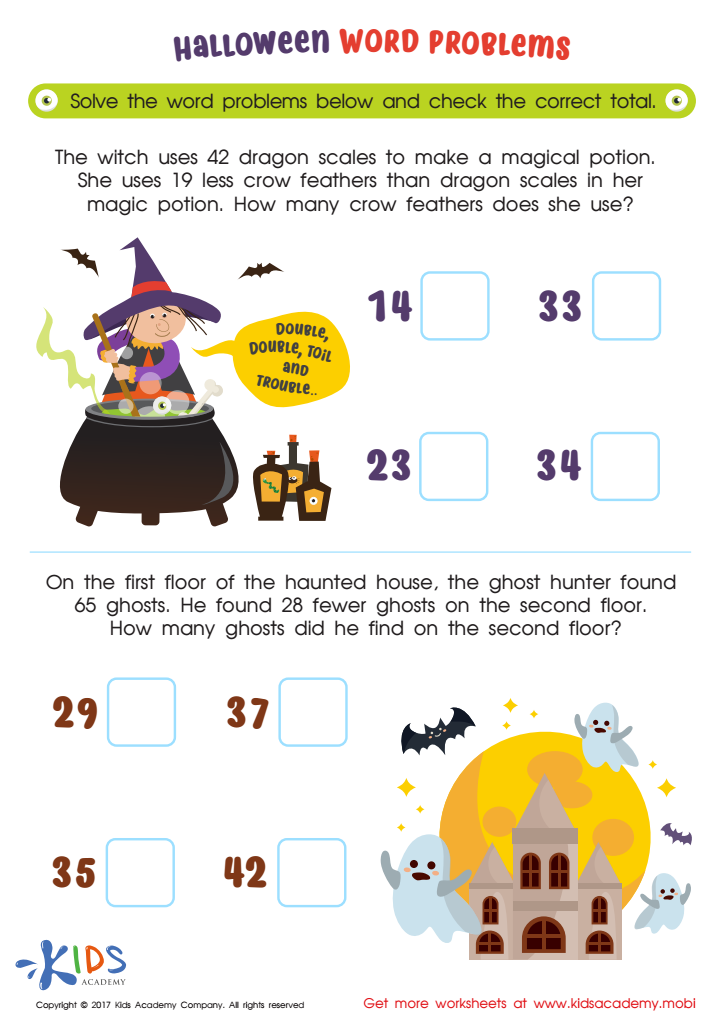
Halloween Word Problems Printable
Ghosts, witches, and other spooky characters make these problems exciting and interactive. Get ready to have some math fun!
Halloween Word Problems Printable
Worksheet
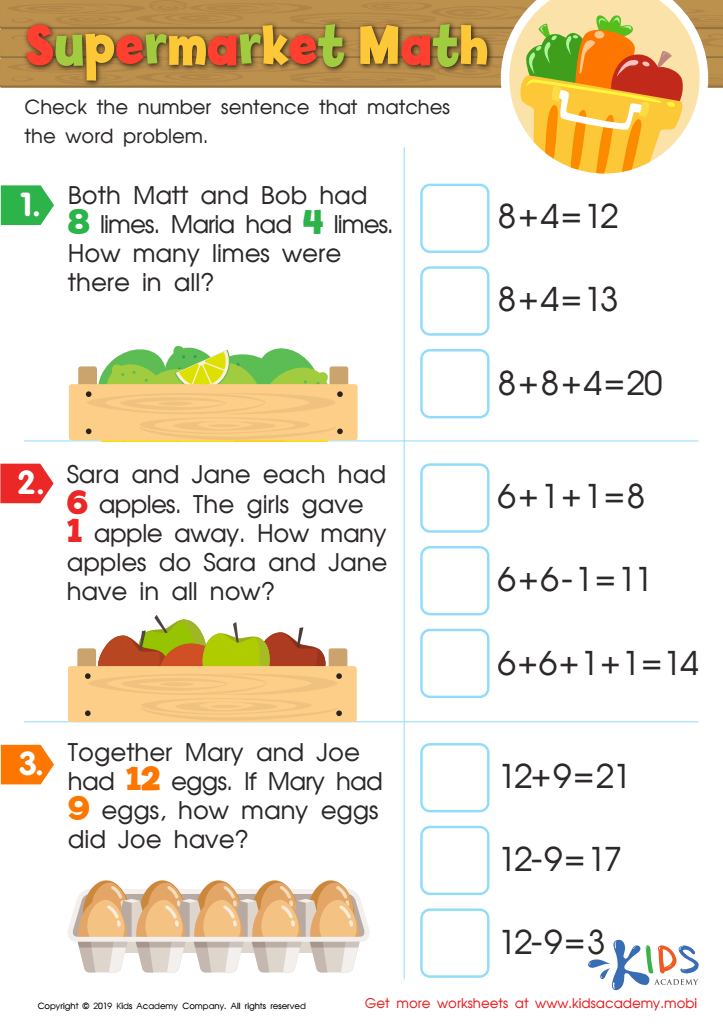
Supermarket Math Worksheet
Take your kids to the supermarket and ask what they're looking forward to buying. Help them solve the three questions in the worksheet by interpreting each one into an equation, then choose the right answer.
Supermarket Math Worksheet
Worksheet
Join Kids Academy for Free
Who is primarily going to use this learning content?








Real-life application is crucial for children ages 3-5 as it lays the foundation for essential life skills and cognitive development. At this age, children learn best through play and exploration, making everyday experiences invaluable. When parents and teachers introduce real-life applications in learning, children can better grasp concepts by directly relating them to their surroundings. For example, cooking together can teach measurements, while grocery shopping can introduce counting and sorting.
Moreover, real-life applications foster critical thinking and problem-solving skills. When children face everyday challenges—like sharing toys or organizing a play area—they learn to navigate social situations and develop emotional intelligence. These practical experiences also enhance language development as children engage in conversations, ask questions, and express their ideas.
Additionally, real-life learning supports a sense of independence. Children become more confident as they try new tasks or help with daily routines, promoting self-efficacy. This exploration helps nurture a lifelong love for learning and curiosity about the world.
When parents and teachers prioritize real-life applications, they create enriching environments that motivate and prepare children for future academic and social challenges. Ultimately, these experiences instill a sense of responsibility and connection to their community, creating well-rounded individuals.








