Syllable identification Normal Worksheets for Ages 3-5
3 filtered results
-
From - To
Discover our engaging Syllable Identification Normal Worksheets designed for children ages 3-5. These worksheets introduce young learners to the fundamentals of syllable recognition, promoting early literacy skills in a fun and interactive way. Each worksheet features colorful images and simple activities, making it easy for kids to grasp the concept of syllables through rhymes, games, and counting. Ideal for home or classroom use, our resources encourage participation and help build a strong phonemic awareness foundation. Perfect for parents and teachers seeking effective tools to foster a love for reading and enhance language development in early learners!
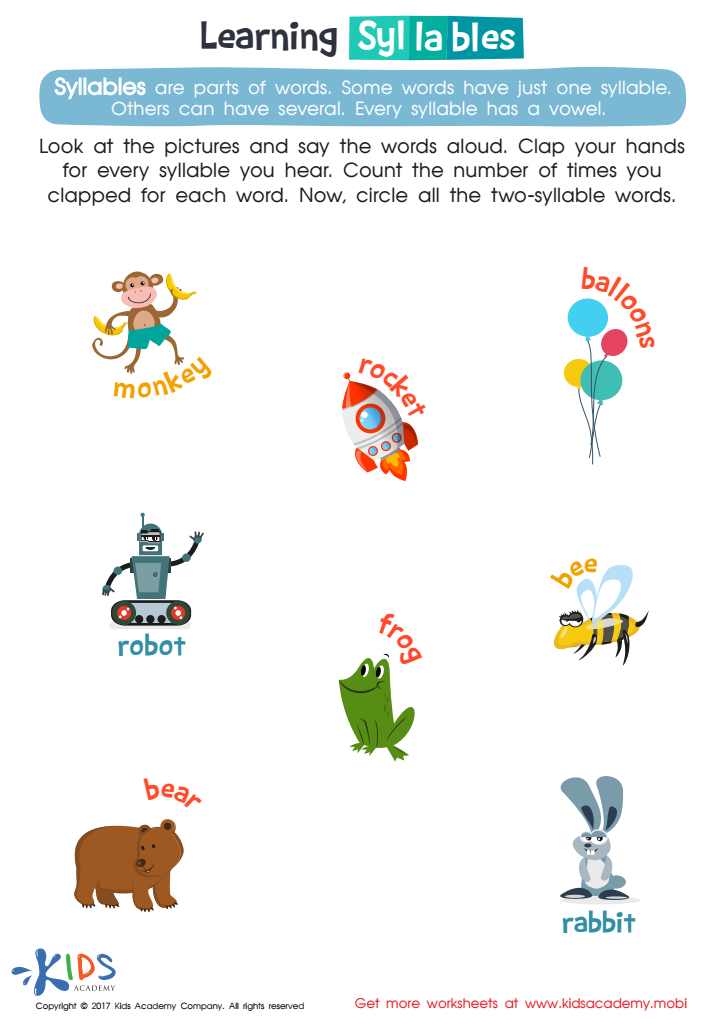
Learning Syllables Word Structure Worksheet
 Assign to My Students
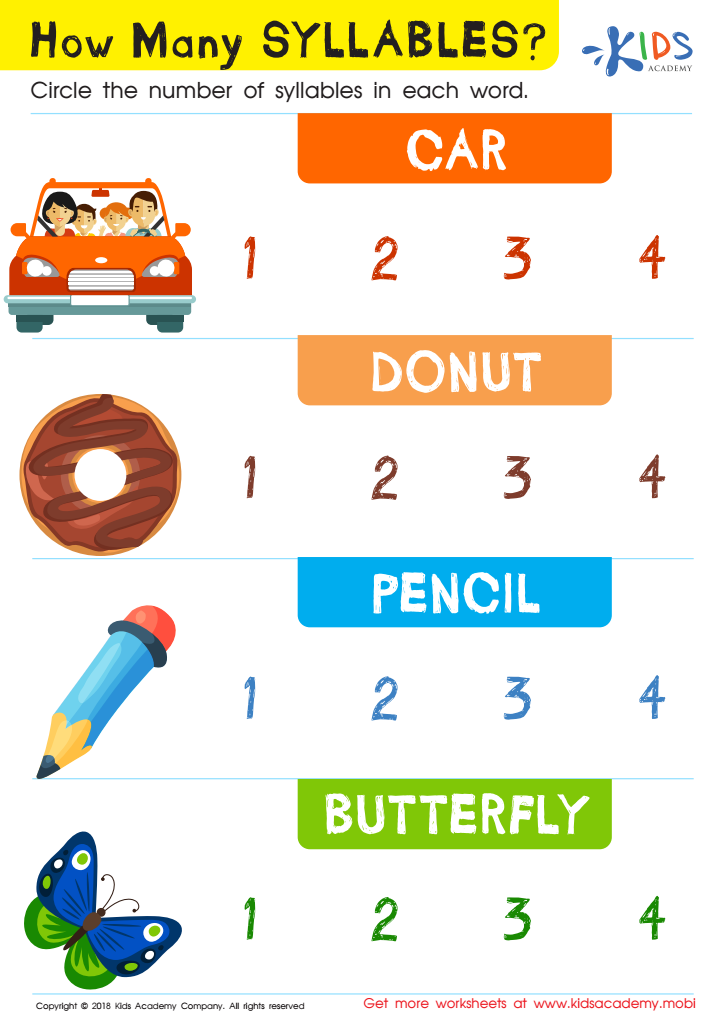
How Many Syllables? Worksheet
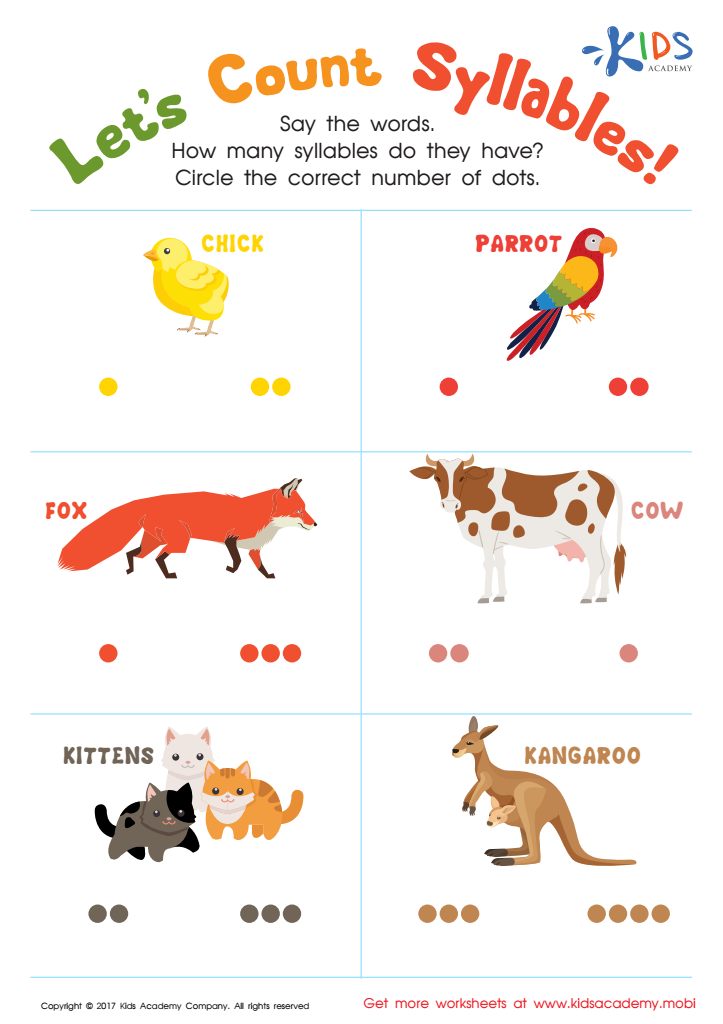
Lets Count Syllables Worksheet





.jpg)
Syllable identification is a crucial early literacy skill that lays the foundation for reading and language development in children aged 3-5. This period is a vital time for cognitive and linguistic growth, and understanding syllables helps foster phonemic awareness, which is essential for decoding words. When parents and teachers support syllable identification, they enhance children’s ability to sound out words, promote better spelling, and strengthen overall language comprehension.
By recognizing syllables, children learn to break words into manageable parts, which aids in pronunciation and boosts confidence in their reading abilities. Engaging in fun activities like clapping out syllables or singing songs emphasizes this skill in an enjoyable way, making learning abstract concepts tangible.
Additionally, children who master syllable identification often enjoy improved listening and speaking skills, as they become more attuned to the sounds within words. It builds a solid foundation for future literacy success, fostering academic growth as they progress into more complex reading tasks. Ultimately, by prioritizing syllable identification, parents and teachers empower children with essential tools for effective communication and lifelong learning.








