Understanding prepositions Normal Worksheets for Ages 3-5
5 filtered results
-
From - To
Enhance your child's understanding of prepositions with our engaging Normal Worksheets designed specifically for ages 3-5. These worksheets provide a fun and interactive way for preschoolers to learn essential concepts like in, on, under, and over through colorful illustrations and relatable scenarios. By completing various activities, children will develop critical thinking skills and improve their language comprehension in an enjoyable manner. Perfect for home or classroom use, our worksheets are tailored to foster a love for learning while building a solid foundation in language arts. Start nurturing your child's communication skills today with these valuable resources!
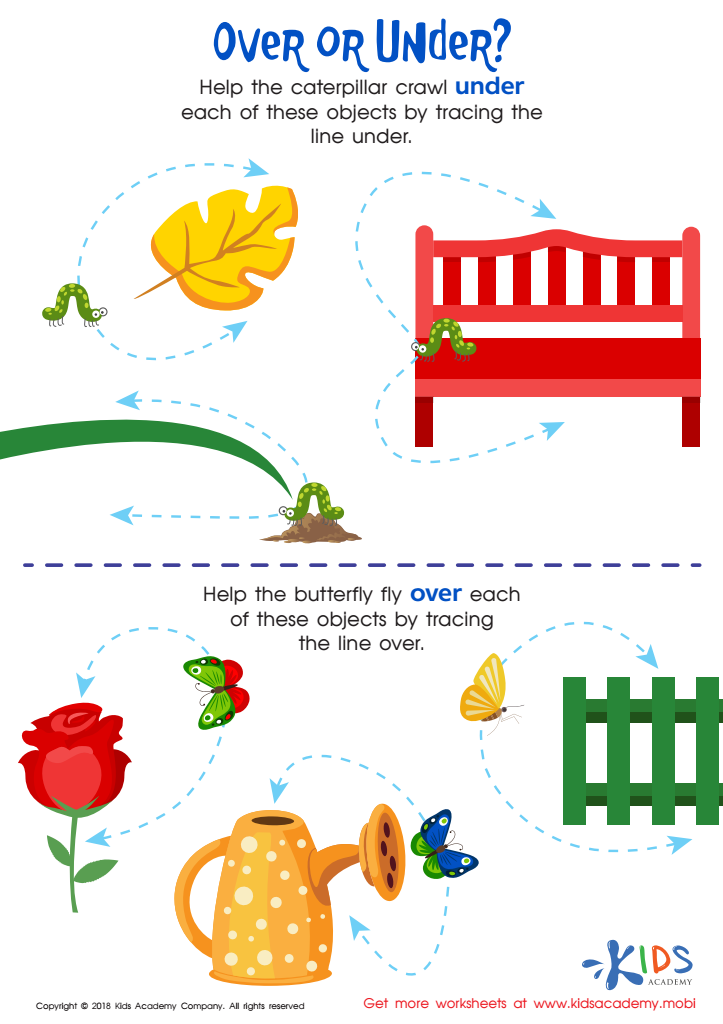
Over or Under? Worksheet
 Assign to My Students
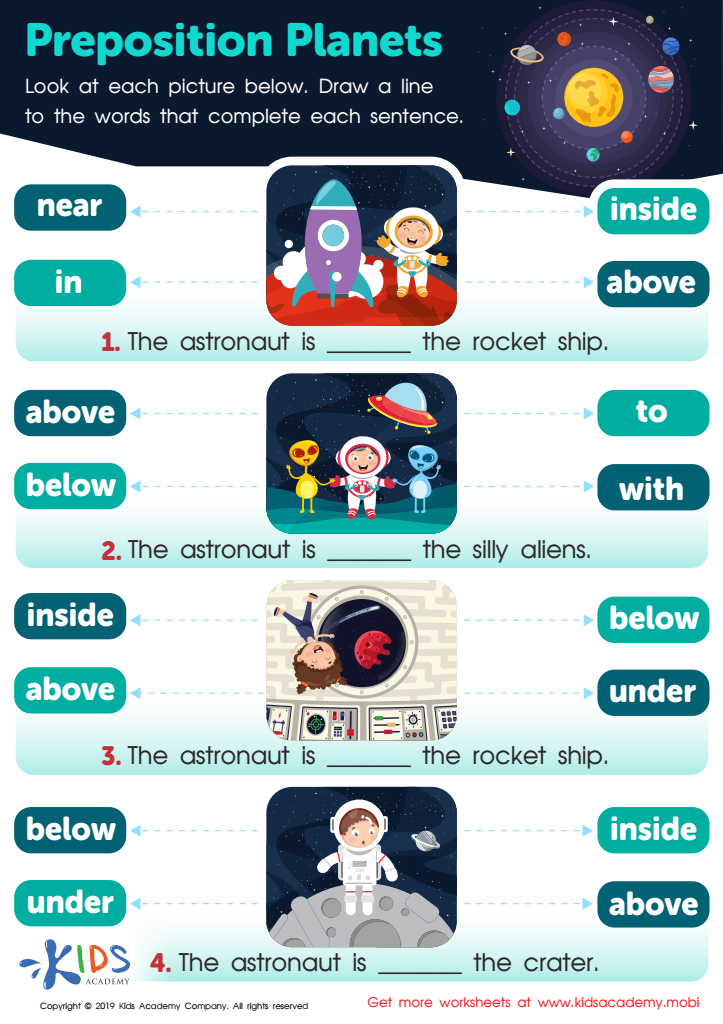
Preposition Planets Worksheet
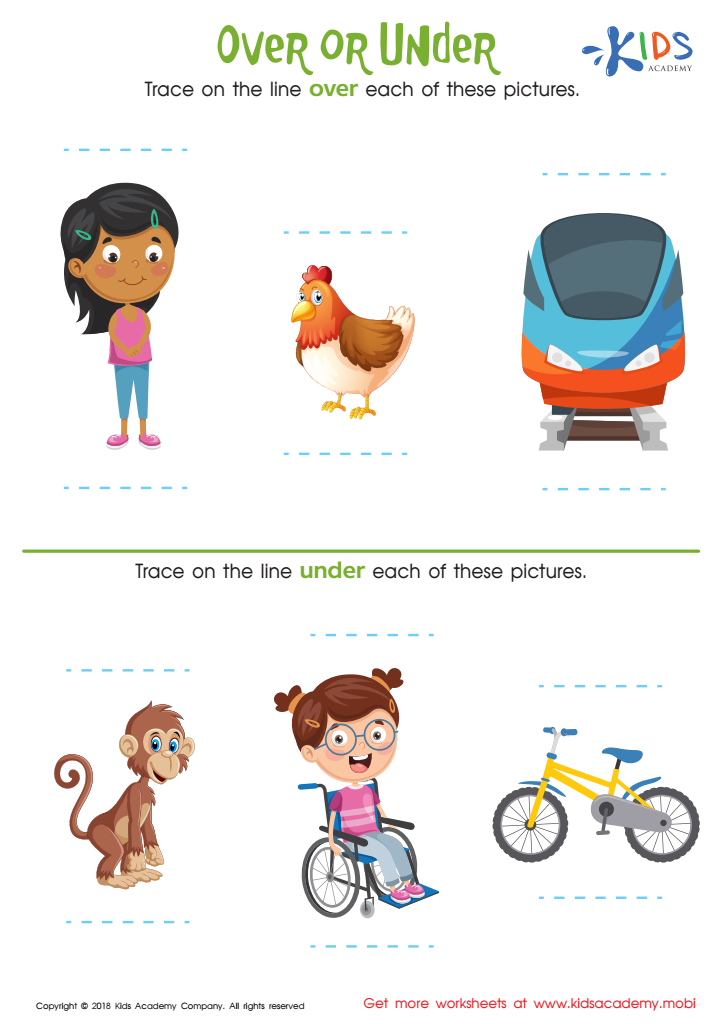
Over or Under Worksheet
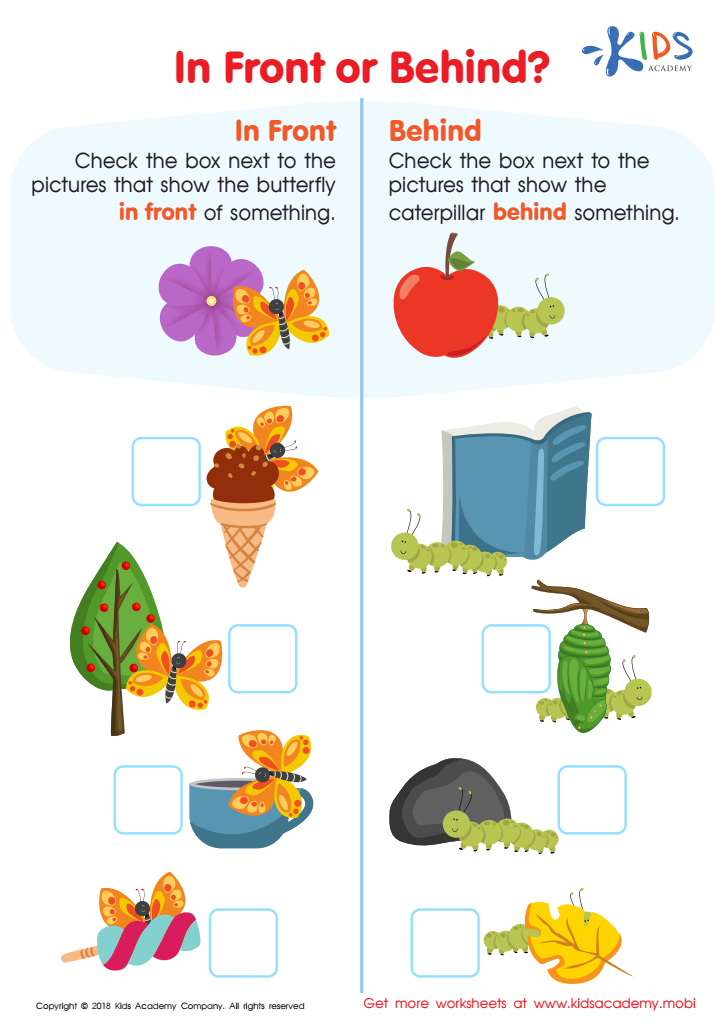
In Front or Behind Worksheet
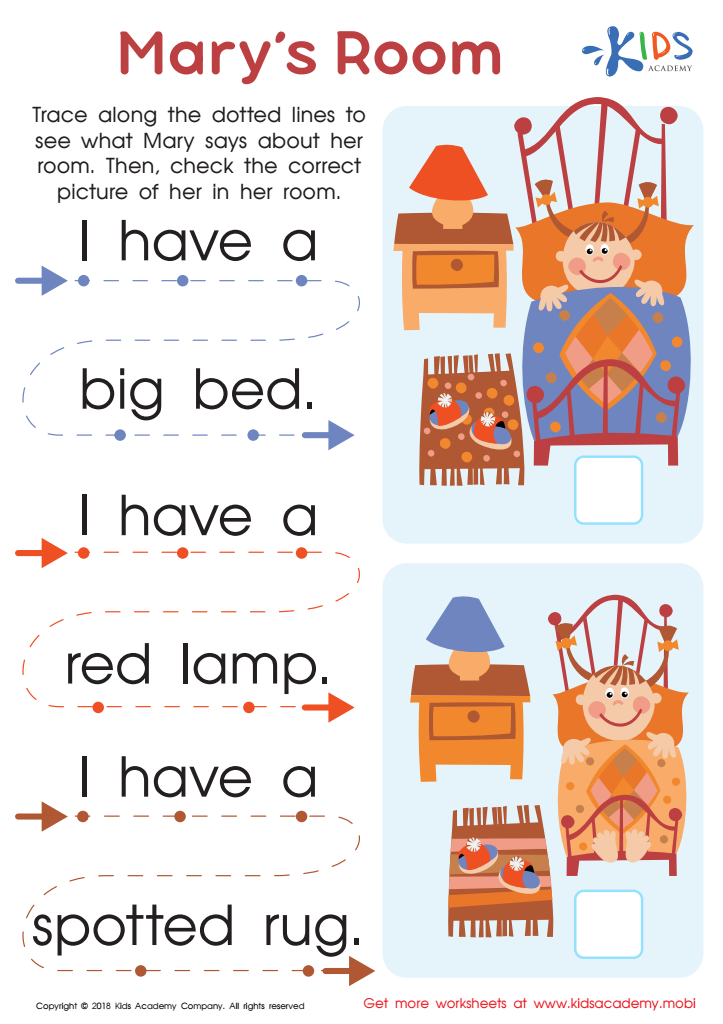
Mary's Room Worksheet







Understanding prepositions is crucial for children ages 3-5 as these small words play a significant role in their early language development. At this age, children are learning to express themselves and their understanding of the world around them. Prepositions help them describe relationships between objects, people, and places, enhancing their communication skills.
For parents and teachers, fostering a strong grasp of prepositions supports children in following instructions, participating in conversations, and grasping the concepts that lay the foundation for reading and writing. For example, understanding terms like "in," "on," "under," or "beside" enables children to navigate their environment, making it easier for them to engage in play and collaborative activities.
Additionally, learning prepositions enriches storytelling and imaginative play, as children can articulate their thoughts and ideas more clearly. Early mastery of prepositions ultimately leads to improved literacy skills, paving the way for future academic success. Therefore, investing time in activities that promote awareness and understanding of prepositions is essential for caregivers to support children's cognitive and communicative development in these formative years.








