Understanding Quantities Normal Worksheets for Ages 3-5
3 filtered results
-
From - To
Introducing "Understanding Quantities" worksheets, specially designed for children ages 3-5 to develop foundational math skills. These engaging activities help young learners recognize, compare, and count objects, fostering an early understanding of quantities. Through colorful illustrations and playful exercises, children will enhance their ability to quantify groups of items, improving both their numerical and cognitive abilities. Our expertly crafted worksheets are perfect for parents and educators looking to support their child's early math education. Unlock the joy of learning with these fun, interactive, and educational worksheets today!
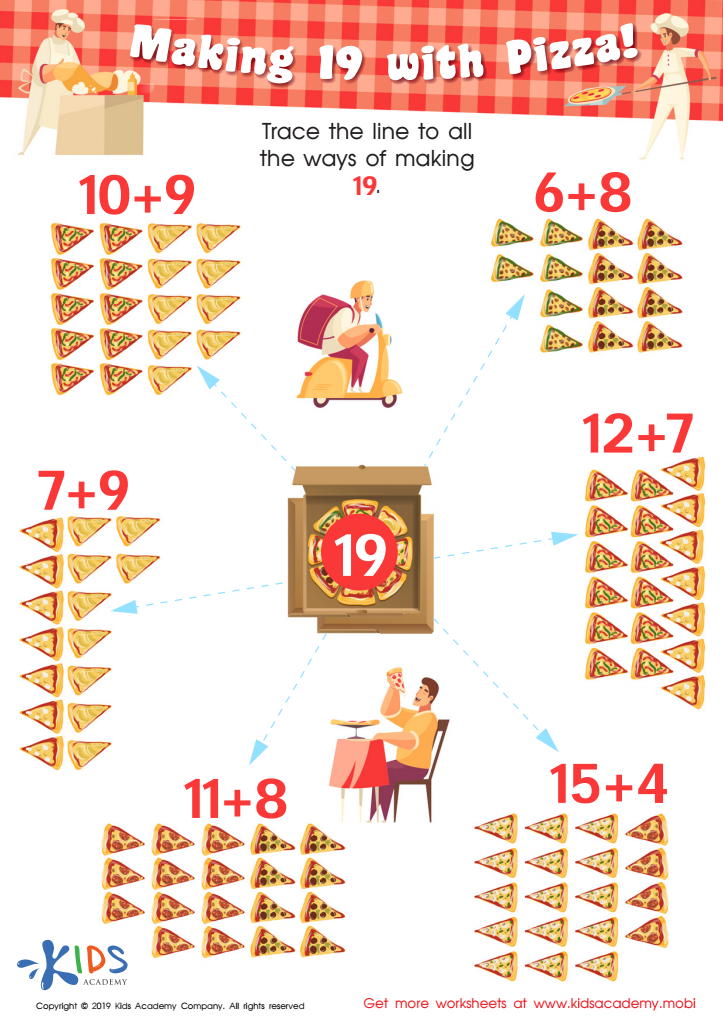
Making 19 with Pizza! Worksheet
 Assign to My Students
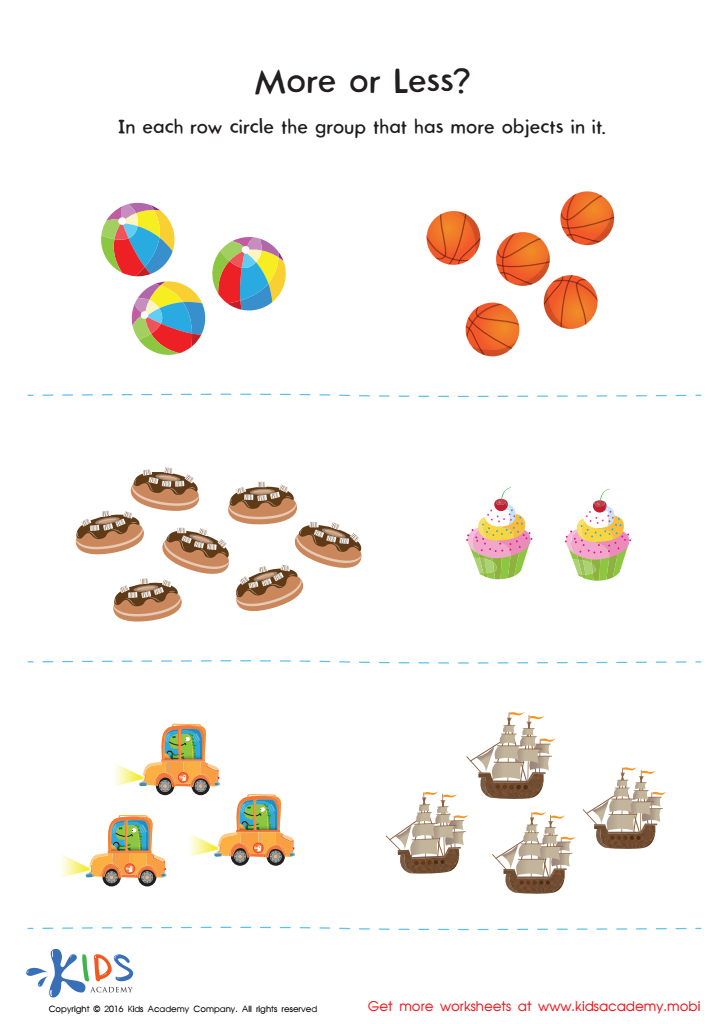
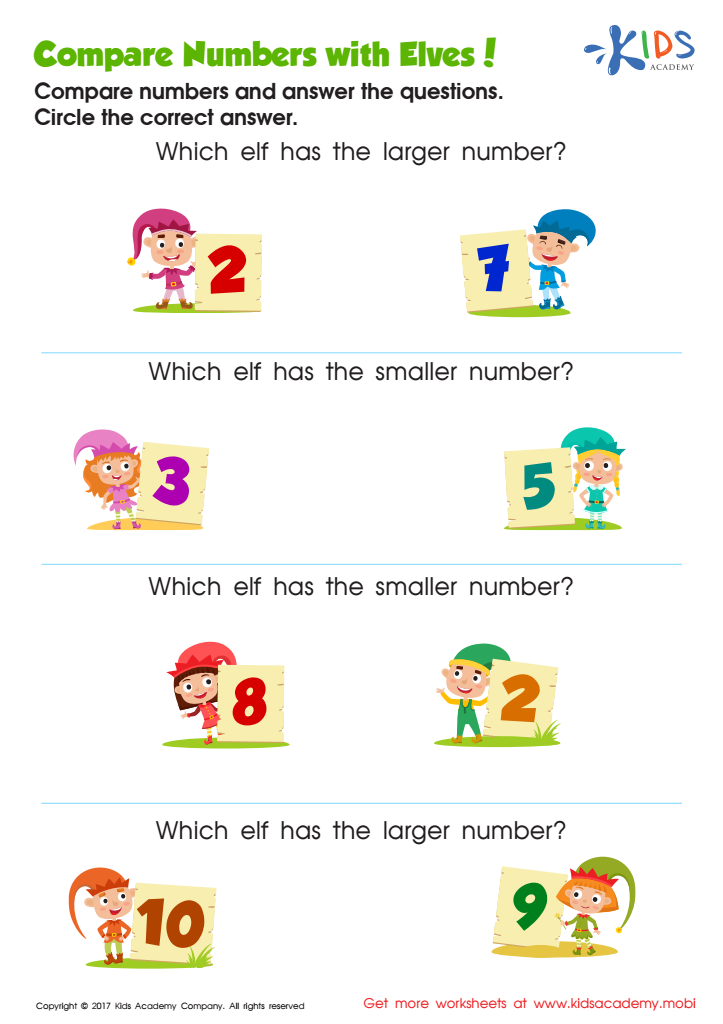
Comparing Numbers Worksheet for Kindergarten


.jpg)




Understanding quantities is crucial for children aged 3-5 as it lays the foundation for future mathematical skills and cognitive development. Parents and teachers need to prioritize this aspect of learning because early quantitative literacy fosters problem-solving abilities, critical thinking, and logical reasoning.
Firstly, grasping quantities helps children understand the concept of numbers and counting, making them more comfortable with basic arithmetic operations such as addition and subtraction. As toddlers learn to compare, categorize, and sort objects based on quantity, they also develop a keen sense of order, sequence, and patterns.
Secondly, recognizing and processing different quantities translates into better spatial awareness and measurement skills. For instance, pouring a certain amount of water into a glass or sharing toys equally among friends requires an intuitive understanding of amounts and distribution. These everyday experiences prepare young minds for more complex mathematical concepts encountered in later academic stages.
Furthermore, a solid grasp of quantities enhances other areas of learning and development. Language skills improve as children describe and communicate their observations. Fine motor skills are honed through activities like grouping and counting small items. Social skills cultivate as kids engage in group games and activities that involve turn-taking and sharing based on quantities.
In summary, focusing on understanding quantities between ages 3-5 equips children with essential cognitive, motor, and social skills, setting the groundwork for well-rounded academic growth.








