Number Recognition Normal Addition and Subtraction Word Problems Worksheets for Ages 3-5
5 filtered results
-
From - To
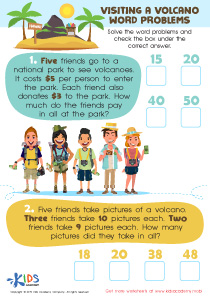
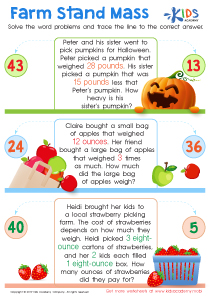
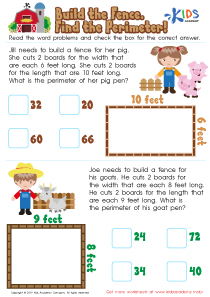
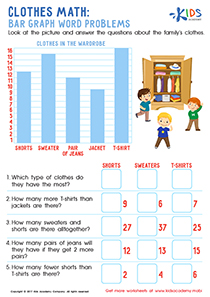
Discover the engaging world of number recognition with our specially designed worksheets for ages 3-5. Our "Normal Addition and Subtraction Word Problems" worksheets provide young learners with the opportunity to practice essential math skills through fun, relatable scenarios. Each worksheet encourages children to identify numbers while solving simple addition and subtraction problems, fostering their critical thinking and comprehension abilities. Perfect for both home and classroom use, these colorful and interactive sheets are tailored to make learning enjoyable. Help your child build a strong mathematical foundation and develop confidence in their number skills today! Start exploring now!
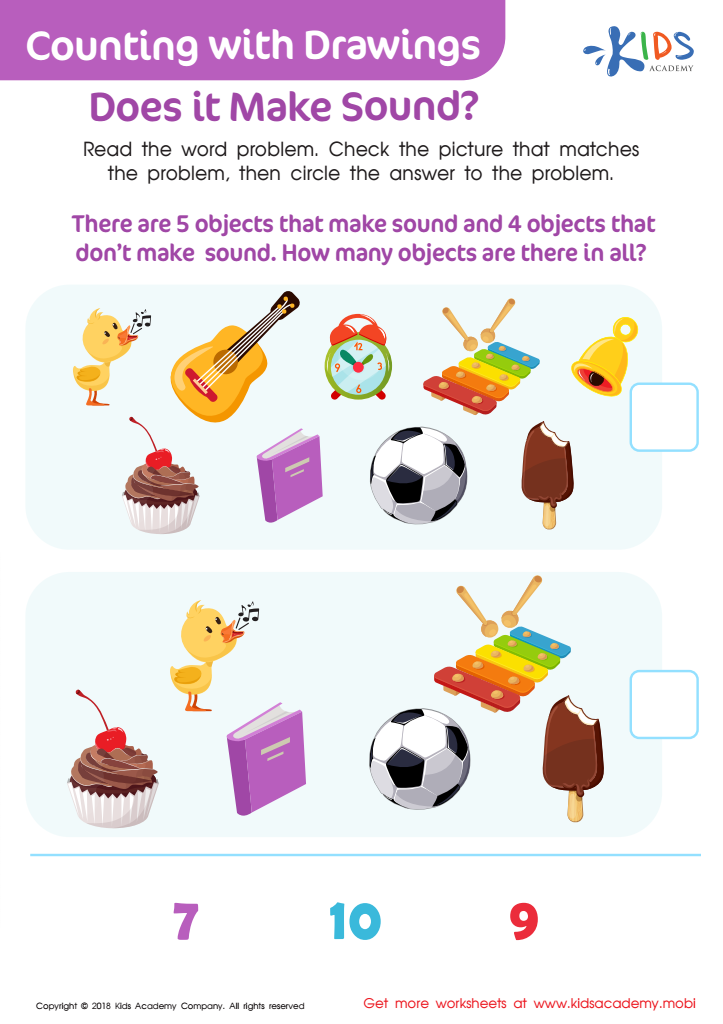
Counting With Drawings. Does It Make Sound? Worksheet
 Assign to My Students
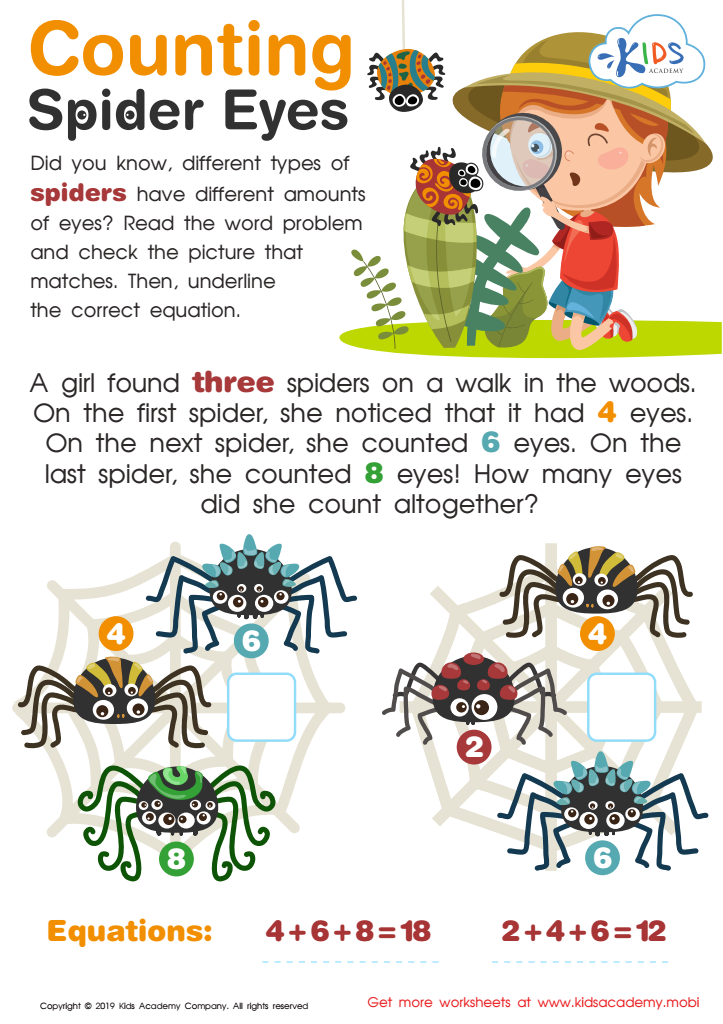
Counting Spider Eyes Worksheet
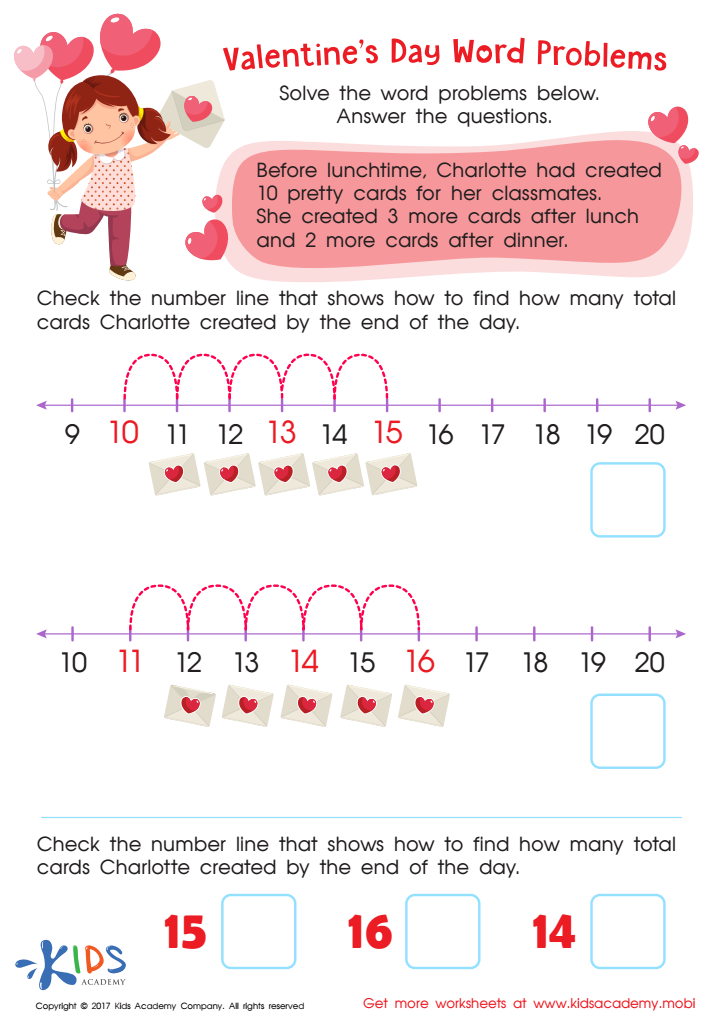
Valentines Day Word Problem Worksheet
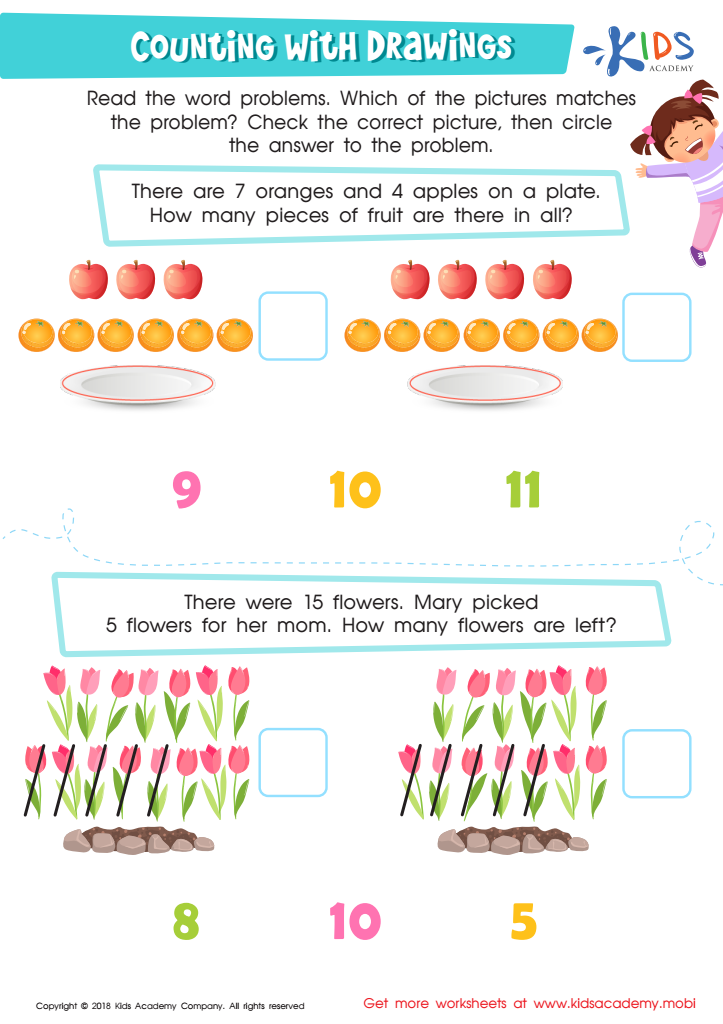
Counting with Drawings: Fruits & Chocolates Worksheet
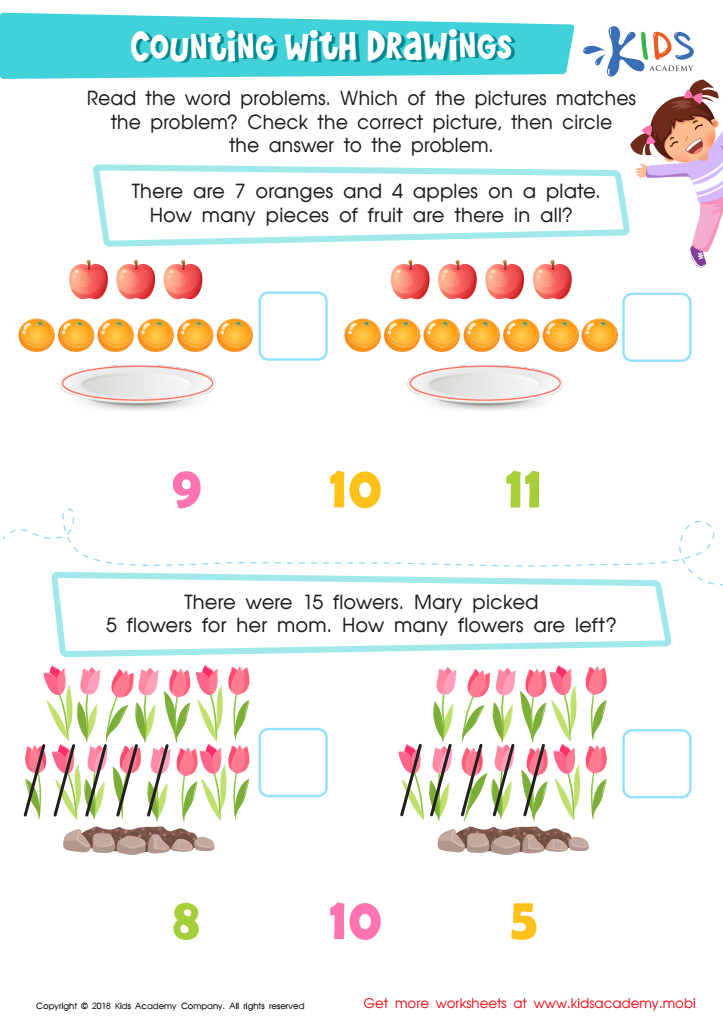
Counting with Drawings:Fruits & Flowers Worksheet








Parents and teachers should prioritize number recognition and simple addition and subtraction word problems for children ages 3-5, as these skills are foundational for later mathematical learning. At this age, kids are developing their cognitive abilities and will benefit immensely from early exposure to numbers and basic mathematical concepts.
Number recognition helps children understand the symbols that represent quantities, fostering their ability to identify and use numbers in everyday situations. Engaging with simple addition and subtraction through word problems enhances critical thinking and problem-solving skills. These activities encourage children to analyze situations, represent ideas with numbers, and articulate their thought processes.
Furthermore, early math skills are closely linked to later academic success, especially in mathematics. Research shows that foundational skills such as counting and basic arithmetic lead to better performance as children progress in school. Additionally, incorporating math into playful activities makes learning enjoyable, helping children to develop a positive attitude toward mathematics.
By focusing on these skills, parents and teachers can support early learners in building confidence, improving their reasoning skills, and preparing them for future academic challenges. Through engaging and interactive methods, children will develop a natural affinity for numbers, setting the stage for lifelong learning in mathematics.