Mathematical reasoning Normal Addition & Subtraction Worksheets for Ages 3-5
6 filtered results
-
From - To
Unlock your child's potential with our "Mathematical Reasoning Normal Addition & Subtraction Worksheets" designed for ages 3-5. These engaging and age-appropriate worksheets, available on Kids Academy, help young learners build essential math skills. Featuring colorful, fun activities, they focus on enhancing mathematical reasoning through basic addition and subtraction, promoting critical thinking, and improving problem-solving abilities. Each worksheet is crafted to cater to early learners, making math approachable and enjoyable. Perfect for parents and educators, these worksheets ensure foundational math fluency, setting the stage for future academic success. Download today and make learning math an exciting adventure for your child!
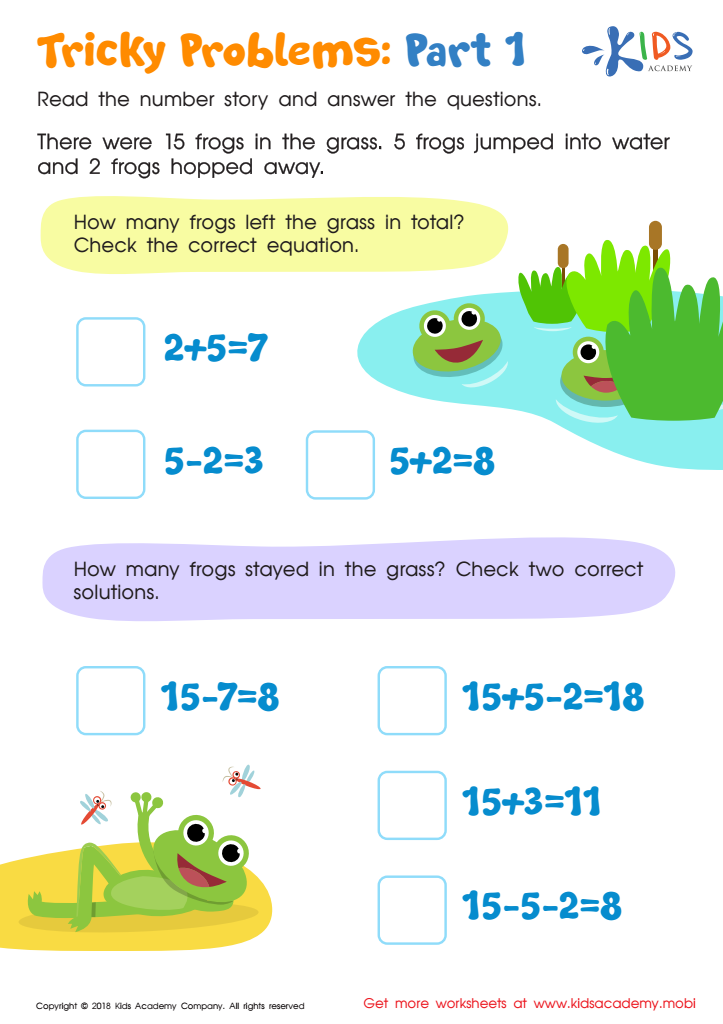
Tricky Problems Worksheet: Part 1
 Assign to My Students
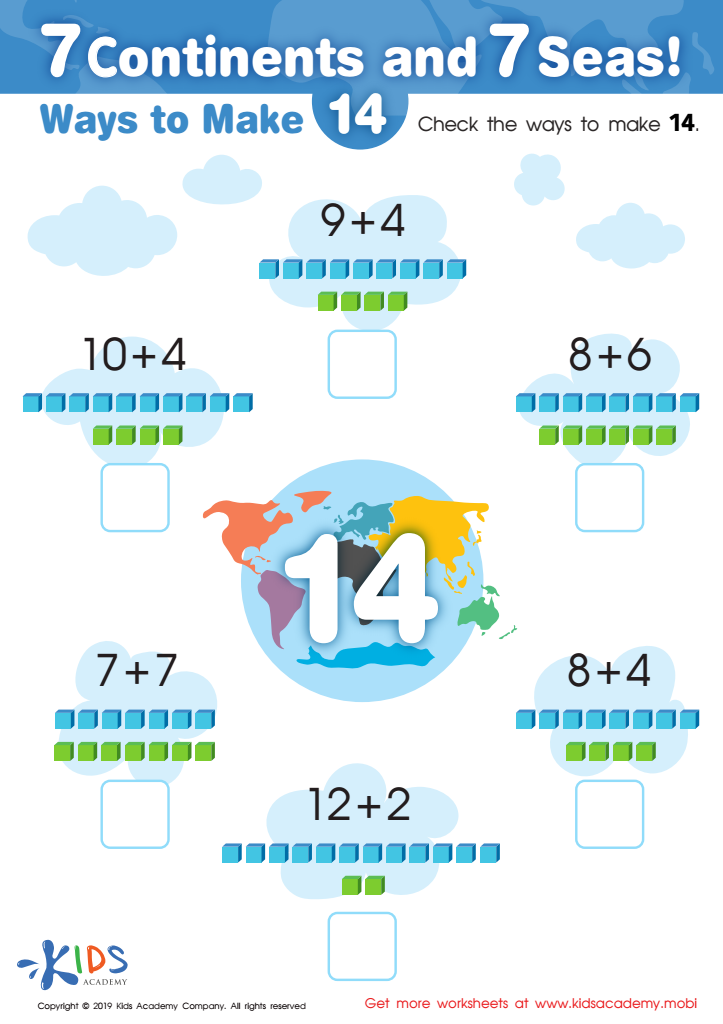
7 Continents and 7 Seas Worksheet
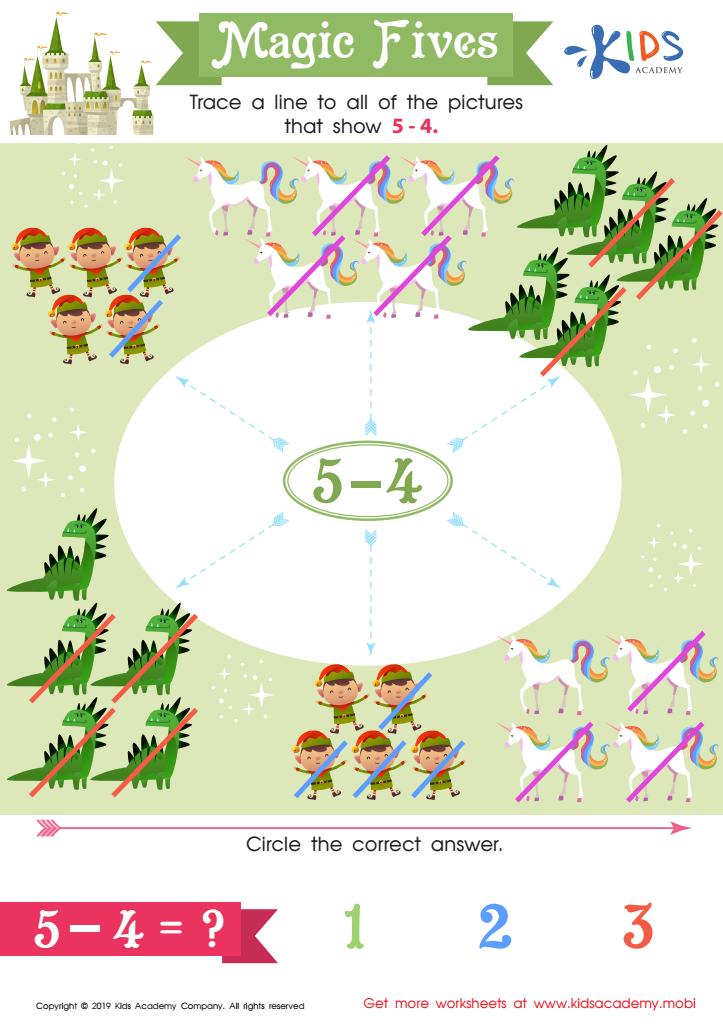
Magic Fives Worksheet
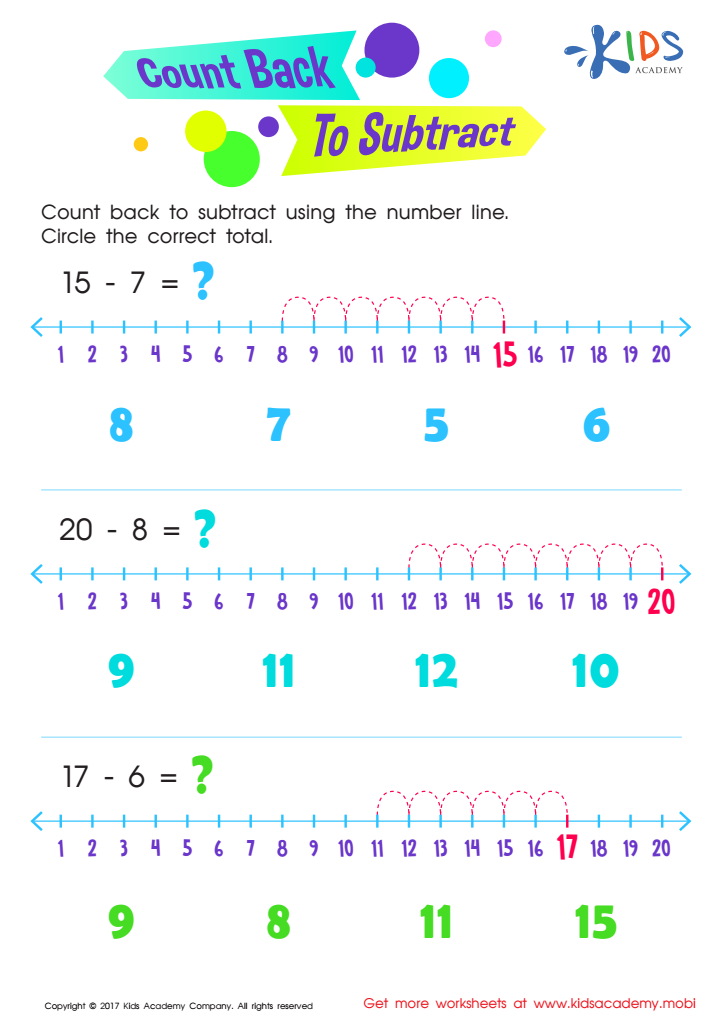
Count Back to Subtract Substraction Worksheet
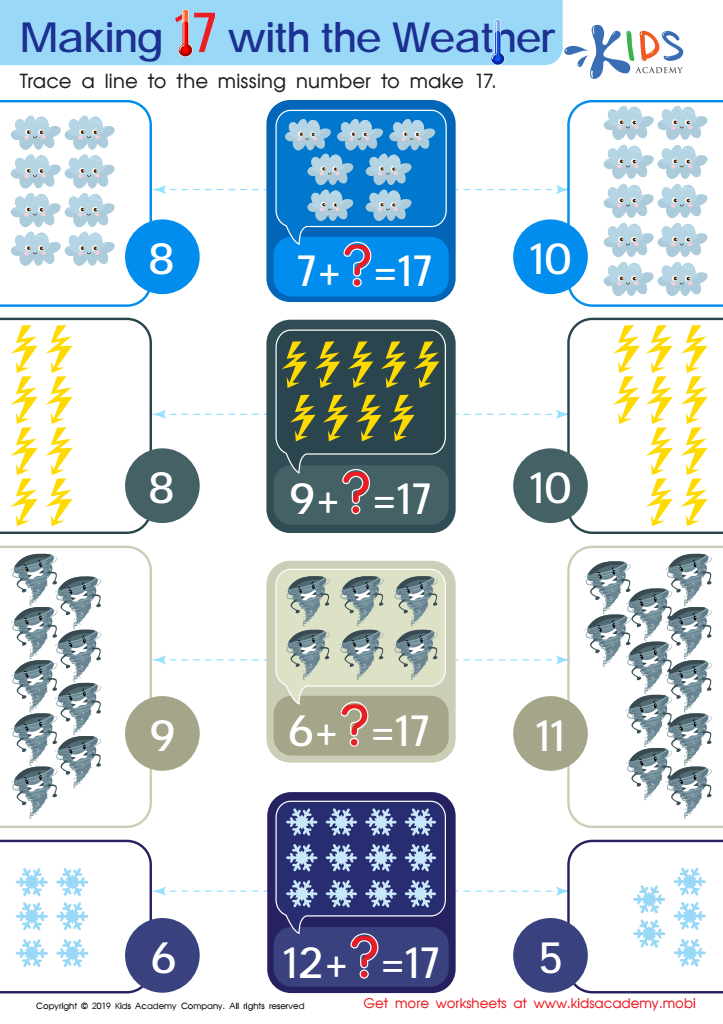
Making 17 with the Weather Worksheet
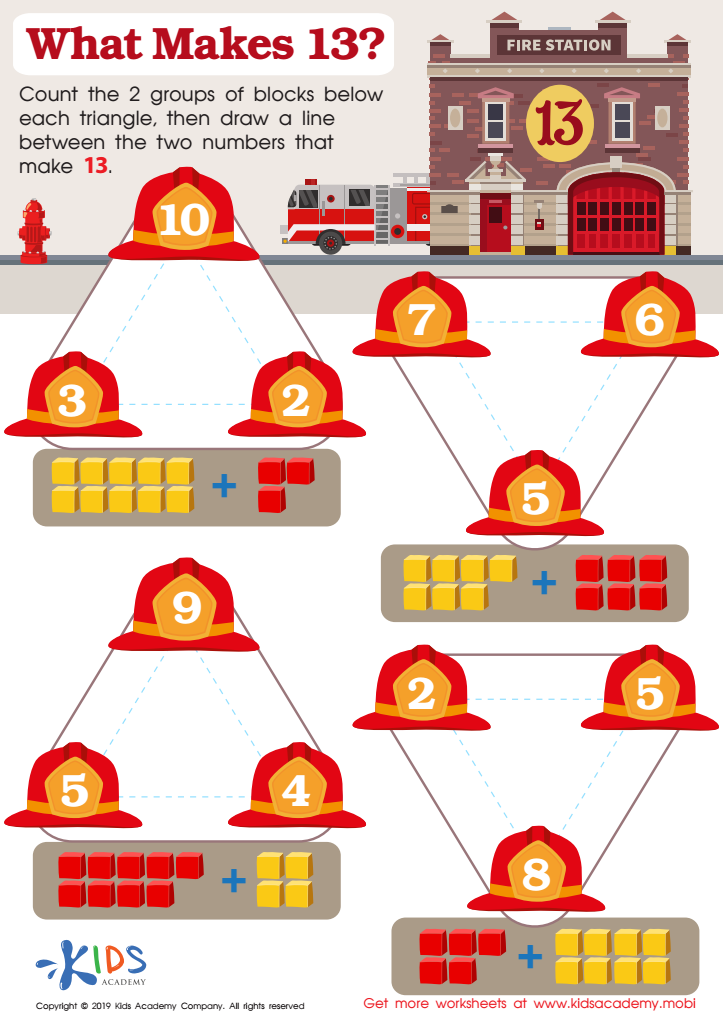
What Makes 13 Worksheet








Mathematical reasoning, particularly in the form of basic addition and subtraction, is a fundamental skill for children aged 3-5. During these formative years, kids develop cognitive skills that lay the groundwork for future learning. Understanding the concepts of addition and subtraction at this age is vital for several reasons.
Firstly, it empowers children to make sense of their environment and everyday experiences. Situations such as sharing toys, divvying up snacks, or figuring out if they have enough crayons for a drawing inherently involve basic math skills. Prior exposure helps children navigate these scenarios confidently and independently.
Secondly, early proficiency in basic arithmetic supports the development of more complex mathematical concepts. Mastery of addition and subtraction forms the foundation for skills like multiplication and division in later grades. Without this foundation, children may struggle with math as academic demands increase.
Thirdly, success in early math often boosts a child’s confidence and academic self-esteem. It cultivates a positive attitude toward learning and problem-solving, essential traits for lifelong success.
Teachers and parents, by encouraging an interest and foundational competence in math early on, lay a solid bedrock for their children’s educational journey. Reinforcing these skills in engaging, playful ways can make math an enjoyable and rewarding part of a young child's life.








