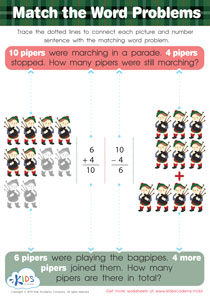
Addition Practice Normal Addition Worksheets for Ages 3-5
4 filtered results
-
From - To
Welcome to our Addition Practice Normal Addition Worksheets designed for children ages 3-5! These engaging and interactive worksheets make learning math fun and exciting for young learners. Perfect for preschool and kindergarten, each sheet offers a variety of colorful exercises to help develop essential addition skills. Children will enjoy counting, matching, and solving simple addition problems while building their confidence in mathematics. Tailored to various learning styles, our worksheets encourage independent practice and improve number recognition. Ideal for home or classroom use, our Addition Practice worksheets are the perfect tool for preparing your little ones for future math success. Start their learning journey today!
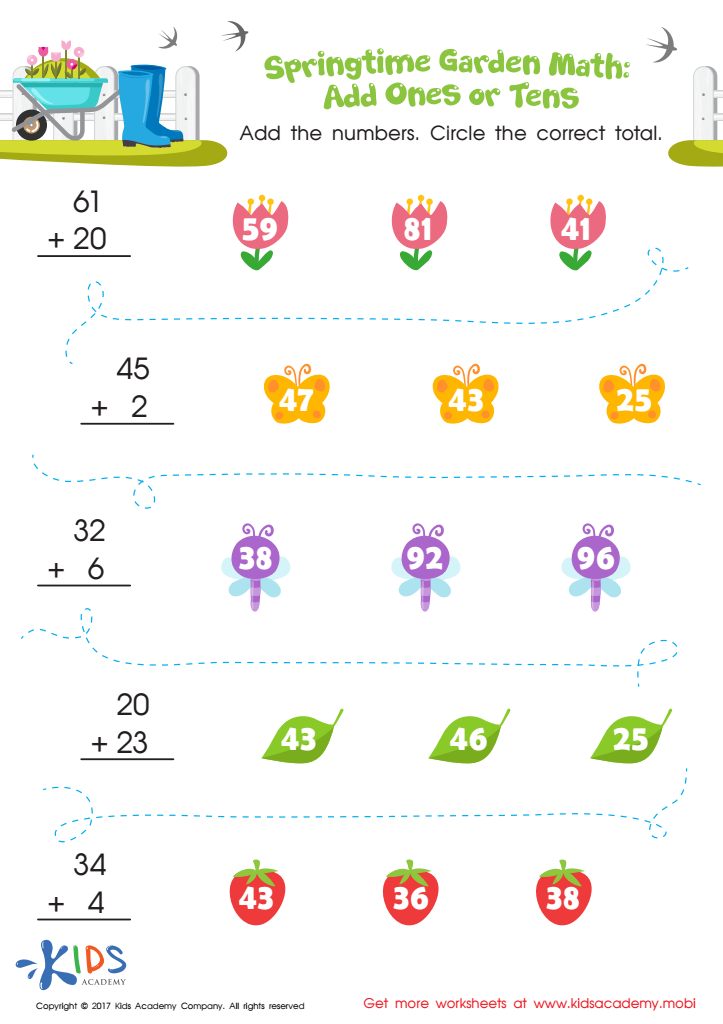
Springtime Garden Math Worksheet
 Assign to My Students
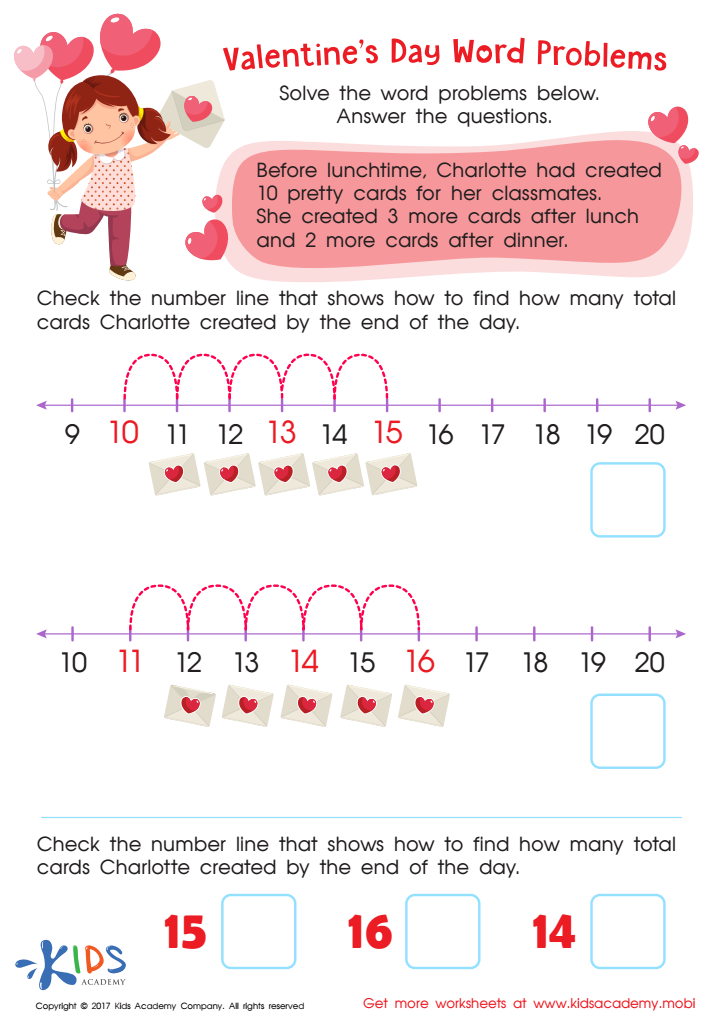
Valentines Day Word Problem Worksheet
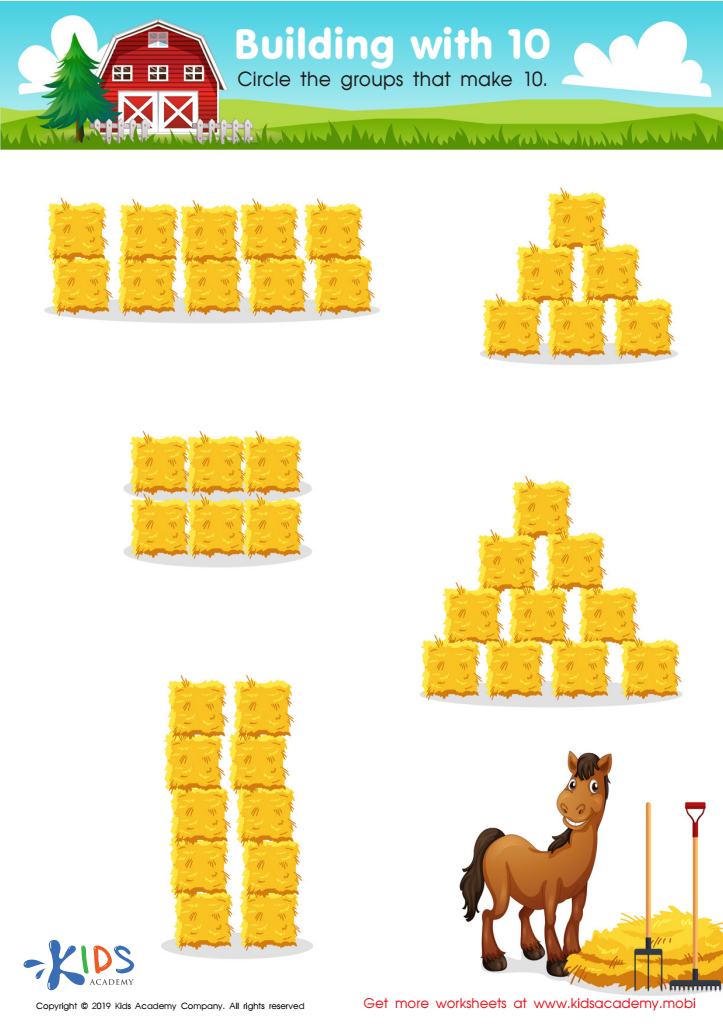
Building with 10 Worksheet
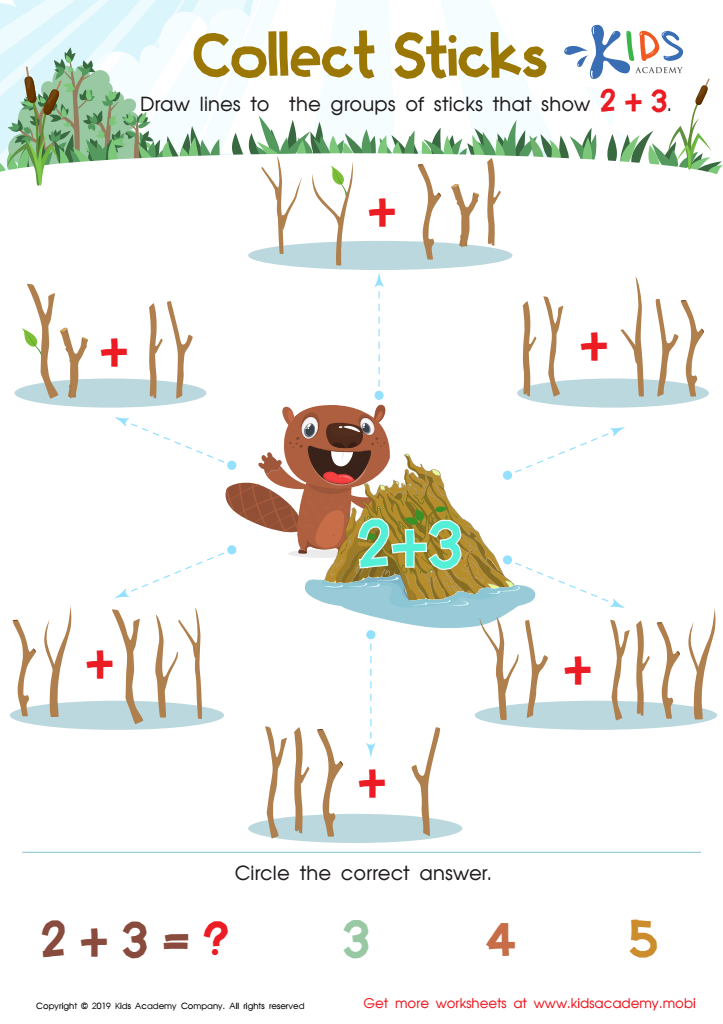
Collect Sticks Worksheet








Addition practice for children ages 3-5 is essential for several reasons, particularly in fostering early mathematical skills and cognitive development. First, addition helps young learners grasp fundamental math concepts, laying the groundwork for future learning. At this stage, children are particularly receptive to patterns and relationships, which are key in understanding how numbers work together.
Engaging in normal addition exercises promotes not only arithmetic skills but also enhances critical thinking and problem-solving abilities. Through playful activities such as counting objects, songs, or interactive games, children can explore addition in a fun and engaging way. This approach makes math less intimidating and positions it as a natural part of their everyday lives.
Moreover, addition practice supports language development; discussing numbers and the act of adding fosters vocabulary growth related to math concepts. Parents and teachers play a pivotal role in building confidence in young learners. By encouraging positive interactions with math, they can help develop a growth mindset, where challenges are seen as opportunities to learn.
In summary, addition practice for ages 3-5 is vital not only for foundational math skills but also for cognitive, language, and emotional development. The benefits extend far beyond simple computation, positively impacting overall learning experiences.