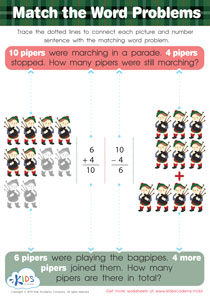
Number Recognition Normal Addition Worksheets for Ages 3-5
8 filtered results
-
From - To
Introduce your little learners to the world of math with our "Number Recognition Normal Addition Worksheets for Ages 3-5". Specially designed for young minds, these engaging worksheets combine brightly colored visuals and exciting activities to help children recognize numbers while mastering basic addition. Through fun exercises, kids enhance their number sense, improve counting skills, and build a strong foundation for future math success. Perfect for preschool and kindergarten students, our worksheets make learning math enjoyable and interactive. Download today to spark a love of numbers in your child and prepare them for academic achievement!
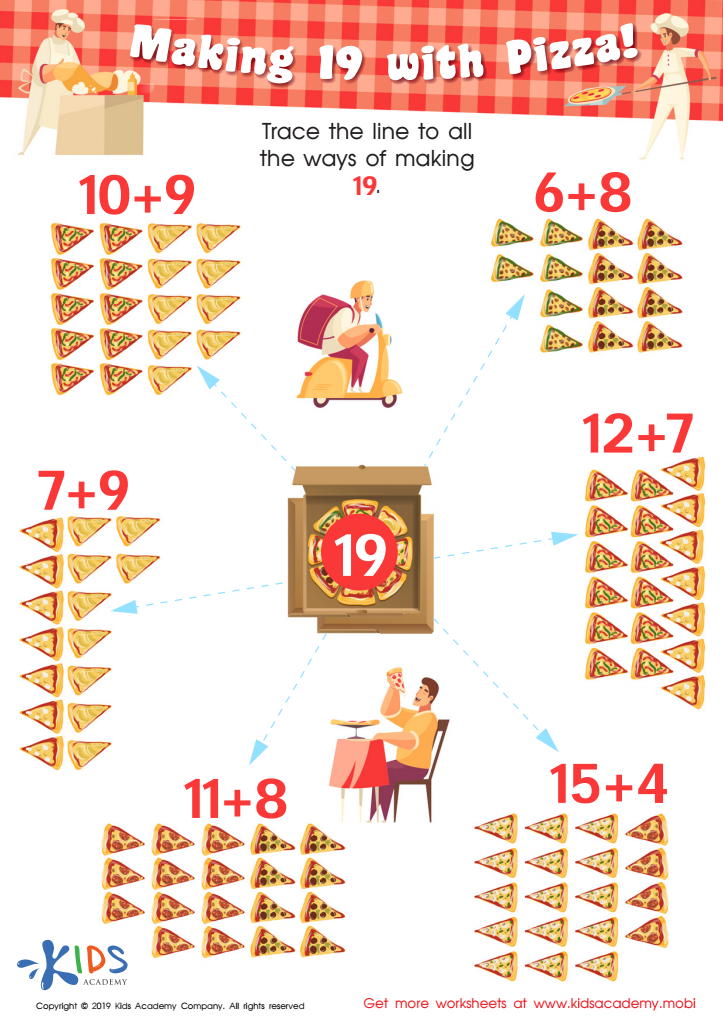
Making 19 with Pizza! Worksheet
 Assign to My Students
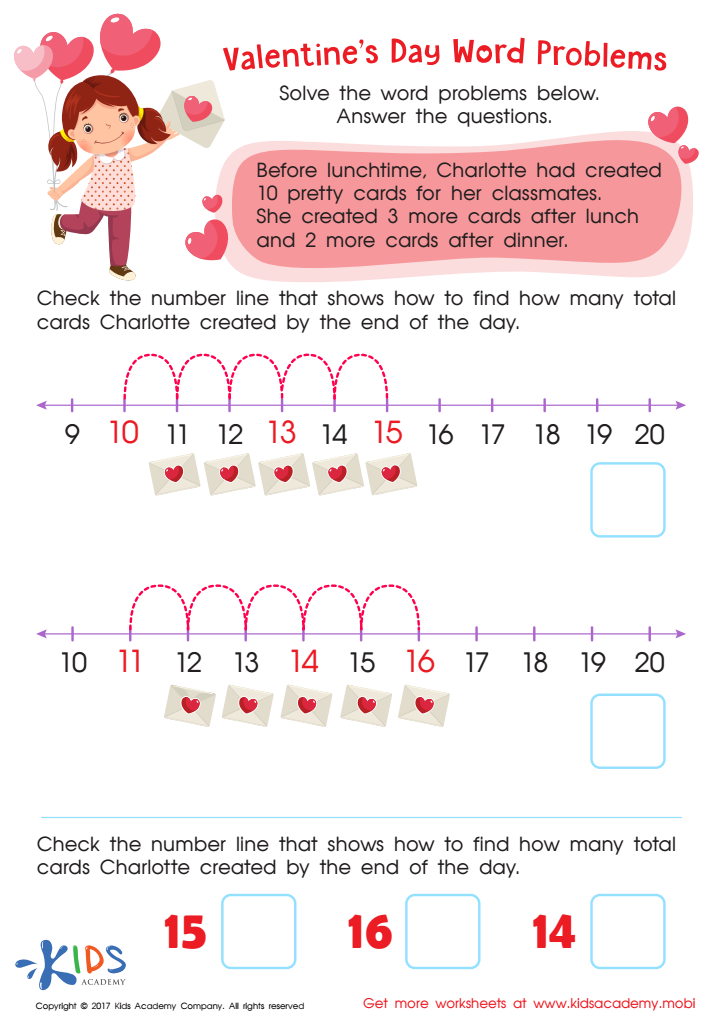
Valentines Day Word Problem Worksheet
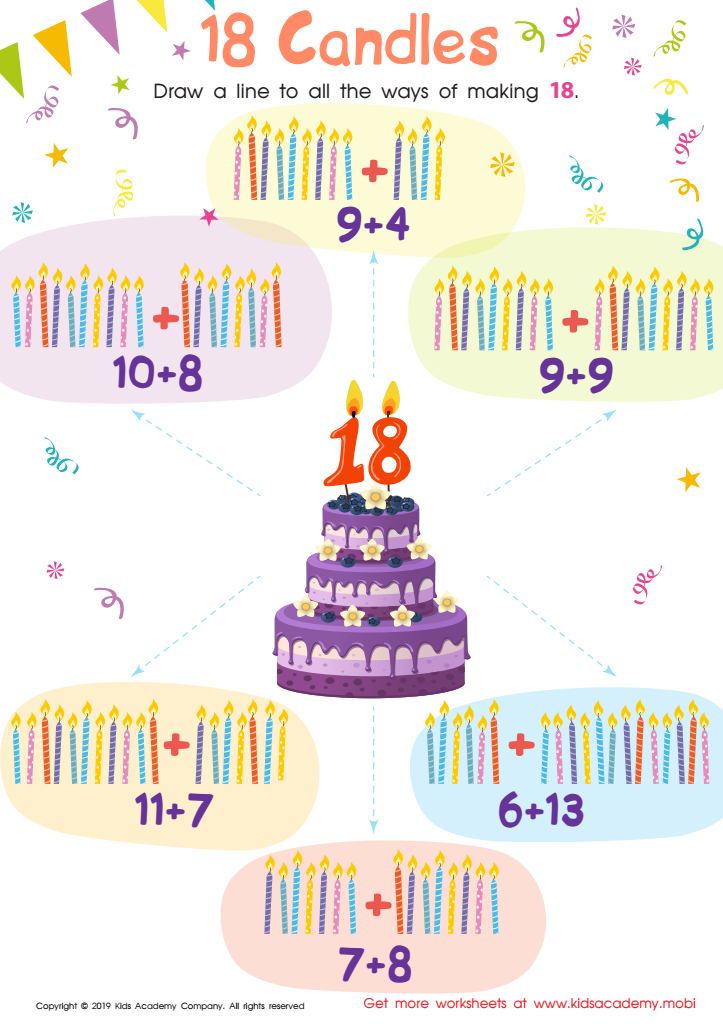
18 Candles Worksheet
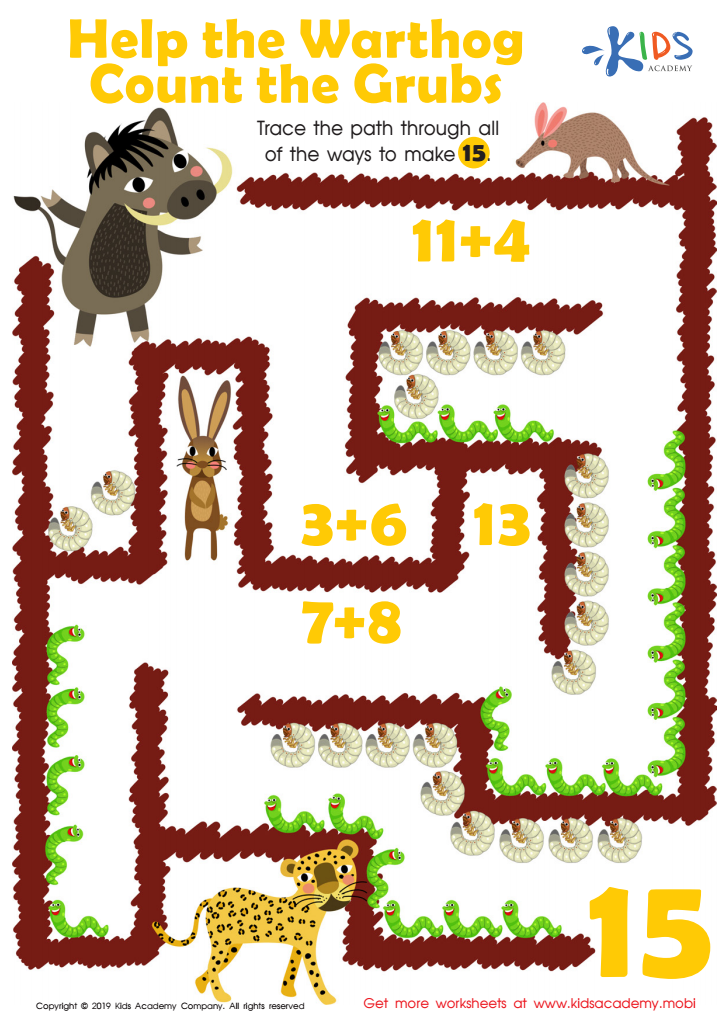
Help the Warthog Count the Grubs Worksheet
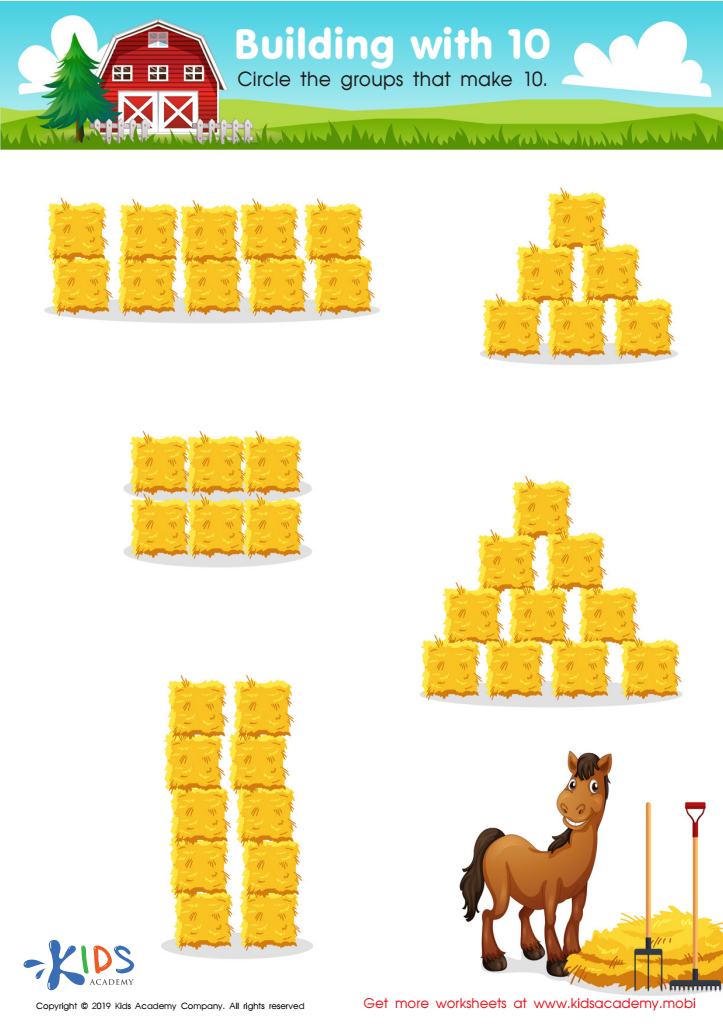
Building with 10 Worksheet
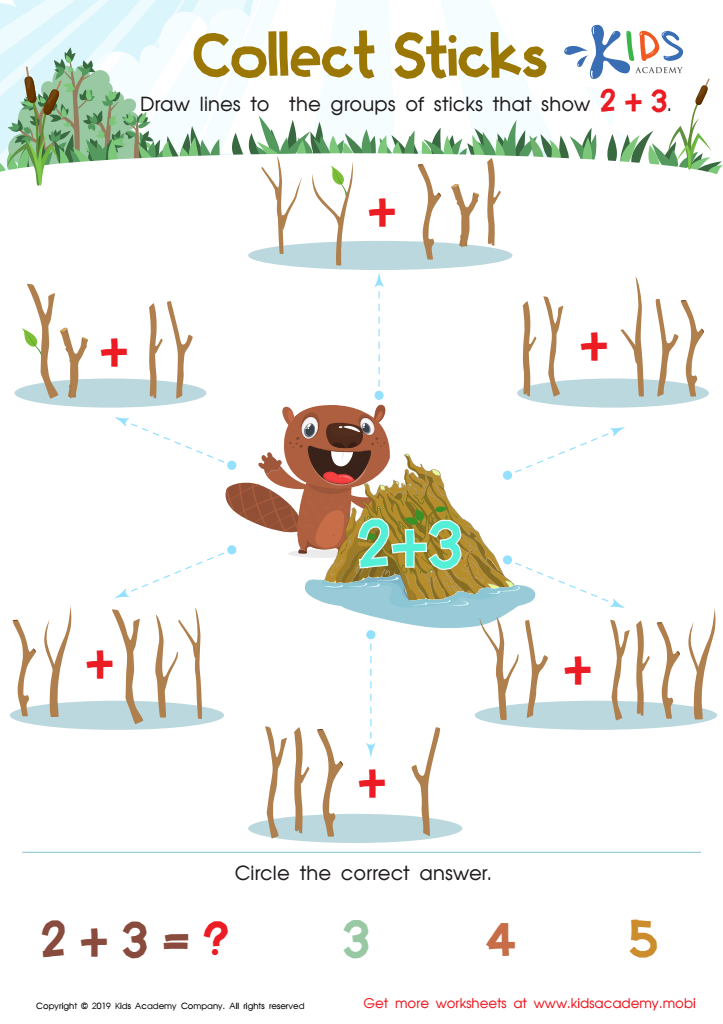
Collect Sticks Worksheet
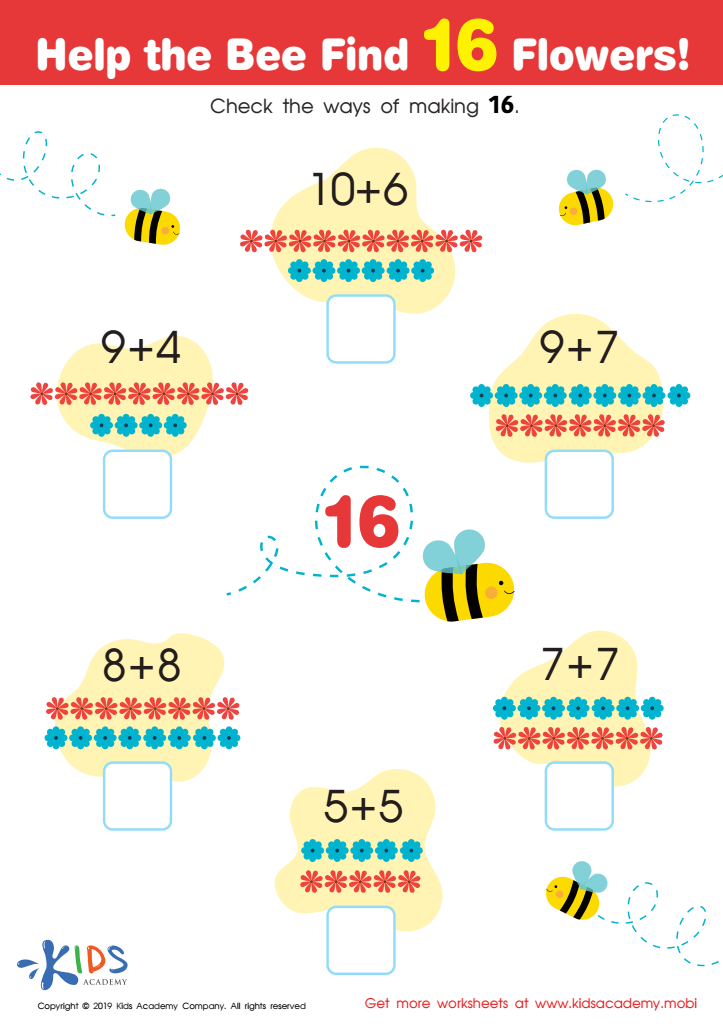
Help the Bee Find 16 Flowers Worksheet
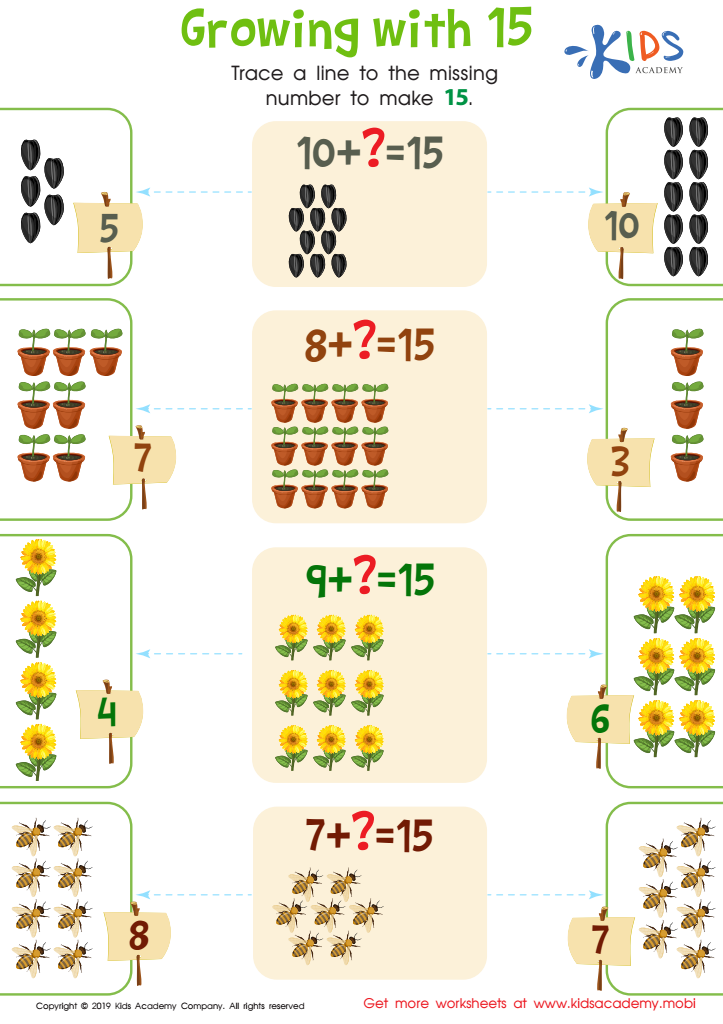
Growing with 15 Worksheet




.jpg)



Number recognition and normal addition are foundational skills that have a significant impact on a child’s future academic success, cognitive development, and everyday life skills. For children aged 3-5, mastery of number recognition enables them to identify and understand numbers, which is critical for early math skills. This early stage is crucial as their brains are highly receptive to learning and establishing neural connections that support numerical cognition.
Parents and teachers focusing on number recognition help children develop essential counting skills, recognize patterns, and understand the concept of quantity. This understanding is pivotal for more advanced mathematical operations. Integrating normal addition introduces basic arithmetic skills, fosters logical thinking, and nurtures problem-solving abilities. These skills are not only necessary for academic purposes but also for practical life scenarios such as recognizing time, handling money, and measuring.
Moreover, interactive and engaging activities that centre around number recognition and addition can significantly boost a child's confidence. Positive reinforcement and hands-on experiences make learning math fun and exciting, thereby reducing any anxiety toward the subject. Cultivating these skills at an early age lays a strong foundation, ensuring children have the relatively stress-free capability to tackle more complex mathematical concepts in the future. Parents and teachers play an instrumental role in this early educational journey, creating a nurturing and conducive learning environment.