Differentiating shapes Normal Math Worksheets for Ages 3-5
3 filtered results
-
From - To
Discover engaging and educational "Differentiating Shapes Normal Math Worksheets" tailored for ages 3-5! These worksheets from Kids Academy help young learners identify, differentiate, and understand various geometric shapes through fun activities. Perfect for early childhood education, they'll enhance your child's math readiness, fine motor skills, and cognitive development. Each worksheet is designed to make learning enjoyable, using playful illustrations and straightforward instructions. Guide your little ones through this essential learning phase with our expertly crafted and colorful resources, ensuring a strong foundation in basic geometry and lifelong love for math.
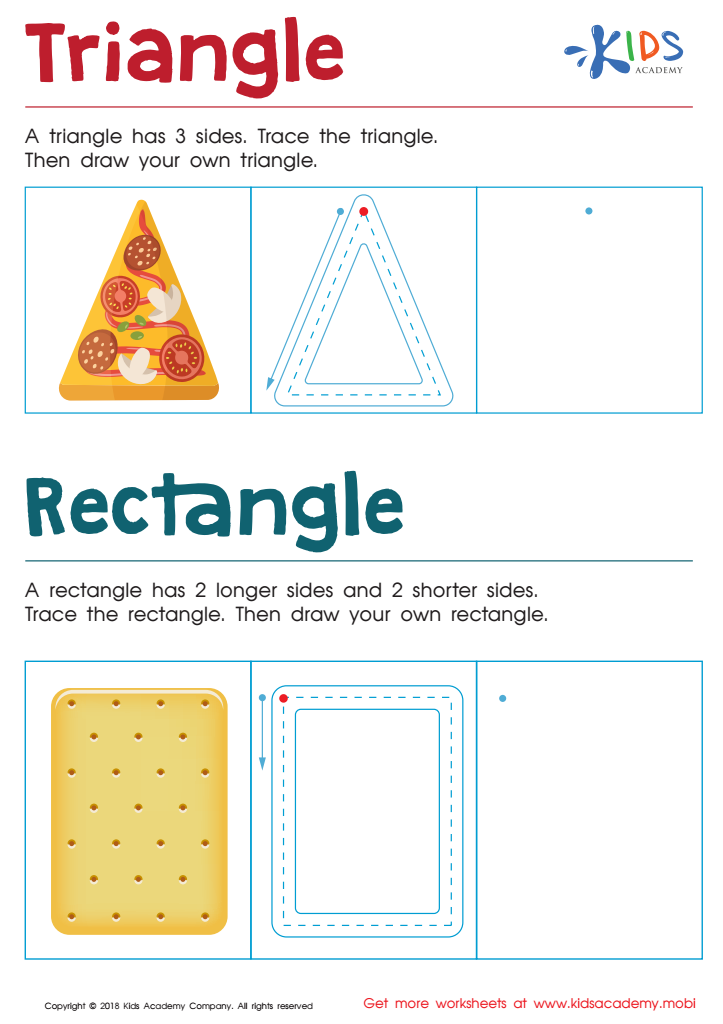
Triangle Rectangle Worksheet
 Assign to My Students
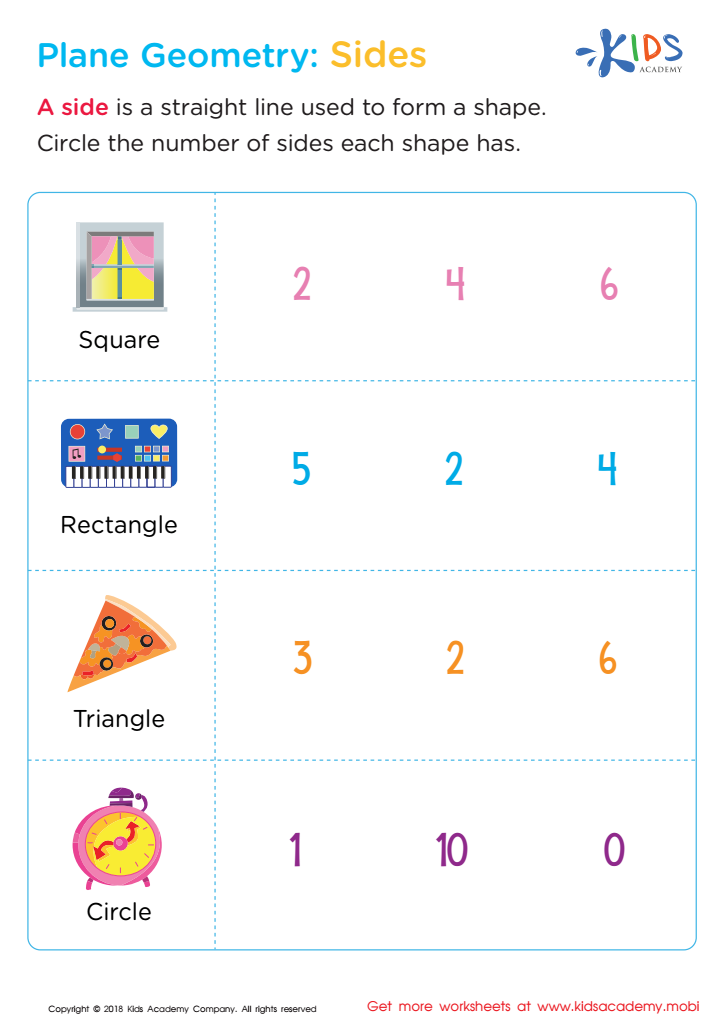
Plane Geometry: Sides Worksheet
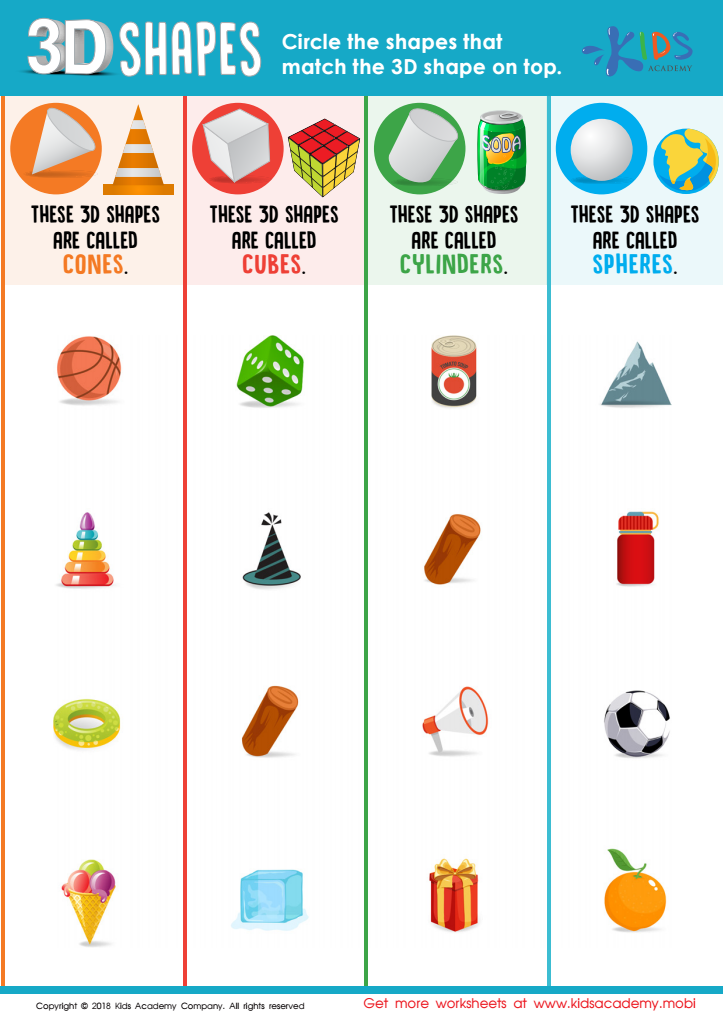
3D Shapes Worksheet







It's important for parents and teachers to focus on differentiating shapes with young children aged 3-5 because it lays a foundational understanding for future math skills and cognitive development. During these early years, children’s brains are highly receptive to new information, and learning about shapes helps them start to understand patterns, spatial relationships, and geometry. These skills are not only critical for math but also for problem-solving and logical thinking in daily life.
By recognizing and distinguishing different shapes, children enhance their visual and spatial abilities. This helps them understand how shapes fit together to form the world around them, aiding in the development of fine motor skills as they learn to draw or construct objects. Learning shapes also assists with language development; when children describe shapes, they expand their vocabulary and improve their ability to communicate.
Furthermore, early familiarity with shapes supports reading readiness. Recognizing the shapes of letters is a visual discrimination skill, which is crucial for reading. Differentiating shapes can also foster creativity and imagination as children identify and create patterns or designs.
Overall, parents and teachers should care about differentiating shapes because it's a pivotal part of a child's overall development, directly benefiting cognitive growth, language skills, and academic preparation for more complex concepts in the future.








