Division practice Normal Math Worksheets for Ages 3-5
4 filtered results
-
From - To
Enhance your preschooler's foundational math skills with our Division Practice Normal Math Worksheets, designed specifically for ages 3-5. These worksheets provide engaging activities that introduce the concepts of division in a playful and accessible manner. By using colorful visuals and hands-on exercises, children can explore dividing numbers and sharing equally in a fun way. Our structured, easy-to-follow worksheets encourage independent learning while reinforcing essential problem-solving skills. Perfect for both classroom settings and at-home practice, these resources help cultivate a love for math early on. Equip your little learners with the tools they need to succeed in their educational journey!
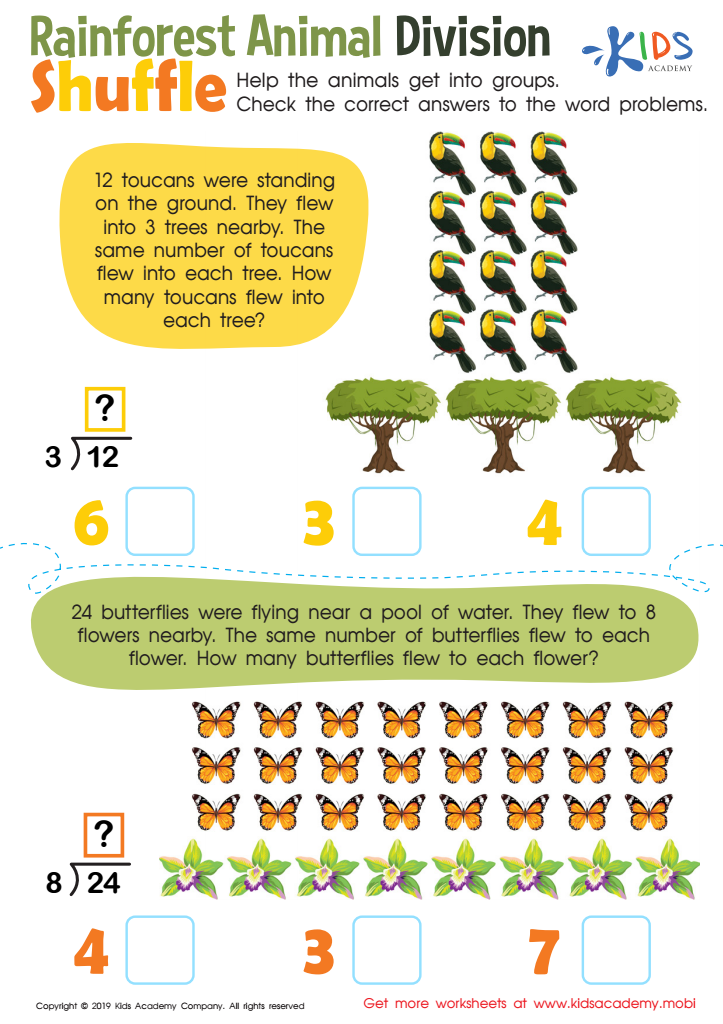
Rainforest Animal Division Worksheet
 Assign to My Students
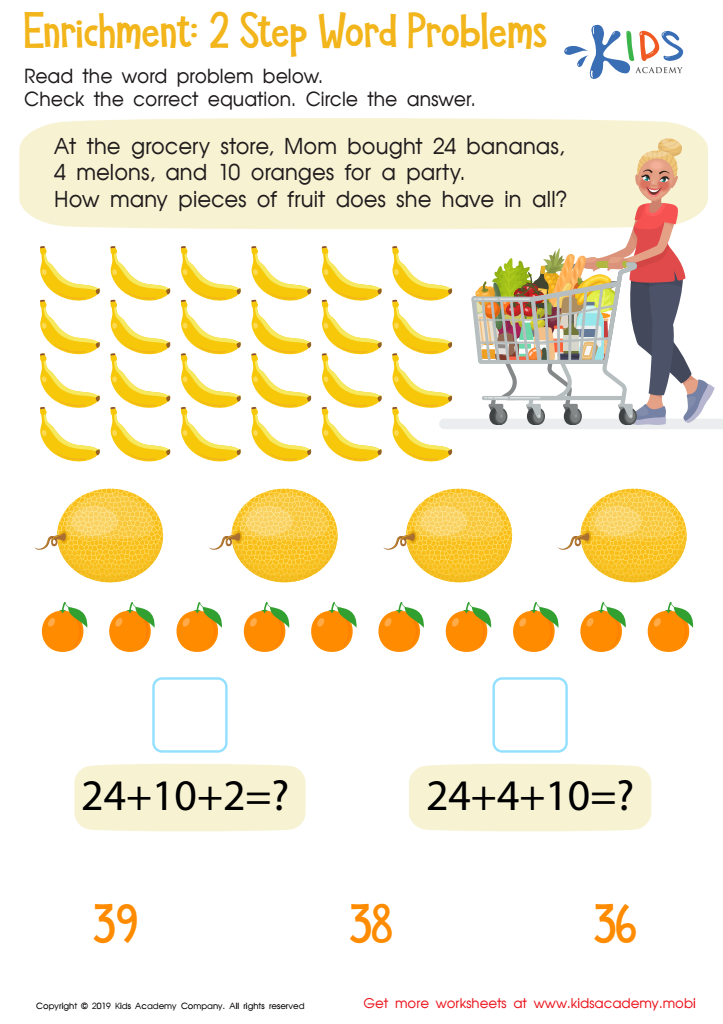
Enrichment -2 Step Word Problems Worksheet
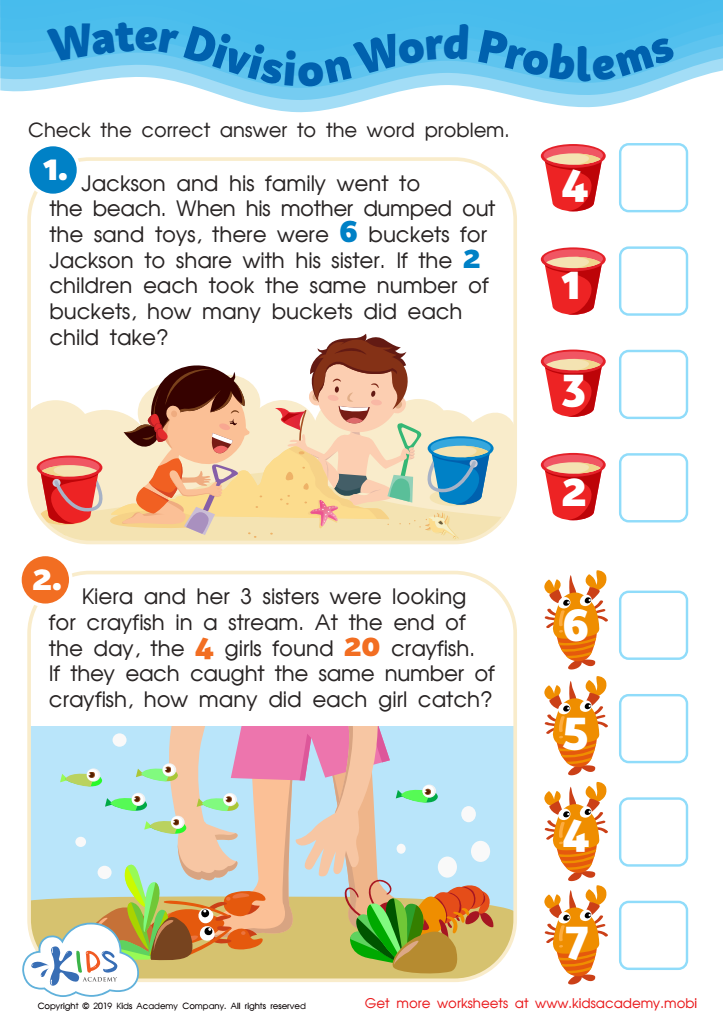
Water Division Word Problems Worksheet
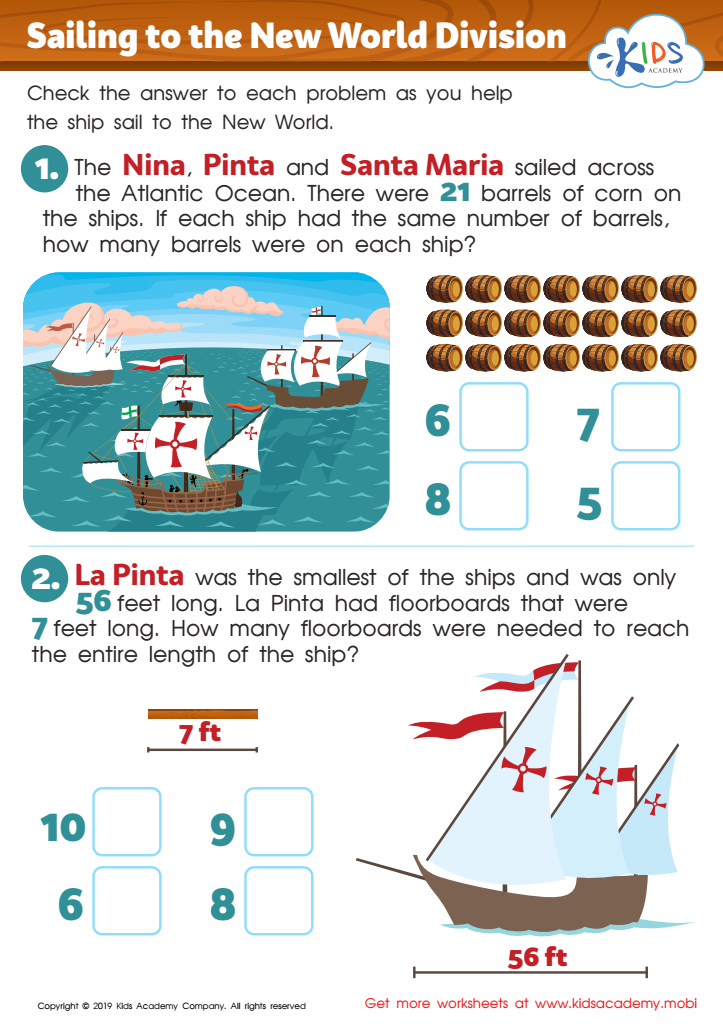
Sailing to the New World Division Worksheet





Parents and teachers should care about Division practice in Normal Math for ages 3-5 because early math skills form the foundation for lifelong learning and cognitive development. At this age, children are naturally curious about how things work and enjoy exploring concepts through play and engagement. Introducing basic division concepts, such as sharing objects or grouping items, helps children develop their understanding of numerical relationships and problem-solving abilities.
Early exposure to division fosters critical thinking and promotes mathematical language, encouraging children to articulate their thought processes. This practice not only aids in number sense but also enhances social skills as children learn to collaborate and communicate while dividing items.
Moreover, teaching division in simple, relatable ways aligns with early learning standards, ensuring that children are prepared for more complex math concepts as they progress in their education. Parents and teachers can leverage everyday situations—like sharing snacks or toys—as opportunities to reinforce these skills, making learning enjoyable and relevant.
In essence, embracing division practice in early education cultivates not only math skills but a love for learning, setting a positive trajectory for future academic success. It empowers children to see themselves as capable learners from a young age.








