Number Recognition Normal Word Problems Worksheets for Ages 3-5
6 filtered results
-
From - To
Discover our engaging "Number Recognition Normal Word Problems Worksheets" designed specifically for children aged 3-5! These worksheets provide fun and interactive exercises that help young learners develop essential number recognition skills through relatable, everyday scenarios. Each problem encourages critical thinking and simplifies math concepts, making learning enjoyable. From counting fruits to identifying numbers in playful contexts, children will gain confidence and proficiency in recognizing numbers. Perfect for home or classroom use, these worksheets are an excellent resource for early childhood educators and parents alike. Foster a love for math early on with our thoughtfully crafted word problems!
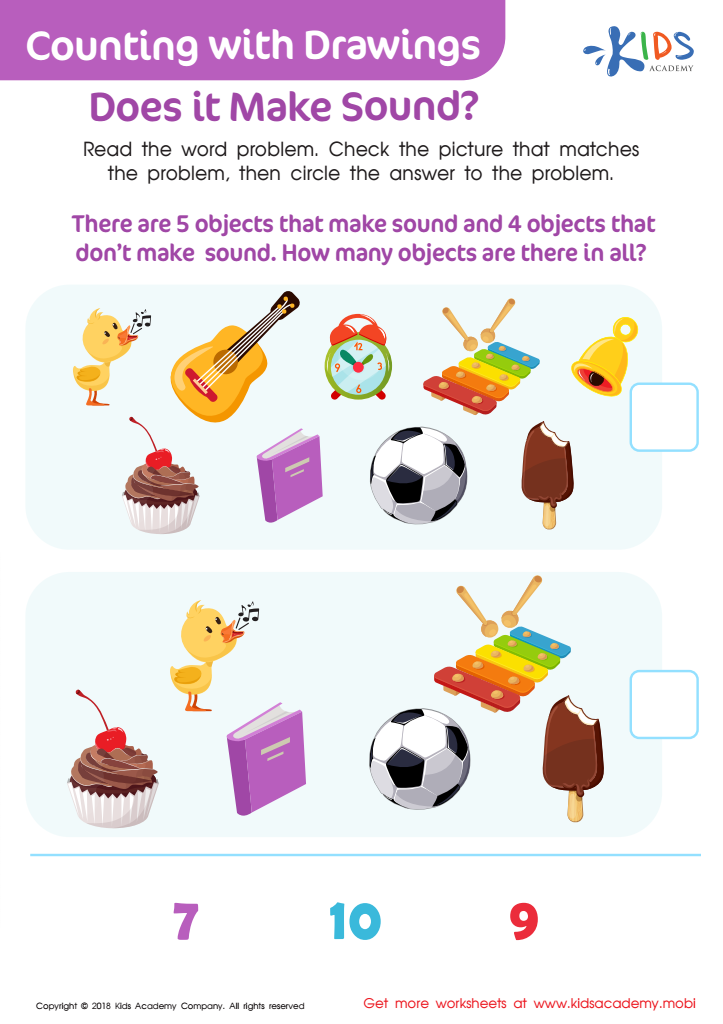
Counting With Drawings. Does It Make Sound? Worksheet
 Assign to My Students
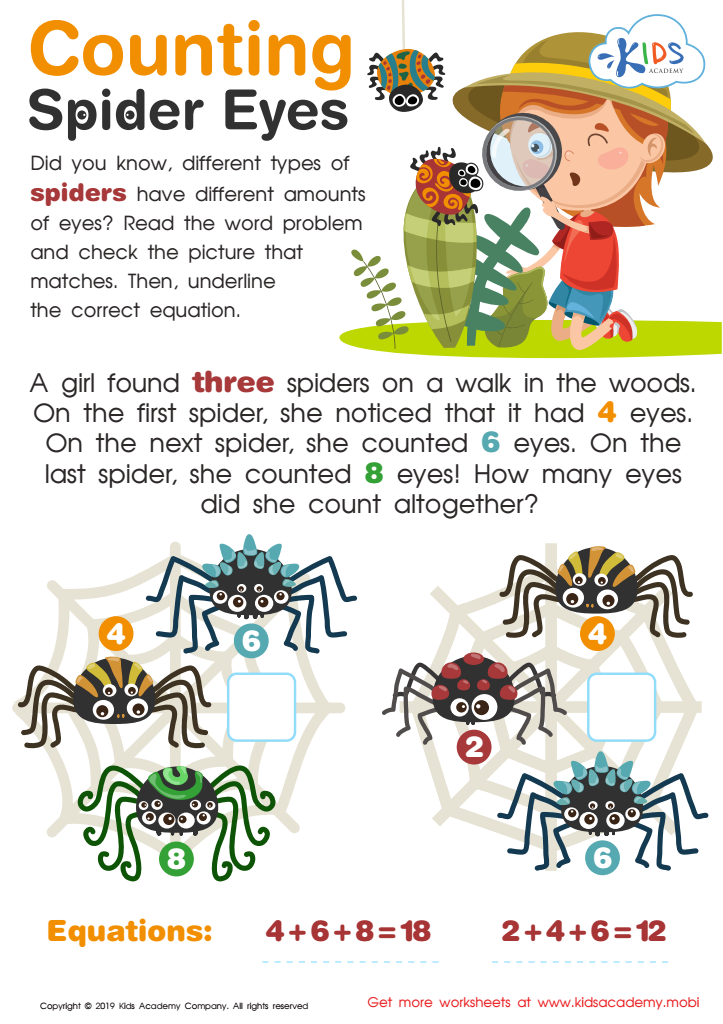
Counting Spider Eyes Worksheet
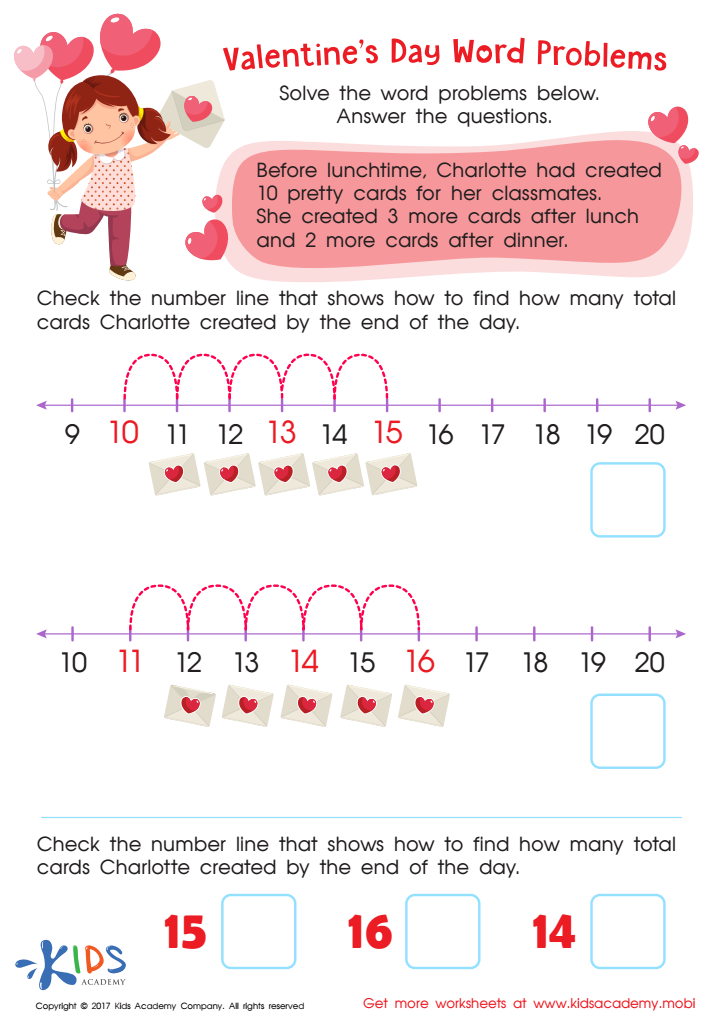
Valentines Day Word Problem Worksheet
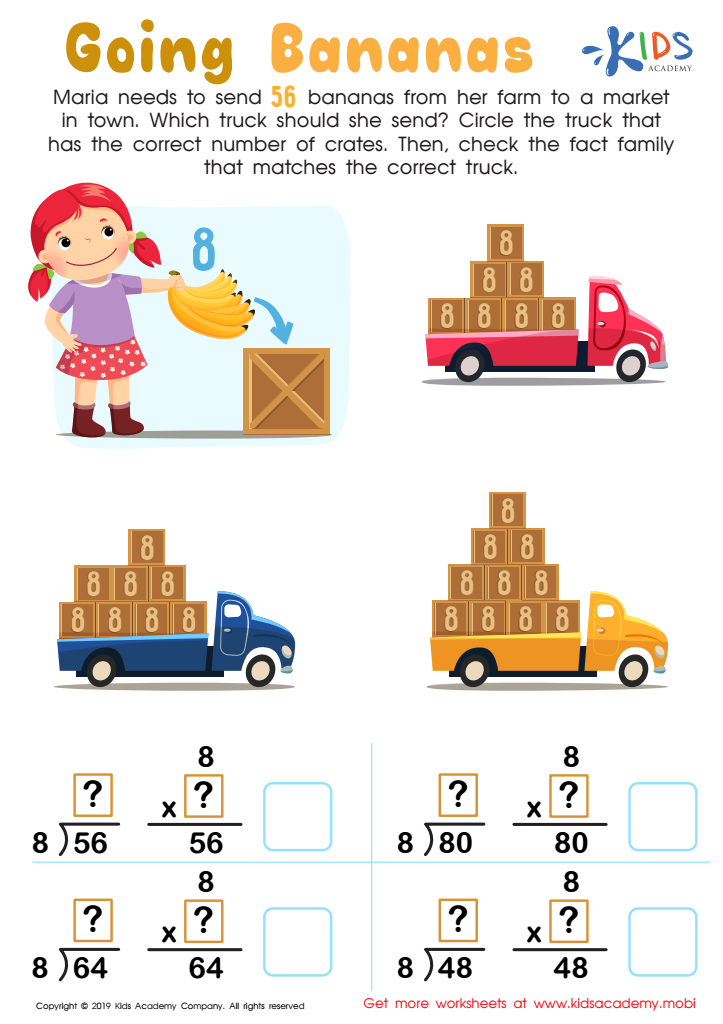
Going Bananas Worksheet
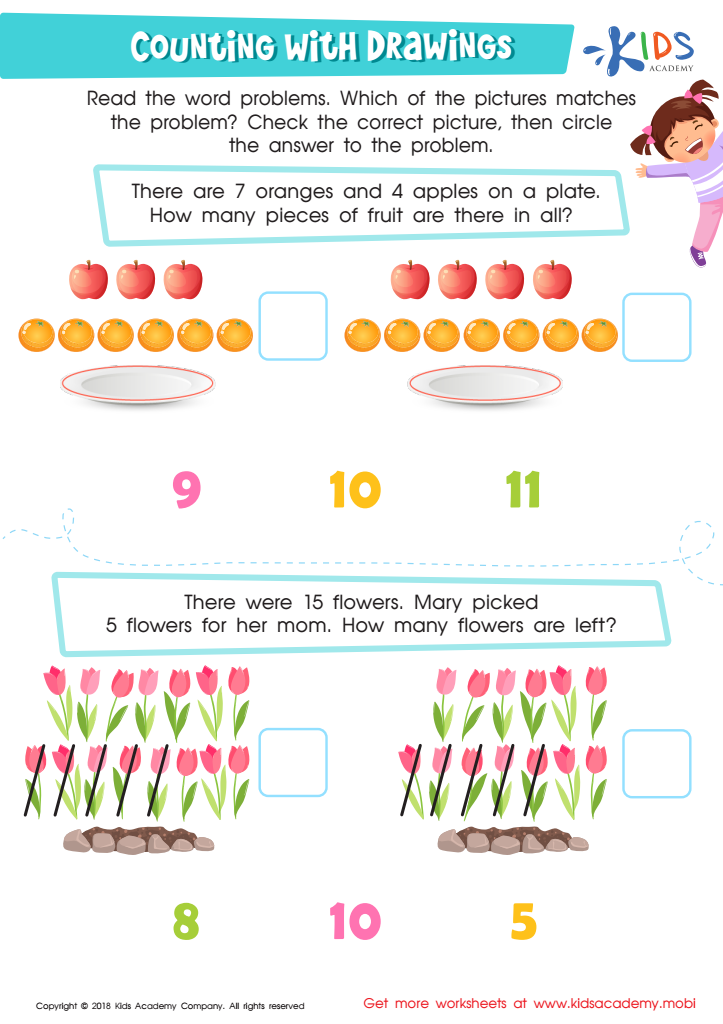
Counting with Drawings: Fruits & Chocolates Worksheet
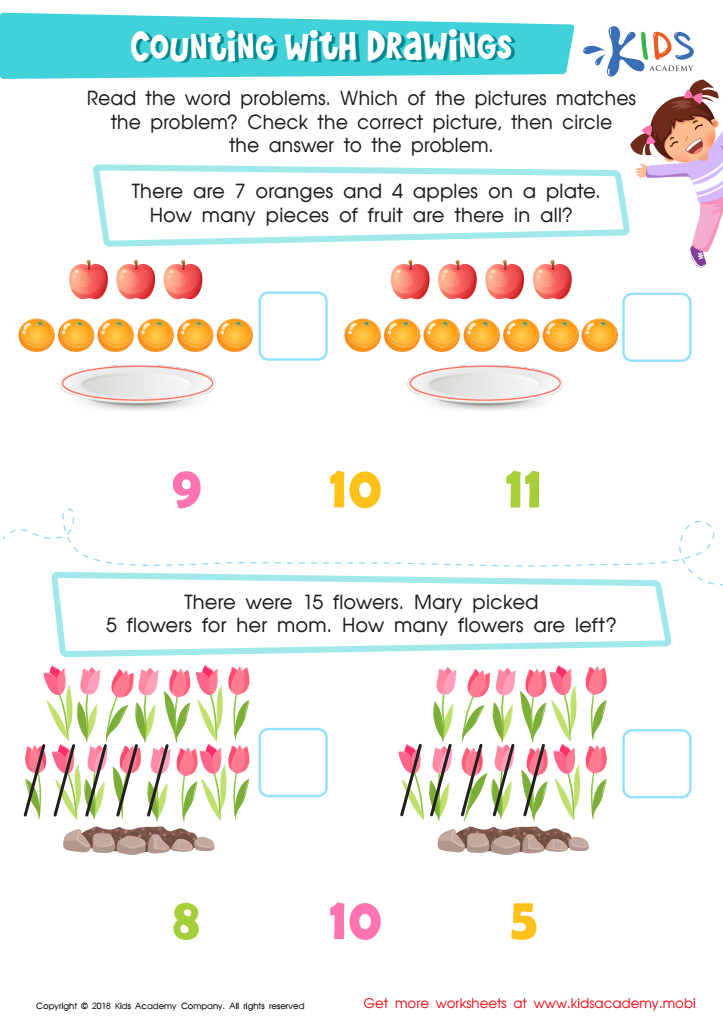
Counting with Drawings:Fruits & Flowers Worksheet








Number recognition and the ability to solve normal word problems are crucial skills for children ages 3-5, laying a foundation for future mathematical understanding. At this developmental stage, children begin to understand the concept of numbers, which enhances their cognitive abilities and promotes critical thinking. When parents and teachers incorporate normal word problems, they’re not just teaching arithmetic but also teaching kids to apply math in real-life contexts. This approach boosts problem-solving skills and encourages them to think logically, laying the groundwork for more complex mathematical concepts.
Moreover, engaging with numbers through fun, relatable word problems makes learning enjoyable, fostering a positive attitude toward mathematics. It also aids in language development as children learn to express mathematical ideas verbally. As they decipher word problems, they practice comprehension and enhance their vocabulary, solidifying their storytelling and reasoning skills.
By promoting number recognition and practicing word problems, parents and teachers can help children gain confidence in their math abilities from a young age. This early exposure not only boosts their academic performance later in school but also fosters a lifelong appreciation for learning, enabling them to navigate everyday situations effectively. Ultimately, supporting these skills is essential for holistic development in early childhood education.








