Analytical skills Normal Reading Comprehension Worksheets for Ages 3-5
5 filtered results
-
From - To
Unlock your child’s potential with our Analytical Skills Normal Reading Comprehension Worksheets, designed specifically for ages 3 to 5! These engaging and interactive worksheets encourage young learners to think critically as they explore stories and exercises that enhance comprehension. By analyzing characters, events, and settings, children develop essential analytical skills while enjoying fun narratives designed to captivate their imaginations. Our user-friendly worksheets promote independent learning, helping kids understand the important elements of stories, make connections, and improve their overall reading skills. Perfect for parents and educators, these resources provide a solid foundation for young students to become confident readers.
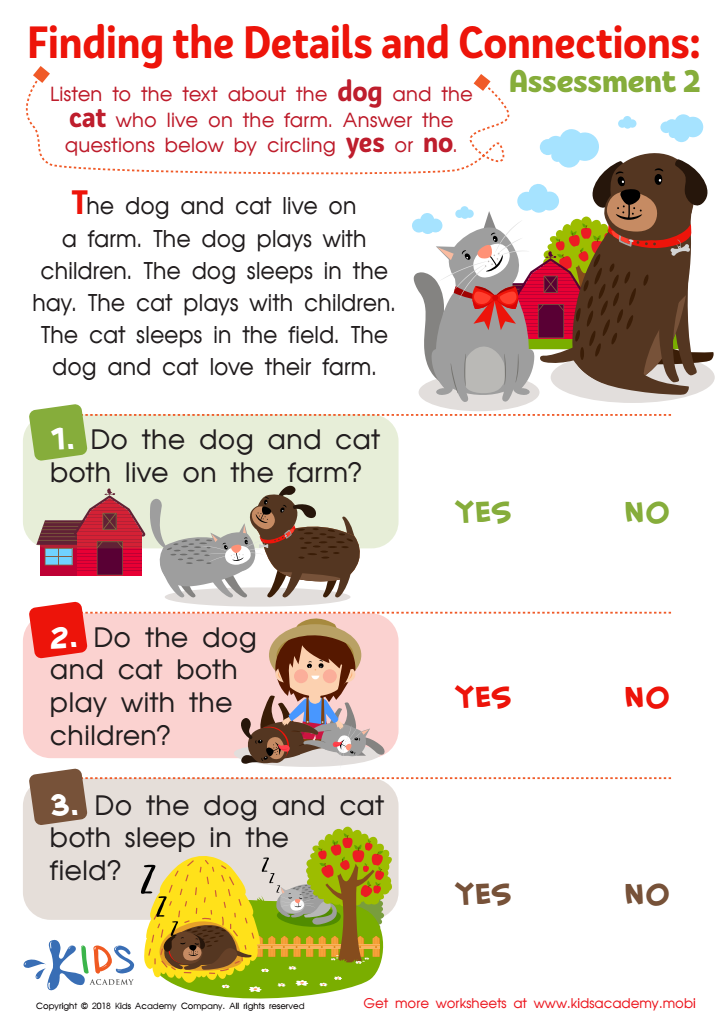
Finding the Details and Connections: Assessment 2 Worksheet
 Assign to My Students
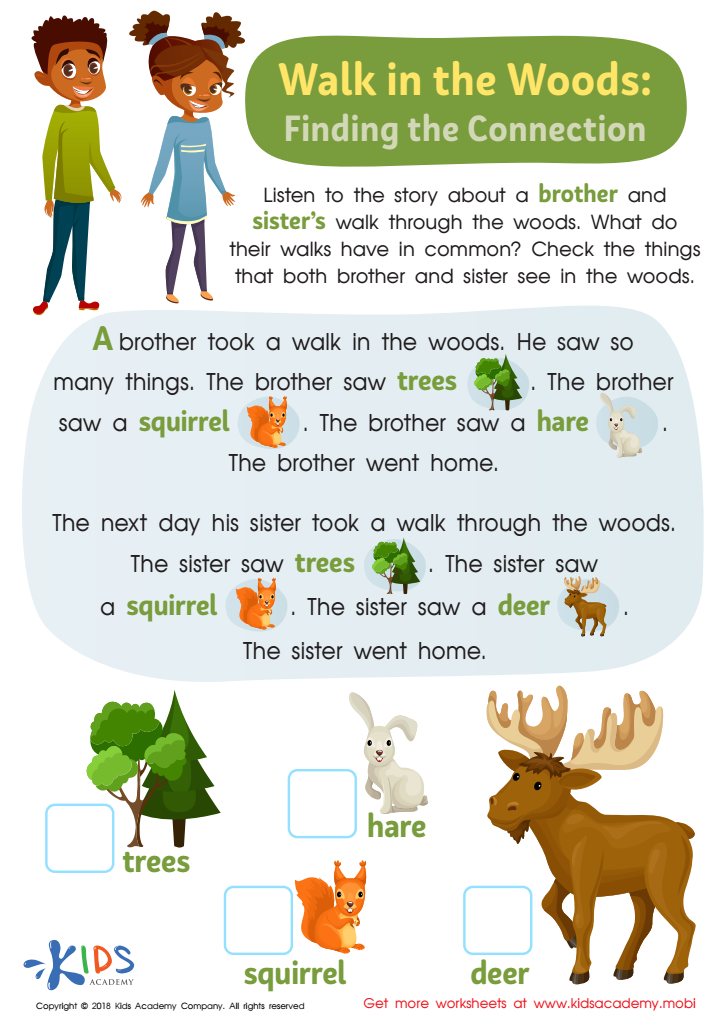
Walk In the Woods: Finding Connections Worksheet
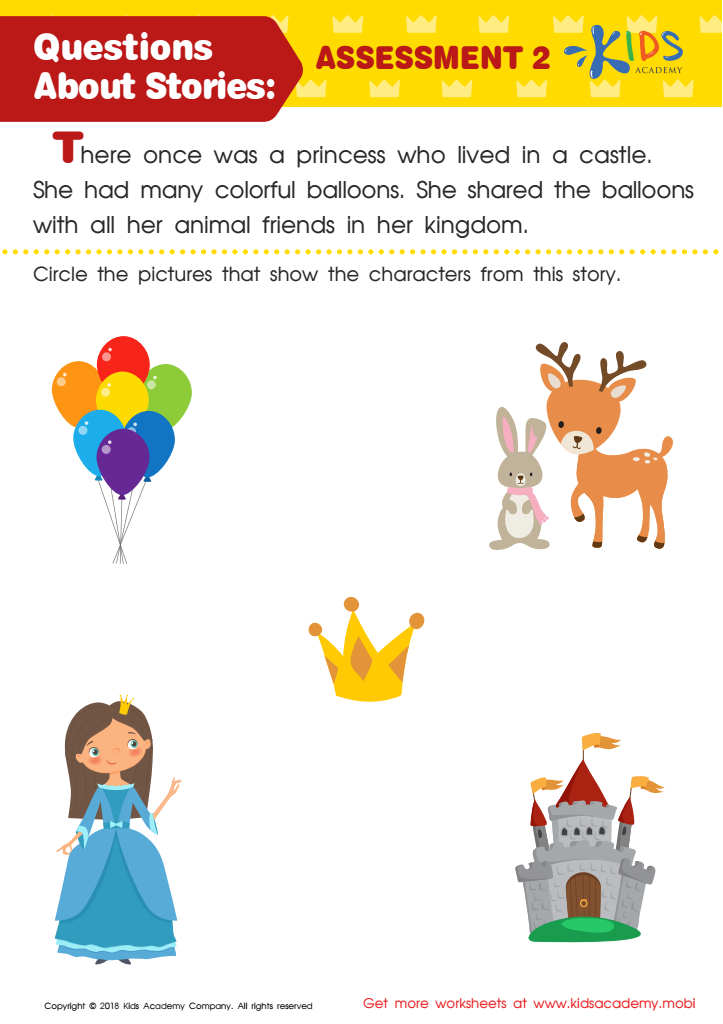
Questions About Stories: Assessment 2 Worksheet
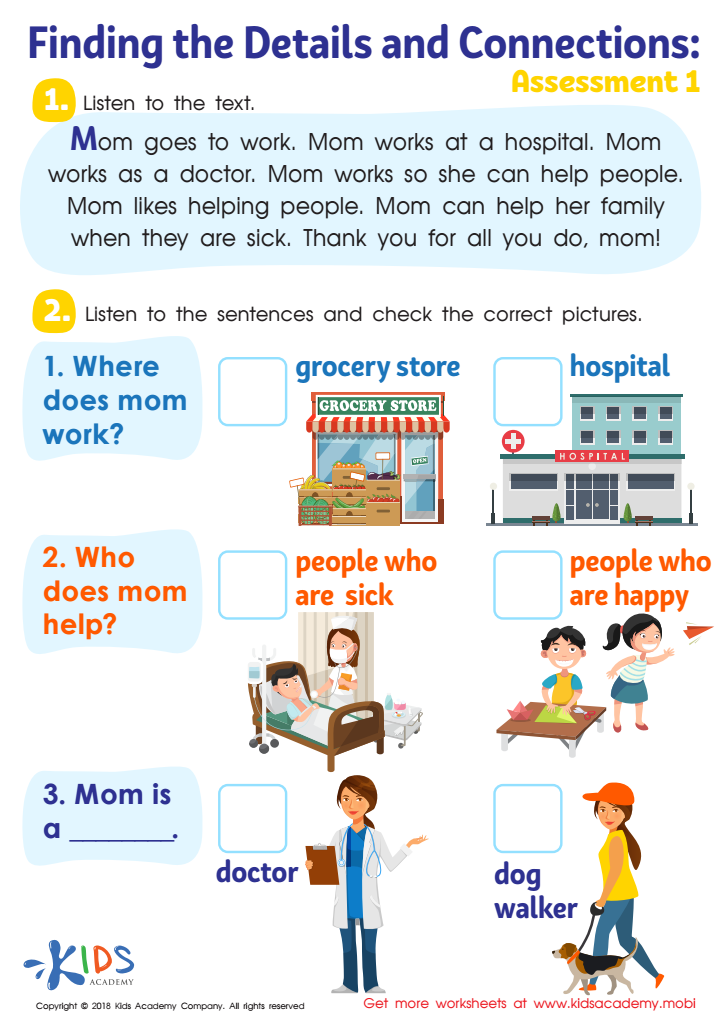
Finding the Details and Connections: Assessment 1 Worksheet
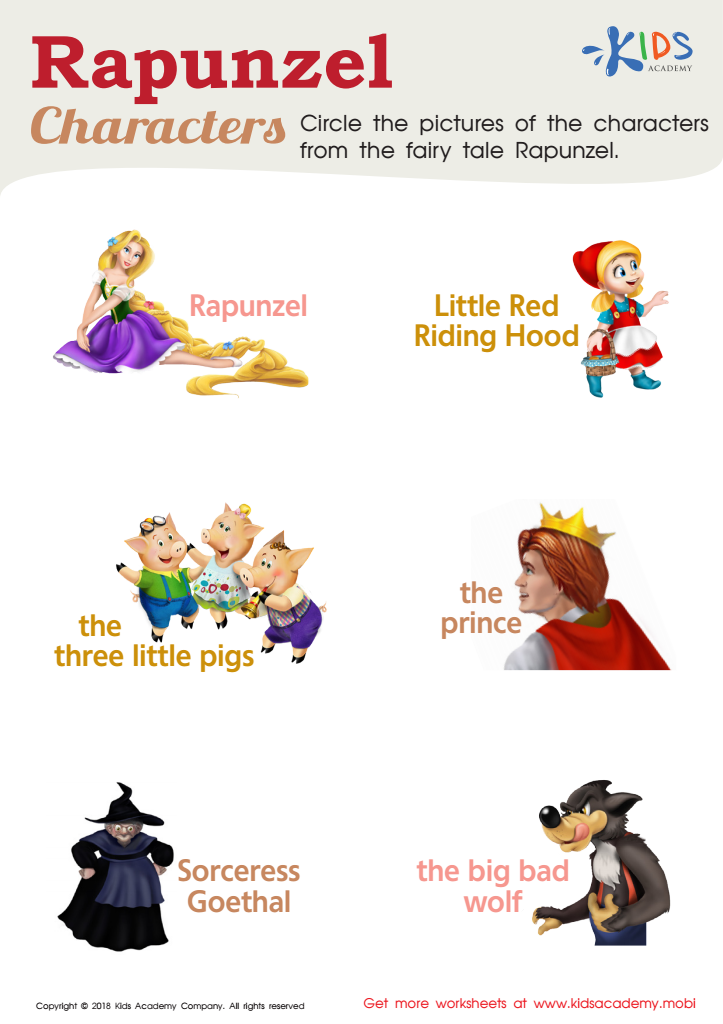
Rapunzel Characters Worksheet








Parents and teachers should prioritize developing analytical skills and reading comprehension in children aged 3-5 because these foundational abilities set the stage for lifelong learning. Analytical skills enable young children to observe, question, and assess the world around them. By fostering these skills early on, adults help children learn to make connections, recognize patterns, and solve problems effectively.
At this age, reading comprehension goes hand in hand with analytical abilities, as understanding stories promotes critical thinking and imagination. When children engage with books, they are encouraged to predict outcomes, infer meaning, and digest complex ideas, all of which enhance cognitive development.
Strong reading skills also support language development, helping children articulate thoughts and express emotions clearly. Furthermore, proficient readers often perform better academically, as they can better comprehend instructions and concepts as they progress in their education.
By nurturing these essential skills, parents and teachers not only enhance preschoolers' cognitive growth but also build the confidence and motivation needed for future learning. Creating a rich language environment through storytelling, questions, and discussions is crucial, making it essential that educators and caregivers actively engage with children to help develop graphic skills and literacy early on.








