Analytical skills Normal Reading Fiction Worksheets for Ages 3-5
5 filtered results
-
From - To
Introduce your young readers to the joy of fiction while developing crucial analytical skills with our Normal Reading Fiction Worksheets for ages 3-5. Carefully crafted for early learners, these worksheets help children explore the world of stories, characters, and plots in an engaging and educational way. Each worksheet is designed to stimulate curiosity and enhance understanding through fun activities that focus on key reading comprehension skills. Ideal for parents and teachers, our worksheets provide a strong foundation for literacy and critical thinking, ensuring your little learners are ahead of the curve as they grow. Unlock the power of reading today!
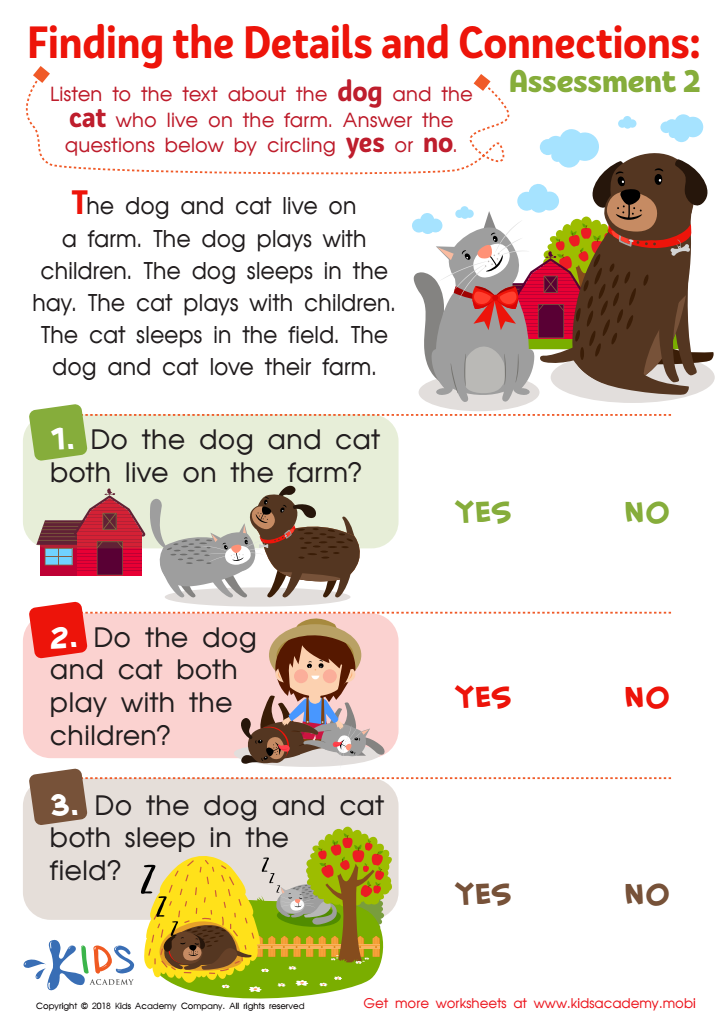
Finding the Details and Connections: Assessment 2 Worksheet
 Assign to My Students
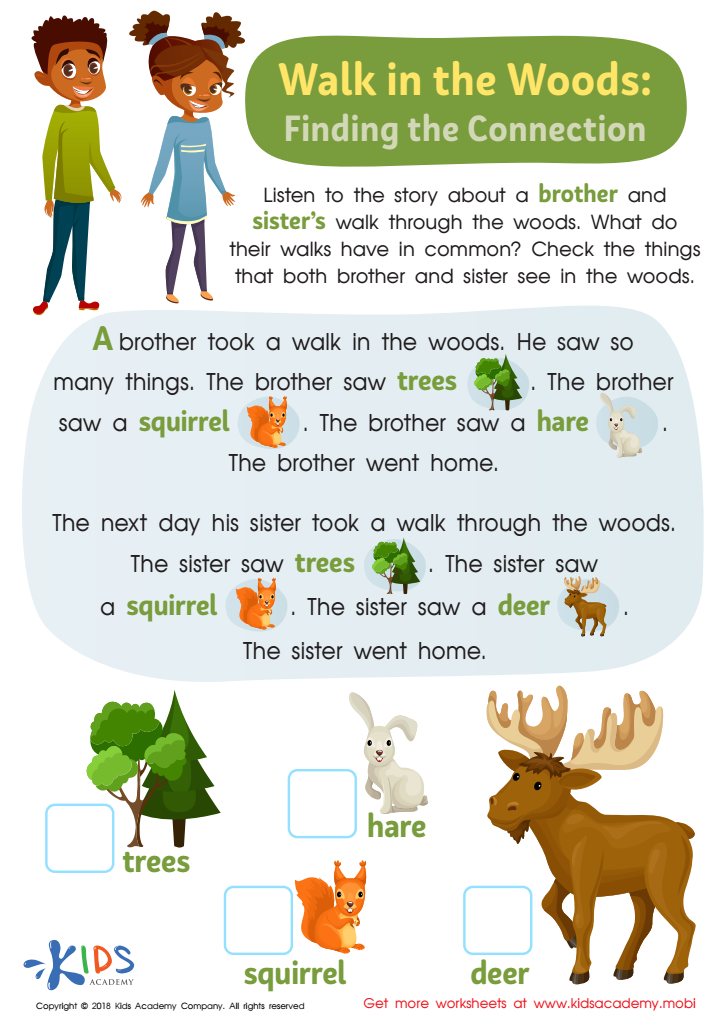
Walk In the Woods: Finding Connections Worksheet
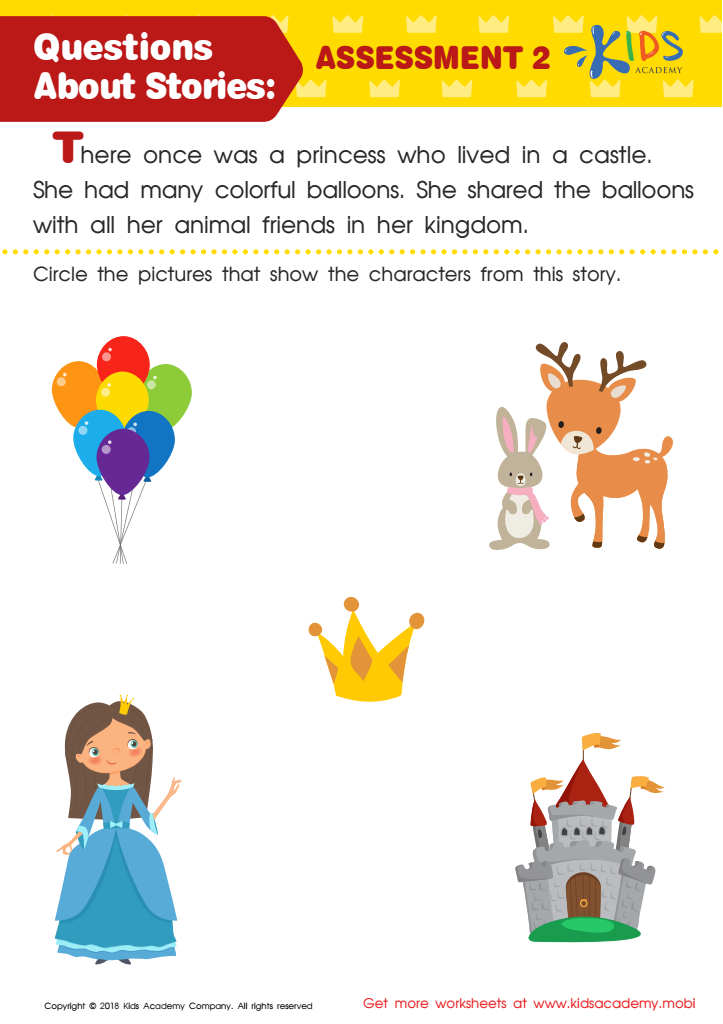
Questions About Stories: Assessment 2 Worksheet
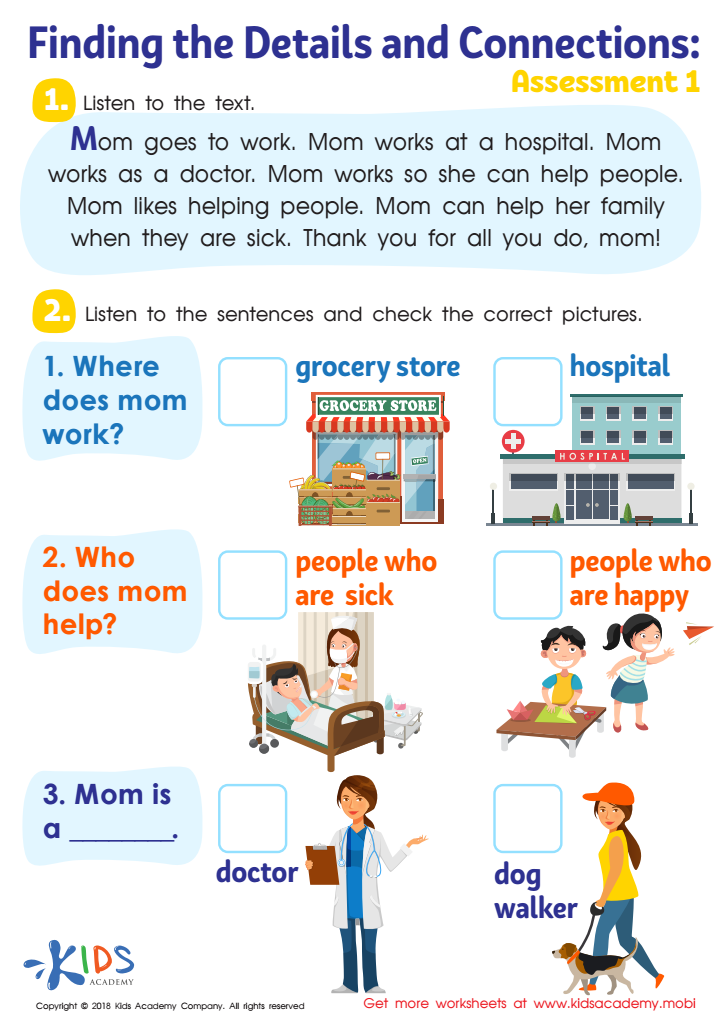
Finding the Details and Connections: Assessment 1 Worksheet
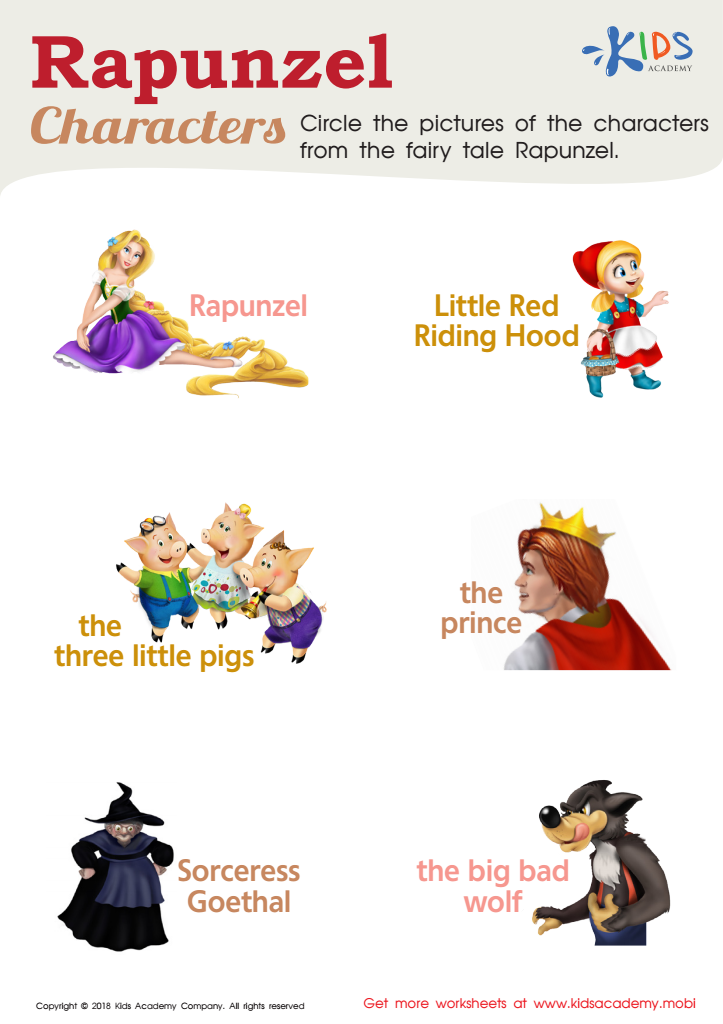
Rapunzel Characters Worksheet



.jpg)




Developing analytical skills through normal reading, especially fiction, for children aged 3-5 is incredibly important for several reasons. At this formative stage, young brains are at a prime period for cognitive development. Fictional stories captivate their imagination and introduce them to new concepts, characters, and worlds, fostering creativity and curiosity.
When parents and teachers engage with children during reading sessions, asking questions about the plot, characters, and settings, they stimulate the child’s thinking and comprehension abilities. This interactive reading not only enhances vocabulary but also promotes critical thinking and problem-solving skills. Analytical thinking begins with understanding basic storylines and progresses to more complex ideas like predicting outcomes, identifying character motivations, and understanding cause and effect.
Moreover, early exposure to analytical thinking sets a strong educational foundation. It prepares children for future learning, making them adept at observing details, drawing inferences, and making judgments. Socially, discussing books helps in developing communication skills, verbal expression, and emotional intelligence. Fictional stories often convey moral lessons and different perspectives, enriching a child’s understanding of the world around them. By nurturing these skills early through reading, parents and teachers equip children with tools essential for academic success and thoughtful, empathetic living.







