Rhyming skills development Normal Rhyming Words Worksheets for Ages 3-5
3 filtered results
-
From - To
Enhance your child’s literacy with our Rhyming Skills Development Worksheets designed for ages 3-5. Our engaging worksheets focus on normal rhyming words, helping young learners recognize sound patterns and develop phonetic awareness. Through fun activities, your child will explore word pairs, strengthen vocabulary, and improve reading skills. Ideal for preschool and early kindergarten stages, these worksheets promote critical thinking and creativity while fostering a love for language. With a variety of interactive exercises and colorful illustrations, your little ones will enjoy the journey of learning to rhyme. Download our worksheets today to support your child's early reading development!
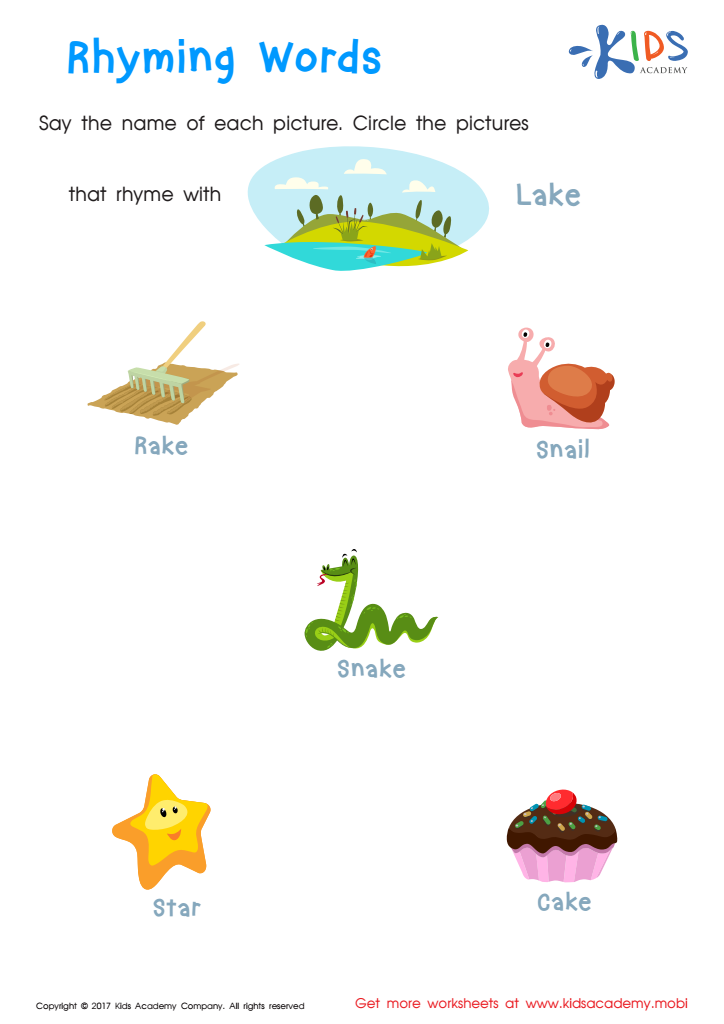
Rhyming Words Rhyming Worksheet
 Assign to My Students
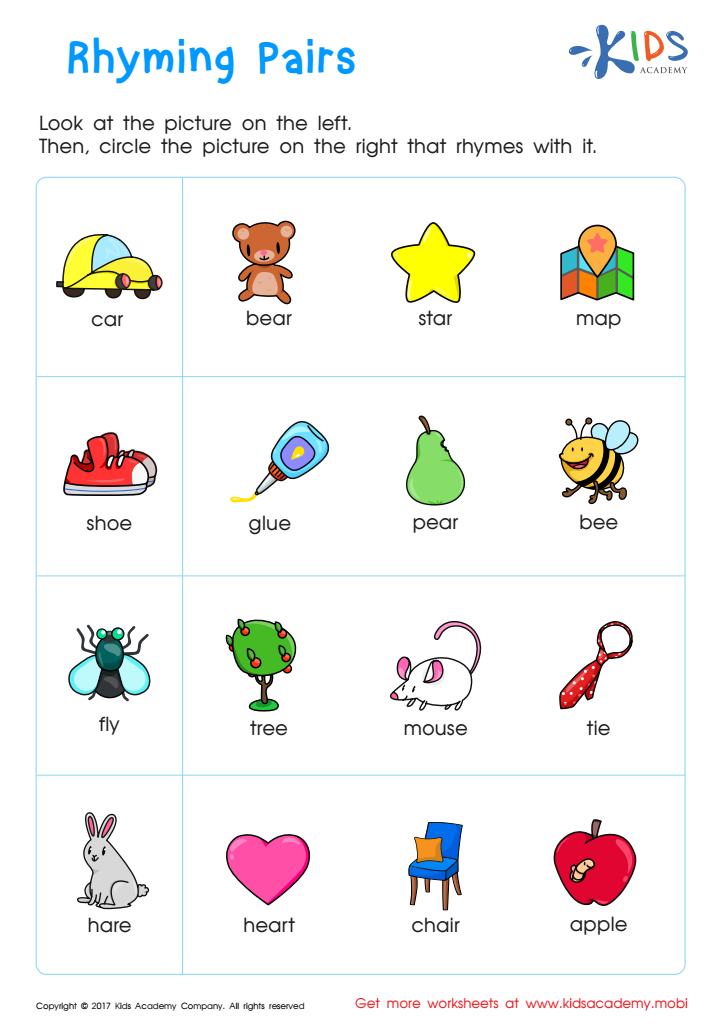
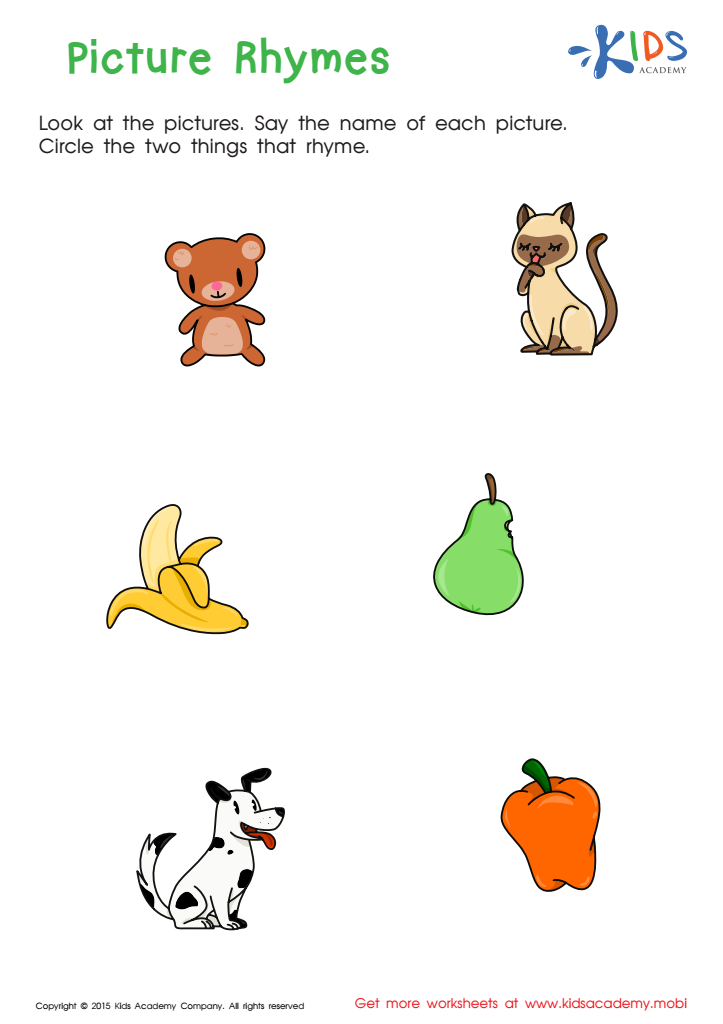
First Words: Picture Rhymes Worksheet




.jpg)



Rhyming skills are essential for children ages 3-5 as they lay the groundwork for effective literacy development. At this early stage, children develop phonemic awareness, the ability to hear, identify, and manipulate sounds in words. Rhyming activities enhance this skill by helping young learners recognize patterns in language, making it easier for them to decode words once they begin reading.
Additionally, rhyming supports vocabulary development. Exposure to rhyming words can enrich a child’s language by introducing them to new vocabulary pairs and concepts, often in a fun and engaging way. For instance, phrases and songs that utilize rhyme are more memorable, increasing retention and recall.
Furthermore, engaging with rhymes fosters listening skills and encourages social interactions during playful learning. Activities such as storytelling, songs, and rhyming games provide opportunities for bonding between parents, teachers, and children while promoting language manipulation and creativity.
By prioritizing rhyming skills, parents and teachers pave the way for improved literacy outcomes, ensuring that children have a strong foundation for reading and writing as they grow. Overall, investing in rhyming skills during early childhood is a crucial, enjoyable component of a child’s educational journey.








