Vocabulary enhancement Normal Rhyming Words Worksheets for Ages 3-5
5 filtered results
-
From - To
Discover the perfect way to boost your child's vocabulary with our Vocabulary Enhancement Normal Rhyming Words Worksheets designed for ages 3-5. These fun and engaging printable worksheets help young learners recognize and create rhymes, expanding their word knowledge and phonetic awareness. Each worksheet is carefully crafted to promote early reading skills in an enjoyable and interactive manner. Encourage your little ones to explore the magic of words and sounds, fostering a love for learning that will last a lifetime. Start your child's journey towards enhanced vocabulary and confident communication today with Kids Academy.
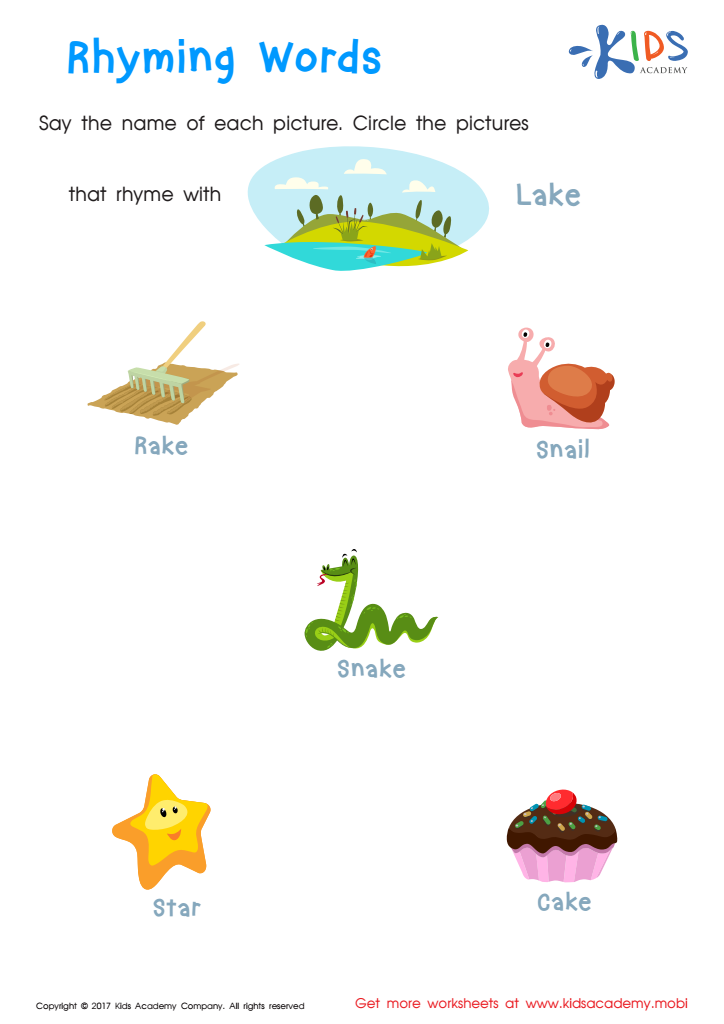
Rhyming Words Rhyming Worksheet
 Assign to My Students
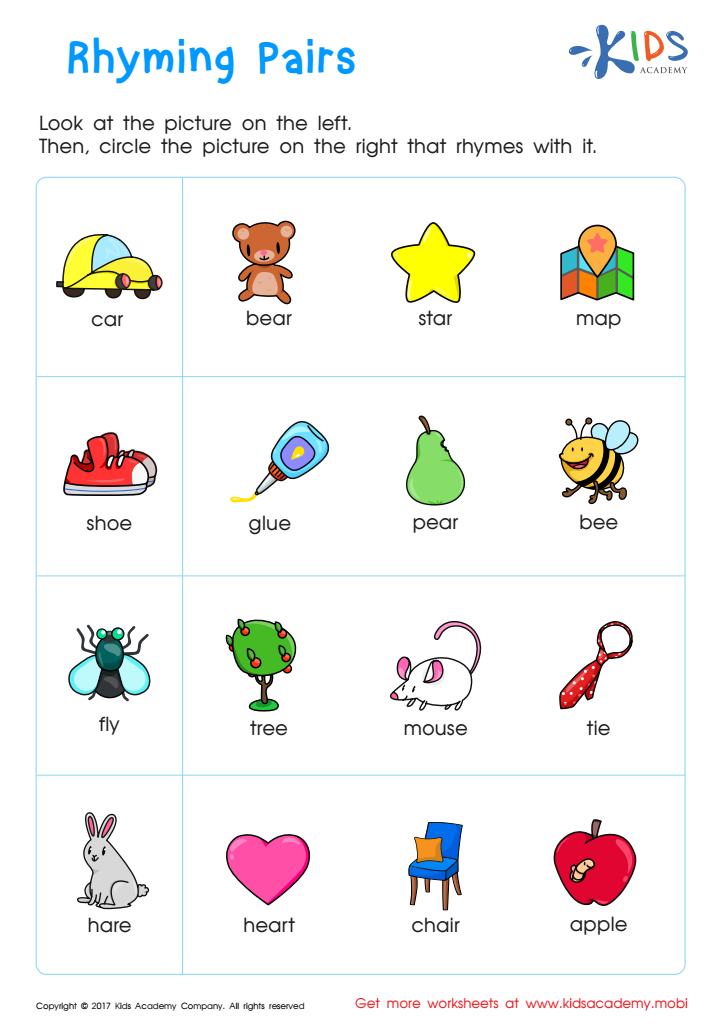
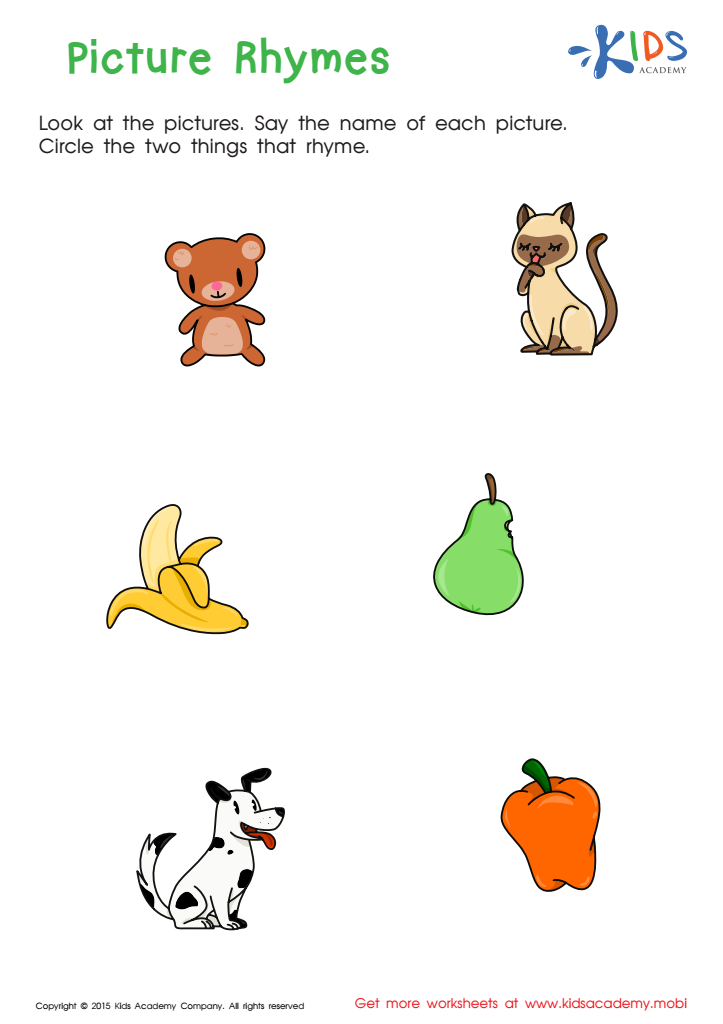
First Words: Picture Rhymes Worksheet
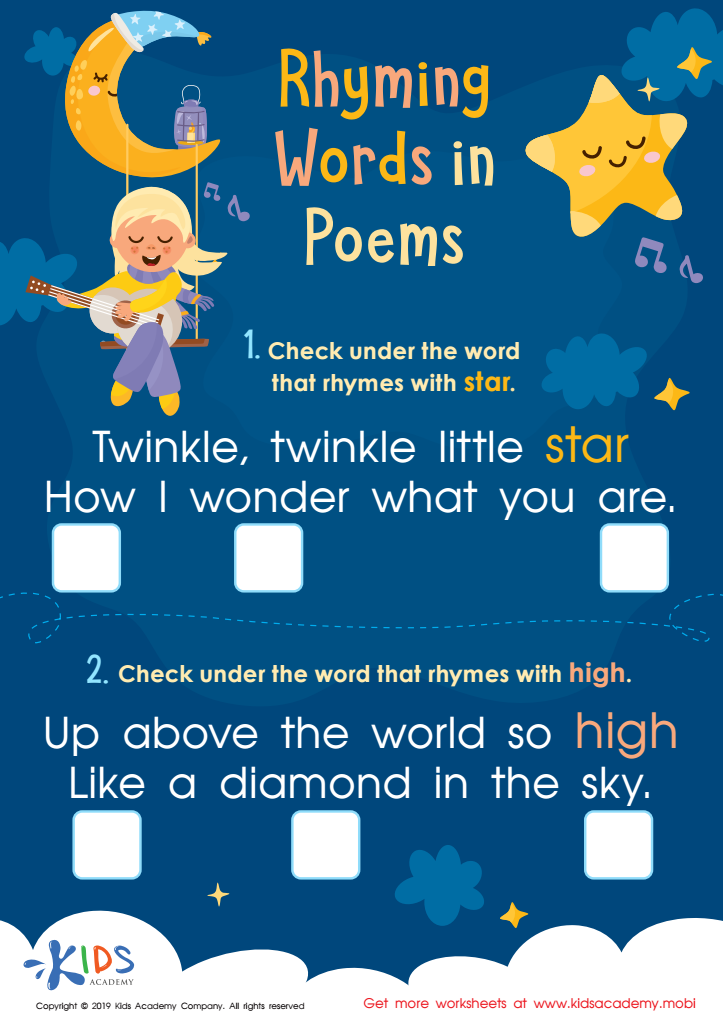
Rhyming Words in Poems Worksheet
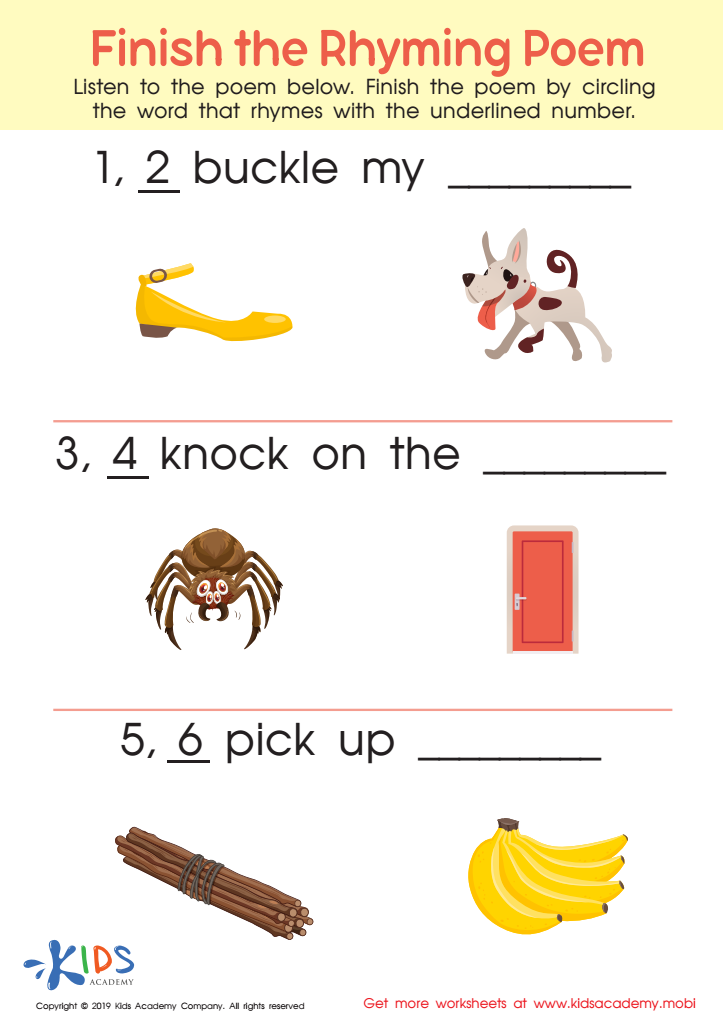
Finish Rhyming Poem Worksheet





.jpg)


Enhancing vocabulary through normal rhyming words for ages 3-5 is crucial for early language development, and parents and teachers should prioritize it. At this developmental stage, children's brains are rapidly growing and highly receptive to new information. Rhyming helps kids hear the rhythm and sounds of language, making it easier for them to learn and remember new words.
Rhyming words are fun and engaging, capturing children's interest and motivating them to participate in verbal activities. This playful approach supports phonological awareness, which is the ability to recognize and manipulate sounds. Phonological awareness is essential for reading and writing skills later on.
Rhyming also introduces children to patterns and structures within our language, which aids in cognitive development. Understanding rhyming patterns enhances children's ability to predict, recite, and even create new pairs of their own, building confidence and creativity.
Moreover, these activities can strengthen the bond between children and adults. Parents and teachers who participate in singing, reading, and playing rhyming games offer a rich, immersive language experience that also promotes emotional well-being.
In sum, encouraging vocabulary enhancement through rhyming words at this tender age lays a strong foundation for literacy, academic success, and comprehensive cognitive development. This interactive and enjoyable method makes lifelong learning more organic and effective.








