Cognitive Development Normal Animals Worksheets for Ages 3-5
3 filtered results
-
From - To
Boost your child's growing mind with our "Cognitive Development Normal Animals Worksheets for Ages 3-5." These engaging, expertly crafted resources are designed to enhance early cognitive skills through fun and educational animal-themed activities. Each worksheet helps children recognize different animal species, understand their habitats, and develop critical thinking and problem-solving skills. Perfect for toddlers and preschoolers, these printables provide a great blend of learning and entertainment, reinforcing fundamental concepts while sparking curiosity and imagination. Strengthen your child's cognitive growth and knowledge of the animal kingdom with our interactive and enjoyable worksheets. Explore now and watch them learn!
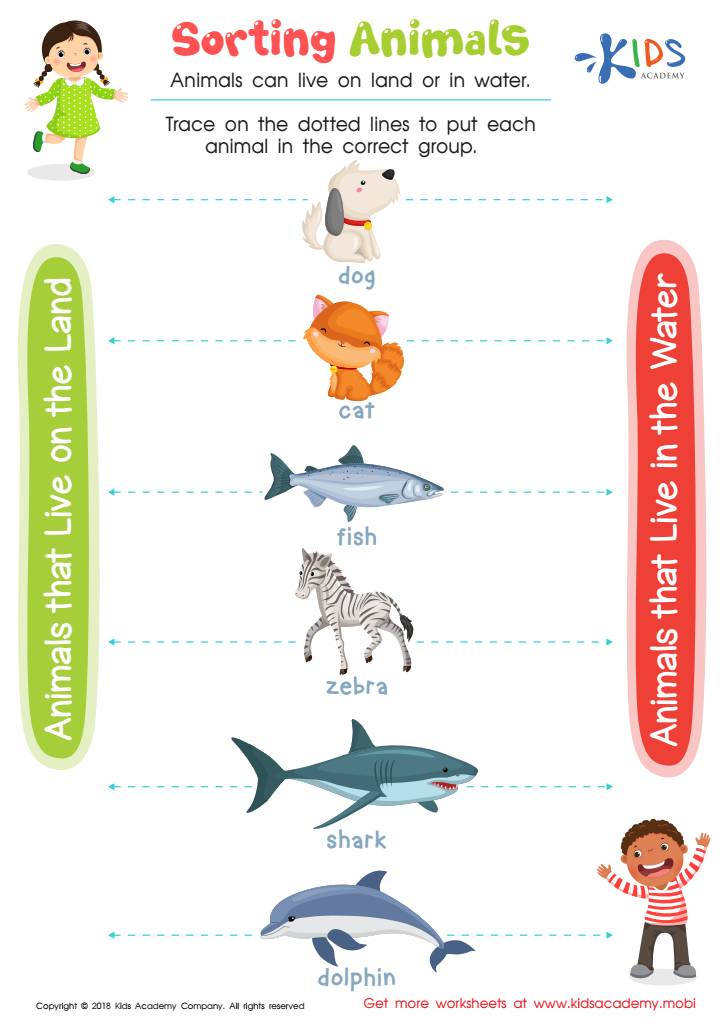
Sorting Animals Worksheet
 Assign to My Students
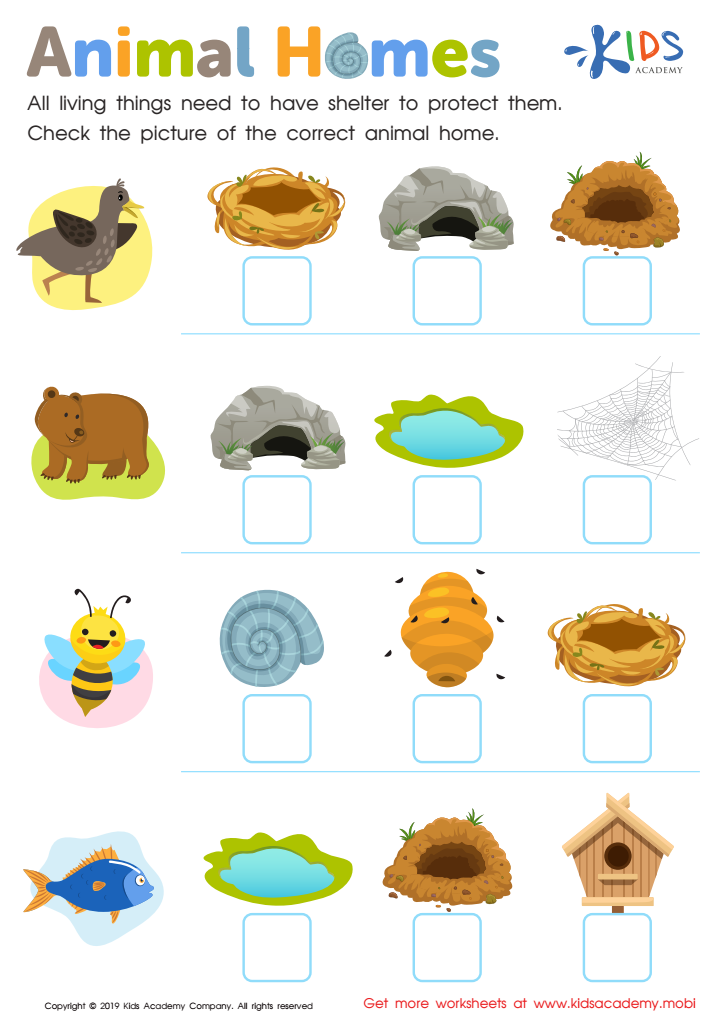
Animal Homes Worksheet
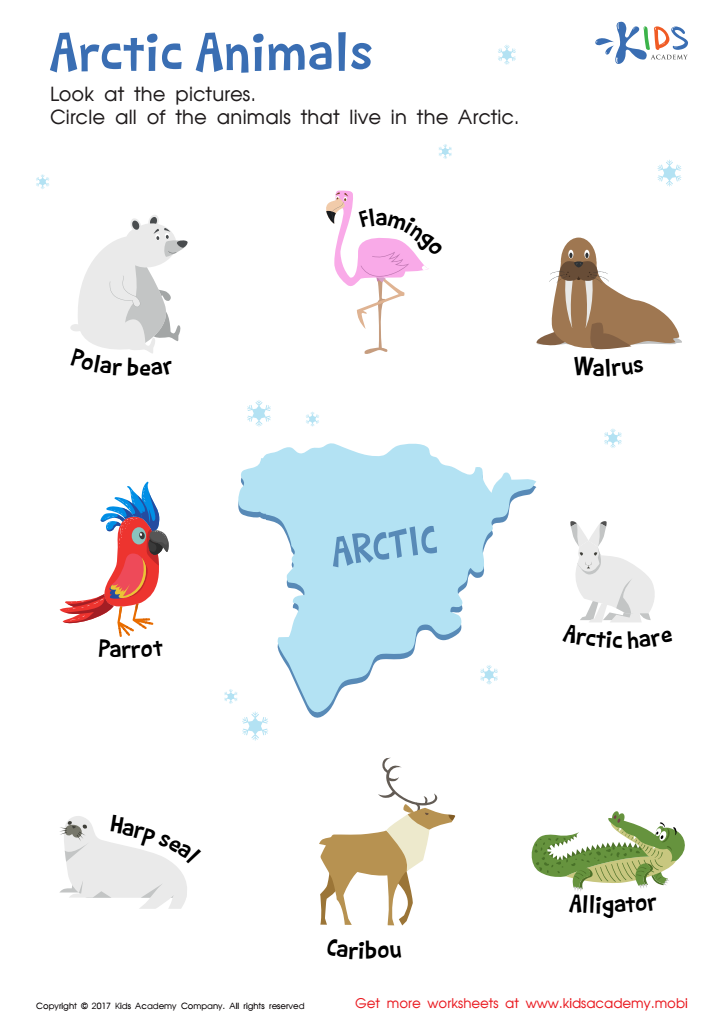
Arctic Animals Worksheet








Parents and teachers should prioritize understanding cognitive development in animals for children aged 3-5 because it fosters critical early learning skills. Engaging young children with the concept of how normal animals think, solve problems, and interact with their environment can spark curiosity and nurture a lifelong love for learning. At this developmental stage, children are naturally curious and their cognitive abilities are rapidly expanding. Learning about animals' cognitive processes can enhance kids' observational skills, analytical thinking, and ability to draw connections between living beings and their surroundings.
Furthermore, such knowledge can encourage empathy by teaching kids to appreciate the complexity of animal life and the importance of respecting all creatures. Understanding cognitive similarities and differences between humans and animals can also lay the groundwork for scientific thinking. It helps establish foundational skills like classification, pattern recognition, and hypothesis testing. Interactive learning, such as observing animals, storytelling, or educational videos, allows children to engage multisensory experiences which are pivotal for retention and comprehension.
In sum, focusing on cognitive development in normal animals for young children not only augments their intellectual growth and empathy but also prepares them for more complex concepts they will encounter academically and in real-world contexts.








