Logical Reasoning Normal Science Worksheets for Ages 3-5
4 filtered results
-
From - To
Enhance your child's logical reasoning skills with our engaging Normal Science Worksheets designed for ages 3-5. These fun, printable worksheets encourage young learners to think critically and gain a deeper understanding of the world around them. Featuring colorful illustrations and age-appropriate activities, each worksheet promotes problem-solving and analytical thinking. Kids will enjoy sorting, categorizing, and making connections through interactive exercises that stimulate their curiosity. Perfect for parents and educators, our resources foster a love for science while building foundational skills essential for future learning. Explore the power of reasoning and watch your little ones thrive in their educational journey!
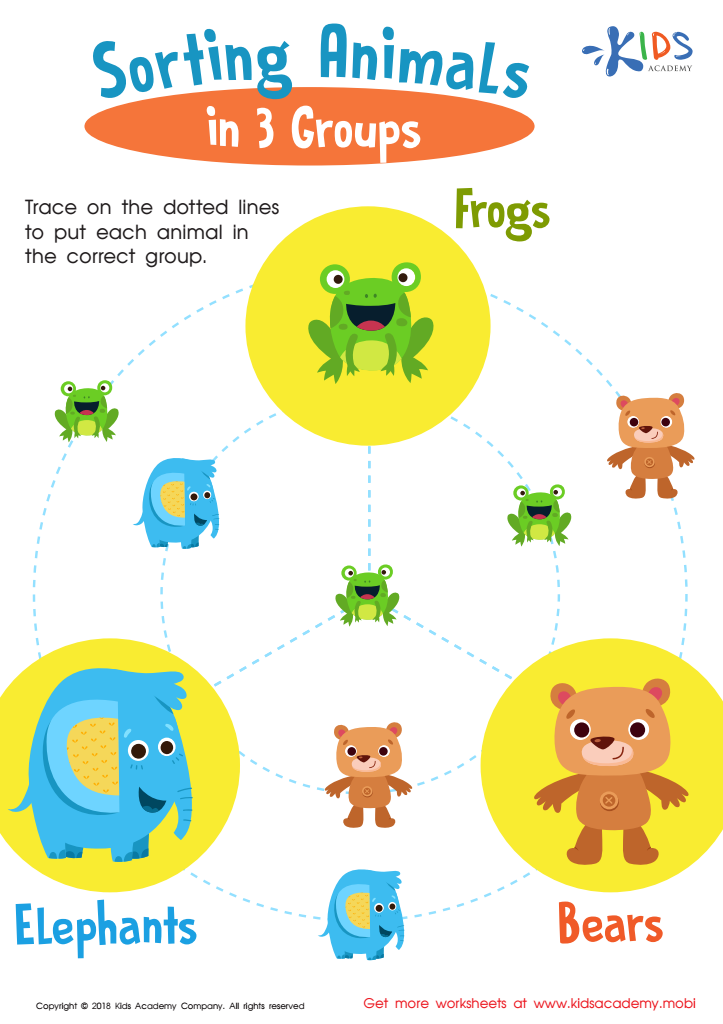
Sorting Animals in 3 Groups Worksheet
 Assign to My Students
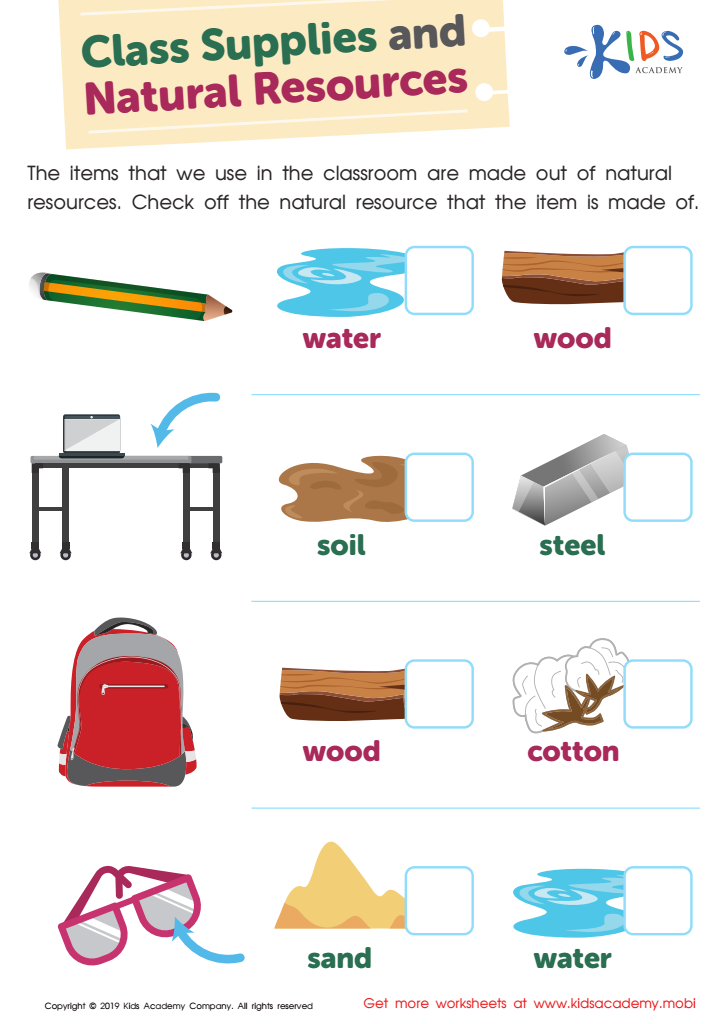
Class Supplies and Natural Resources Worksheet
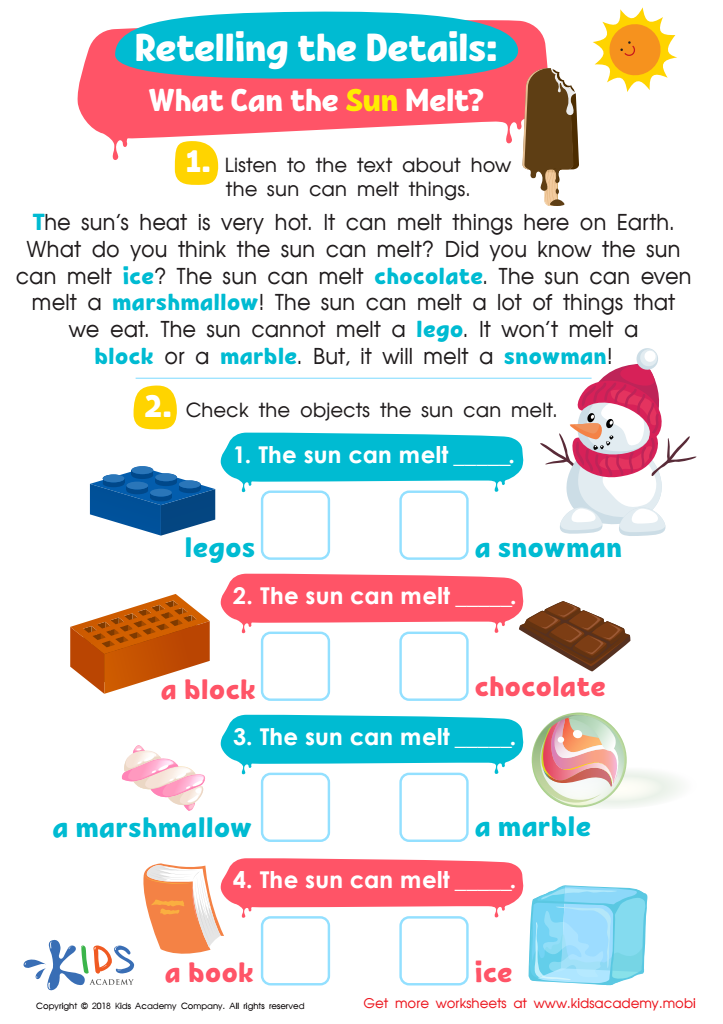
Retelling the Details: What Can the Sun Melt? Worksheet
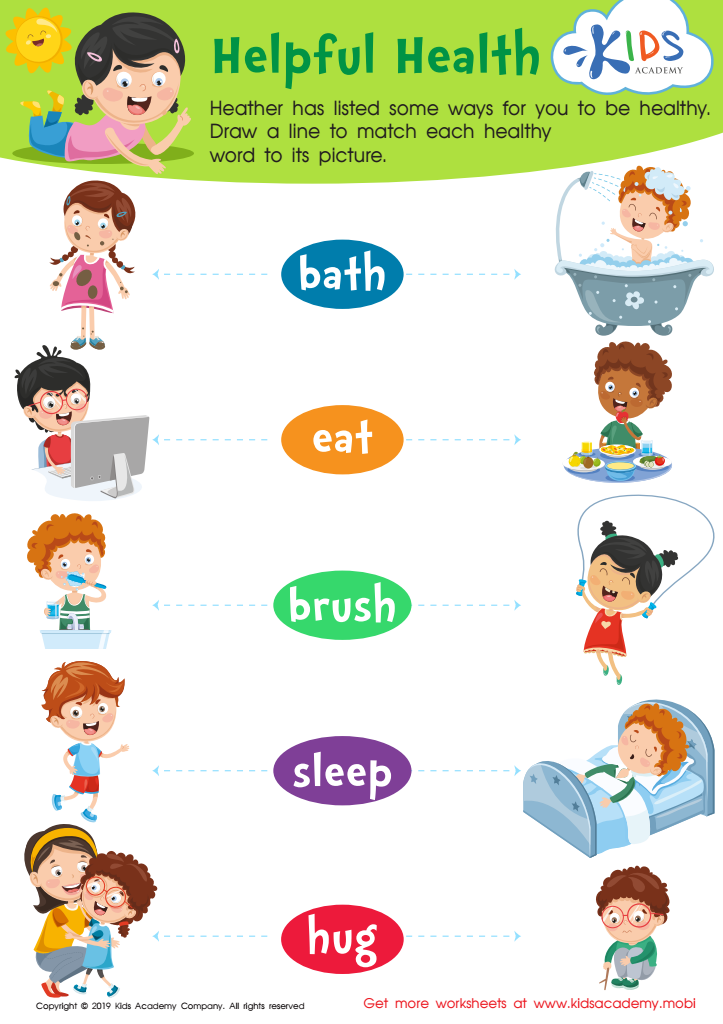
Helpful Health Worksheet








Logical reasoning and normal science play a crucial role in the developmental journey of children aged 3-5. During these formative years, kids are naturally curious and keen to explore the world around them. Fostering logical reasoning skills helps them develop critical thinking abilities, enabling them to analyze situations, solve problems, and make informed decisions. This capacity to reason logically lays a solid foundation for lifelong learning.
Moreover, introducing normal science concepts—such as observations, experiments, and understanding cause and effect—encourages children to approach learning in an empirical manner. This practice nurtures curiosity and a love for investigation. By engaging in simple scientific activities, such as exploring nature or conducting mini-experiments, children begin to grasp the fundamental principles of how the world works, aiding their cognitive development.
Parents and teachers should care about a child’s exposure to logical reasoning and normal science because these experiences promote cognitive and social-emotional growth. They not only enhance problem-solving skills but also encourage collaboration, communication, and creativity. As children learn to think critically, they build the tools needed to navigate future academic challenges, fostering independent thinkers and informed citizens. Thus, investing in these early learning opportunities pays lifelong dividends for each child.







