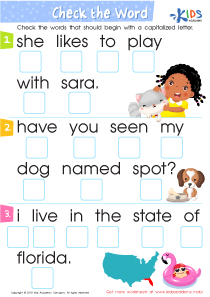
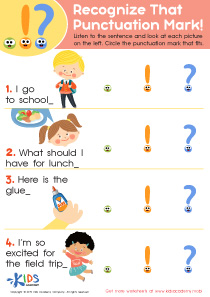
Verb identification Normal Grammar Worksheets for Ages 3-5
3 filtered results
-
From - To
Discover our engaging Verb Identification Normal Grammar Worksheets designed specifically for children aged 3-5! These interactive worksheets provide a fun and educational way for young learners to explore and identify verbs in sentences. Tailored to support early literacy skills, our materials enhance language development through colorful visuals and simple exercises. Kids will enjoy tasks that encourage participation and enhance their understanding of action words. With a focus on normal grammar concepts, these worksheets are perfect for preschool and kindergarten classrooms. Foster a love for learning with our easy-to-use resources, helping young minds build a solid foundation in grammar.
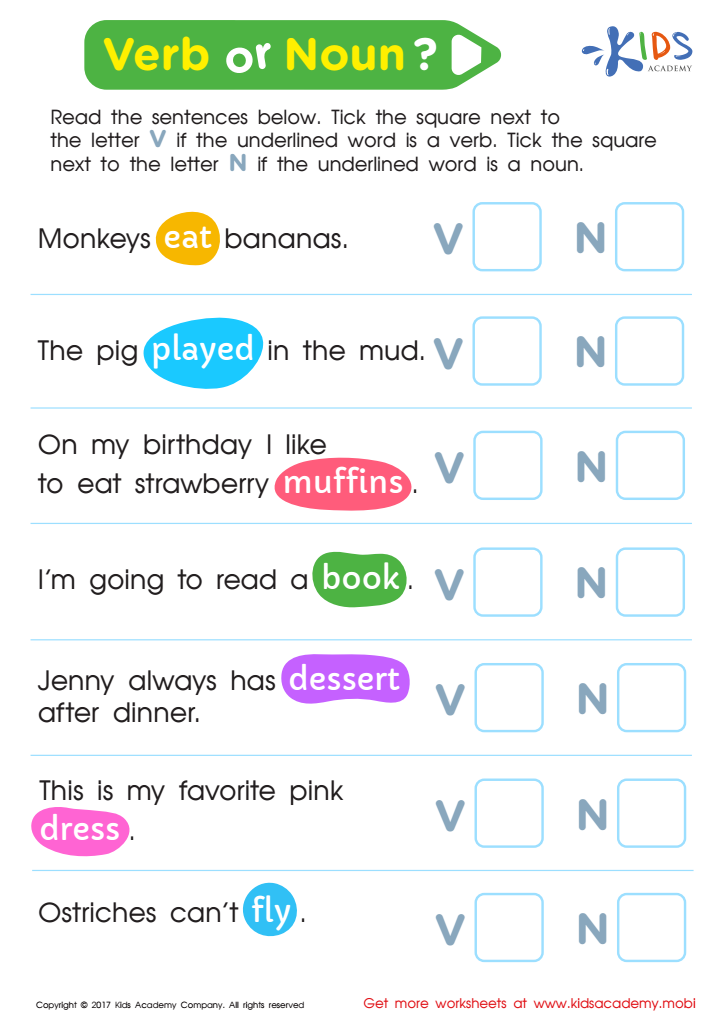
Verb or Noun Worksheet
 Assign to My Students
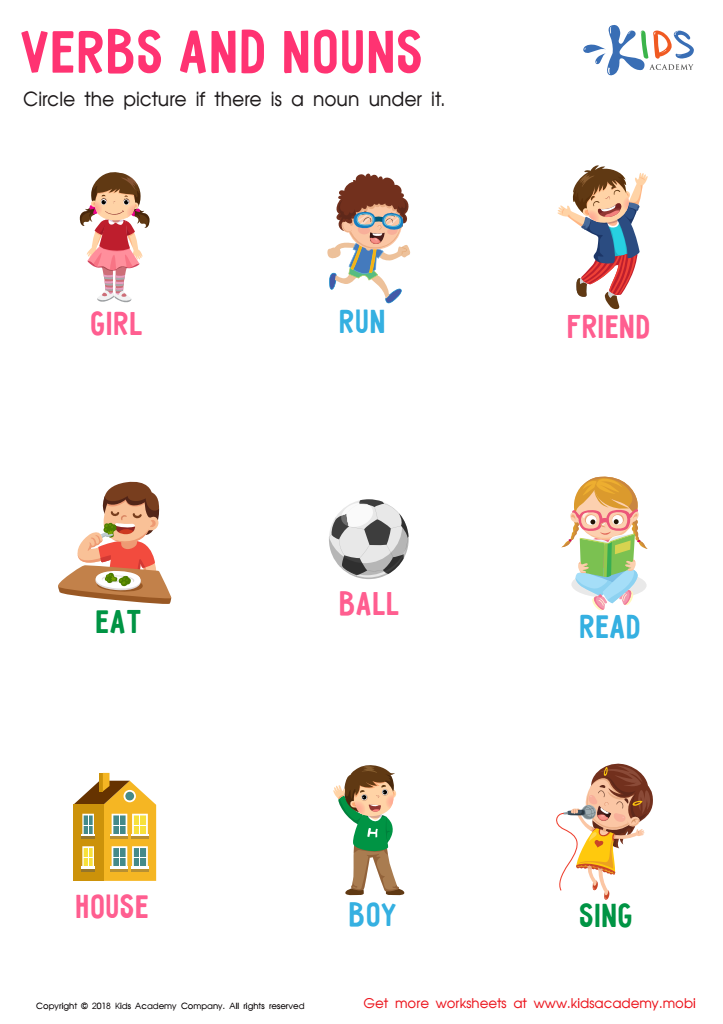
Verbs and Nouns Worksheet
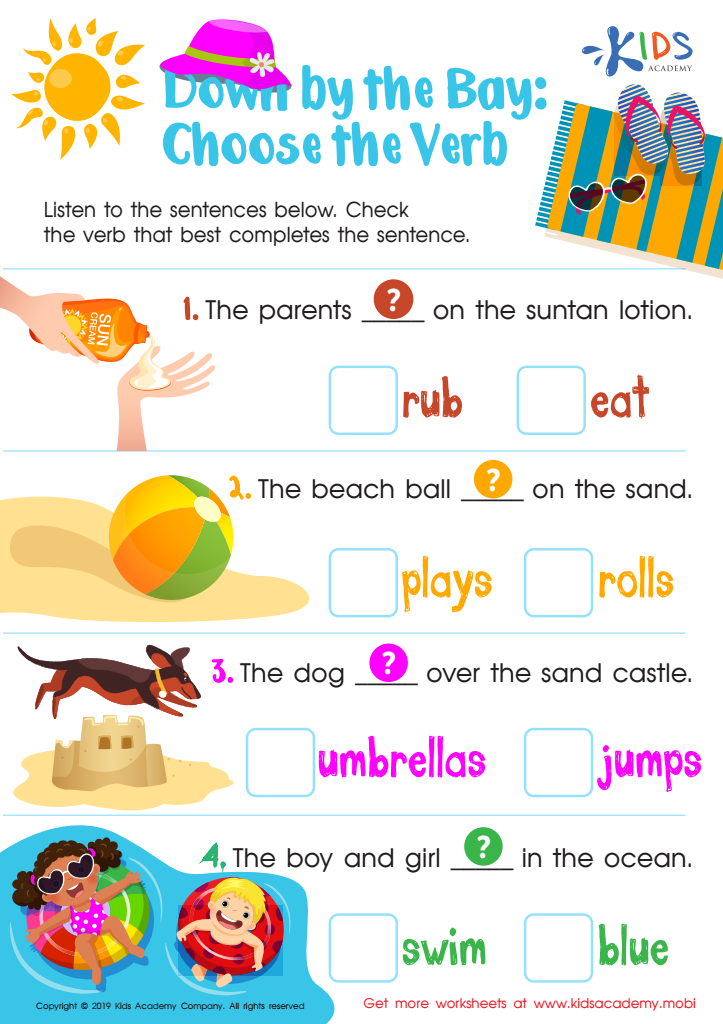
Down by the Bay: Choose the Verb Worksheet





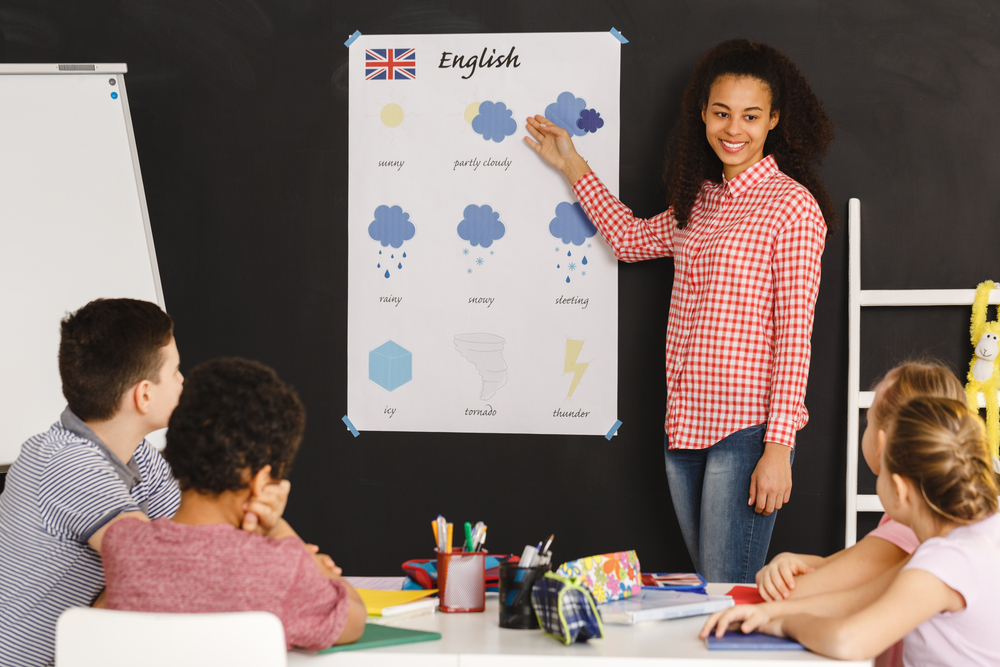

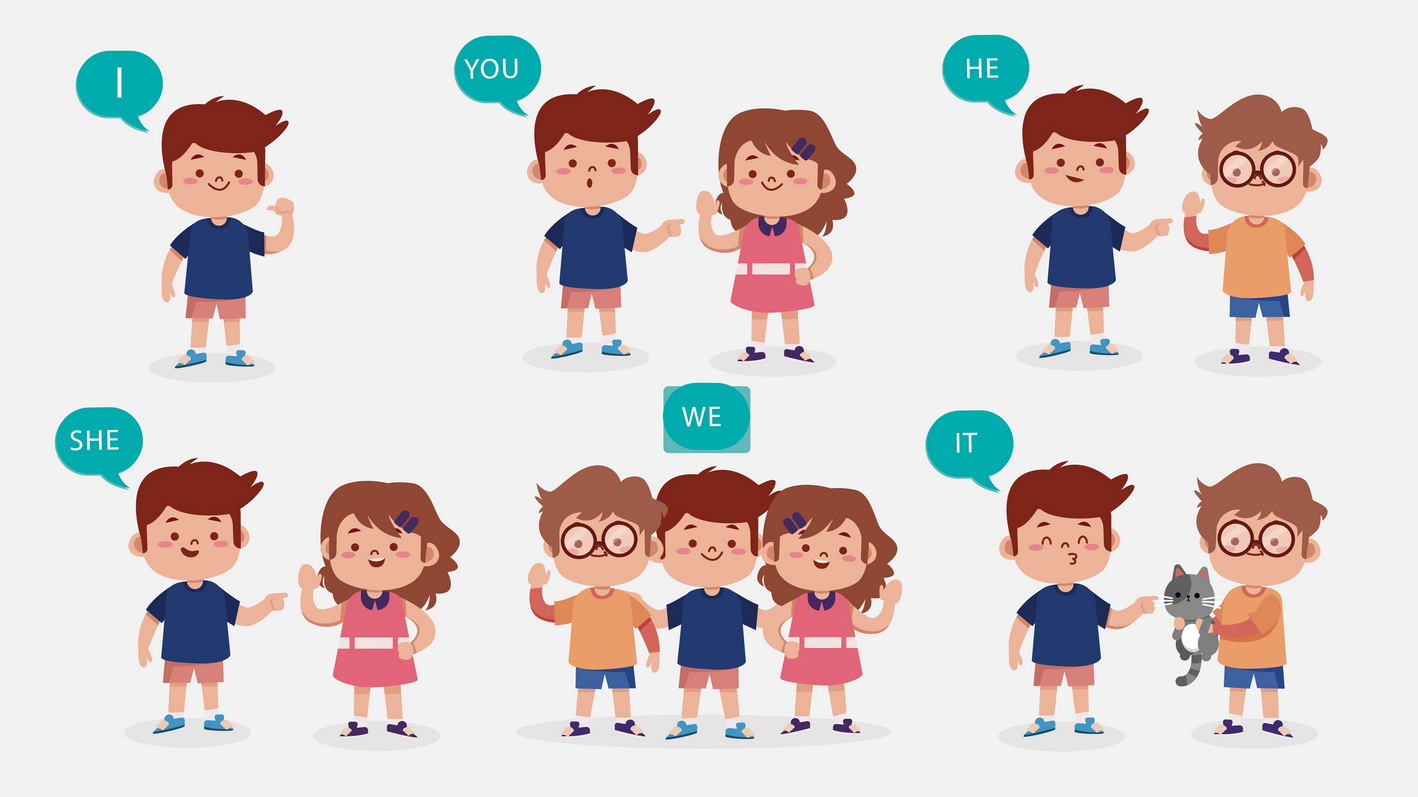
Verb identification is a crucial skill for children aged 3-5 as it lays the foundation for their language development, reading comprehension, and overall communication abilities. During these formative years, children are naturally curious and actively acquiring language skills. By focusing on verb identification, parents and teachers can enhance vocabulary, comprehension, and expressive language.
Understanding verbs helps children grasp actions and functions of words in sentences, leading to better sentence construction and literacy skills. As children start to recognize action words, they become more adept at expressing their thoughts and emotions, improving social interactions and storytelling capabilities.
Moreover, engaging in activities centered around verb identification encourages cognitive development. Games, songs, and interactive storytelling that highlight verbs make learning fun and memorable. These activities can enhance critical thinking and promote problem-solving skills as children learn to categorize words based on their roles in communication.
Ultimately, parents and teachers play a significant role in supporting literacy skills in early childhood. By emphasizing verb identification, they can contribute significantly to a child's success in language acquisition, reading readiness, and the confidence needed for effective communication as they prepare for school and social interactions.