
Letter tracing skills Normal ABC Letters Worksheets for Ages 3-6
3 filtered results
Difficulty Level
Grade
Age
-
From - To
Subject
Activity
Standards
Jumpstart your child's writing journey with our "Normal ABC Letters Worksheets" designed specifically for ages 3-6. These engaging letter tracing worksheets provide young learners with the opportunity to practice letter formation while developing fine motor skills. Each worksheet features a combination of uppercase and lowercase letters, making it easy for children to differentiate between them. With fun illustrations and clear guidelines, your little ones will stay motivated and excited! Perfect for at-home learning or classroom activities, these worksheets help foster essential skills that lay the groundwork for literacy. Download now and watch your child's confidence grow as they master the alphabet!
Favorites
With answer key
Interactive
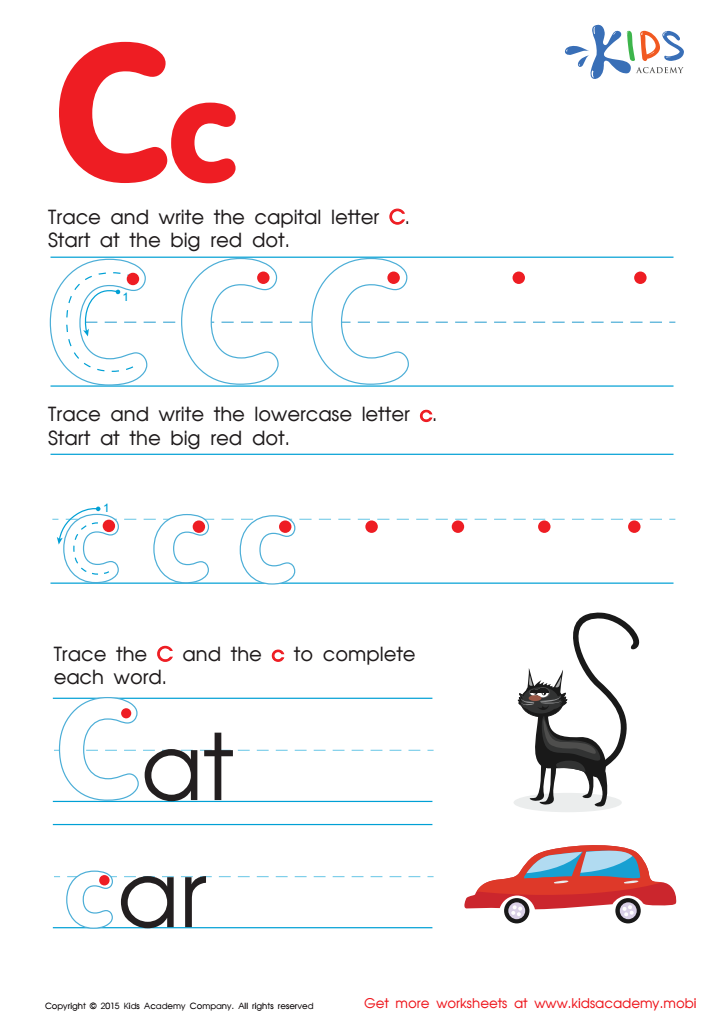
Letter C Tracing Page
Trace and write the letter 'C'! Put the pencil at the red dot then follow the lines – the capital letter first then the lowercase one. Cats love it and so will you! Get more free printables to practice tracing and writing.
Letter C Tracing Page
Worksheet






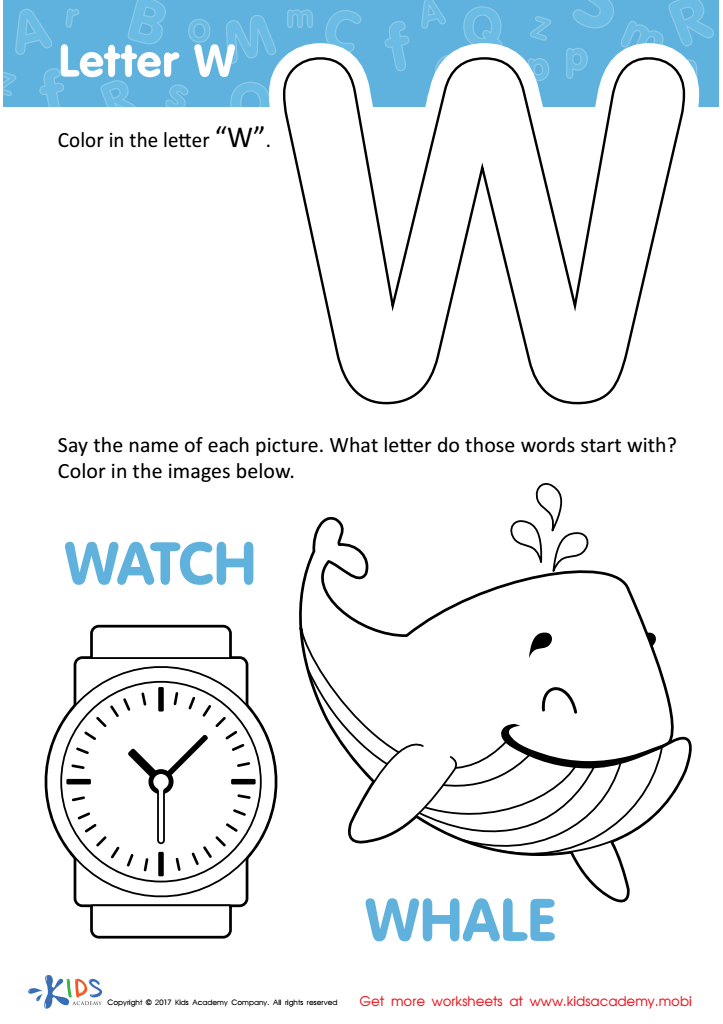
Letter W Coloring Sheet
Let your child have fun with this letter "W" coloring page! They can use their imagination to color the whale and discover the letter and its sound. Give them a helping hand to make it a whale of a time!
Download (PDF)
 Assign to My Students
Assign to My Students
Letter W Coloring Sheet
Worksheet
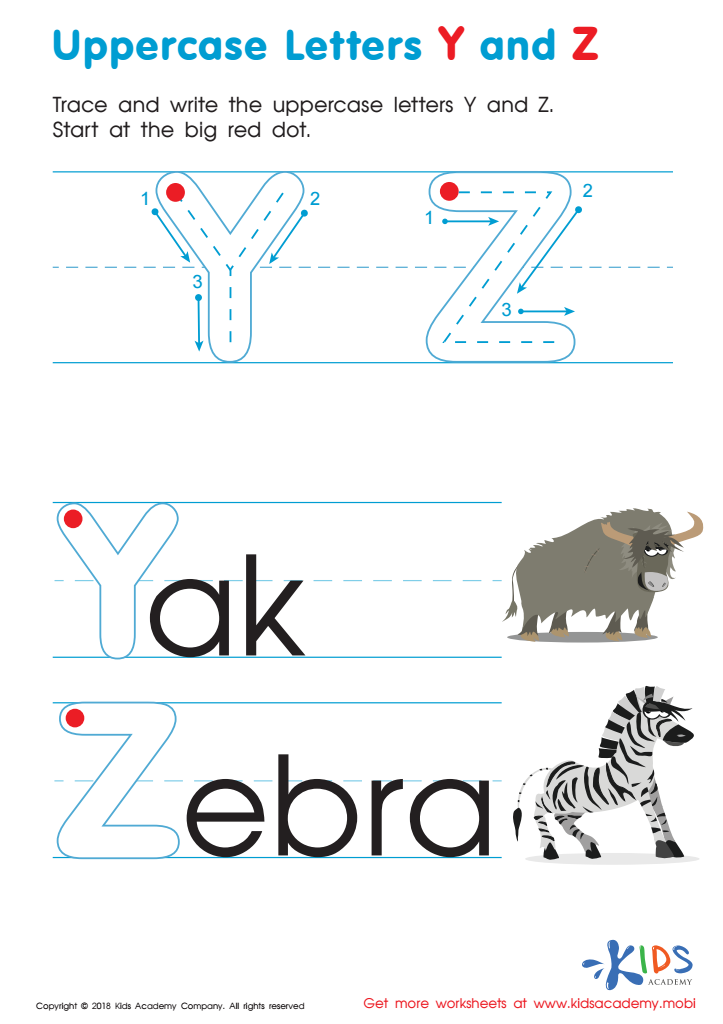
Uppercase Letters Y Z Worksheet
Help your child learn their ABCs with this fun tracing activity! They must trace and write Y and Z in uppercase form, starting from the red dot. Kids will love the fun images for extra engagement. Guiding their hand carefully will help them practice and perfect their writing skills.
Uppercase Letters Y Z Worksheet
Worksheet
Join Kids Academy for Free
Who is primarily going to use this learning content?








Letter tracing skills are crucial for children aged 3-6 as they serve as the foundational step in developing proficient handwriting and literacy skills. During these early years, practicing letter tracing helps children grasp the shapes and strokes of individual letters, reinforcing their recognition and understanding of the entire alphabet. This hands-on practice not only aids in muscle development in their fingers but also enhances fine motor skills, which are essential for many daily tasks.
Moreover, tracing exposes young learners to proper letter formation, which is pivotal as they transition to writing independently. It bolsters their confidence, allowing them to express their thoughts and creativity through writing. Parents and teachers should care about these skills since they set the tone for future academic success; strong handwriting and writing skills can impact reading fluency and overall communication abilities.
Additionally, engaging in letter tracing activities encourages early literacy development, expanding children's vocabulary and comprehension through playful learning. As such, prioritizing letter tracing in early education can yield benefits that extend far beyond the classroom, playing a vital role in shaping well-rounded, literate individuals prepared for future learning challenges.







