Phonics recognition Normal Consonants Worksheets for Ages 3-6
3 filtered results
-
From - To
Discover our engaging Phonics Recognition Normal Consonants Worksheets designed for children ages 3-6! These fun, interactive printables help young learners develop essential phonics skills by recognizing and practicing normal consonants. Each worksheet is crafted to enhance early literacy through colorful activities that promote reading readiness. Kids will enjoy tracing, coloring, and identifying consonants, making learning a delightful experience. Perfect for home or classroom use, these resources support learning in a playful way, fostering creativity and confidence in young readers. Explore our collection and give your child a solid foundation in phonics today! Ideal for preschool or kindergarten programs.
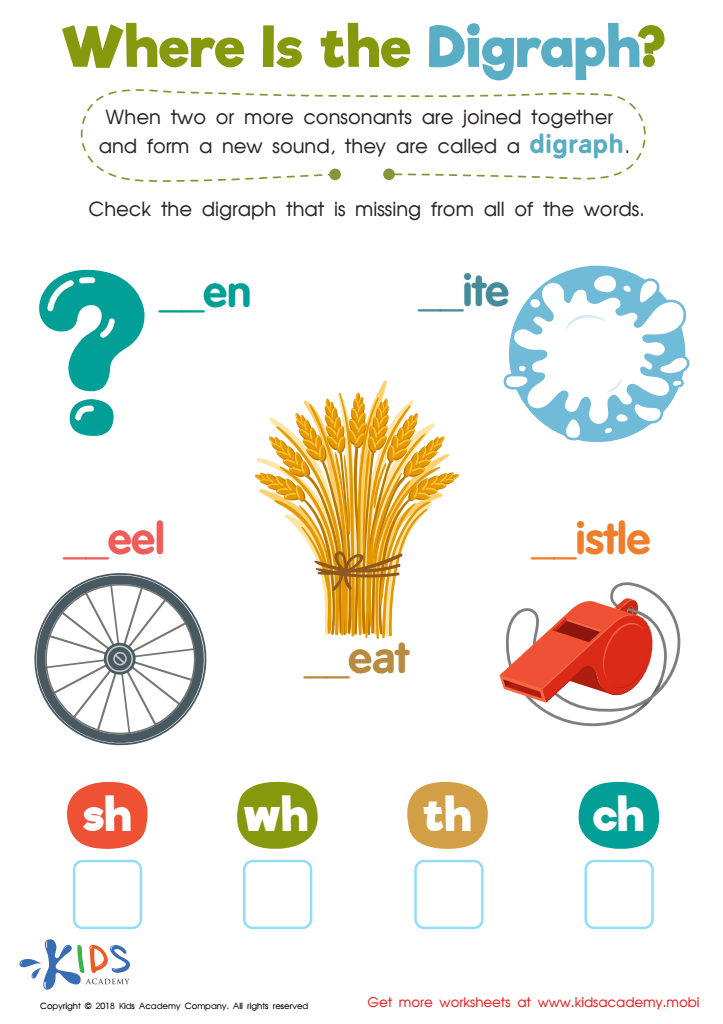
Where Is the Digraph? Worksheet
 Assign to My Students
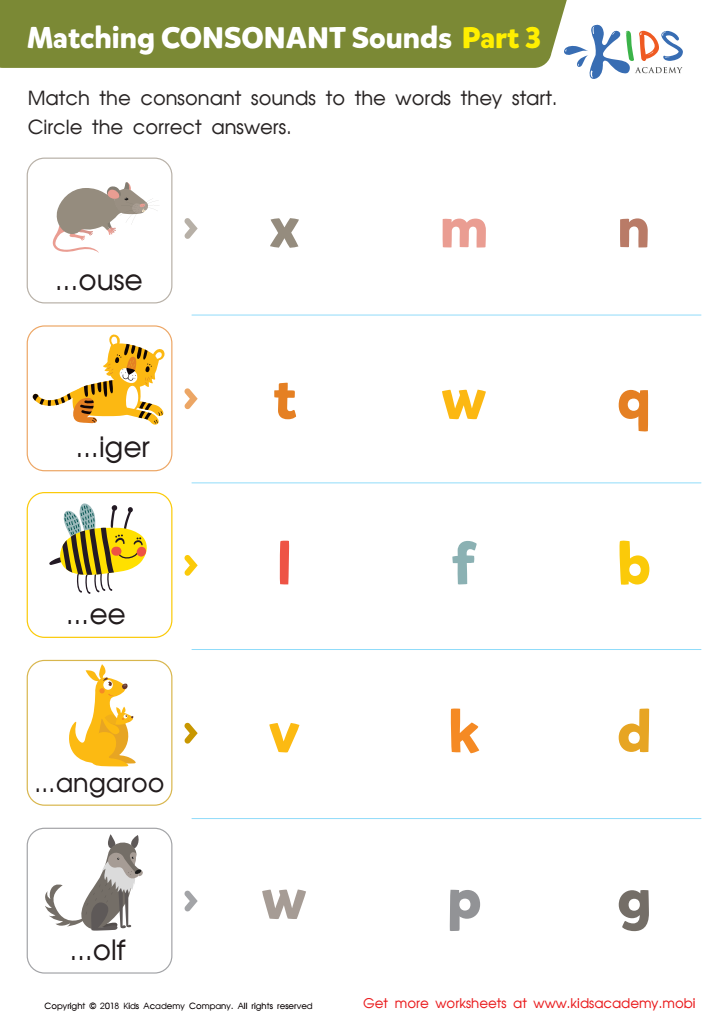
Matching Consonant Sounds: Part 3 Worksheet
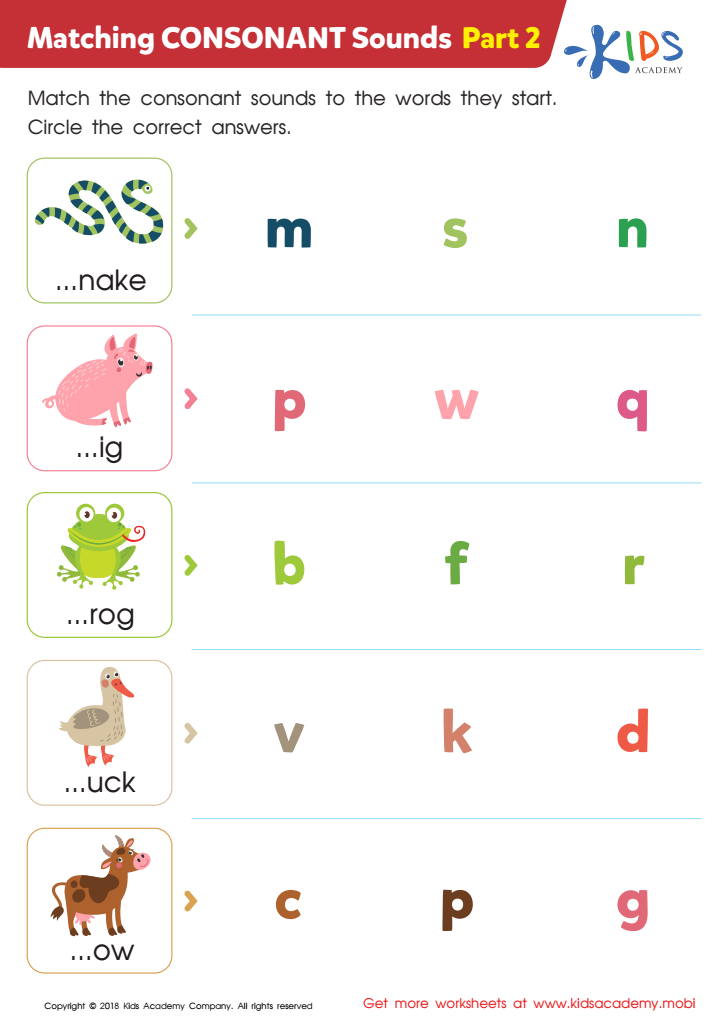
Matching Consonant Sounds: Part 2 Worksheet



Phonics recognition, particularly for normal consonants, is a crucial developmental milestone for children aged 3-6. At this stage, children are actively exploring language and developing early literacy skills, which lay the groundwork for their future academic success. Recognizing consonants helps children decode words, facilitating reading and writing proficiency. Understanding these sounds allows them to blend and segment words, essential skills for reading fluency.
Teachers and parents should care about phonics recognition because it builds confidence in young learners. Mastery of consonants enables children to engage with literature, enhance vocabulary, and communicate effectively. Moreover, strong phonics skills are linked to overall literacy development, allowing for better comprehension and expression as children progress through school.
Supporting phonics education also fosters a love for reading and learning. When children grasp the sounds of consonants, they are more likely to develop enthusiasm for books and storytelling. This engagement has lasting positive effects on their education.
In summary, phonics recognition of normal consonants is not just an academic exercise; it’s a foundational skill that enhances literacy, boosts confidence, and promotes a lifelong love for reading. As such, it should be a focal point for both parents and educators during these critical early years.






