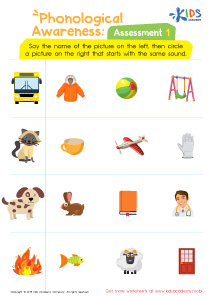
Vocabulary expansion Normal Consonants Worksheets for Ages 3-6
4 filtered results
-
From - To
Introduce your little ones to the exciting world of words with our Vocabulary Expansion Normal Consonants Worksheets for Ages 3-6. Designed specifically for early learners, these engaging worksheets focus on enhancing vocabulary by emphasizing normal consonants. Each worksheet features fun, age-appropriate activities that help children recognize, pronounce, and use new consonant sounds. By incorporating playful exercises, bright visuals, and practical word associations, these worksheets support language development and solidify foundational literacy skills. Transform learning into an enjoyable experience with our expertly crafted resources, perfect for encouraging young minds to explore and expand their vocabulary confidently.
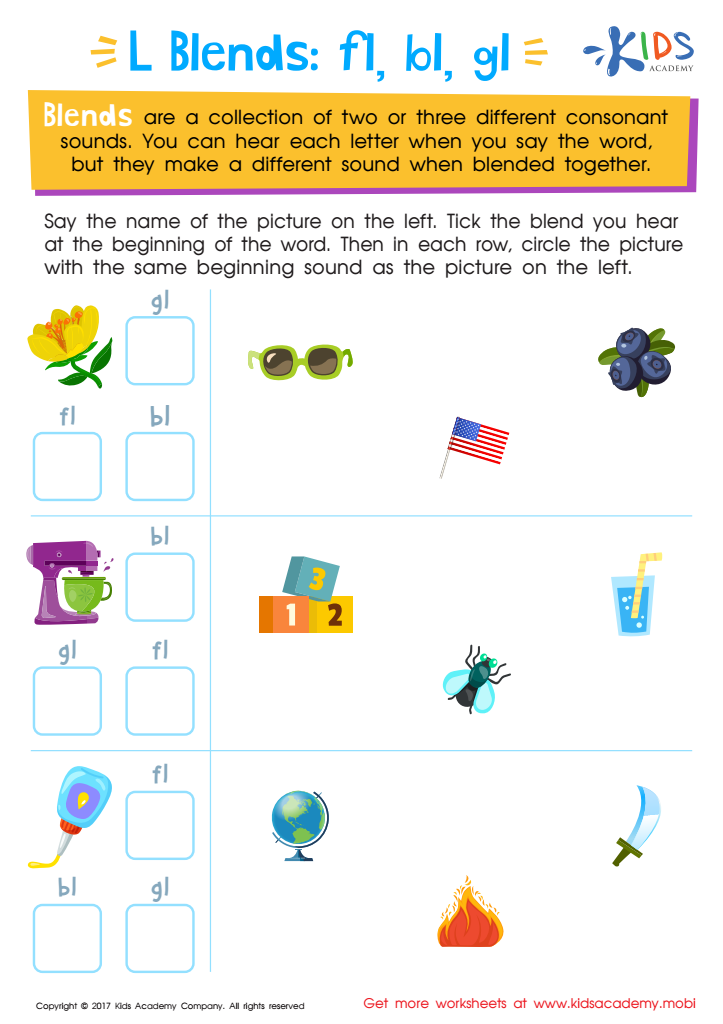
Blending Consonants: "Fl", "Bl" and "Gl" Printable
 Assign to My Students
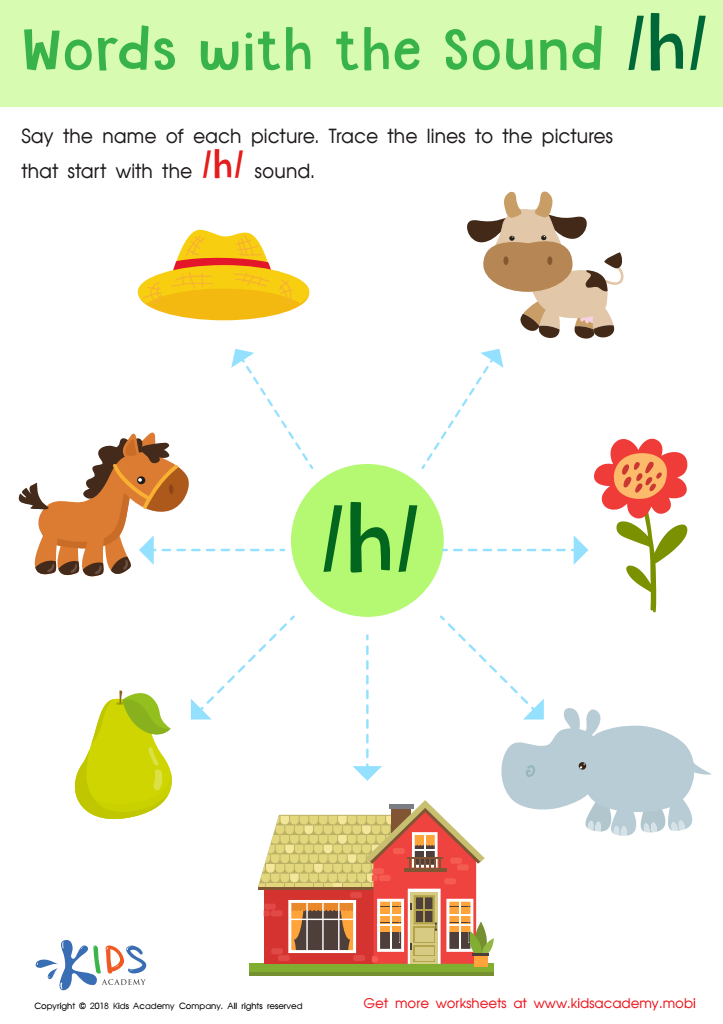
Words with sound h Reading Worksheet
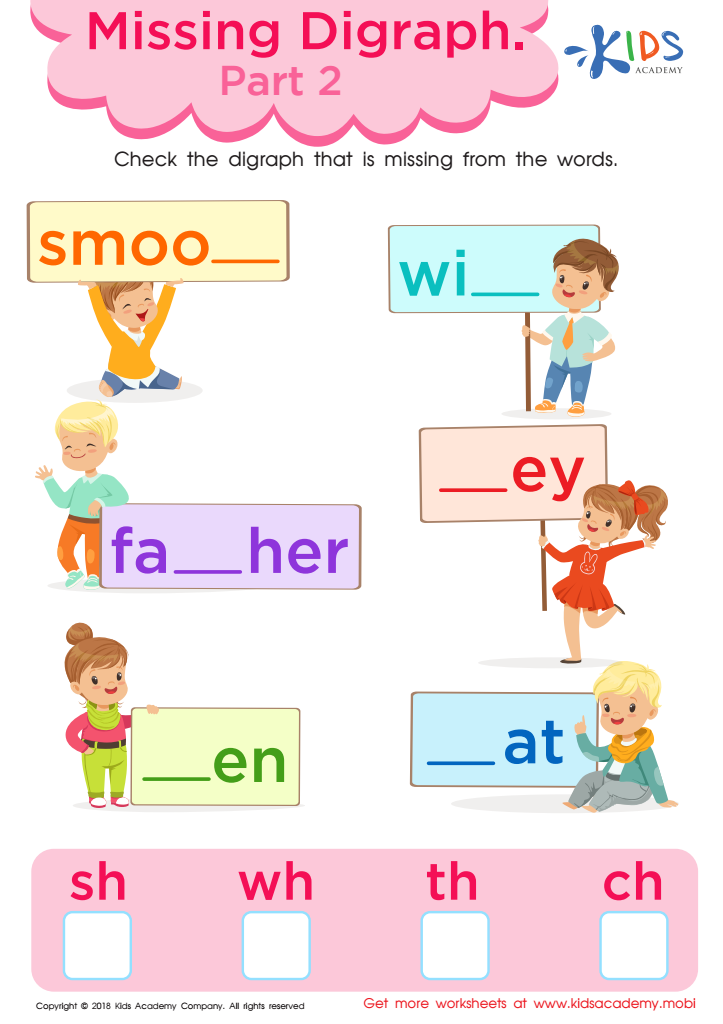
Missing Digraph: Part 2 Worksheet
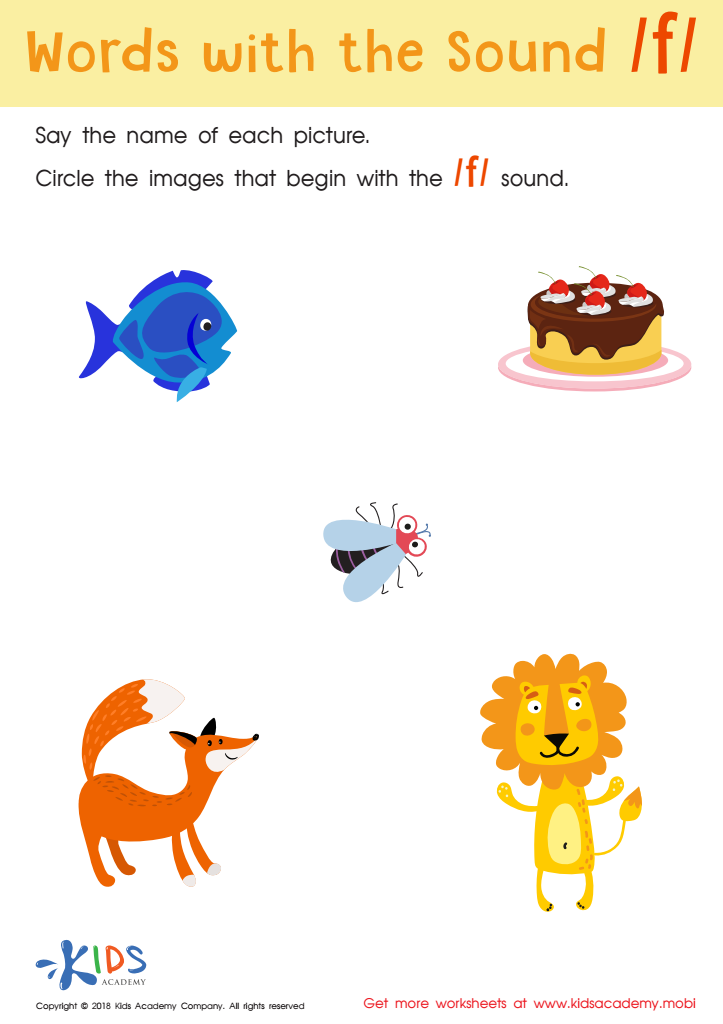
Words with sound f Reading Worksheet



Vocabulary expansion, particularly with normal consonants, is a pivotal component of early childhood development. For children aged 3-6, this period is a crucial window for language acquisition; their brains are highly responsive to new information, making it an optimal time for enriching their vocabulary.
Firstly, developing a robust vocabulary aids in overall language proficiency. It enables more effective communication and fosters better understanding and expression of ideas. For young kids, mastering normal consonants ensures clearer speech, which is fundamental for interactive learning both at home and in school.
Secondly, vocabulary development is linked to literacy skills. Children with a wider vocabulary can more easily comprehend reading materials and follow classroom instructions. This readiness is a significant predictor of their later academic success.
Additionally, vocabulary growth enhances cognitive skills. It exercises memory, categorization, as well as problem-solving abilities. Engaging with new words broadens a child’s world view, enabling them to grasp more complex concepts and social nuances.
Parents and teachers play a pivotal role. By providing a rich language environment, they set a strong foundation for continuous learning. Utilizing activities such as reading, conversations, and playful learning can nurture a child’s vocabulary expansion, setting them on a path to confident, articulate, and proficient language use.