Rhyming skills development Normal Alphabet Worksheets for Ages 3-6
4 filtered results
-
From - To
Discover the joy of learning with our Rhyming Skills Development Normal Alphabet Worksheets designed for children ages 3-6. These engaging and educational worksheets seamlessly blend fun rhymes with alphabet recognition, ensuring your child builds essential literacy skills while having a blast. Ideal for early learners, each worksheet promotes phonemic awareness, vocabulary expansion, and the ability to recognize rhyming patterns. Perfect for preschoolers and kindergarten students, these printable resources provide a strong foundation for reading and writing success. Download now to make learning a delightful adventure for your little ones with Kids Academy.
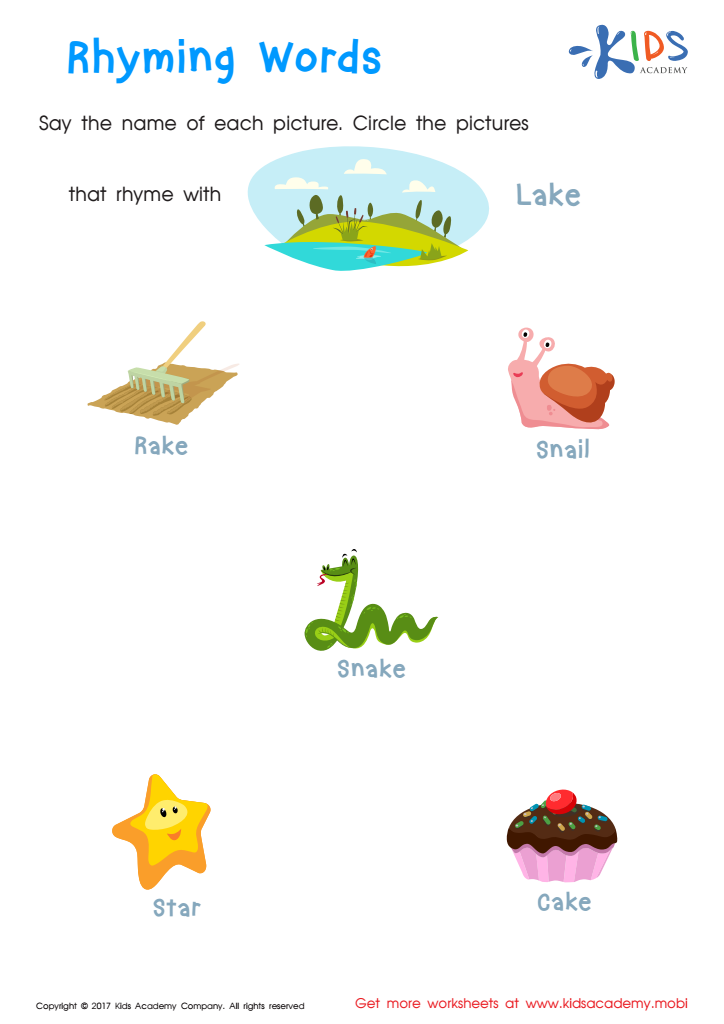
Rhyming Words Rhyming Worksheet
 Assign to My Students
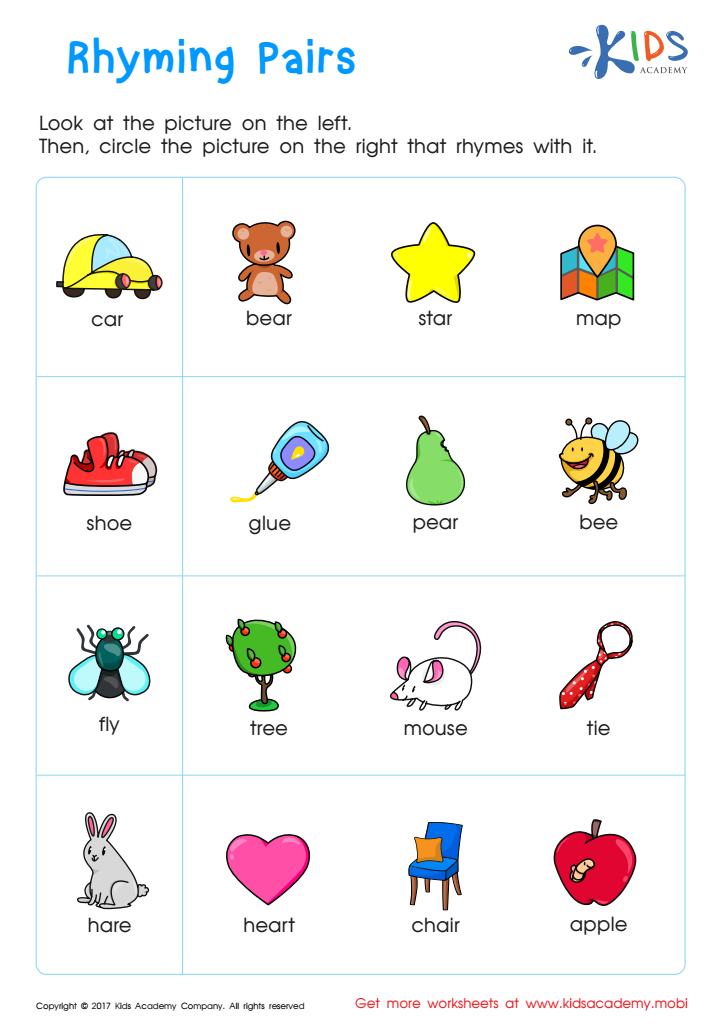
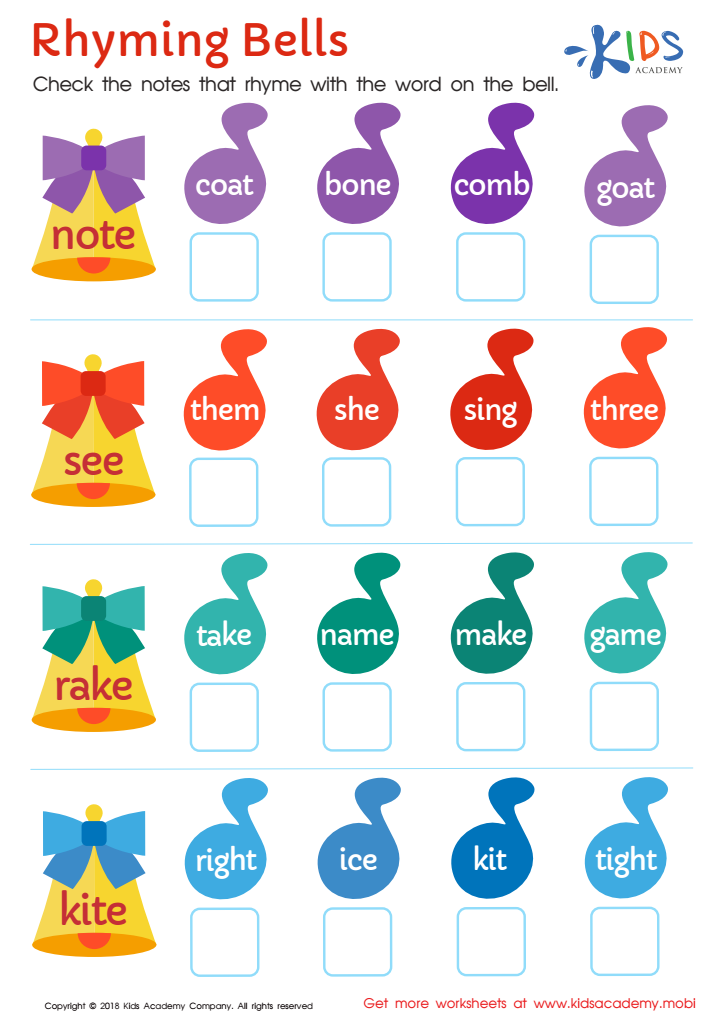
Rhyming Bells Worksheet
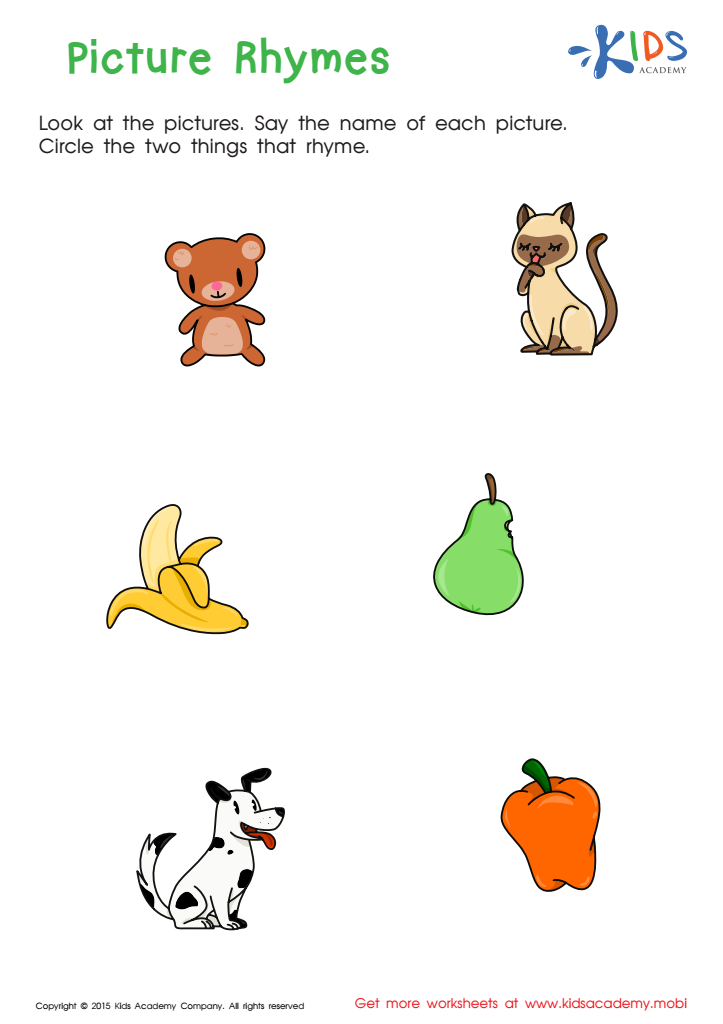
First Words: Picture Rhymes Worksheet







Rhyming skills are fundamental for the developmental phonological awareness in children aged 3-6, which is crucial for reading and language acquisition. When parents and teachers help young children develop rhyming skills, they are laying the groundwork for successful literacy. First, rhyming helps children notice the sounds within words, fostering an awareness of phonemes, which are the smallest units of sound in speech. This recognition is essential for learning to read and spell as it aids in distinguishing between similar-sounding words and understanding sound patterns.
Moreover, rhyming activities enhance vocabulary and comprehension. When children hear and practice rhyming words, their brains start linking sounds with meanings, strengthening their understanding of how language works. This foundation supports the ability to decode new words and creatively use language. Rhyming also improves memory and recall, as the pattern and music of rhymes make words and phrases easier to remember.
Additionally, rhyming is fun and engaging for young children, fostering a positive and enthusiastic approach to learning. It encourages playful interaction and strengthens the bond between parents, teachers, and children, creating a supportive learning environment. Overall, fostering rhyming skills sets the stage for a child's future academic success and inspires a lifelong love for language and reading.







