Uppercase identification Normal Alphabet Worksheets for Ages 3-6
5 filtered results
-
From - To
Discover Uppercase Identification Normal Alphabet Worksheets designed for ages 3-6 at Kids Academy! These engaging, printable worksheets are perfect for young learners to recognize and identify uppercase letters. Each worksheet offers fun activities that build foundational literacy skills, helping children connect letters with sounds. Ideal for preschoolers and kindergarteners, these resources enhance early reading abilities through interactive exercises and colorful designs. Whether used in the classroom or for at-home practice, our worksheets support your child's journey toward successful alphabet mastery. Boost your little one’s confidence in their ABCs with our expertly crafted materials!
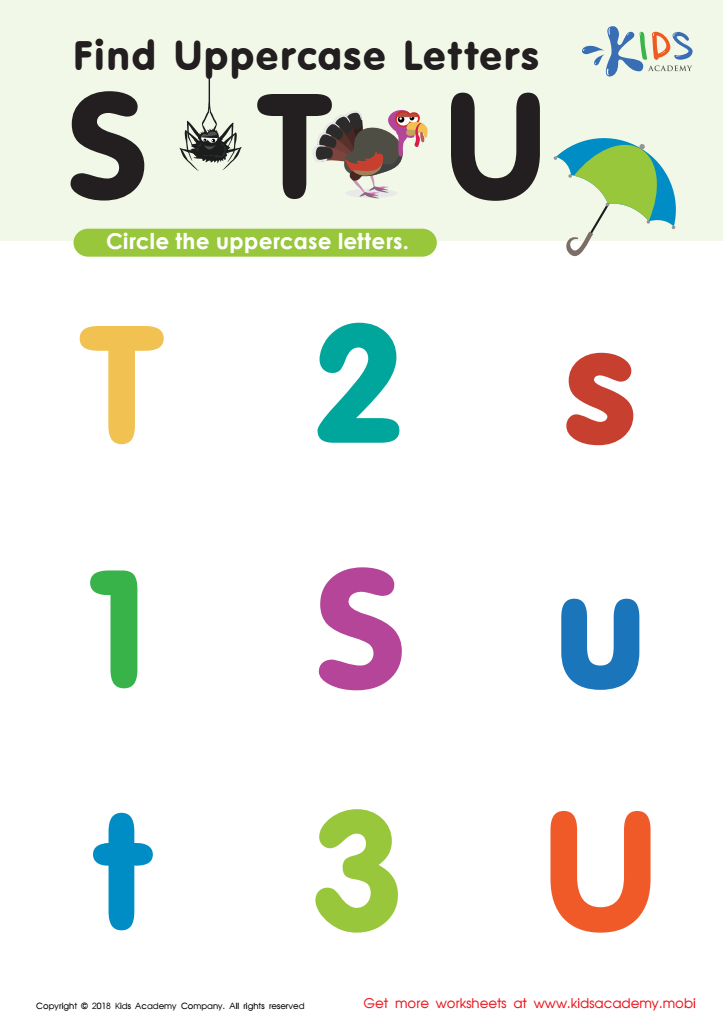
Find Uppercase Letters Worksheet
 Assign to My Students
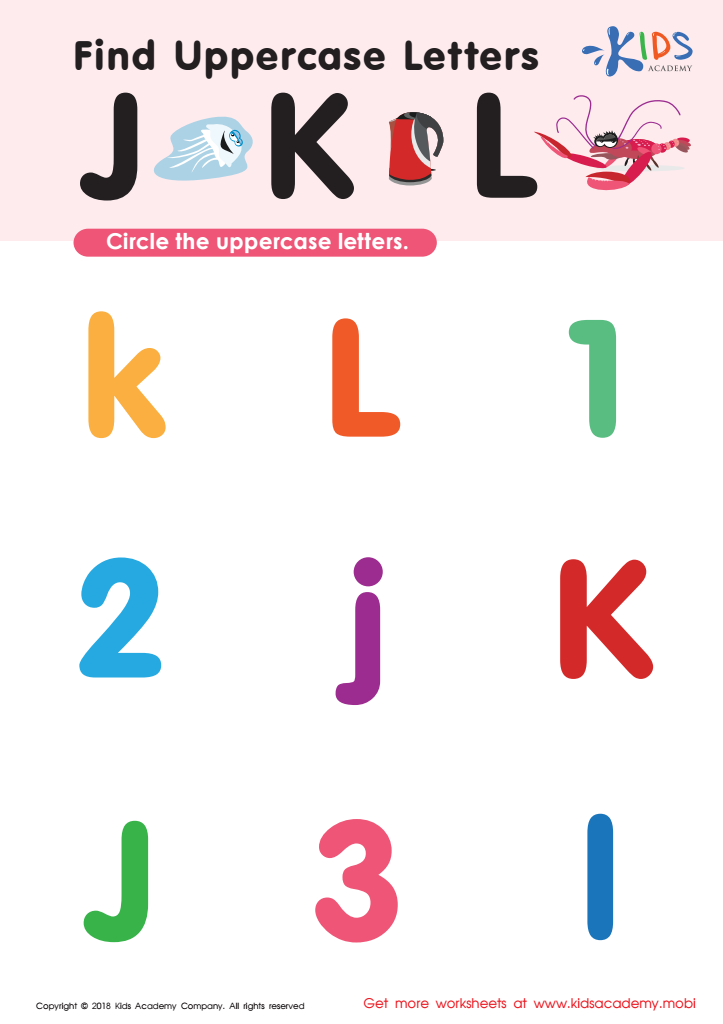
Find Uppercase Letters J, K, and L Worksheet
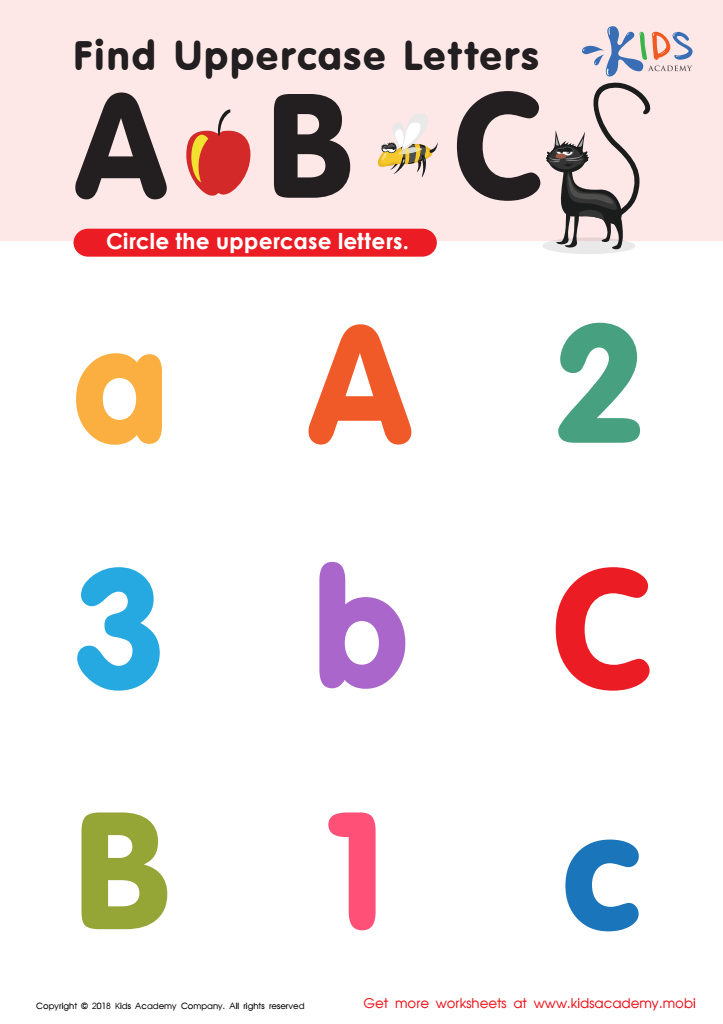
Find Uppercase Letters A, B, and C Worksheet
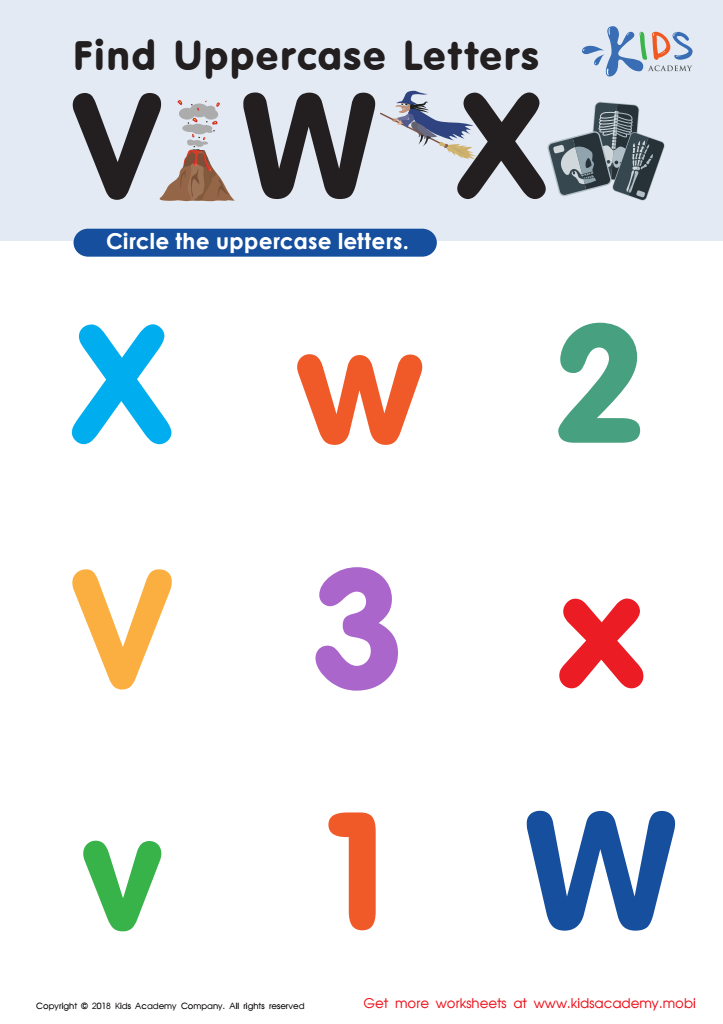
Find Uppercase Letters V, W, X Worksheet
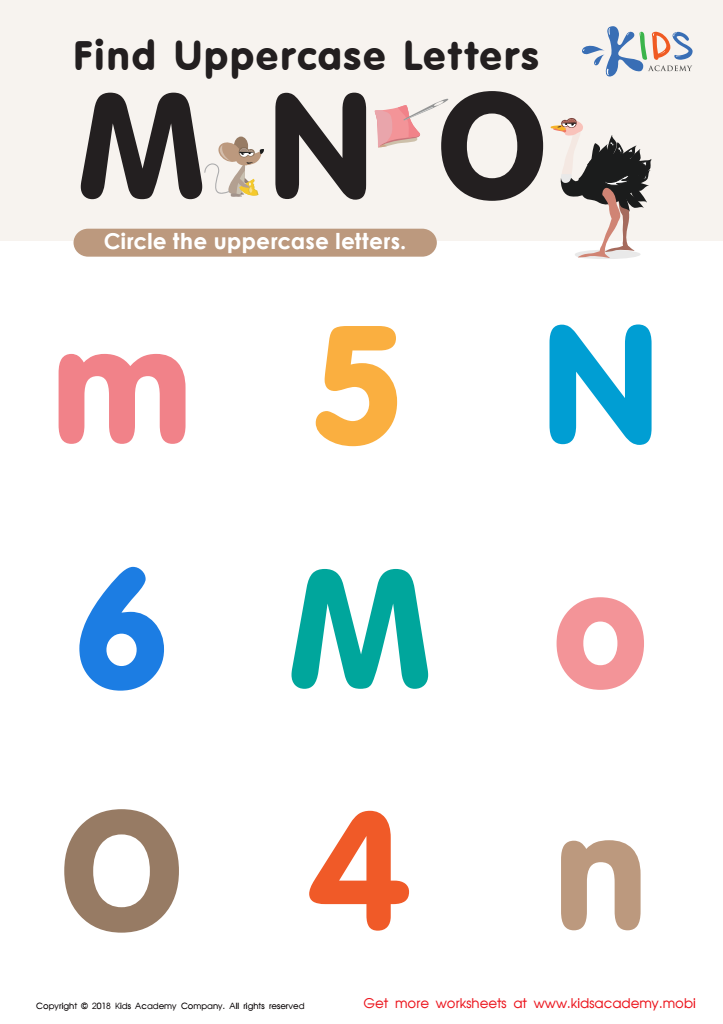
Find Uppercase Letters M, N, and O Worksheet







Understanding uppercase letters is crucial for children aged 3-6 because it lays a strong foundation for their literacy development. At this early age, children's brains are rapidly developing, making it the perfect time to introduce fundamental skills such as letter recognition. Designing activities and learning experiences around uppercase letters helps kids grasp the basic building blocks of written language.
Parents and teachers should prioritize uppercase identification because these letters are often used in signs, labels, and books, making them the most visible and frequent letters in a child's environment. Recognizing these letters ensures that children can begin to decode their world, boosting their confidence and curiosity about reading. Proficiency in uppercase identification can also enhance a child's ability to spell their own name and other essential words, which is a major milestone in early education.
Moreover, early mastery of uppercase letters can lead to an easier transition to lowercase letters and other literacy skills like phonics, writing, and word recognition. When parents and teachers engage children in playful and interactive activities around uppercase letters, they foster a love for learning and set the stage for future academic success. Cultivating these skills early on forms an essential part of a child’s overall cognitive and educational development.







