Vocabulary expansion Normal Alphabet Worksheets for Ages 3-6 - Page 2
26 filtered results
-
From - To
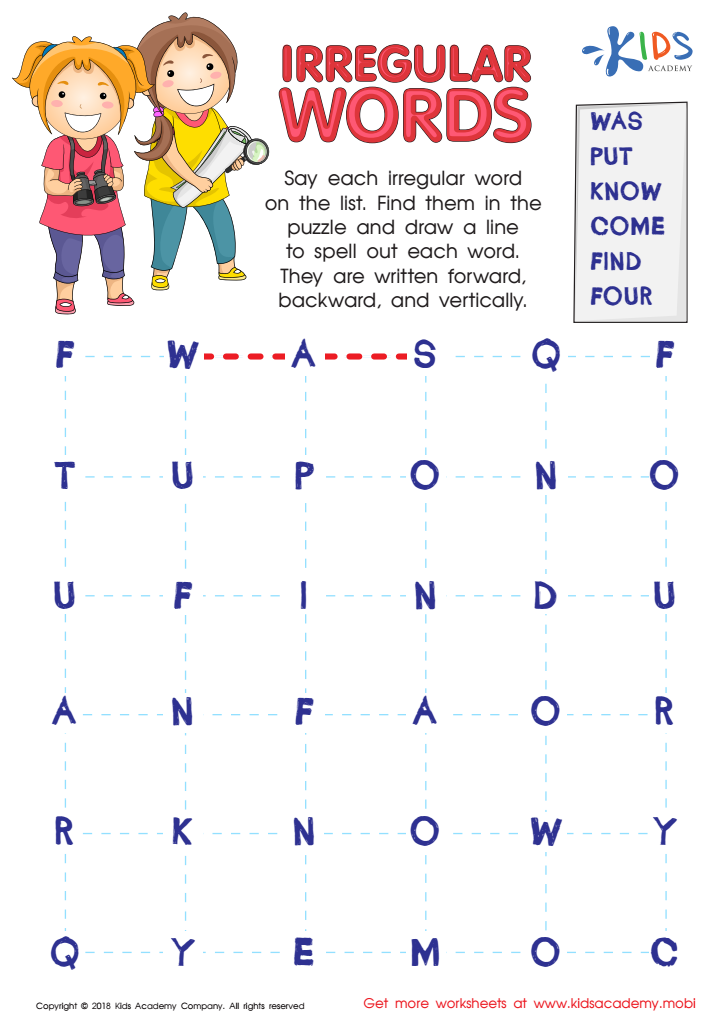
Irregular Words Worksheet
 Assign to My Students
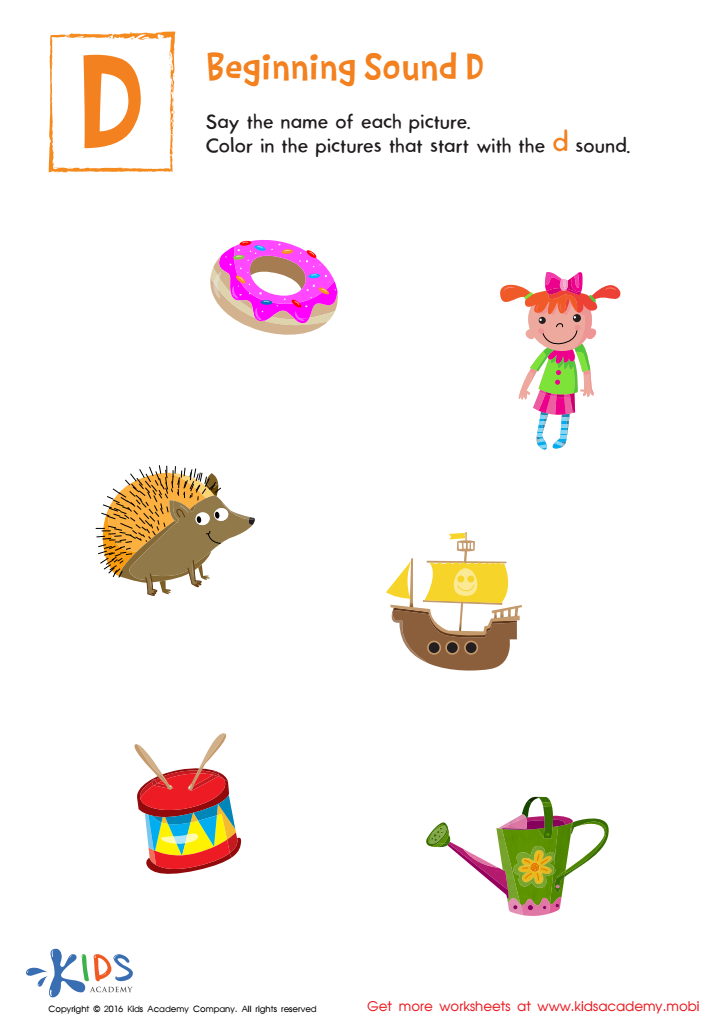
Beginning Sound D Worksheet







Vocabulary expansion is critical for children aged 3-6 as it lays the foundation for their language development, literacy, and overall cognitive growth. During these formative years, children's brains are exceptionally receptive to learning new words, which enhances their ability to communicate effectively, understand complex concepts, and express themselves creatively.
When parents and teachers focus on vocabulary expansion using the Normal Alphabet, they cultivate phonemic awareness, essential for reading and writing. By introducing a rich variety of words through engaging activities—such as storytelling, singing, and play—they help children to not only learn new words but also understand their meanings and contexts.
Additionally, a strong vocabulary positively influences academic success. Early exposure to diverse language helps children perform better in school and develop critical thinking skills as they comprehend and analyze texts more effectively.
Moreover, a robust vocabulary fosters social skills by empowering children to articulate their thoughts and emotions, promoting healthy interactions with peers and adults. By prioritizing vocabulary expansion, parents and teachers equip young learners with indispensable tools for lifelong communication, learning, and success, reinforcing the importance of nurturing language skills from a young age.







