Letter-sound association Normal Letter Recognition Worksheets for Ages 3-6
5 filtered results
-
From - To
Our "Letter-Sound Association Normal Letter Recognition Worksheets for Ages 3-6" are designed to help young learners master the basics of phonics. These engaging worksheets provide fun, interactive activities that enhance children's ability to recognize letters and link them to their respective sounds. Ideal for early beginners, these worksheets promote strong literacy foundations by combining vibrant visuals with hands-on practice. Through repetition and nurturing guidance, kids will develop the essential skills needed for reading success. Perfect for both parents and educators looking to support early learning in a creative, effective way. Empower your child's reading journey with our thoughtfully designed resources!
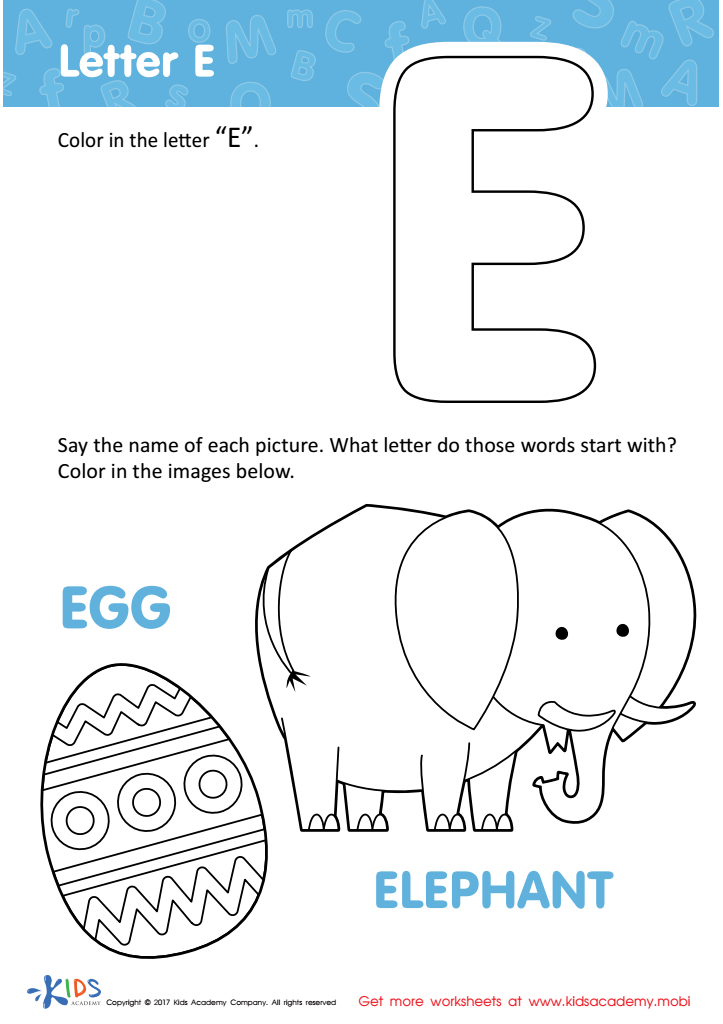
Letter E Coloring Sheet
 Assign to My Students
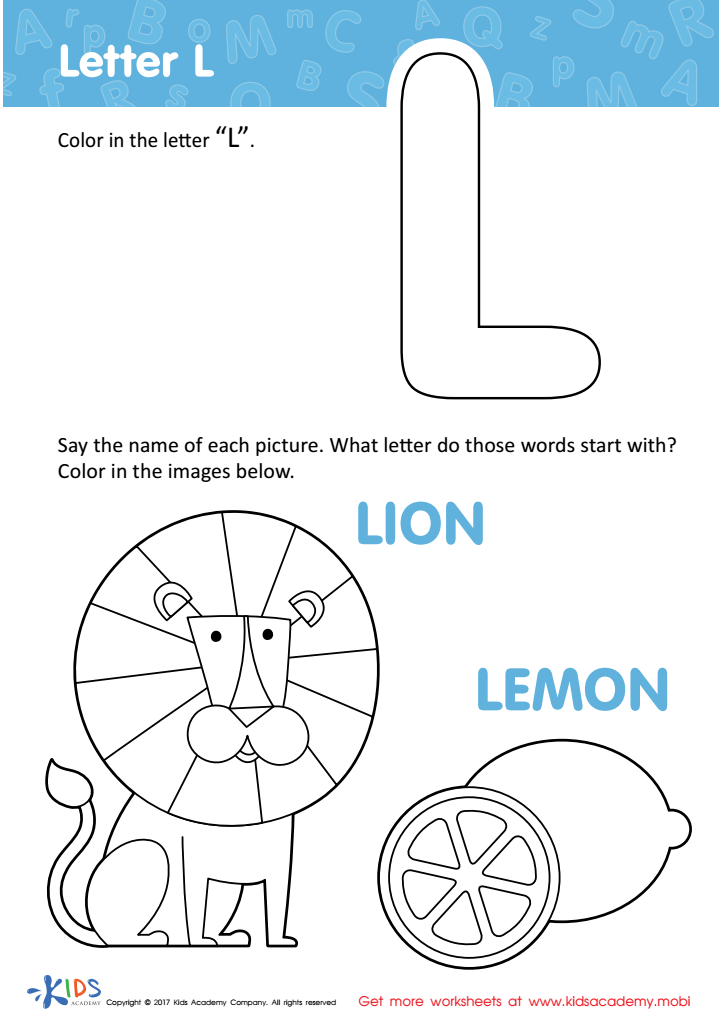
Letter L Coloring Sheet
Assign to My Students
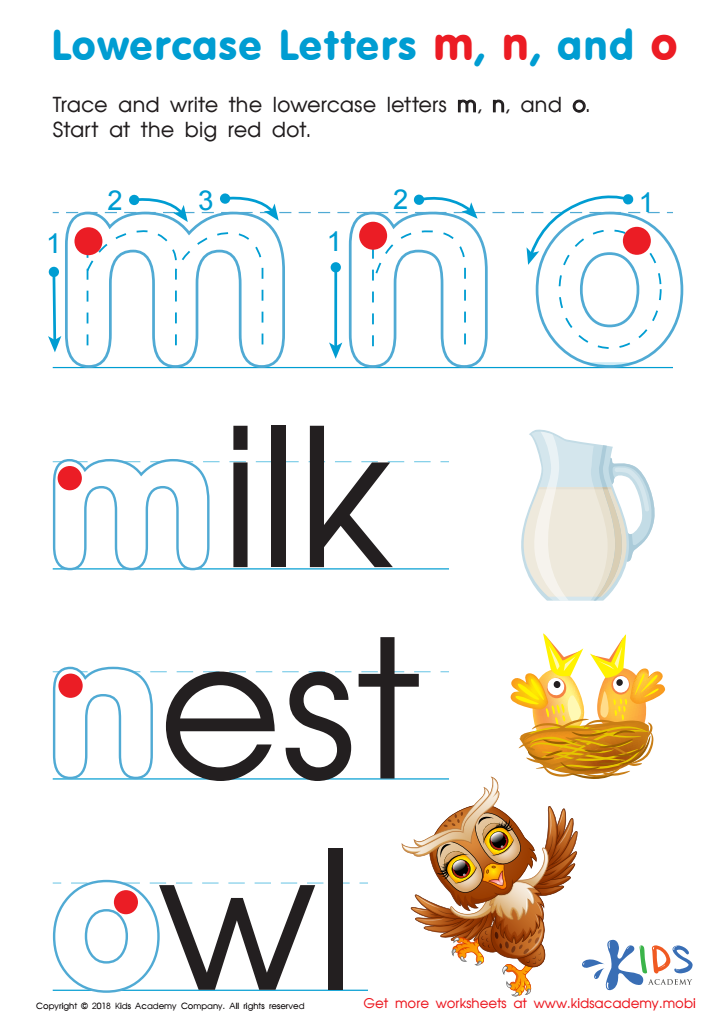
Lowercase Letters m n o Worksheet
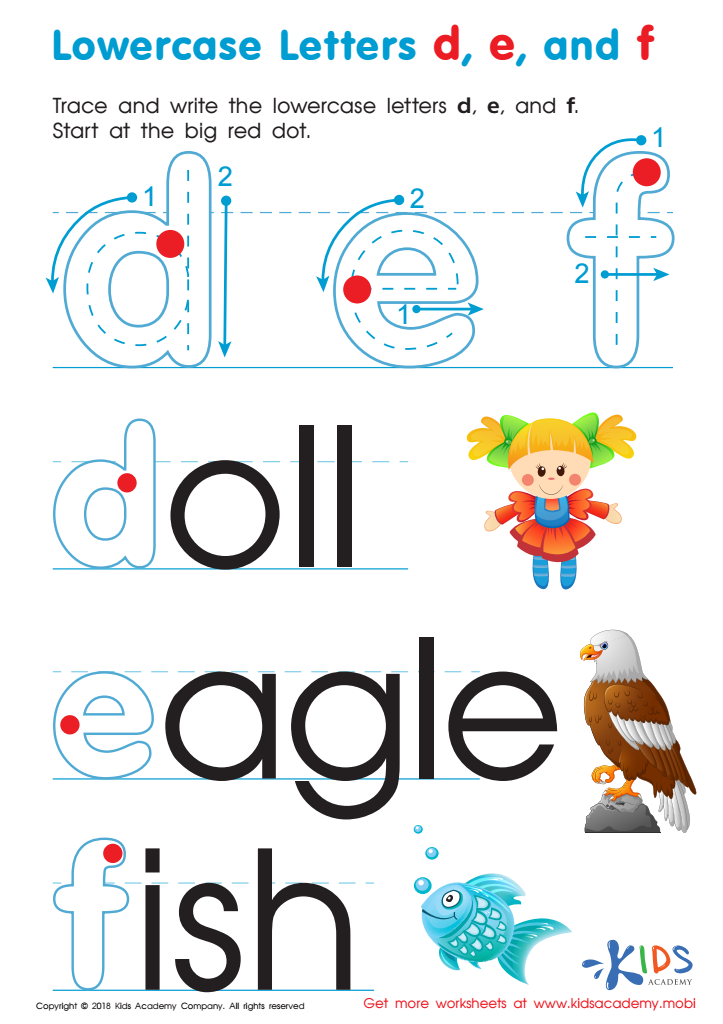
Lowercase Letters d e f Worksheet
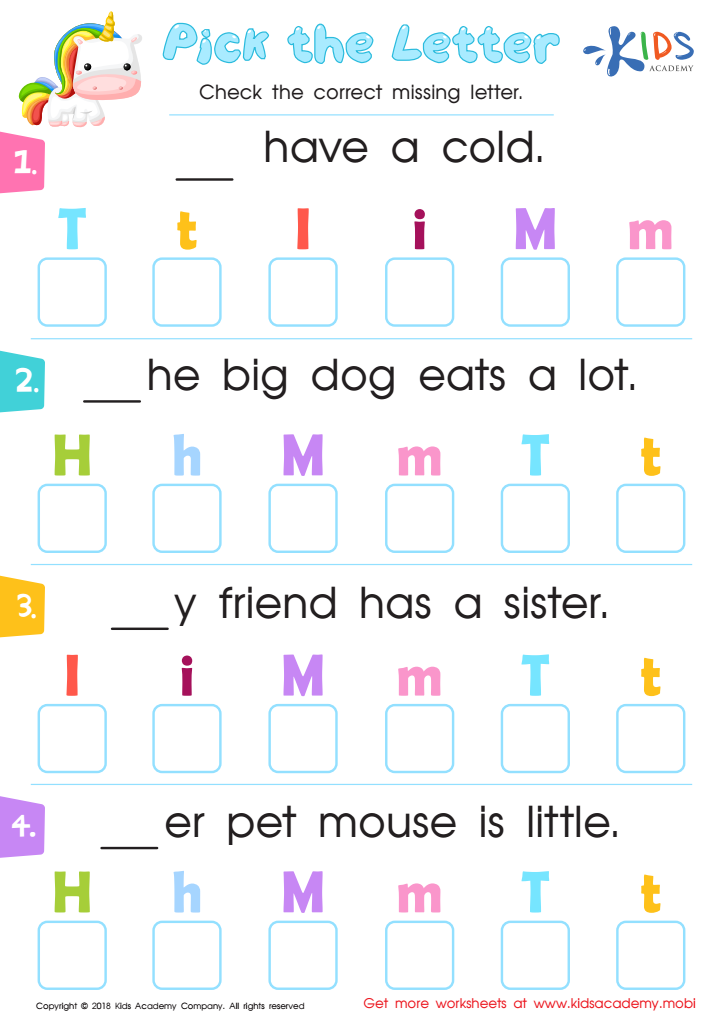
Pick the Letter Worksheet








Parents and teachers should care about letter-sound association and normal letter recognition in children ages 3 to 6 because these skills are the building blocks for literacy. During this critical developmental period, children's brains are highly receptive to acquiring foundational skills that will influence their future learning. Letter-sound association, also known as phonemic awareness, is crucial because it helps children understand that sounds are represented by letters, forming the basis for reading and spelling.
When children recognize letters and associate them with the correct sounds, they are able to decode words. This decoding skill is essential for reading fluently, which involves rapid and accurate word recognition. Fluent reading, in turn, facilitates comprehension, allowing children to understand and absorb information. Moreover, these skills foster a love of reading, which is linked to broader academic success and lifelong learning.
Early intervention in developing these skills can help identify and support children who may be at risk for reading difficulties, such as dyslexia. By focusing on letter-sound association and letter recognition, parents and teachers can set children on a path toward confident, proficient reading. This foundational support paves the way for academic achievement and instills a sense of accomplishment and self-efficacy in young learners.








