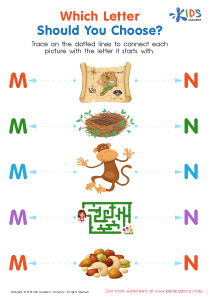
Alphabet sequencing Normal Lowercase/Small Letters Worksheets for Ages 3-6
3 filtered results
-
From - To
Introduce your young learner to the essentials of alphabet sequencing with our engaging Normal Lowercase/Small Letters Worksheets, designed for children ages 3-6. Tailored to inspire early reading and writing skills, these thoughtfully crafted activities encourage children to recognize, arrange, and sequence lowercase letters with ease. Perfect for preschool and kindergarten students, our worksheets blend fun with foundational learning, offering repetitive practice that reinforces letter order comprehension. By tackling these enjoyable exercises, children will build their confidence in letter identification and sequencing, setting a solid groundwork for future literacy success. Download today and watch your child's alphabet skills flourish!
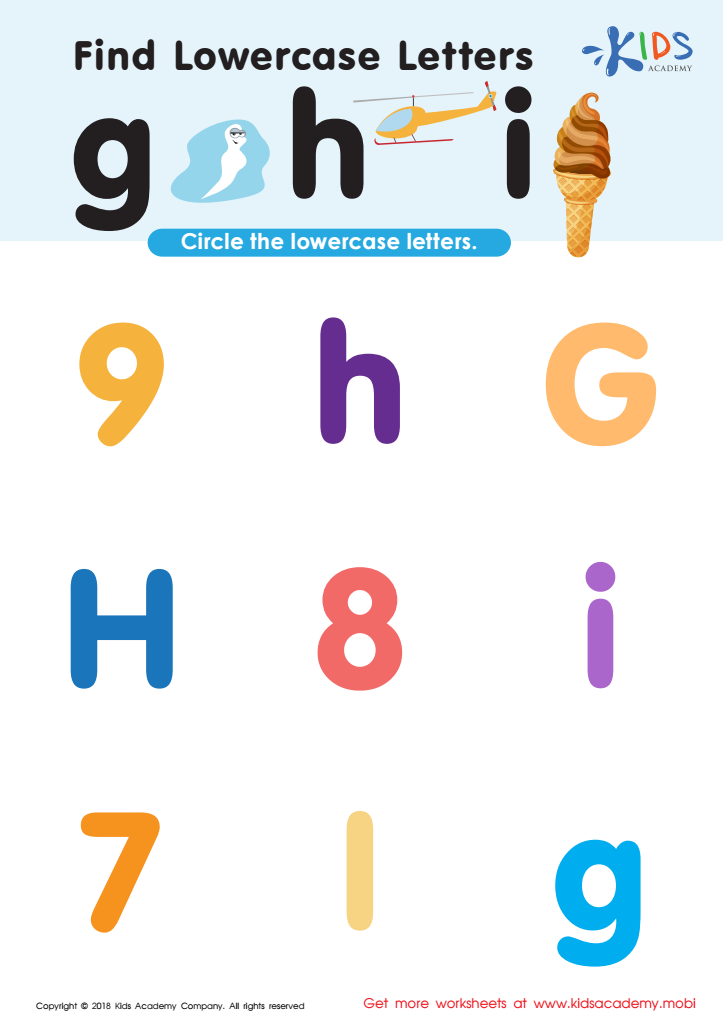
Find Lowercase Letters g h i Worksheet
 Assign to My Students
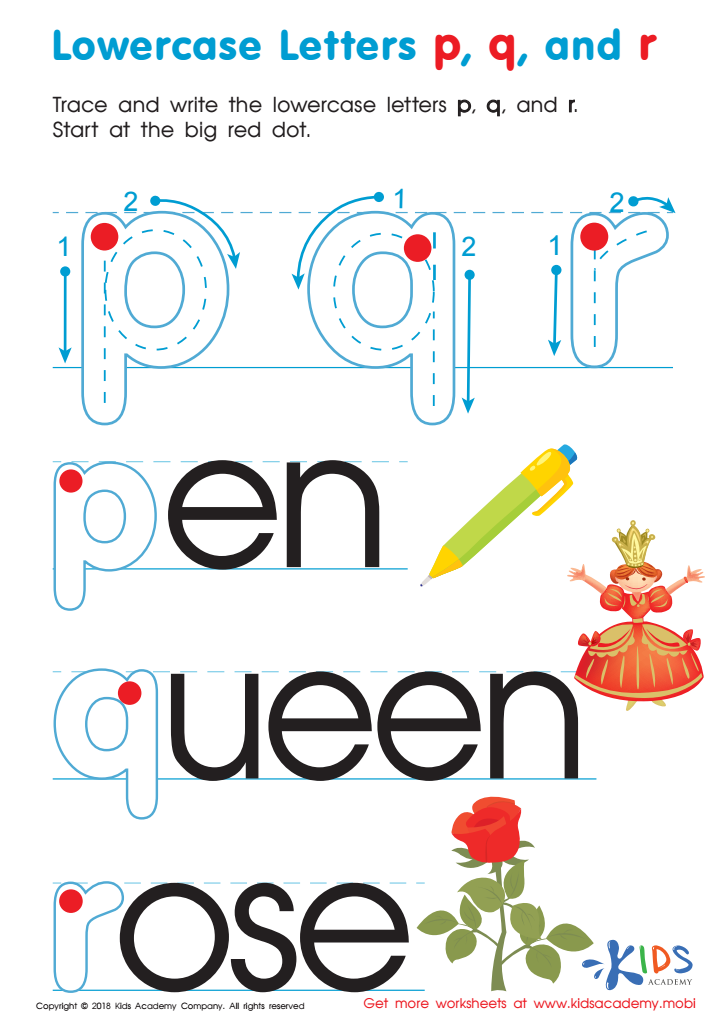
Lowercase Letters p q r Worksheet
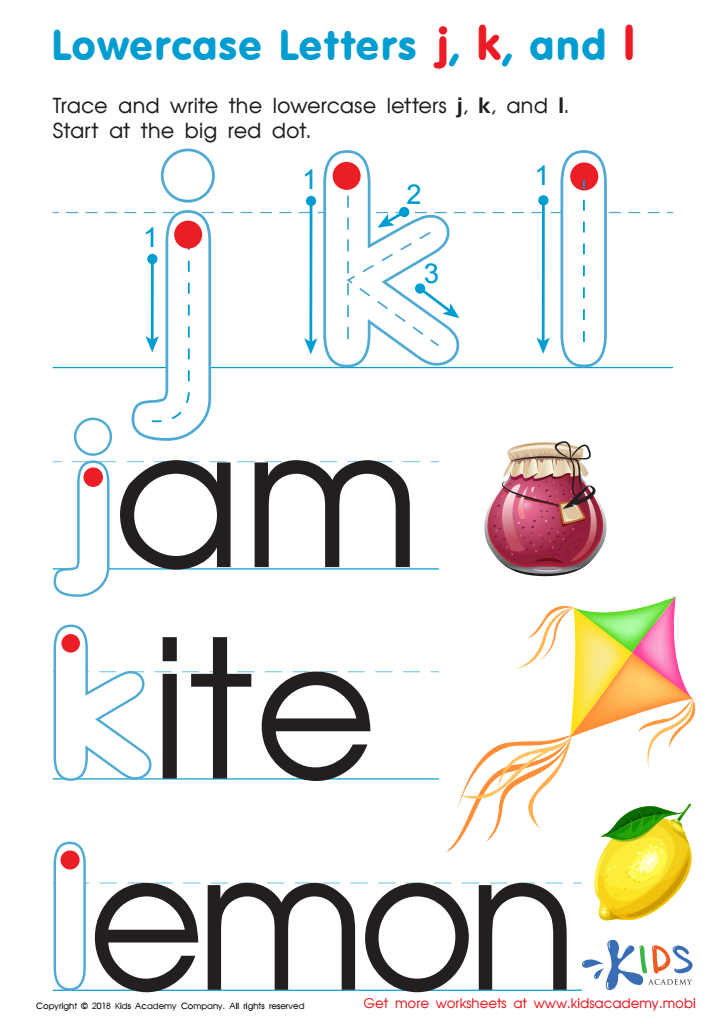
Lowercase Letters j k l Worksheet


Alphabet sequencing using normal lowercase letters is a foundational skill crucial for the early developmental stages of children aged 3-6. This fundamental skill helps young learners understand the sequence and structure of the written language, which is pivotal as they begin reading and writing. Lowercase letters are predominantly used in texts; thus, mastering them early provides a more practical application in books, signs, and other written materials they encounter daily.
For cognitive development, alphabet sequencing assists in enhancing memory skills and boosting logical thinking. This practice can spill over into other areas, such as numerical order and eventually more complicated problems. Socio-emotionally, successfully learning and recalling the alphabet cultivates a sense of achievement and confidence in children, fostering a positive attitude toward future learning.
Furthermore, teachers and parents play a vital role in establishing a consistent learning environment that promotes literacy from an early age. Engaging in age-appropriate alphabet activities like singing songs, using flashcards, or interactive games makes learning enjoyable and more effective. This enhances their attention, sharpens their focus, and lays down a solid foundation for more complex literacy skills they will encounter later in their academic journey.
By prioritizing the mastery of normal lowercase letters and their sequence, caregivers and educators are unlocking the door to literacy for children, setting them up for educational success and a lifelong love for reading and learning.