
Counting skills Normal Phonics Worksheets for Ages 3-6
3 filtered results
Difficulty Level
Grade
Age
-
From - To
Subject
Activity
Standards
Introduce your child to a fun and engaging way to develop essential counting skills with our expertly designed Counting Skills Normal Phonics Worksheets for ages 3-6. Tailored to keep young minds captivated, these worksheets blend counting exercises with fundamental phonics elements to build a strong foundation in mathematics and literacy. Each activity promotes important learning skills like number recognition, sequencing, and fine motor development. Created by educational experts at Kids Academy, these printables make learning enjoyable and effective. Perfect for preschoolers and kindergarteners, there's no better way to support your child’s early education and foster a lifelong love for numbers and reading.
Favorites
With answer key
Interactive
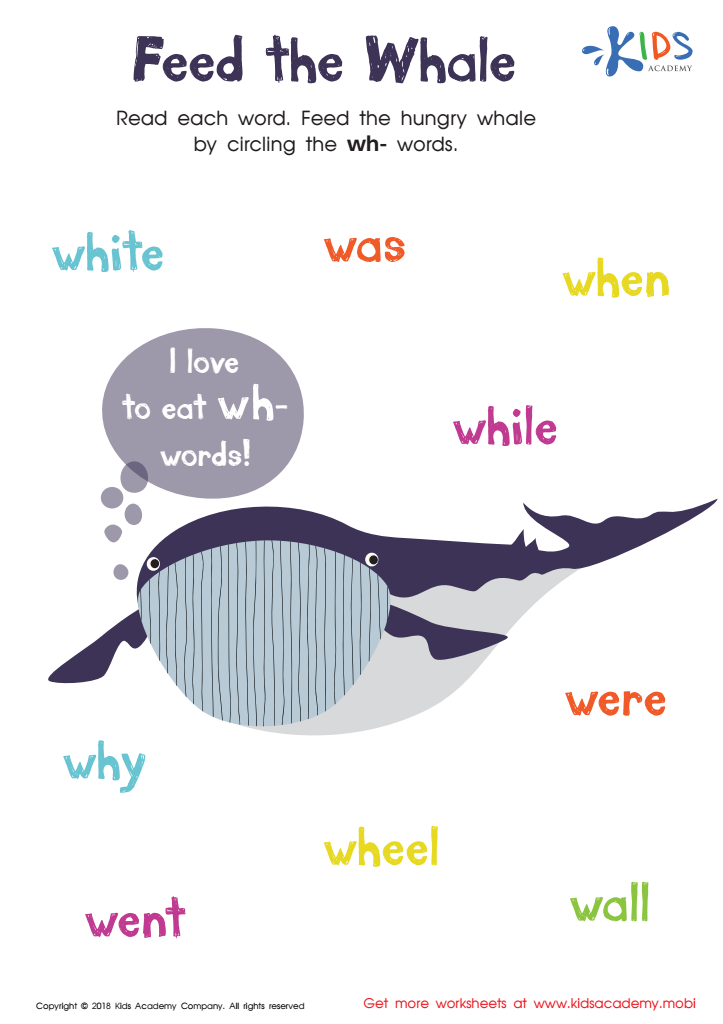
Feed the Whale Worksheet
Help your early reader build beginning consonant and blend recognition with this fun whale worksheet! They'll feed the whale wh- words, circle sight words, and build fine motor skills—all while discriminating between differently colored words.
 Assign to My Students
Feed the Whale Worksheet
Worksheet
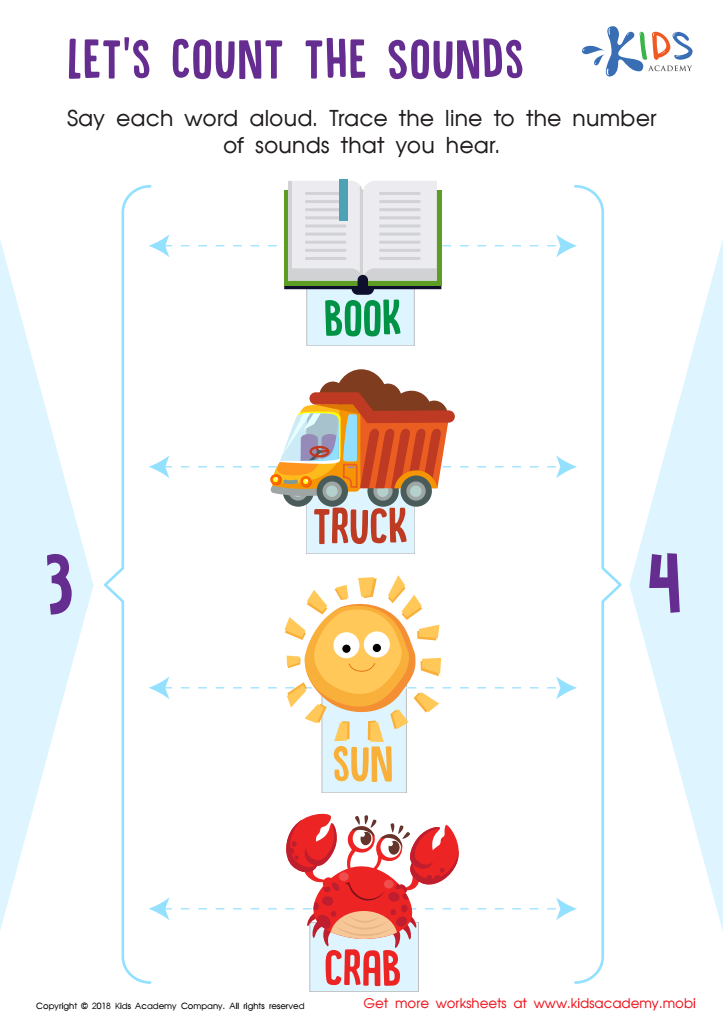
Let's Count the Sounds Worksheet
This bright and cheery traceable worksheet encourages children to practice auditory discrimination and phonological awareness. Using picture clues, they read each word and trace the line that represents the number of sounds heard. This builds decoding skills and helps them become successful readers.
Let's Count the Sounds Worksheet
Worksheet
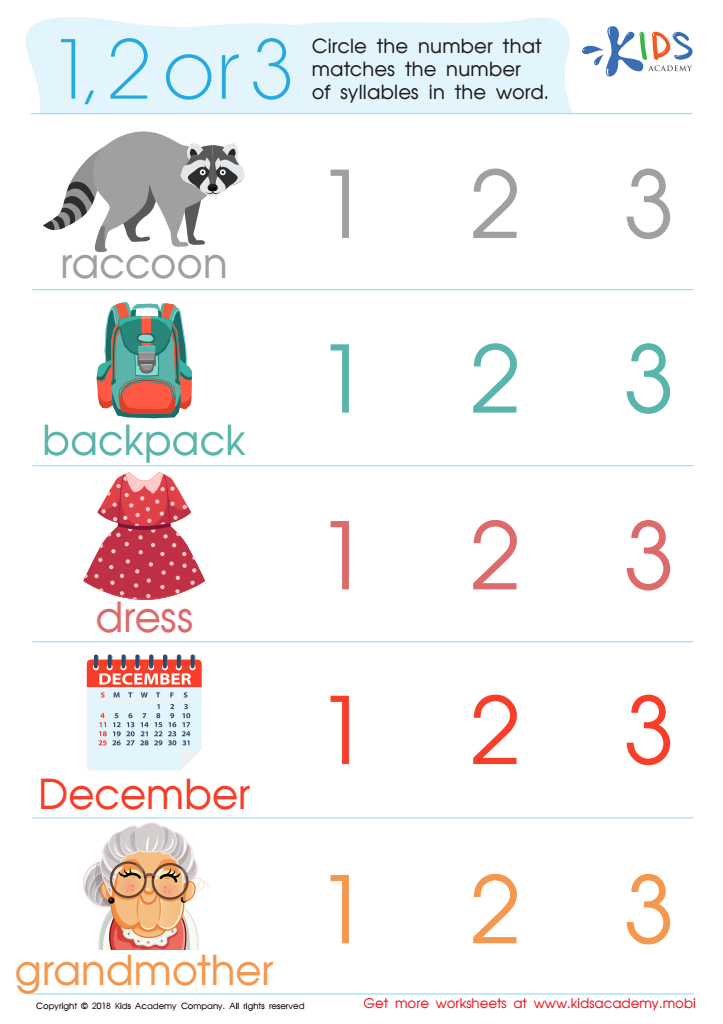
1, 2 or 3? Worksheet
Do your kids know about syllables? Test their understanding with this worksheet. Read the words aloud and ask them to say them with you. Help them circle the number that matches the number of syllables in each word. Perfect for expanding knowledge or testing how much they've already learned.
1, 2 or 3? Worksheet
Worksheet
Join Kids Academy for Free
Who is primarily going to use this learning content?








Counting skills and phonics, especially for ages 3-6, are foundational for a child's early development and future academic success. Firstly, counting skills are essential because they introduce the basics of mathematics. Numeracy—the ability to understand and work with numbers—is a critical life skill. Counting teaches children about sequence, quantity, and the concept of more or less, which aids problem-solving and logical thinking.
Phonics, on the other hand, is the method of teaching reading and writing by demonstrating the relationship between sounds and their corresponding letters. For young children, mastering phonics can significantly boost both reading fluency and comprehension. Being able to decode words early builds confidence and a love for reading, which often translates into better performance across all subjects as they progress through school.
Moreover, both counting skills and phonics development contribute heavily to cognitive growth. They enhance memory, concentration, and the ability to follow multi-step instructions. Socially, these skills are important in enabling children to communicate effectively and interact with their peers.
Therefore, investing time and resources into teaching counting skills and regular phonics practice during these formative years is crucial. The benefits extend beyond academics, shaping well-rounded, intelligent, and confident individuals prepared for the challenges of the future.







