Phonics development Normal Phonics Worksheets for Ages 3-6
3 filtered results
-
From - To
Enhance your child's phonics development with our Normal Phonics Worksheets designed for ages 3-6! Crafted to nurture early reading skills, these engaging worksheets introduce essential phonics concepts such as letter sounds, blending, and simple word formation. Each activity encourages interactive learning through colorful visuals and exciting exercises, making it enjoyable for young learners. Our materials support literacy foundation, foster critical thinking, and improve reading fluency. Help your child build confidence and a love for reading with our comprehensive phonics resources. Perfect for parents and educators alike, these worksheets are an essential tool in early childhood education! Start your phonics journey today!
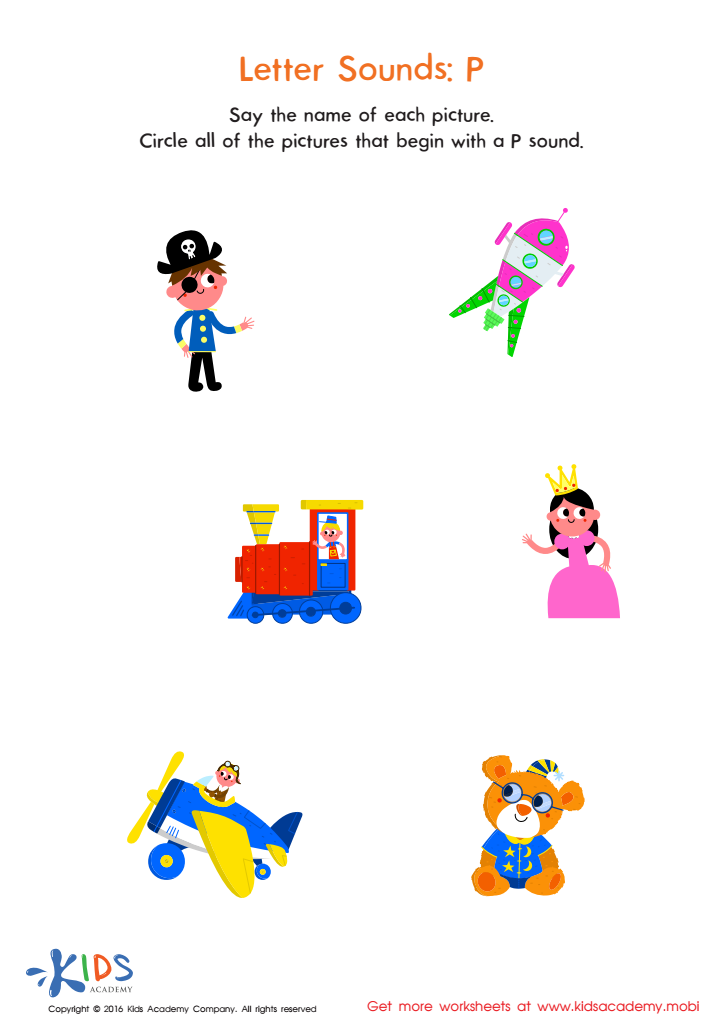
Letter P Sound Worksheet
 Assign to My Students
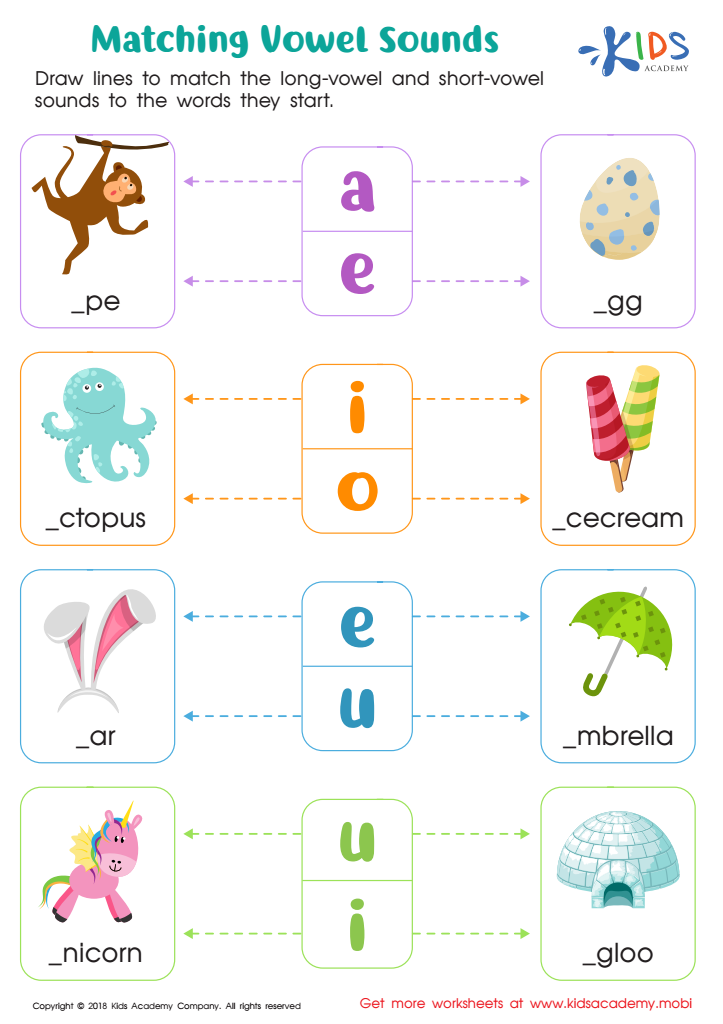
Matching Vowel Sounds Worksheet
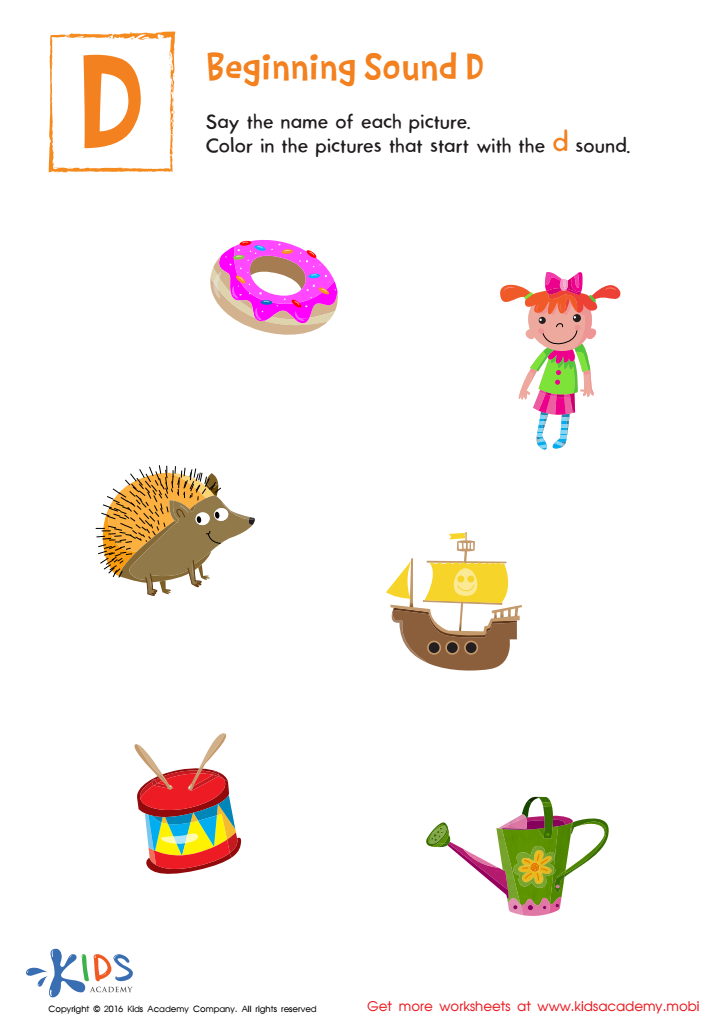
Beginning Sound D Worksheet








Phonics development is a crucial aspect of early literacy that significantly impacts a child's reading and writing success. For children aged 3-6, understanding the relationship between letters and sounds lays the foundation for their language skills. Engaging in phonics is essential as it helps children decode words when reading and spells words correctly when writing.
When parents and teachers prioritize phonics development, they empower children to become confident readers and communicators. By recognizing the sounds that letters and combinations make, children can navigate text more easily and develop a love for reading—vital for academic growth and curiosity.
Moreover, phonics can enhance children's vocabulary and comprehension skills. Strong phonics knowledge allows young learners to grasp new words effectively, which in turn enriches their language experience.
Supporting phonics development also contributes to overall cognitive development and critical thinking skills. It nurtures listening skills and attention to detail, attributes essential not just for reading but for navigating everyday life. With phonics-fostering activities, families can create enjoyable learning experiences, making it easier for children to engage with language and literacy in a fun, interactive manner. Therefore, investing time in phonics reinforces long-term educational success.







