
Phonics recognition Normal Phonics Worksheets for Ages 3-6
9 filtered results
Difficulty Level
Grade
Age
-
From - To
Subject
Activity
Standards
Discover the perfect tool for early learners with our Phonics Recognition Normal Phonics Worksheets for ages 3-6. Carefully designed to nurture young minds, these worksheets help kids identify letters, understand sounds, and build essential reading skills. Featuring engaging activities, vibrant illustrations, and age-appropriate challenges, our resources make phonics fun and effective. Support your child's educational journey with exercises tailored to their learning needs. Embark on this phonics adventure today and lay a strong foundation for your child’s literacy success. Visit the link for more information and enhance your child's reading abilities effortlessly!
Favorites
With answer key
Interactive
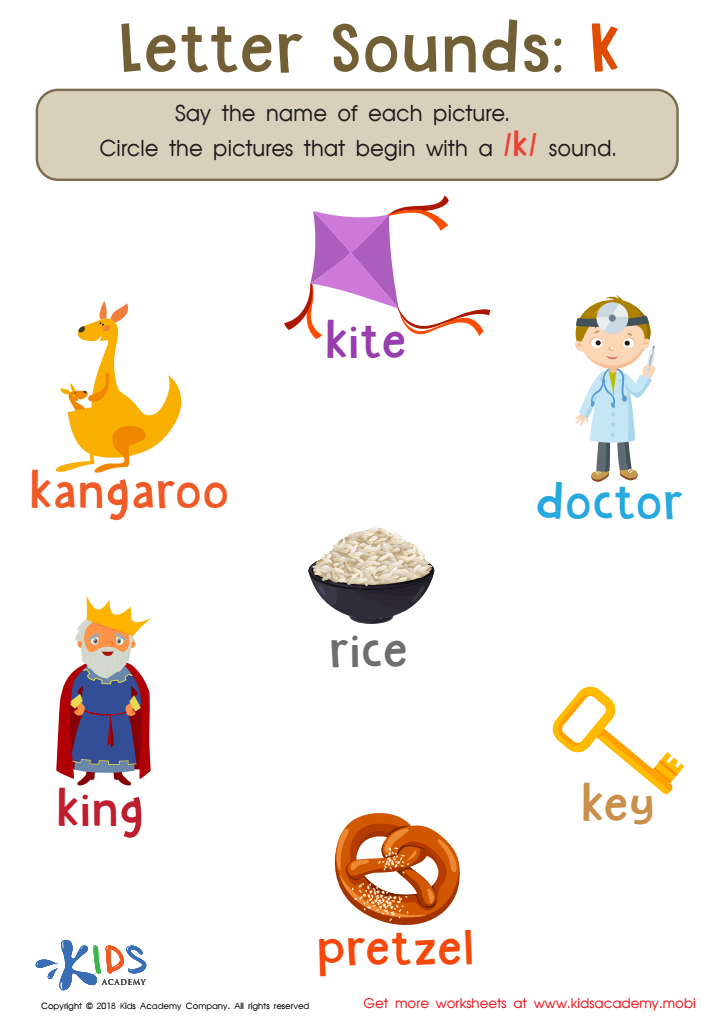
Letter K Sounds Worksheet
Help your child practice phonics with Kids Academy's illustrated worksheet! Have them look at the pictures, read the words and say them aloud. Only circle those that start with a hard 'K' sound. Perfect for preschoolers and kindergarteners! Plus, they'll learn the silent K used in a few words.
 Assign to My Students
Letter K Sounds Worksheet
Worksheet
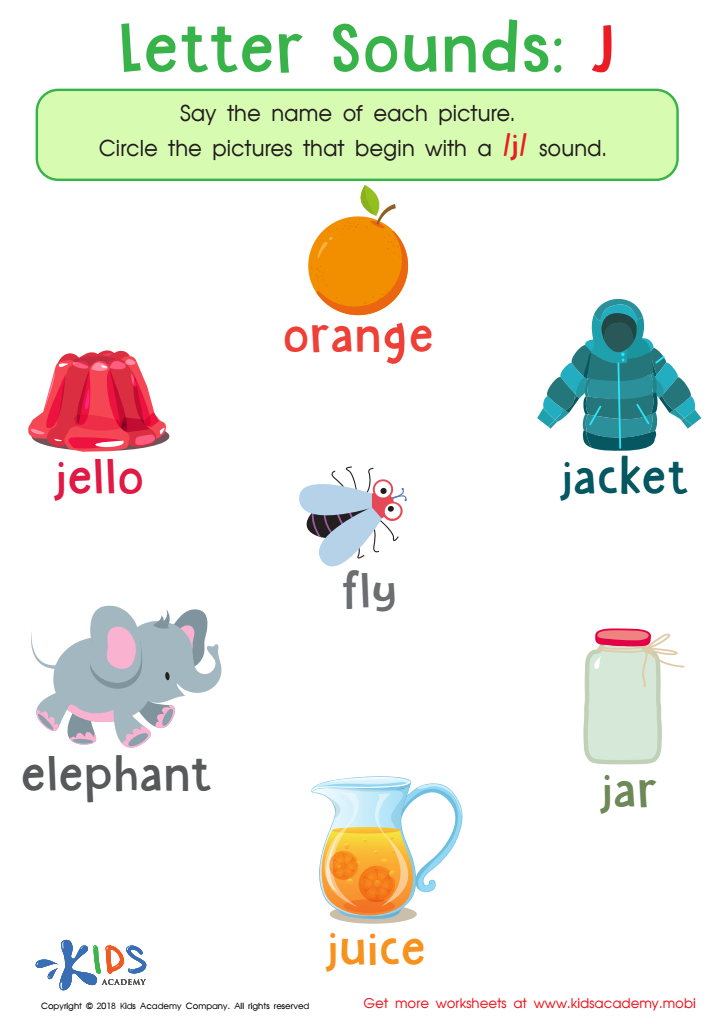
Letter Sounds: J Printable Worksheet
Preschoolers can learn to identify letter sounds by focusing on beginning sounds. This cute and colorful worksheet reviews the hard “j” sound. Kids can point it out by naming the words and circling only those starting with the “j” sound. Read the text out loud and listen closely!
Letter Sounds: J Printable Worksheet
Worksheet
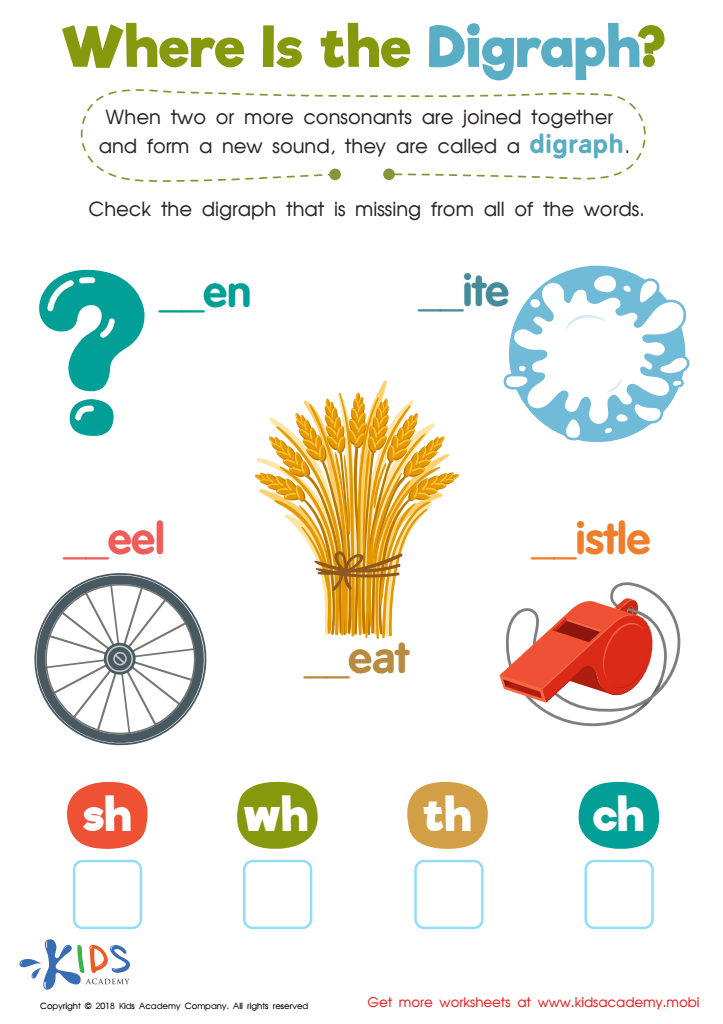
Where Is the Digraph? Worksheet
Teach your child about digraphs - two or more consonants that form one sound, like /wh/, /sh/, and /ch/. Show them words with these sounds and use this worksheet to help. Ask them which digraph is missing from the words and point out the pictures. 80 words.
Where Is the Digraph? Worksheet
Worksheet
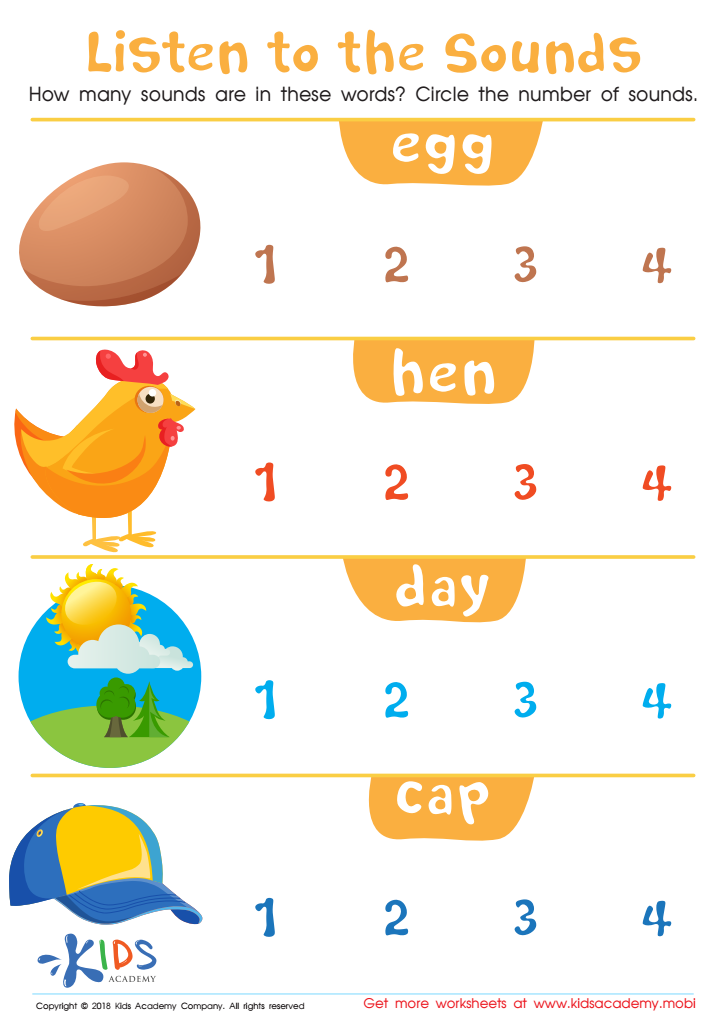
Listen to the Sounds Worksheet
This worksheet builds emerging readers' skills in using sounds for reading and spelling. It helps strengthen auditory processing by having them count the sounds in each word, then trace the corresponding number. Fun and cheerful!
Listen to the Sounds Worksheet
Worksheet
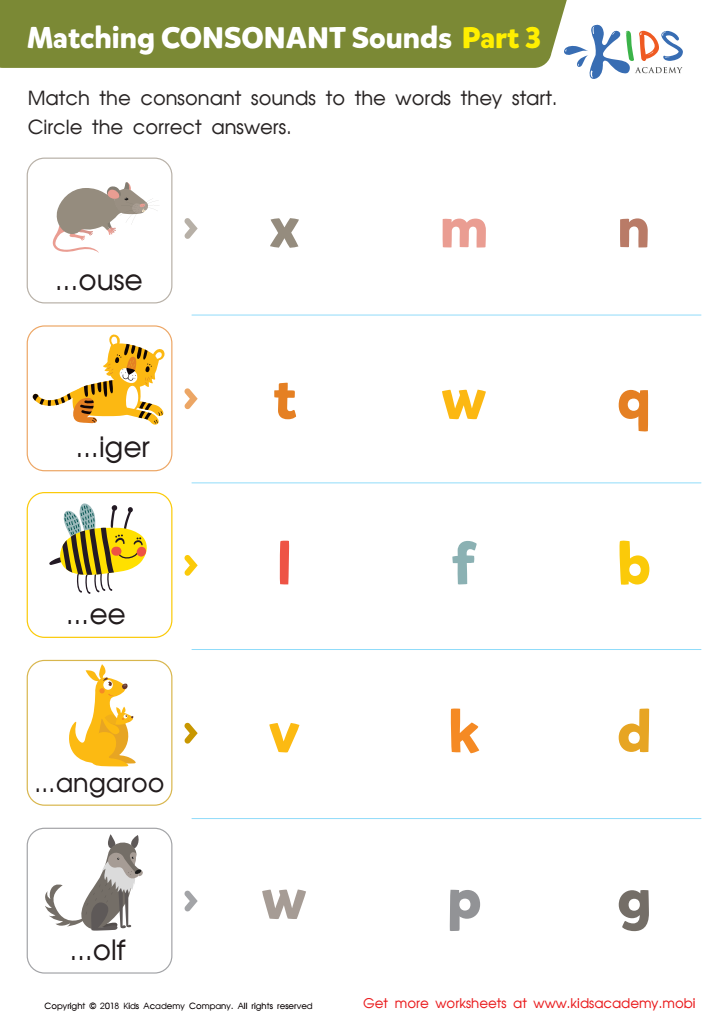
Matching Consonant Sounds: Part 3 Worksheet
Help your early learner match consonant sounds to words with this fun worksheet! Have them name the pictures and try out each letter in the corresponding column. When they hear the sound that matches, circle it. Have them write the letter in the box to complete the word. Work their way down the page until the critters' names all match with consonants!
Matching Consonant Sounds: Part 3 Worksheet
Worksheet
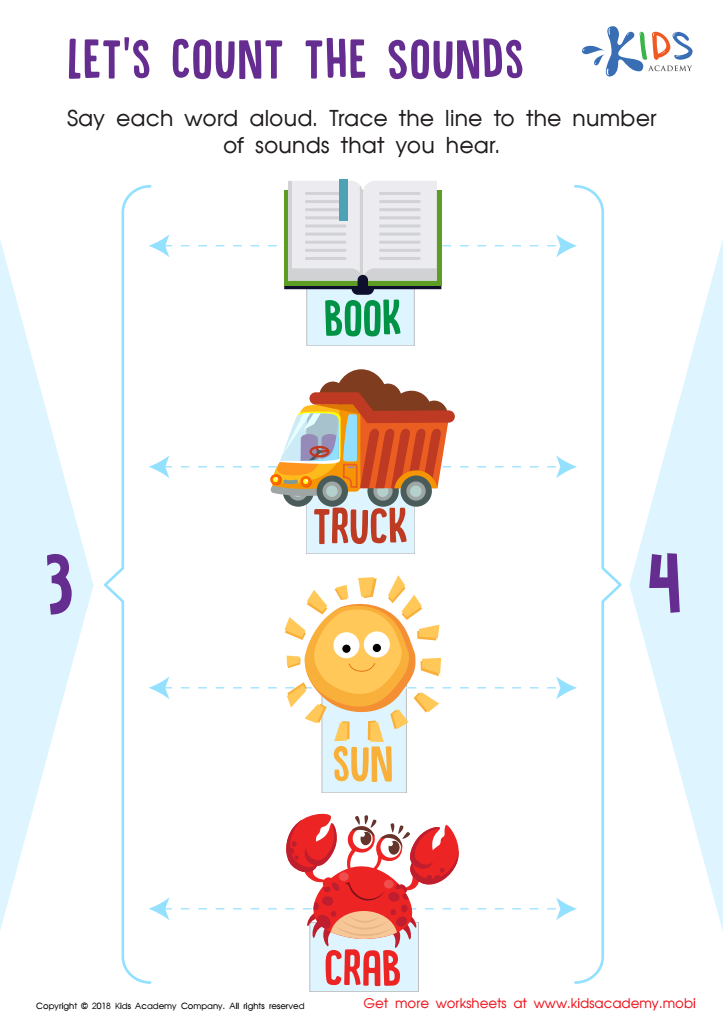
Let's Count the Sounds Worksheet
This bright and cheery traceable worksheet encourages children to practice auditory discrimination and phonological awareness. Using picture clues, they read each word and trace the line that represents the number of sounds heard. This builds decoding skills and helps them become successful readers.
Let's Count the Sounds Worksheet
Worksheet
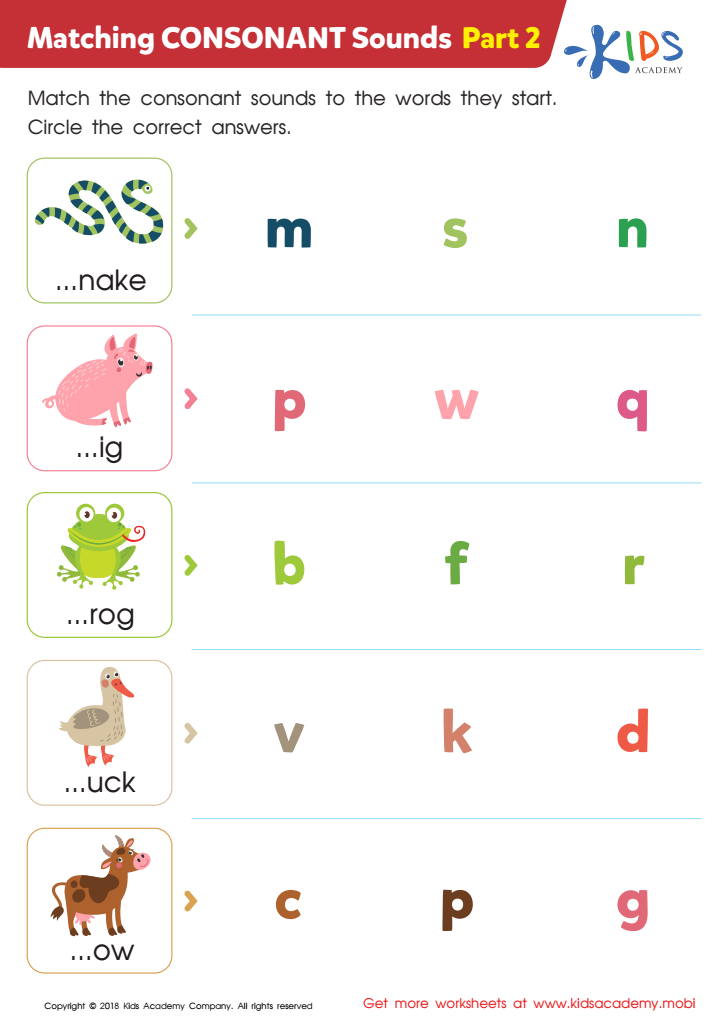
Matching Consonant Sounds: Part 2 Worksheet
Look at the picture, say the word and match the consonant sound with the letter. Coach your child to name the animal and complete the word. For extra challenge, write the missing letter in the box! This PDF worksheet helps kids learn to read words with familiar animal pictures.
Matching Consonant Sounds: Part 2 Worksheet
Worksheet
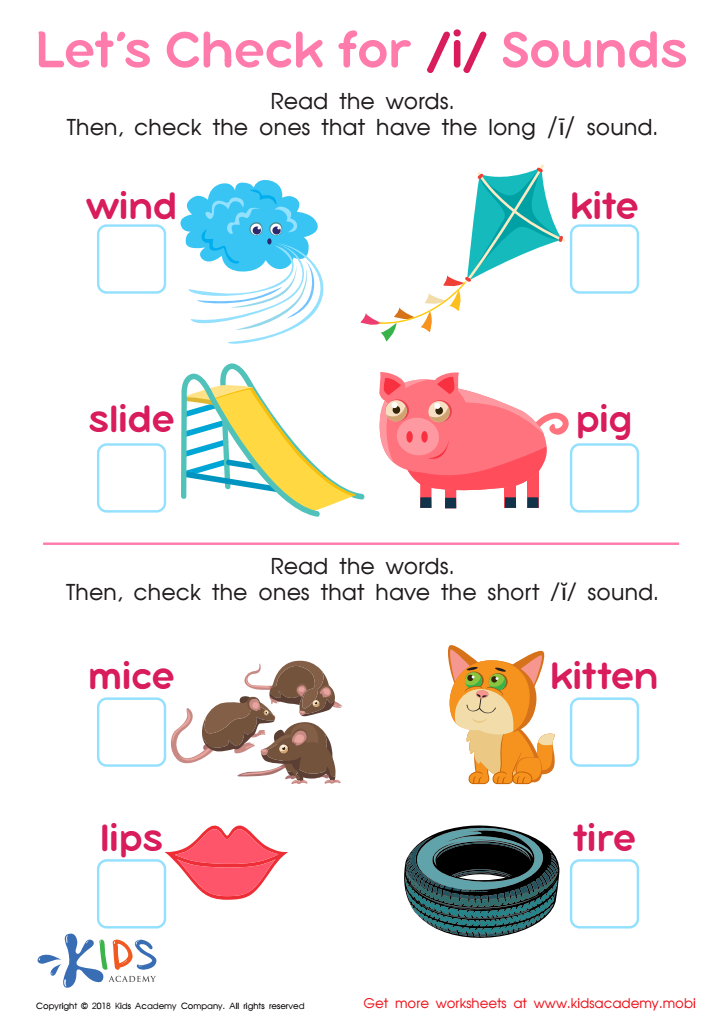
Let's Check for «i» Sounds Worksheet
This fun worksheet with pictures boosts phonics skills - differentiating between long «ī» and short «i» sounds in 1- and 2-syllable words. Kids use picture clues to read words, then check off the correct ones. It's a great way for new readers to practice early reading skills and find success on their own.
Let's Check for «i» Sounds Worksheet
Worksheet
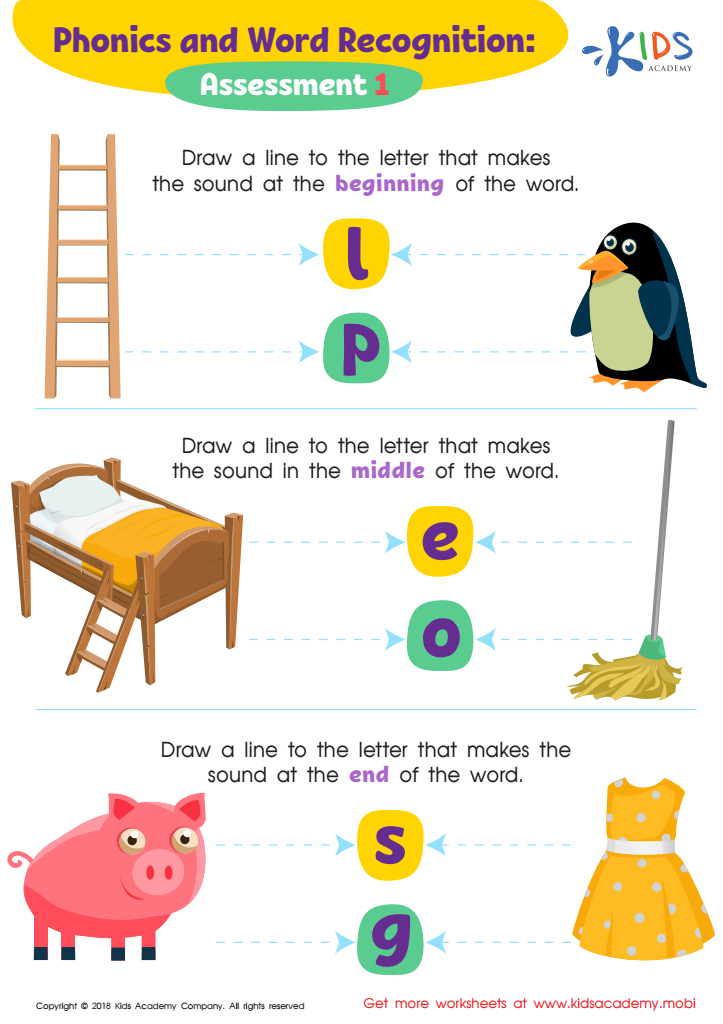
Phonics and Word Recognition: Assessment 1 ELA Worksheet
This fun worksheet tests your child's sound recognition skills for each part of a word. Ask your child to name each image and trace the line to match it with the corresponding letter. Listen for beginning sounds on 1st, middle sounds on 2nd, and ending sounds on 3rd. Encourage learning with this colorful and interactive activity!
Phonics and Word Recognition: Assessment 1 ELA Worksheet
Worksheet
Join Kids Academy for Free
Who is primarily going to use this learning content?








Phonics recognition is a foundational skill in learning to read, and it is crucial for children aged 3-6. At this early stage, children’s brains are highly receptive to language acquisition, making it an ideal time to introduce phonics. Phonics helps children understand the relationship between letters and their sounds, enabling them to decode new words independently. This skill is critical for reading fluency and comprehension.
For parents and teachers, prioritizing phonics recognition means supporting children as they develop crucial literacy skills. Early exposure to phonics can build a child’s confidence and curiosity about reading. Children who master phonics at a young age tend to have a more extensive vocabulary and better reading comprehension skills. These skills are not only important for academic success but also for everyday communication and lifelong learning.
Moreover, phonics instruction can prevent reading difficulties later on. Research indicates that early difficulties in phonics can predict future reading challenges. Therefore, attentive phonics teaching can serve as an early intervention, addressing potential learning struggles before they become more significant problems.
In summary, investing in phonics recognition during the early years sets the stage for academic success, boosts self-esteem, and lays a solid foundation for lifelong literacy and learning. This makes it a vital aspect of early childhood education.







