
Reading practice Normal Phonics Worksheets for Ages 3-6
4 filtered results
Difficulty Level
Grade
Age
-
From - To
Subject
Activity
Standards
Discover engaging Normal Phonics Worksheets designed for children ages 3-6 at Kids Academy! Our carefully crafted reading practice materials help young learners build foundational literacy skills through phonics. Each worksheet focuses on letter recognition, sound association, and blending to foster early reading confidence. With vibrant illustrations and interactive activities, these resources keep children motivated as they embark on their reading journey. Perfect for home or classroom use, our phonics worksheets support curriculum goals while making learning fun. Unlock your child’s potential today with our collection of printable worksheets tailored for effective and enjoyable reading practice!
Favorites
With answer key
Interactive
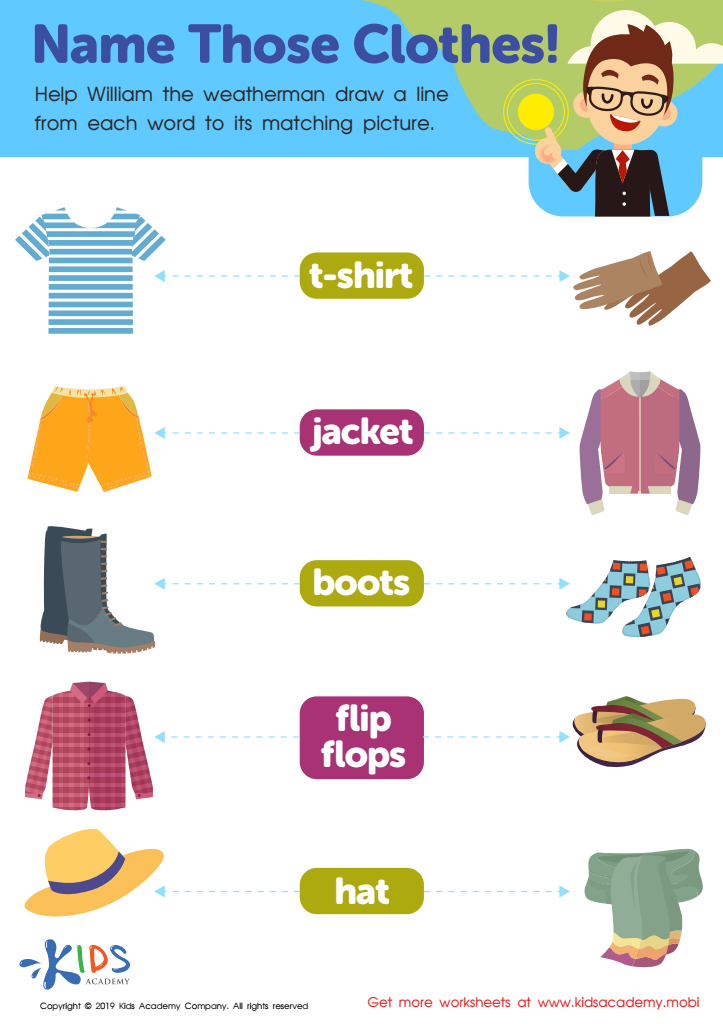
Name Those Clothes Worksheet
This worksheet will help your preschooler build their vocabulary, develop life-skills and work on fine motor skills. They'll analyze which clothing goes with the weatherman and match it to the word. It's a fun and interactive way to recognize high-frequency words.
 Assign to My Students
Name Those Clothes Worksheet
Worksheet
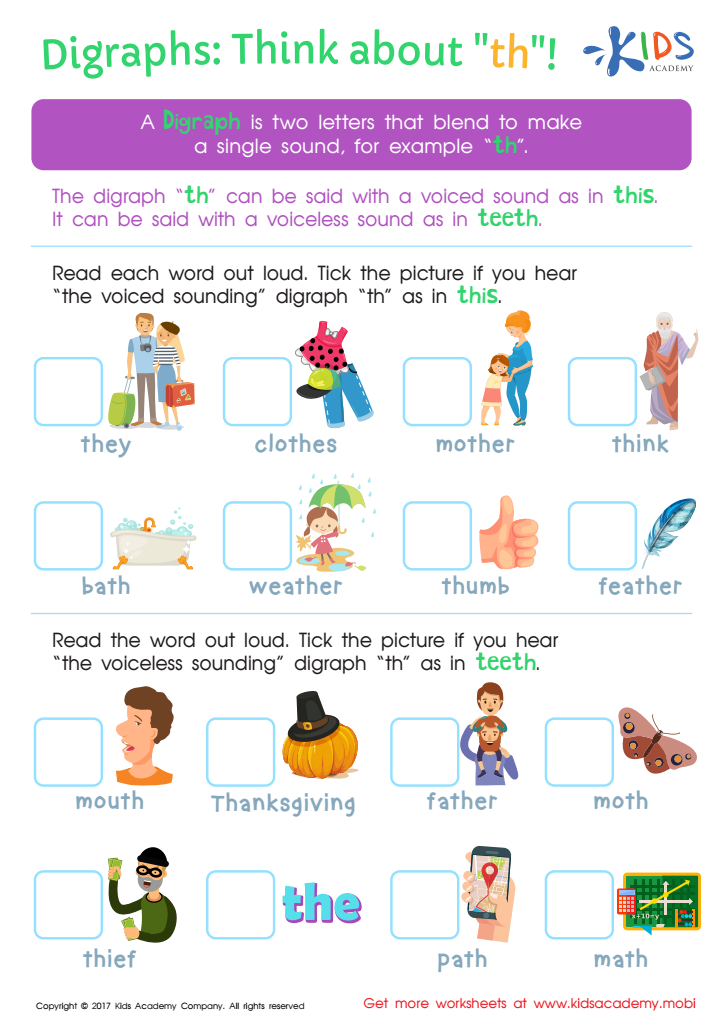
Digraphs: Think About "th" Worksheet
Help your child master phonics with this illustrated digraph Th printable worksheet. It will help recognize "Th" words, differentiate voiced and voiceless sounds and understand key concepts. Use similar words while they work to reap its full benefits!
Digraphs: Think About "th" Worksheet
Worksheet
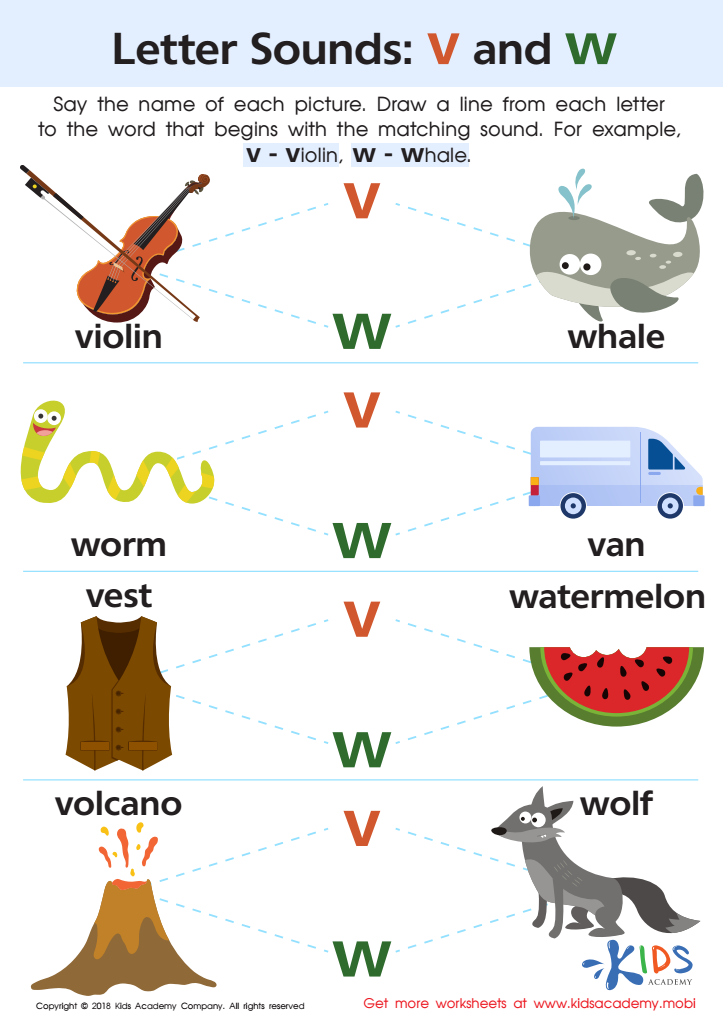
Letter V and W Sounds Worksheet
Help your child master the sounds of W & V while completing this fun phonics worksheet. Have them trace the dotted line from letter to picture while saying words like "worm", "violin" and "van" aloud to notice how each word begins with either W or V. Listen and pay attention to the pronunciation to complete the practice.
Letter V and W Sounds Worksheet
Worksheet
Join Kids Academy for Free
Who is primarily going to use this learning content?








Reading practice, particularly through resources like Normal Phonics for ages 3-6, is crucial for a child’s early development. During these formative years, children’s brains undergo rapid growth, especially regarding language acquisition. Engaging with phonics supports not only their reading skills but also deepens comprehension and critical thinking abilities.
Phonics systematically teaches children the relationships between sounds and letters, laying a foundation for fluent reading. This method boosts confidence, as kids learn to decode words independently, which can foster a love for reading early on. With phonics, reading becomes less intimidating, enabling kids to explore books with curiosity rather than fear.
Additionally, effective reading practice cultivates communication skills essential for academic success and social interaction. By helping young learners recognize phonetic patterns, parents and teachers empower them to navigate both reading and writing proficiently.
Moreover, early reading proficiency is linked to better educational outcomes and higher self-esteem in later stages of schooling. Investing time and resources into reading practice through phonics ensures that children build strong literacy skills, setting the stage for lifelong learning. In essence, supporting Normal Phonics practice contributes significantly to a child's overall cognitive and emotional development.







