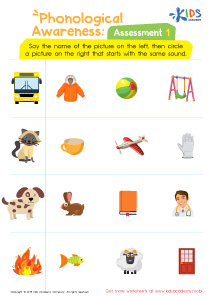
Rhyming skills development Normal Rhyming Worksheets for Ages 3-6
4 filtered results
-
From - To
Unlock the joys of language with our Rhyming Skills Development Worksheets designed for children ages 3-6. These engaging activities promote phonemic awareness and enhance vocabulary through fun rhyming games and exercises. Our normal rhyming worksheets provide a perfect blend of colorful illustrations and interactive prompts that keep young learners excited and motivated. As children match words and complete rhyming pairs, they strengthen their reading and speaking skills while building early literacy foundations. Ideal for parents and educators, these printable worksheets can be easily integrated into daily learning routines. Foster creativity and confidence in your little ones with our carefully crafted rhyming resources!
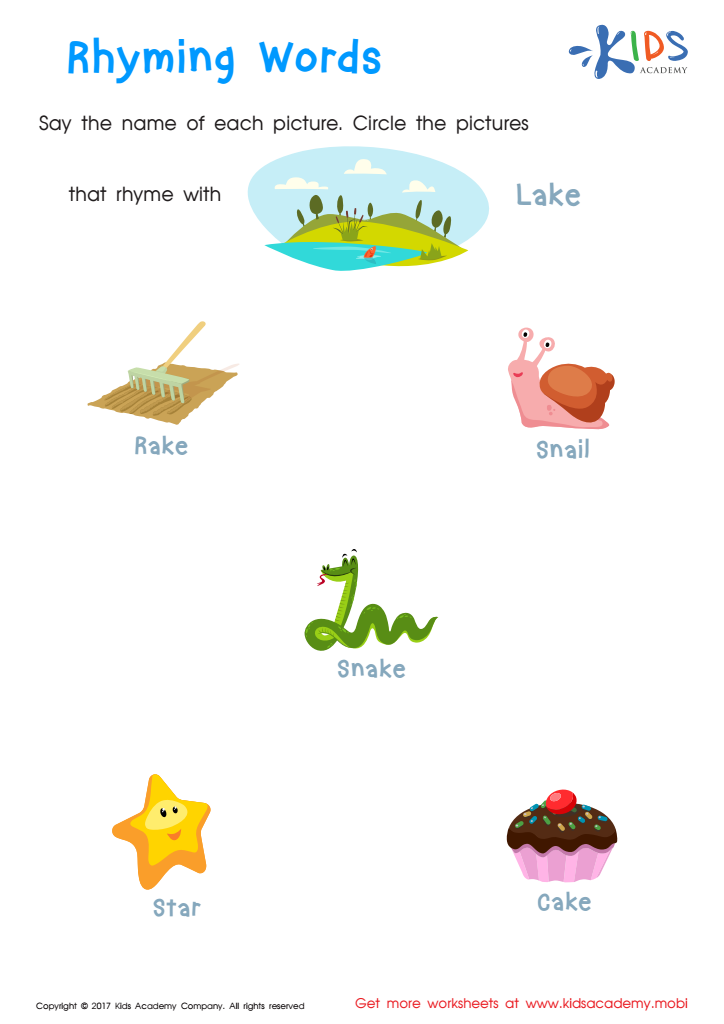
Rhyming Words Rhyming Worksheet
 Assign to My Students
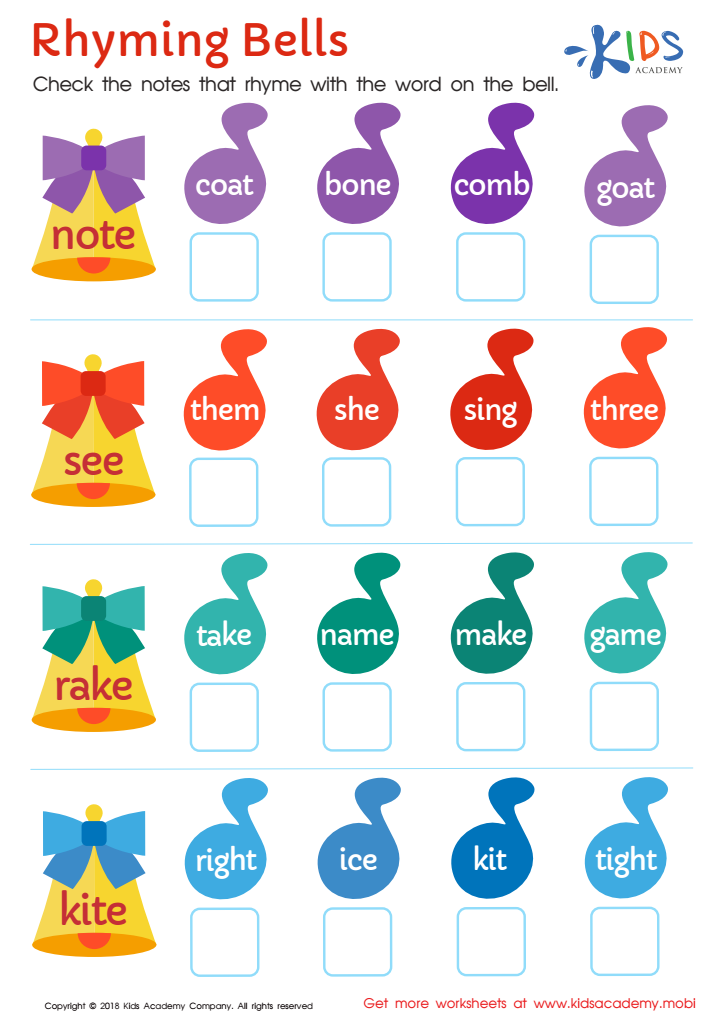
Rhyming Bells Worksheet
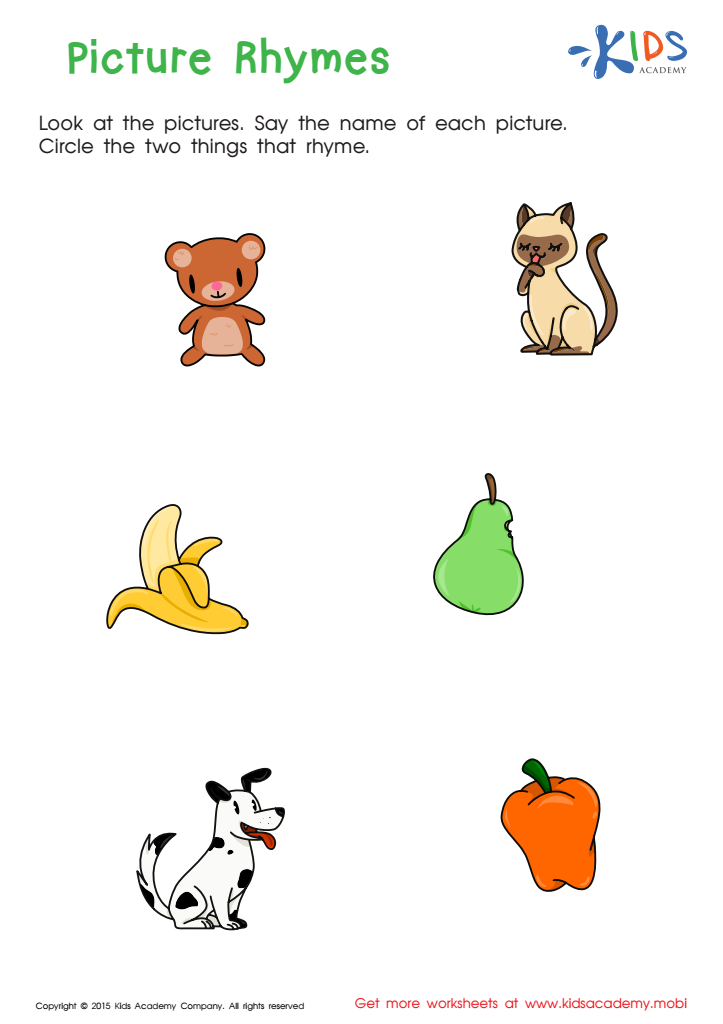
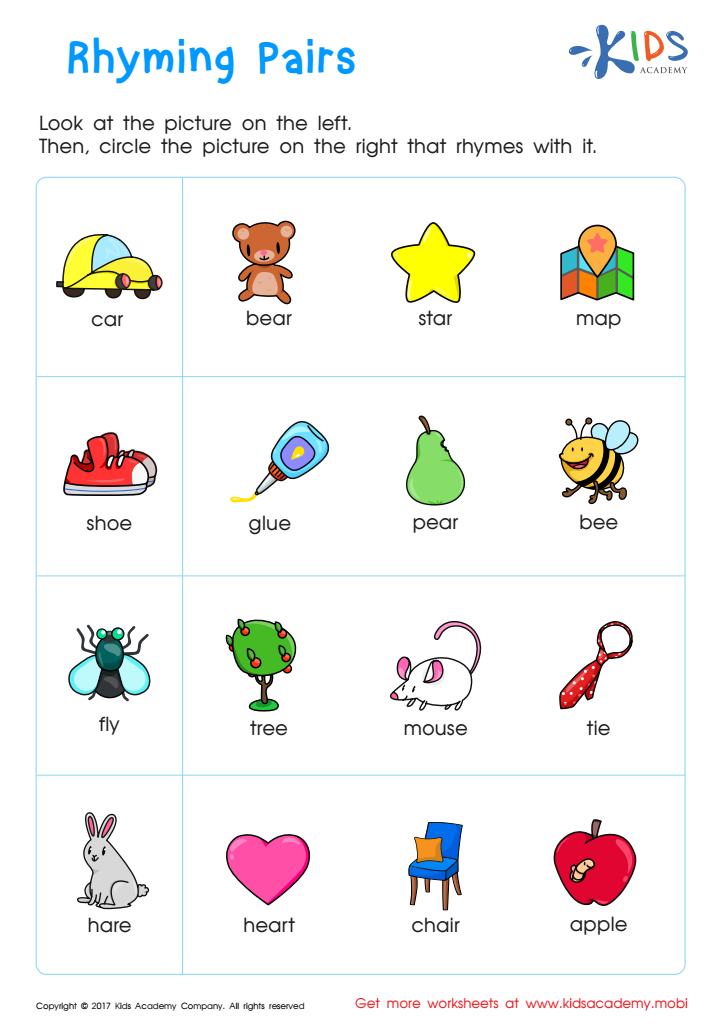
First Words: Picture Rhymes Worksheet








Rhyming skills are vital in the early developmental stages of children, specifically for those aged 3 to 6 years. These skills serve as crucial building blocks for literacy and language development. When children engage with rhymes, they enhance their phonemic awareness—an understanding of the sounds that make up words, which is essential for reading.
Rhyming activities can boost vocabulary interests and promote story comprehension, as children learn to recognize patterns and sounds within language. This understanding also fosters their ability to segment and blend sounds, skills necessary for decoding words when they begin to read.
Moreover, engaging with rhymes is not only educational but also enjoyable, sparking a child's imagination and creativity. Fun rhyming games or songs improve verbal skills and help children articulate their thoughts more clearly. For teachers and parents, fostering rhyming skills provides an opportunity to create positive learning environments that encourage children's social and emotional development. In summary, caring about rhyming doesn't just contribute to literacy; it nurtures a child's cognitive and imaginative growth, laying a strong foundation for future learning.