Phonics practice Normal Short Vowels Worksheets for Ages 3-6
3 filtered results
-
From - To
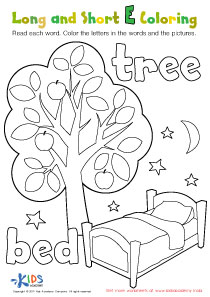
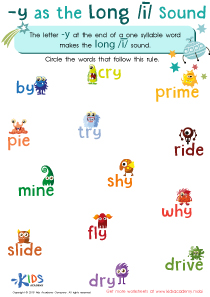
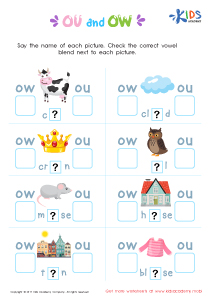
Discover the ideal resource for young learners with our Phonics Practice Normal Short Vowels Worksheets designed for ages 3-6. These engaging, colorful worksheets are perfect for developing foundational reading skills through the recognition and pronunciation of short vowels. Each activity encourages kids to identify, trace, and sound out short vowel words, enhancing their phonemic awareness. Whether used at home or in the classroom, these worksheets make learning fun and effective, laying the groundwork for successful reading and literacy. Help your child excel in phonics with our expertly crafted educational tools. Explore today!
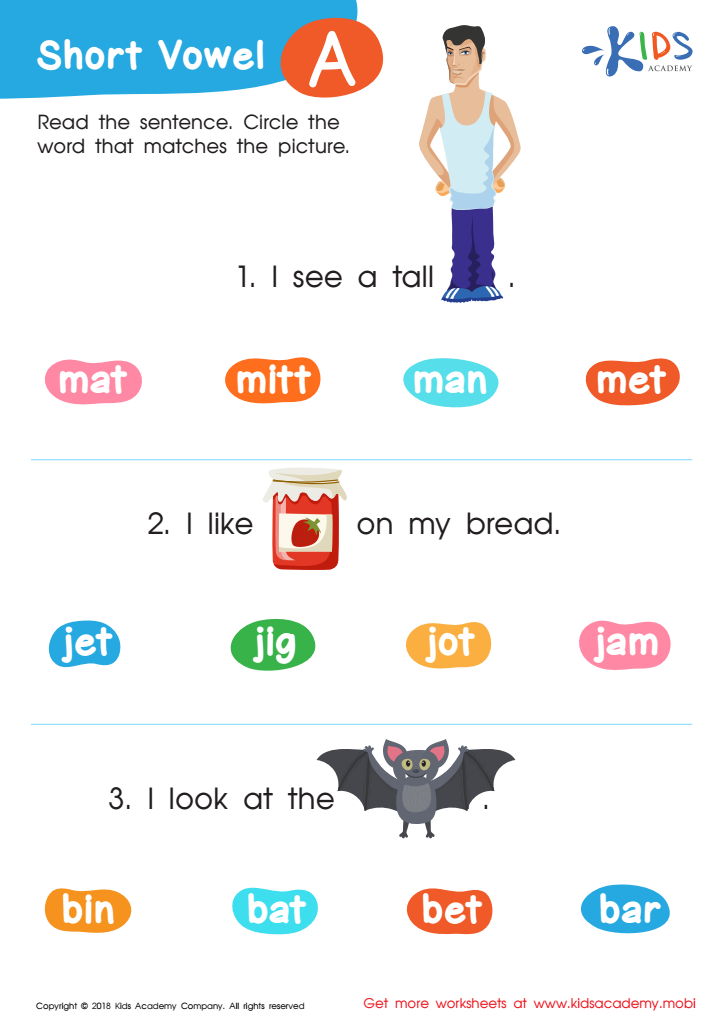
Short Vowel /a/ Worksheet
 Assign to My Students
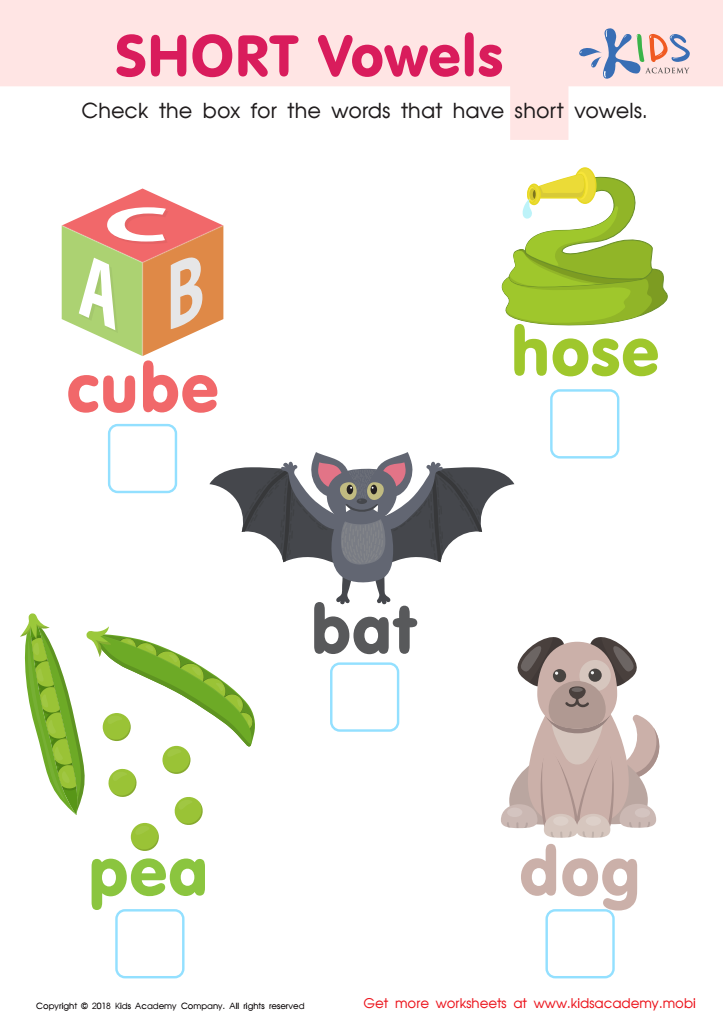
short vowels Worksheet
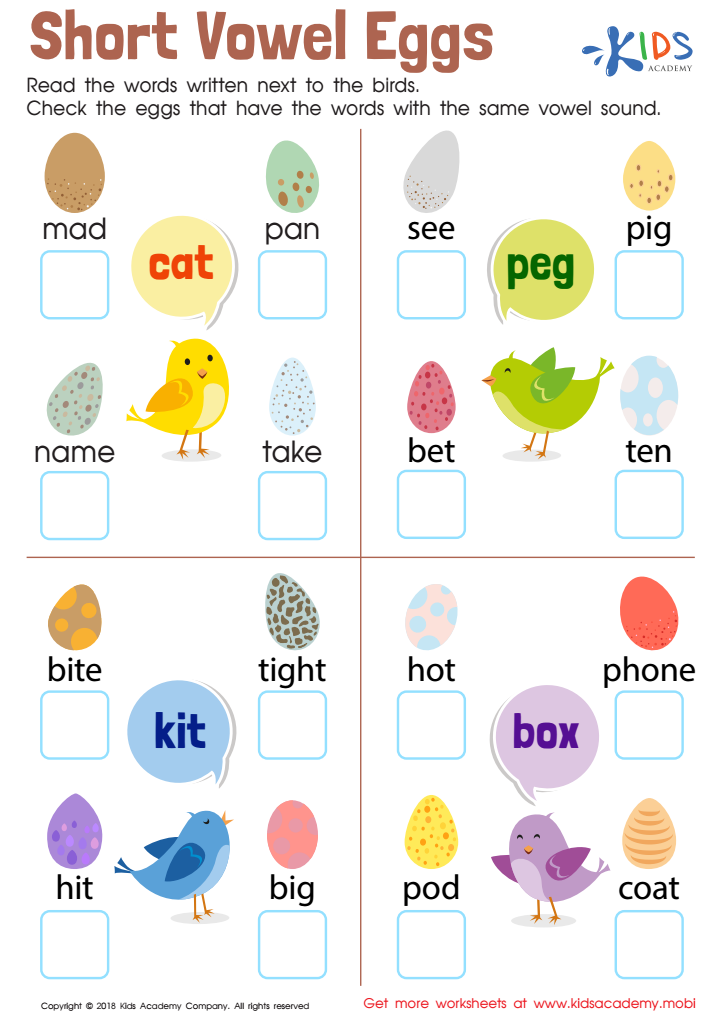
Short Vowel Eggs Worksheet



Phonics practice, particularly focusing on normal short vowels, is crucial for children ages 3-6 as it lays the foundation for essential reading and writing skills. During these formative years, children's brains are rapidly developing, and exposure to phonics enhances their ability to decode words, a critical component of early literacy. The understanding of short vowel sounds—such as 'a' in "cat," 'e' in "bed," 'i' in "sit," 'o' in "cot," and 'u' in "rug"—picturesquely impacts their ability to recognize and produce these sounds in various words, advancing their reading fluency.
Engaging in phonics practice helps to segment and blend sounds effectively, crucial techniques for reading and spelling. Encouraging consistent practice strengthens auditory discrimination, meaning children become adept at hearing differences between similar sounds, crucial for understanding spoken language and word recognition. Furthermore, familiarity with short vowels supports children in building a robust vocabulary and improves their grasp of word structure, which is fundamental as they progress to more complex reading and writing tasks.
For parents and teachers, investing time in phonics practice ensures that children gain increased confidence and motivation towards learning. This foundation not only aids immediate educational outcomes but also creates a positive, long-lasting impact on academic performance, contributing significantly to their future success in literacy and overall education.