Vocabulary enhancement Normal Short Vowels Worksheets for Ages 3-6
3 filtered results
Difficulty Level
Grade
Age
-
From - To
Subject
Activity
Standards
Boost your child's vocabulary with our engaging Normal Short Vowels Worksheets designed specifically for ages 3-6. These worksheets provide interactive activities that help young learners identify and understand short vowel sounds, a crucial foundation for their reading skills. Each worksheet features colorful illustrations and simple exercises tailored to enhance word recognition and pronunciation. Through playful learning, children will build their vocabulary while developing phonemic awareness in a fun, supportive environment. Ideal for both homes and classrooms, our vocabulary enhancement worksheets make learning enjoyable and effective, allowing children to explore and master the world of short vowels with confidence. Start their journey today!
Favorites
With answer key
Interactive
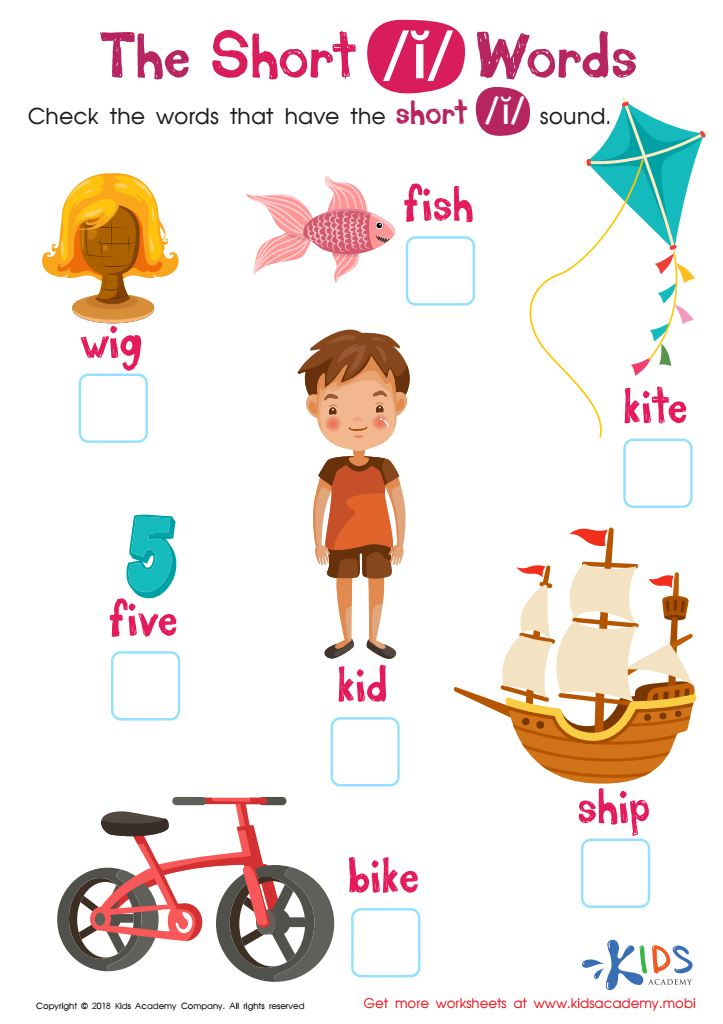
The Short I Words Reading Worksheet
Teach your kindergartner phonics with this printout worksheet! It introduces the short «i» sound and helps them differentiate and articulate sounds and letters of the alphabet. With practice, your child will soon find it easy to classify sounds into long and short vowels.
 Assign to My Students
The Short I Words Reading Worksheet
Worksheet
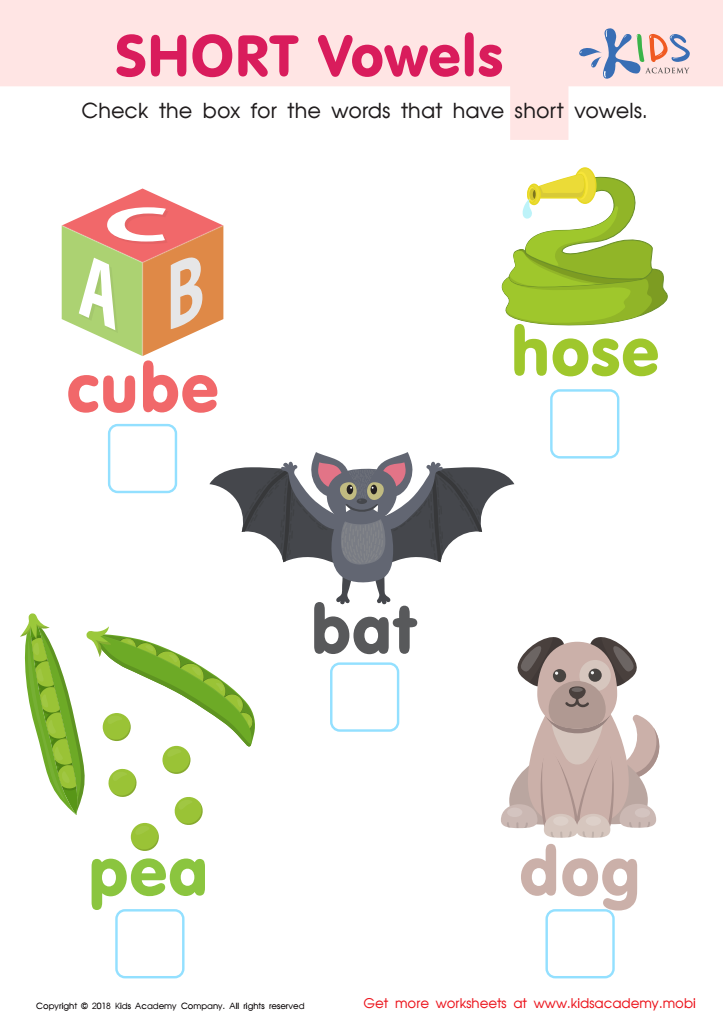
short vowels Worksheet
Say "dog" and notice how long it takes to pronounce the vowel. Is it short or long? Compare it to "pea" and use this worksheet to quickly assess your child's mastery. Have them name each picture and listen for the vowel sounds. Only check the boxes for words with short vowel sounds.
short vowels Worksheet
Worksheet
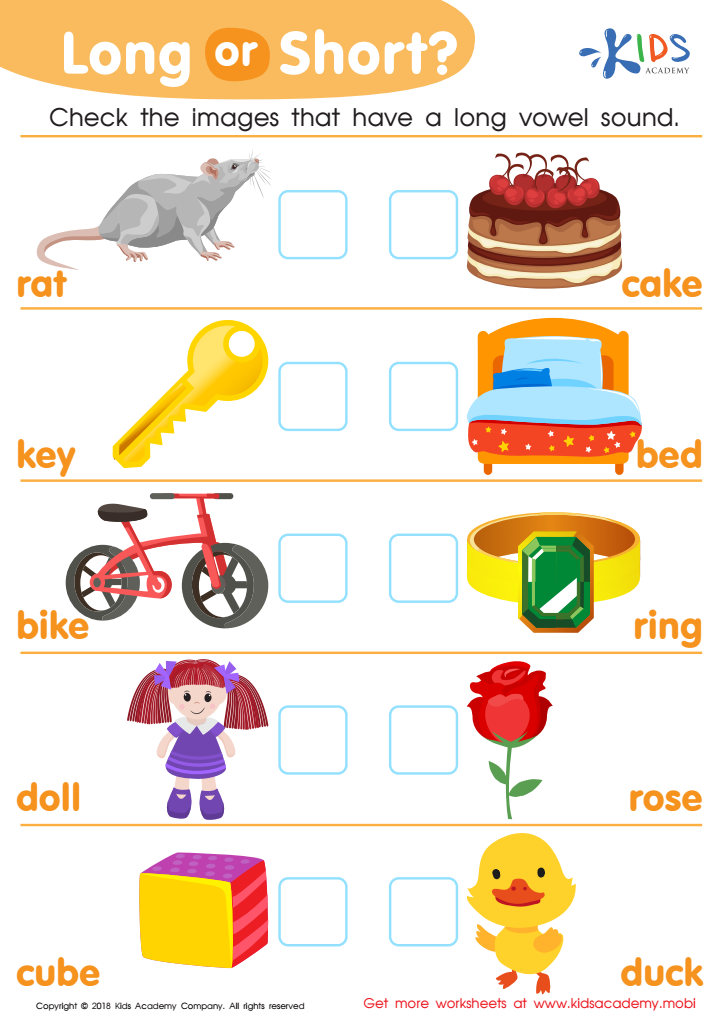
Long or Short Reading Worksheet
Every new reader needs to learn to recognize long and short vowel sounds. This phonics worksheet uses pictures of high-frequency words to help. Kids read the words and then check off images with long vowel sounds. It helps them learn to decode words and improves fine motor skills.
Long or Short Reading Worksheet
Worksheet
Join Kids Academy for Free
Who is primarily going to use this learning content?



Vocabulary enhancement for normal short vowels in children aged 3-6 is vital for several reasons. First, this developmental stage is crucial for language acquisition, and mastering short vowel sounds lays the foundation for reading and writing skills. Children learn to decode words, which supports their ability to recognize familiar language patterns, a skill essential for effective communication.
Engaging with vocabulary enhancement activities focusing on short vowels fosters phonemic awareness. This skill aids in distinguishing sound differences, making it easier for children to manipulate sounds when learning to read and spell. Early exposure to diverse vocabulary also enriches children's understanding and expressive capabilities, allowing them to articulate their thoughts and feelings more clearly.
Moreover, vocabulary development significantly impacts overall literacy success. When children become proficient in short vowel words, they can build more complex phonetic skills and eventually tackle longer words. This accomplishment boosts their confidence and motivation to learn.
Lastly, a strong vocabulary enhances cognitive development, enabling children to think critically and engage in discussions. Collaborating with parents or caregivers in this area reinforces learning at home and fosters a love for language, which can last a lifetime. Prioritizing vocabulary enhancement in these early years creates a strong educational foundation for future success.