Alphabet familiarity Normal Upper & Lowercase Letters Worksheets for Ages 3-6
6 filtered results
-
From - To
Welcome to our Alphabet Familiarity Worksheets, perfect for children aged 3-6! Designed to enhance recognition of both uppercase and lowercase letters, these engaging worksheets provide a fun and interactive way for young learners to familiarize themselves with the alphabet. Through a variety of activities, including tracing, matching, and coloring, children will build essential pre-reading skills while boosting their confidence in letter recognition. Each worksheet is crafted to captivate young minds and establish a solid foundation for early literacy. Explore our collection today and support your child's journey toward mastering the alphabet in a creative and enjoyable manner!
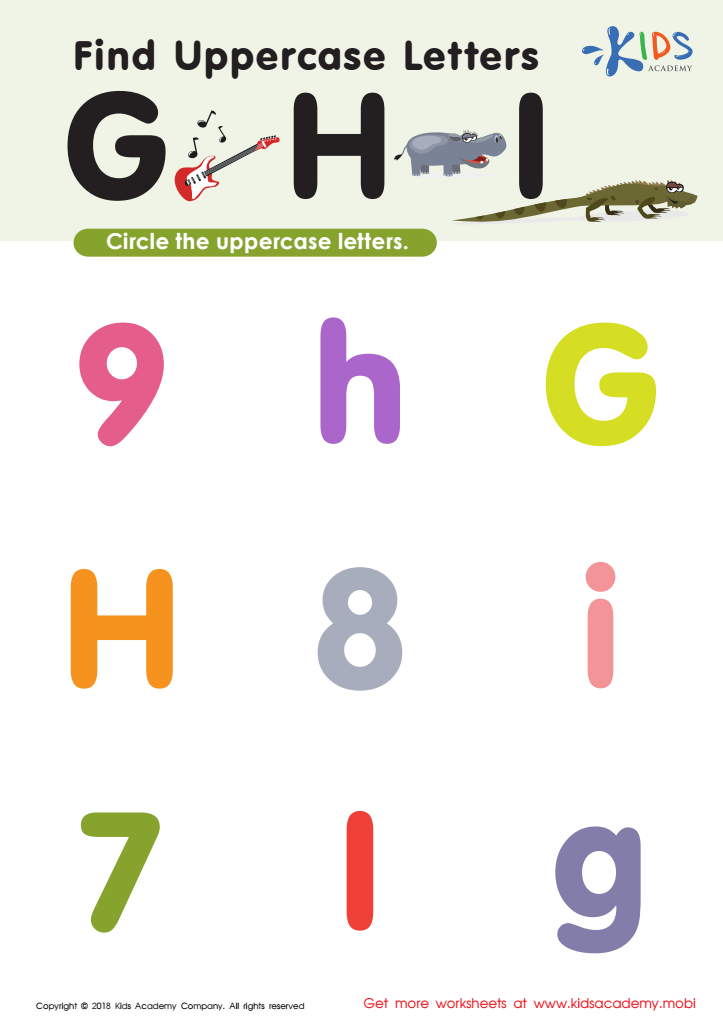
Find Uppercase Letters G, H, and I Worksheet
 Assign to My Students

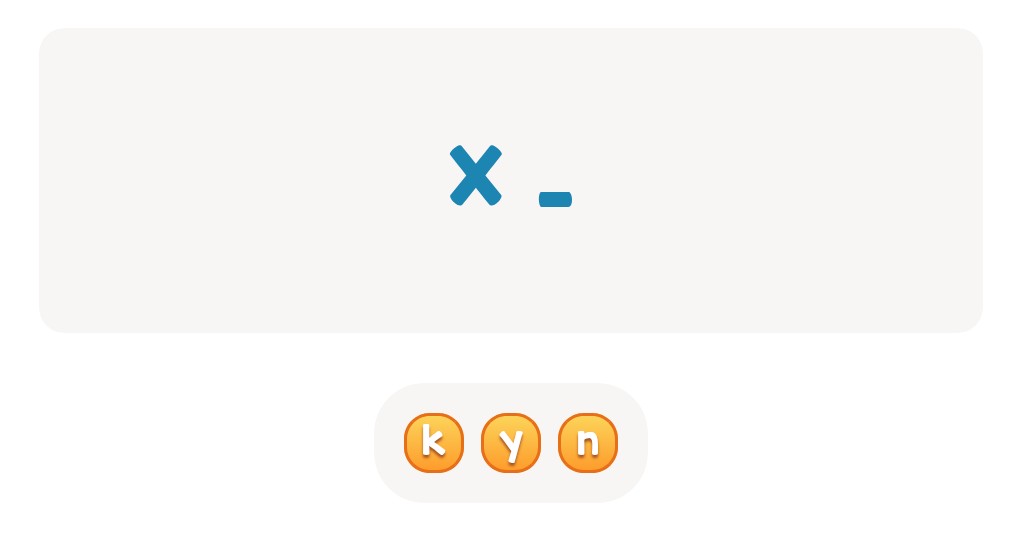
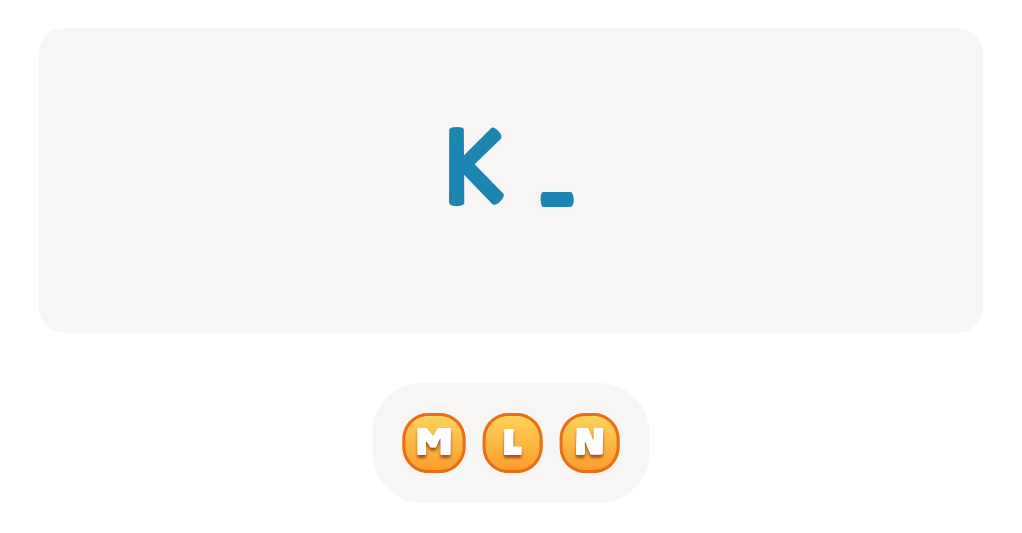
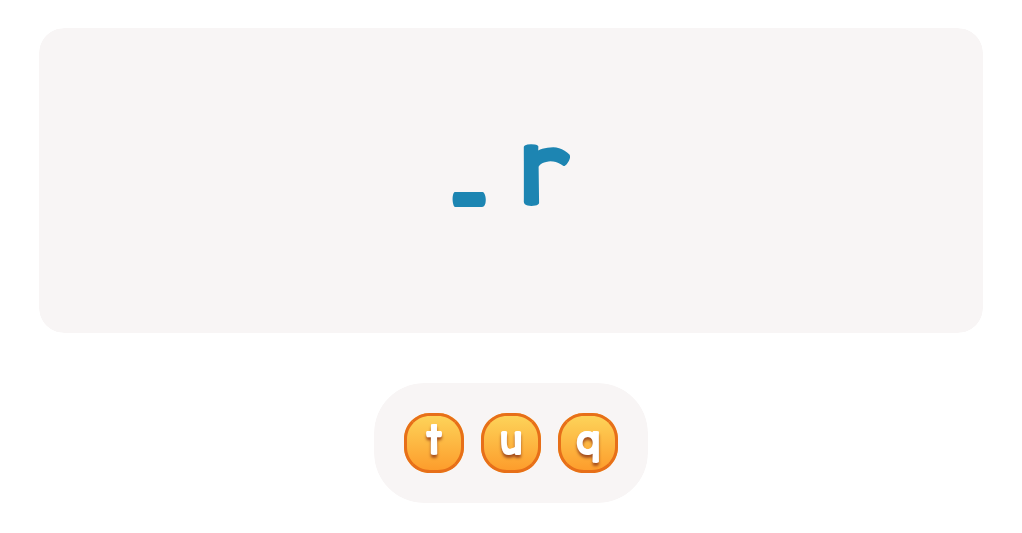

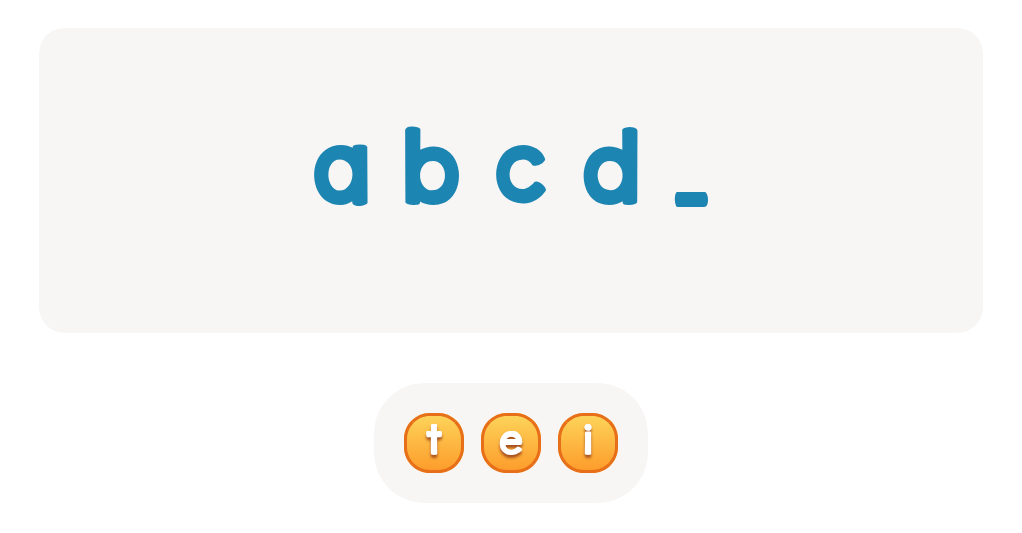
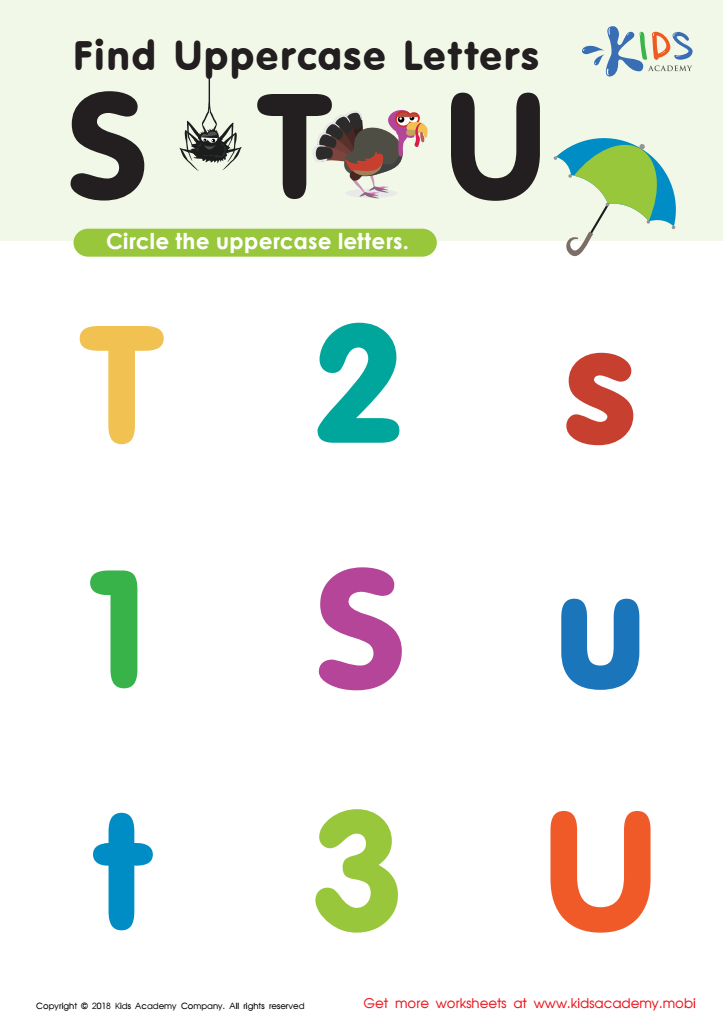
Find Uppercase Letters Worksheet
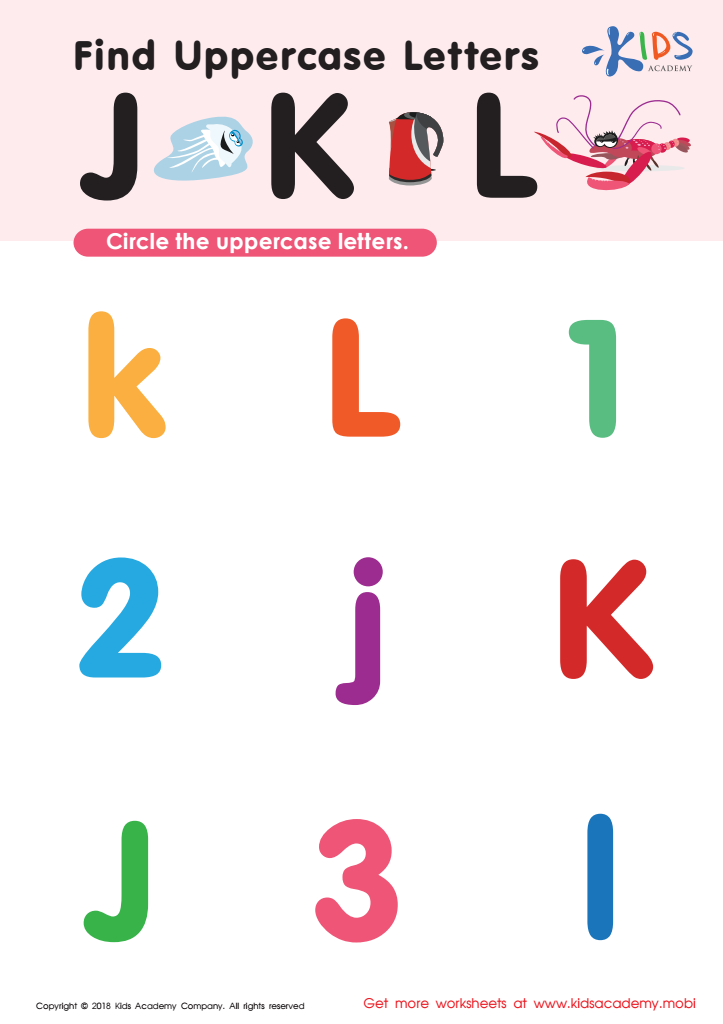
Find Uppercase Letters J, K, and L Worksheet
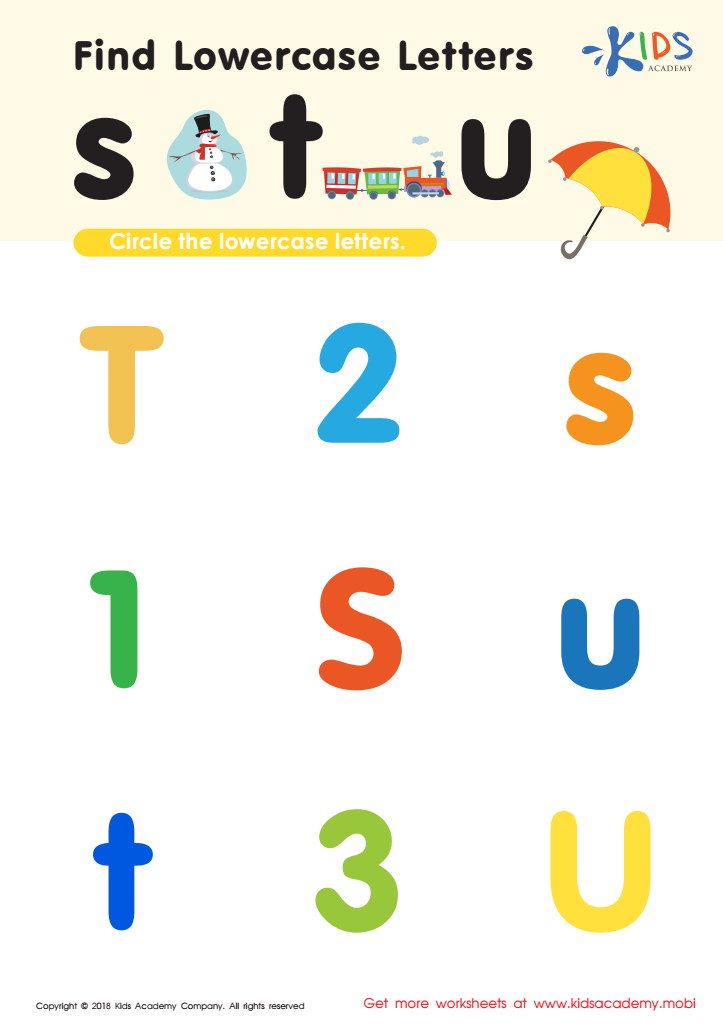
Find lowercase Letters s t u Worksheet

Find Uppercase Letters A, B, and C Worksheet
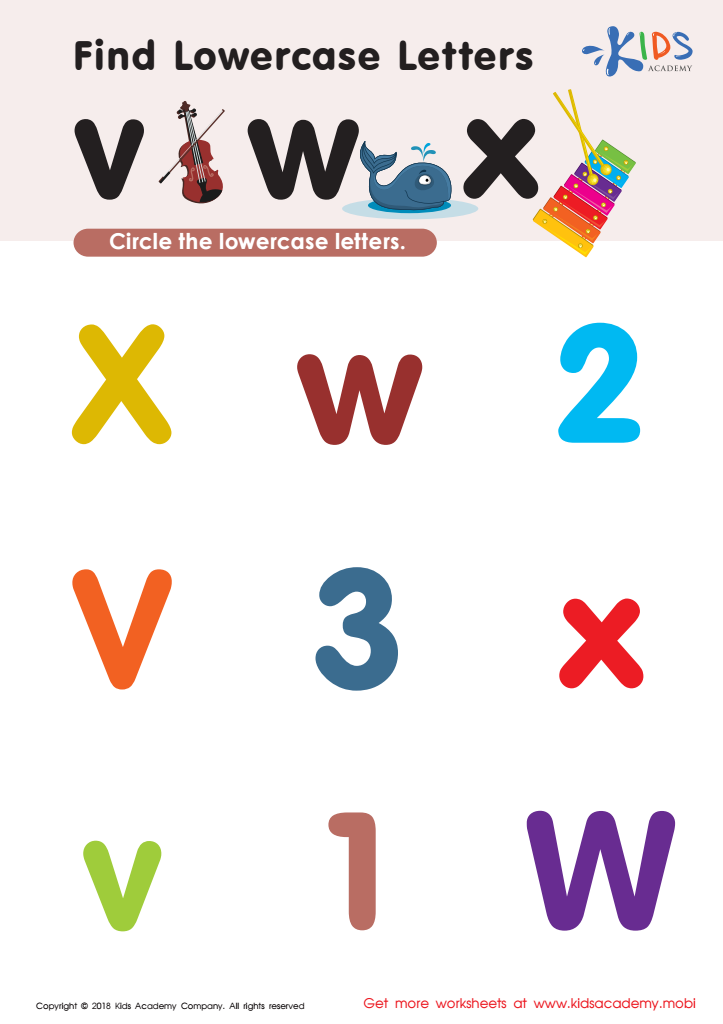
Find Lowercase Letters v w x Worksheet






Alphabet familiarity, including recognizing both uppercase and lowercase letters, is essential for children aged 3-6 for several reasons. First, this foundational skill promotes early literacy, which is crucial as children begin to read and write. By becoming acquainted with letters, children develop phonemic awareness, essential for understanding that letters have corresponding sounds.
Understanding the difference between uppercase and lowercase letters prepares children for various literacy tasks, such as reading simple books or writing their names, which often include both forms. Recognizing uppercase letters is particularly important, as they are predominant in the initial stages of reading and are used for sentence beginnings and proper nouns.
Moreover, alphabet familiarity enhances cognitive development. When children engage in activities involving letter recognition, they develop memory skills and improve their cognitive flexibility, which aids in processing information more effectively.
Lastly, fostering this knowledge builds confidence. As children gain proficiency with letters, they feel more empowered to participate in classroom activities, which can ignite a lifelong love for learning. Therefore, parents and teachers should actively encourage alphabet familiarity to support literacy development, cognitive skills, and self-esteem in young learners.







